
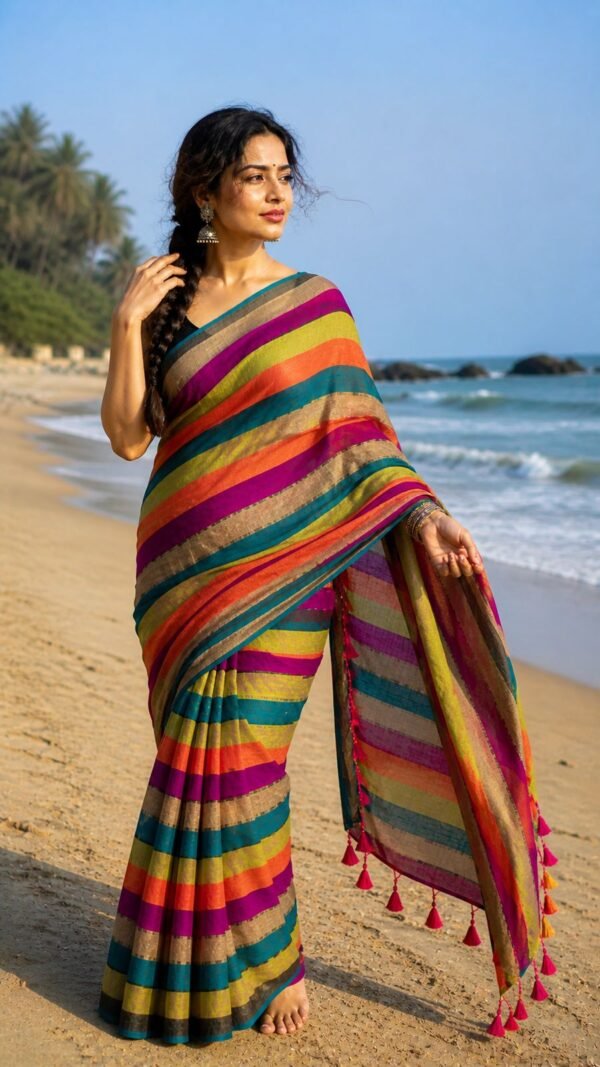
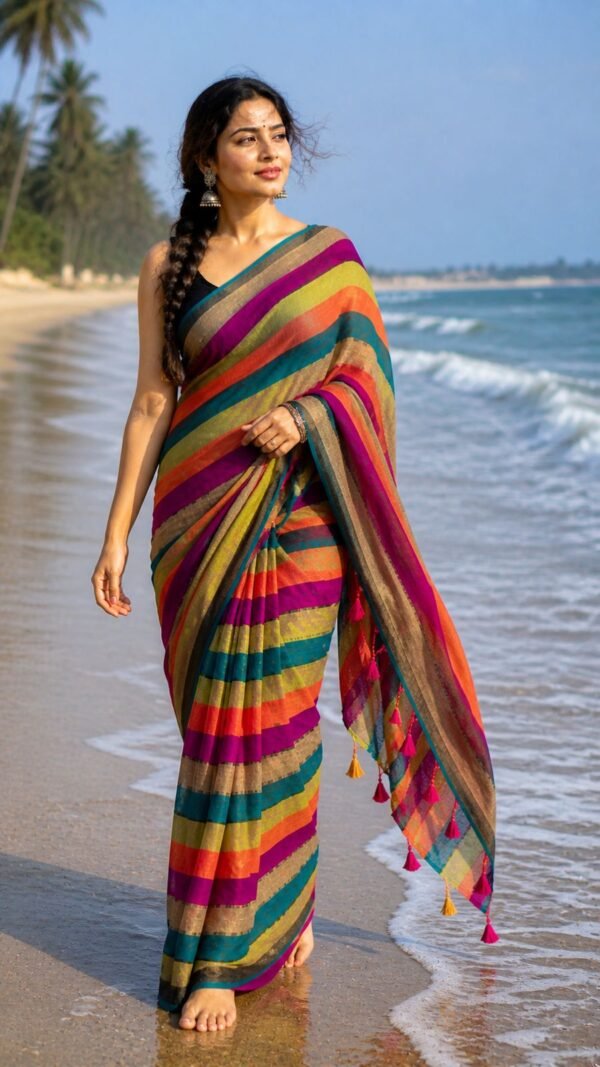
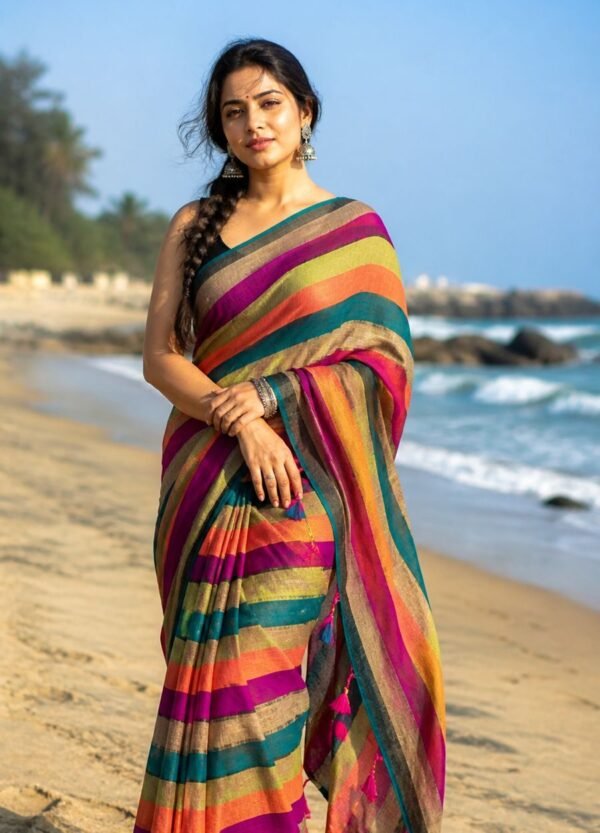
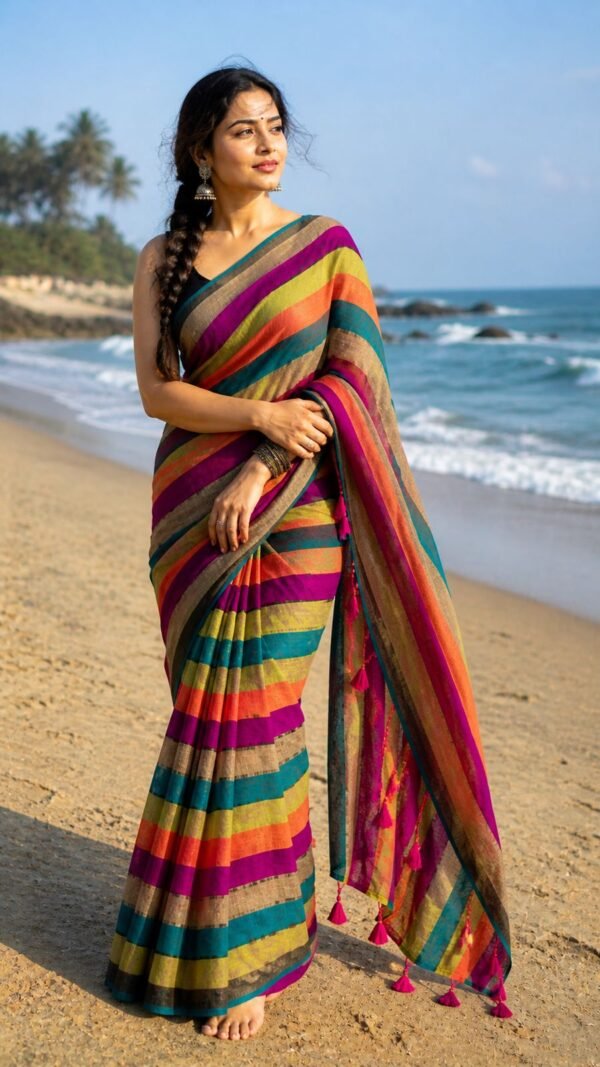
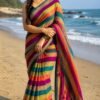

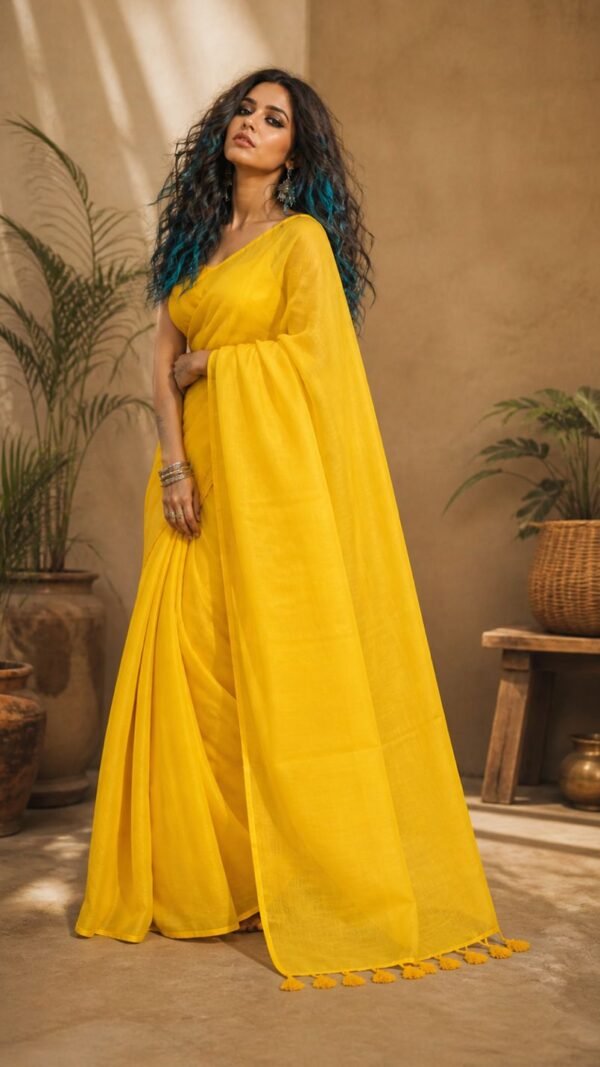
Tassels Multicolour Striped Mul Cotton Saree with
Sarees, Suits & Kurtas₹2,400.00
& Free ShippingDhaka weavers once made mul cotton so fine it was called woven air —
cloth you could fold into a matchbox, pass through a ring.
This saree is the inheritor of that tradition.
Not the museum piece. The living one.The stripes are not decoration.
In Bengal handloom, the colour sequence is the weaver’s identity —
their particular vision of joy, written in thread.
The tassels at the end are their signature.
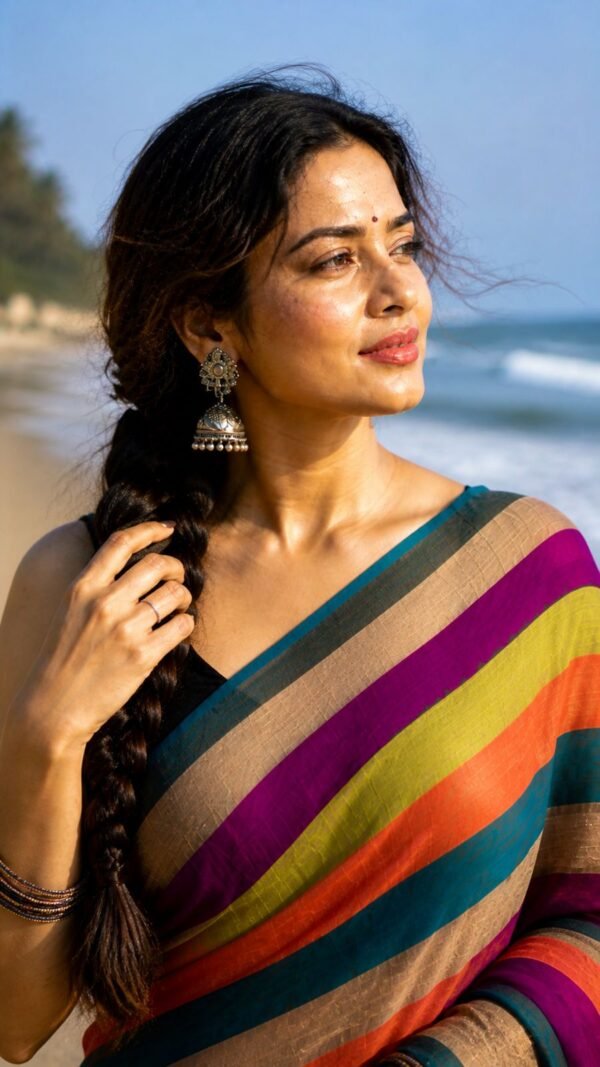
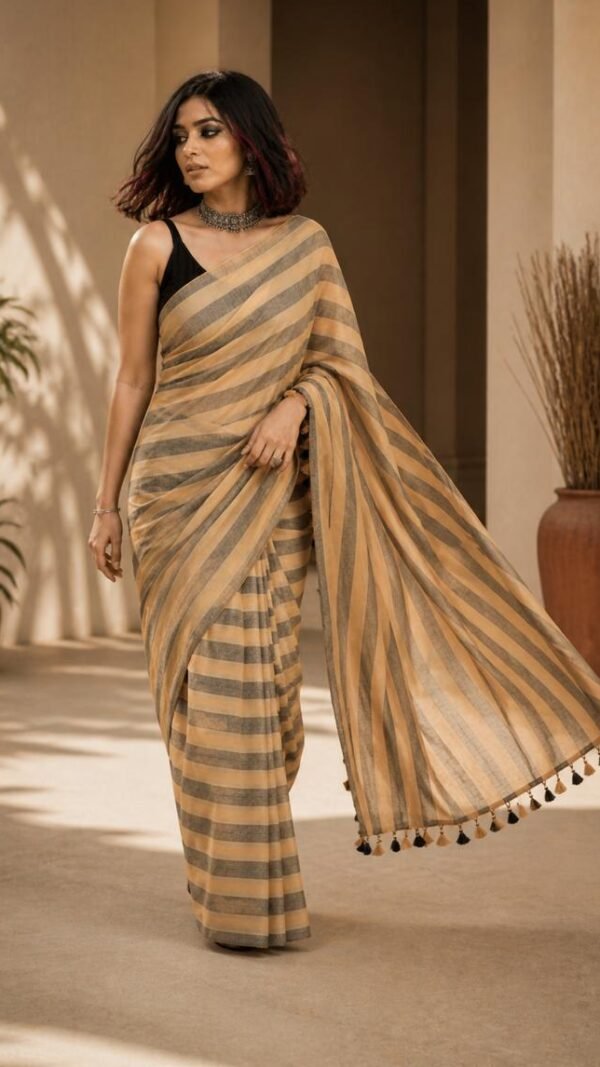
Mul cotton — mulmul — is the lightest, most breathable cotton fabric India has ever made, woven from extremely fine loosely twisted yarn in a plain weave so open it almost disappears against the skin. This saree is worked in bold horizontal stripes of magenta, teal, saffron orange, yellow-green, and natural beige — a full spectrum of colour arranged in the unhurried confidence of the handloom. The pallu finishes in a riot of multicolour tassels that catch every breeze and remind you, with every movement, that this cloth is completely alive.
The story of mul cotton in Bengal begins with one of the most extraordinary achievements in the history of human craft. The weavers of Dhaka — in what is now Bangladesh but was then undivided Bengal — once produced a fabric called woven air: mul cotton so fine that a full six-yard saree could be folded and hidden inside a matchbox, or passed through a finger ring. The Mughal emperors commissioned it. European traders paid fortunes for it. And then, over two centuries of colonial rule and industrial disruption, the tradition was almost entirely destroyed.
What survives today — in the handloom clusters of West Bengal — is the living continuation of that tradition. Not as fine as the legendary Dhaka muslin, but carrying the same knowledge in its structure: the loose, open weave, the feather weight, the way the fabric moves with the body rather than against it. The bold stripe pattern of this saree — each colour in sequence, each stripe a decision — is the Bengal handloom weaver’s particular way of signing their work. The tassels at the hem are the final flourish. The weaver chose every colour. Every stripe is
Reviews
There are no reviews yet.