Slide Heading
Lorem ipsum dolor sit amet, consectetur adipiscing elit. Ut elit tellus, luctus nec ullamcorper mattis, pulvinar dapibus leo.
Click Here

At Hastkaar-E-Khaas, we believe that what you wear is not just fabric.

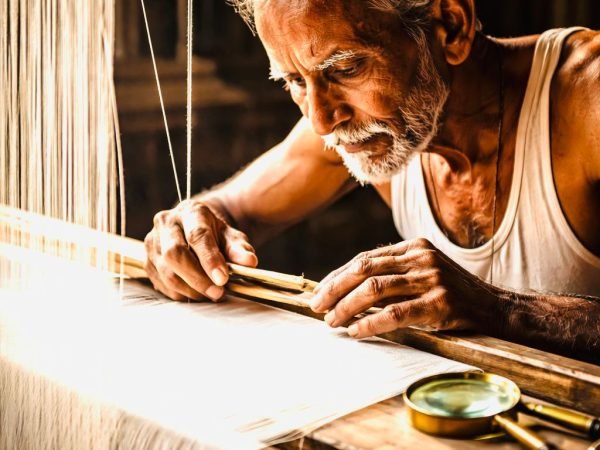
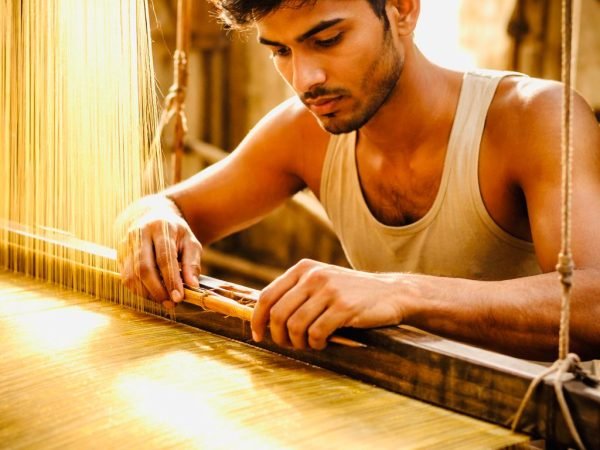
It is a geography. A community. A technique passed from hand to hand across generations. It is the specific quality of cotton grown in one district of Bengal, or the particular tension of silk threads on a loom in Varanasi that has stood in the same family for a hundred years.
This page is our attempt to give each of these traditions the space they deserve. Browse by the fabric that moves you, the weave that calls to you, or the surface work that stops you in your tracks. Every entry here is a doorway — into a story, into a craft, and into a garment made by extraordinary hands.

By Fabric

The thread beneath everything — understand the cloth before you wear it.

Cotton

Pan India — Bengal, Andhra Pradesh, Tamil Nadu, Madhya Pradesh
WhatsApp Image 2026-03-24 at 9.22.23 PM (1)
WhatsApp Image 2026-03-24 at 9.22.23 PM (2)
Cotton

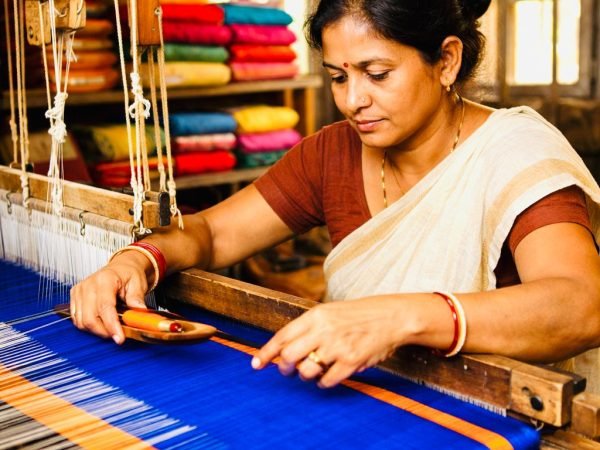
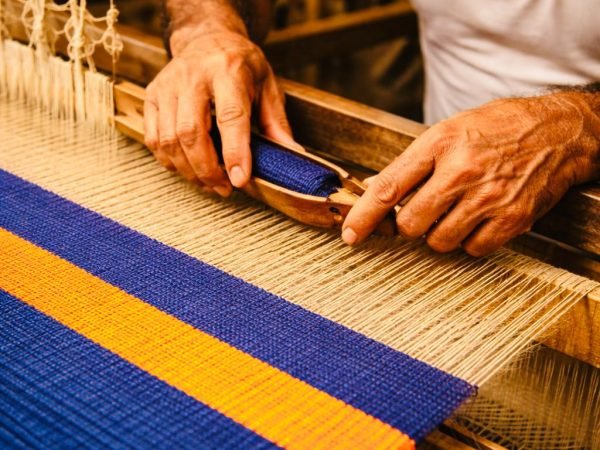
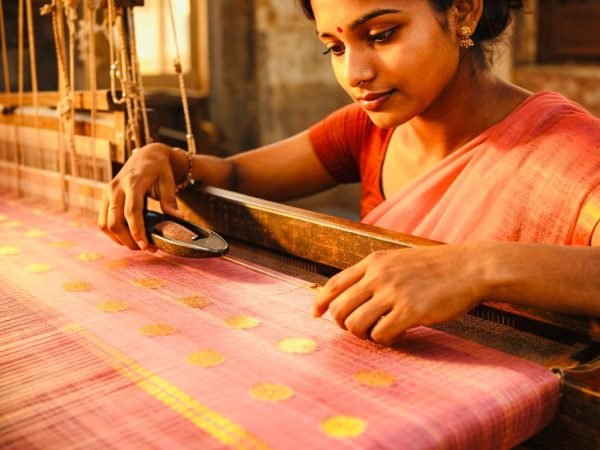
Cotton is the oldest love story between India and its soil. For more than five thousand years, Indian farmers have grown cotton and Indian weavers have spun it into cloth of extraordinary variety — from the gossamer-fine Dhaka muslin that Mughal emperors called woven air, to the bold, textured handloom cottons of Bengal that drape with the easy confidence of a fabric completely at ease with itself.

What makes handloom cotton unlike anything else is the irregularity that is, in fact, its greatest perfection. The slight variations in thread thickness, the tiny slubs in the weave, the way the fabric breathes against the skin on a hot afternoon — these are not flaws. They are the fingerprints of the hands that made it. No power loom can replicate them.

At Hastkaar-E-Khaas, our cotton comes primarily from the handloom clusters of West Bengal — where weavers work on pit looms and frame looms to produce sarees that are simultaneously ancient and entirely contemporary. Light enough to wear through a long day, rich enough to carry history in every thread.

Linen

West Bengal — handwoven across the eastern handloom belt
WhatsApp Image 2026-03-24 at 9.22.23 PM (1)
WhatsApp Image 2026-03-24 at 9.22.23 PM (2)
Linen

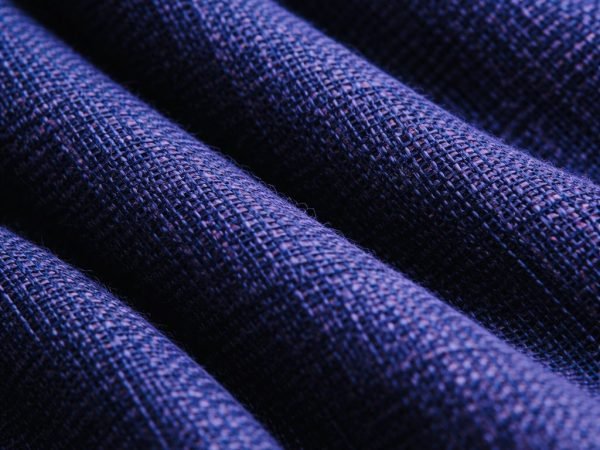
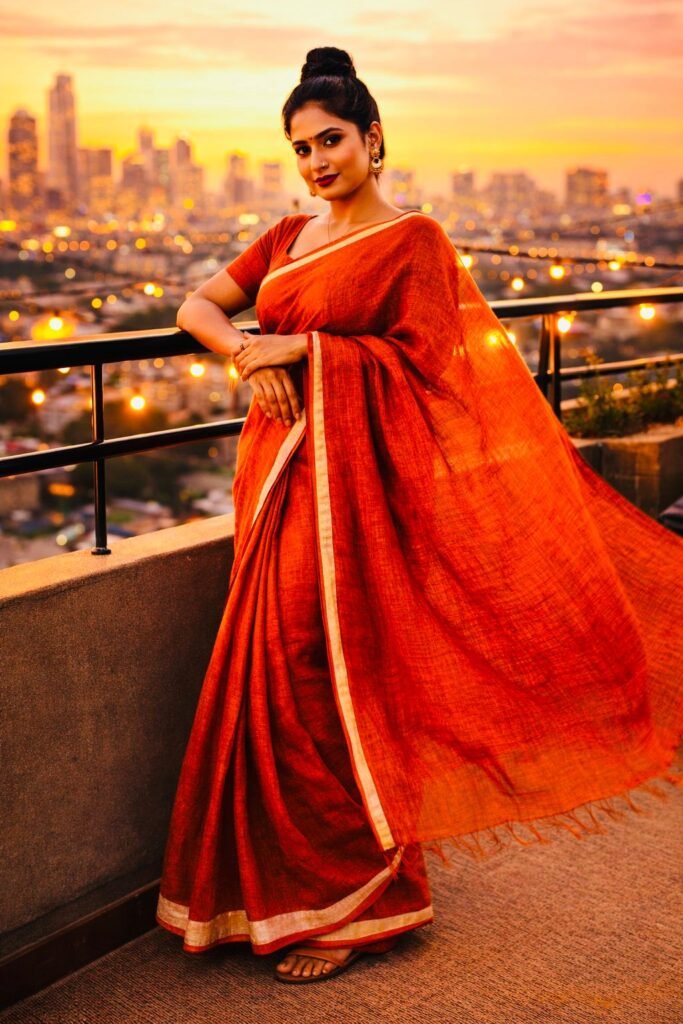
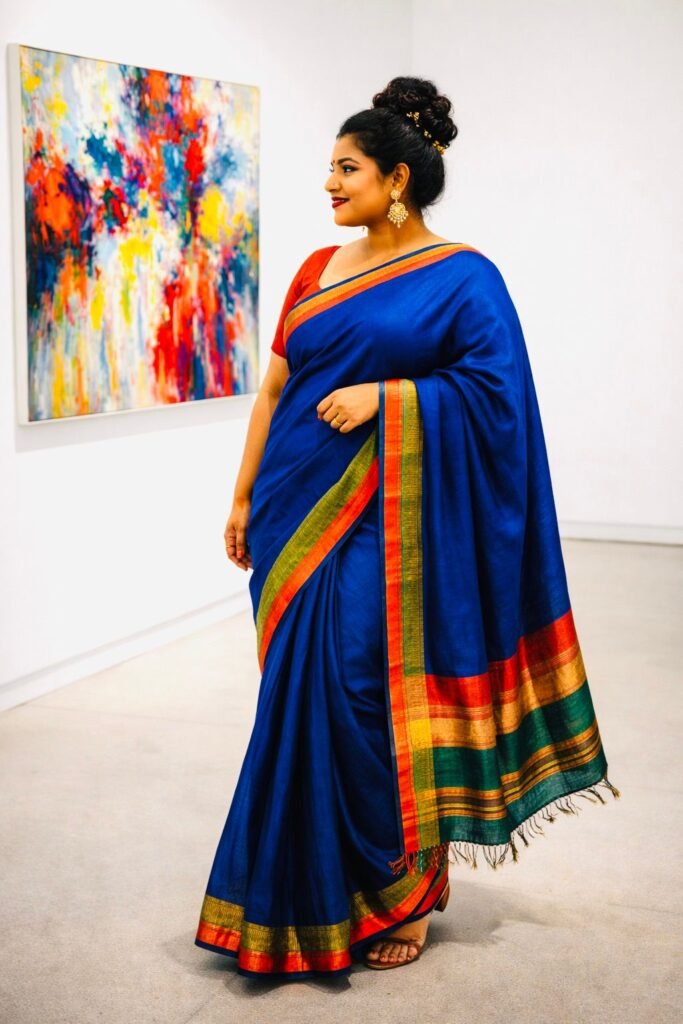
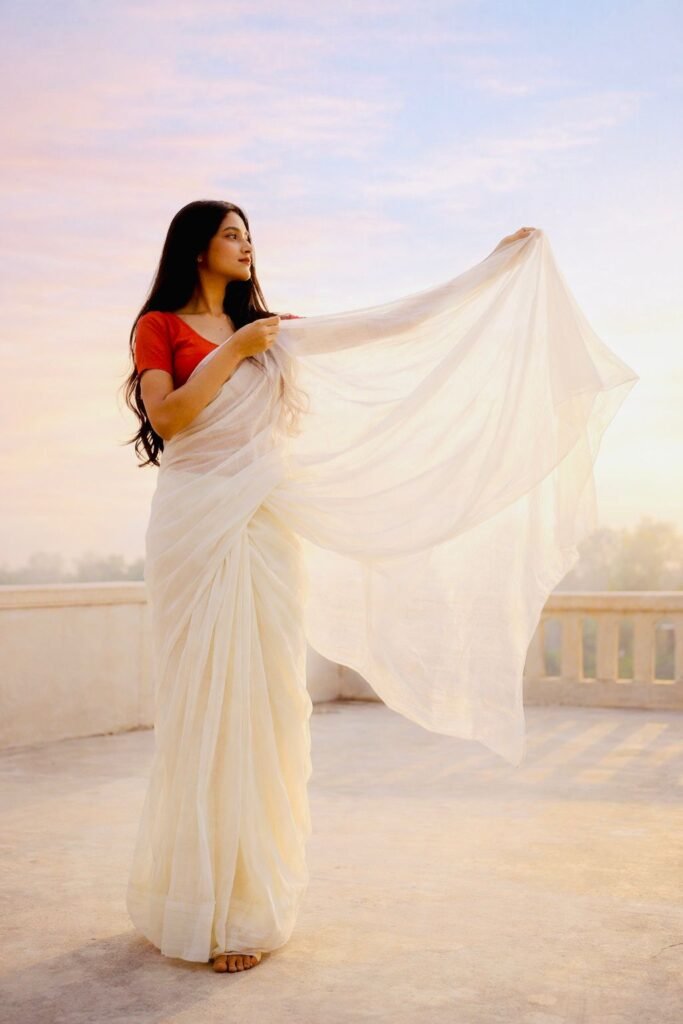
Linen is perhaps the most honest fabric in the world. It does not pretend. It does not perform. It simply is — cool against the skin, slightly rough to the touch in the best possible way, and more beautiful with every wash. When linen is handwoven on traditional looms in Bengal, it acquires a texture and a character that machine-made linen can never match.
The flax plant from which linen is made has been cultivated for over ten thousand years, making linen one of the oldest textiles in human history. A well-made linen saree in the right colour is among the most versatile garments a woman can own — equally at home in a boardroom, at a cultural event, or on a slow weekend morning.
Our linen sarees are handwoven with great care in colours that range from natural undyed ecru to rich, deeply saturated tones. Genuine handloom linen has a particular feel, weight, and drape that is immediately recognisable to anyone who has experienced it. Once you wear it, you will understand why women who discover handloom linen rarely go back.

Pure Silk

Varanasi, Kanchipuram, Assam, Bishnupur — India's great silk traditions
WhatsApp Image 2026-03-24 at 9.22.24 PM (1)
WhatsApp Image 2026-03-24 at 9.22.25 PM
Pure Silk

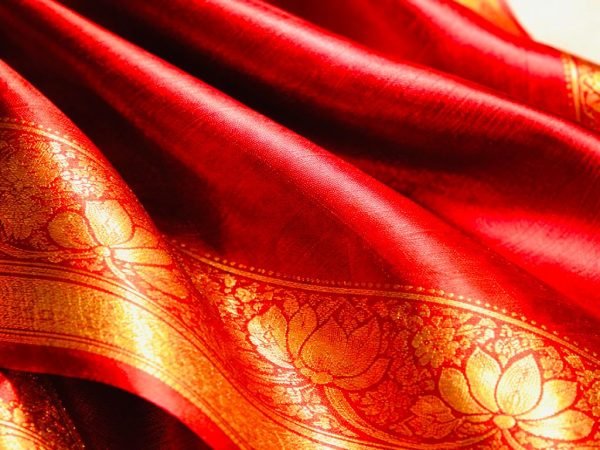
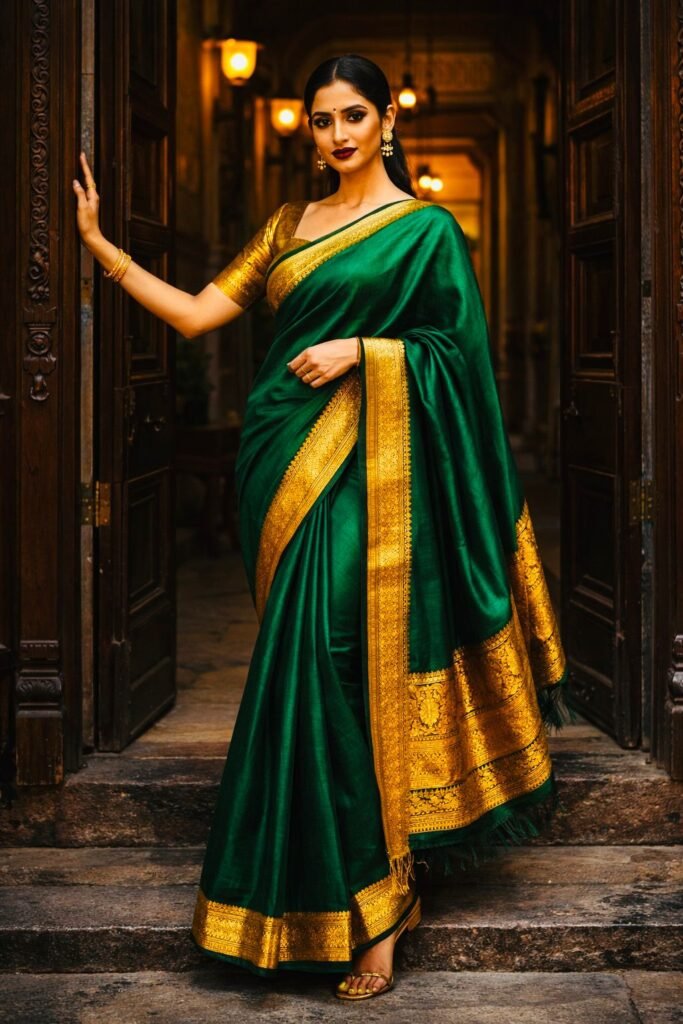
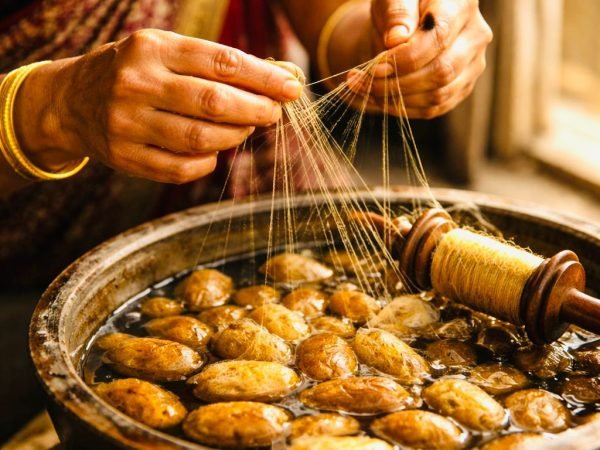
Silk is the fabric that civilisations have gone to war over, traded empires for, and woven into legends. It is produced by the silkworm — a caterpillar that spins a cocoon of continuous filament that can be unwound into a thread of extraordinary strength, lustre, and fineness. A single silkworm produces a filament that can be up to one kilometre long. Pure silk has a natural sheen that no synthetic fabric has ever convincingly replicated. It catches light differently at different angles, creating a luminosity that shifts as the wearer moves. It drapes with a weight and a flow that gives the body a particular grace, and it takes dye with an intensity that creates the deep, saturated jewel colours that Indian silk is famous for across the world.

At Hastkaar-E-Khaas, pure silk means exactly what it says — no blends, no synthetics, no shortcuts. Our silk comes from the great weaving traditions of India: the heavy brocaded silks of Varanasi, the structured temple-woven silks of Kanchipuram, the golden Muga silk of Assam, and the delicate Baluchari silks of Bishnupur.

Silk-Cotton

Chanderi, Maheshwari, Gadwal — the great blended weaving traditions
WhatsApp Image 2026-03-24 at 9.22.26 PM
WhatsApp Image 2026-03-24 at 9.22.23 PM (2)
Silk-Cotton

The silk-cotton blend is one of India's most intelligent textile inventions. By combining the lustre and sheen of silk with the breathability and earthiness of cotton, the weavers of Chanderi, Maheshwari, and Gadwal created a fabric that offers the best of both worlds — light enough for a hot Indian summer, beautiful enough for any celebration.

The weaving of silk-cotton requires particular skill because the two fibres behave differently on the loom. Creating a fabric that honours both requires a weaver who understands each thread individually. The great silk-cotton weaving towns of central India — Chanderi in Madhya Pradesh, Maheshwari on the banks of the Narmada — have produced weavers of this calibre for centuries.

A silk-cotton saree from these traditions is one of the most wearable luxury garments available. It requires less careful handling than pure silk, launders more easily, and yet retains a beauty and elegance that makes it feel entirely special. For a woman who wants the look of silk with the ease of cotton, nothing comes closer to perfect.

Tussar Silk

Jharkhand, Bihar, West Bengal, Odisha — the wild silk of the forest
WhatsApp Image 2026-03-24 at 9.22.26 PM (2)
WhatsApp Image 2026-03-24 at 9.22.38 PM
Tussar Silk

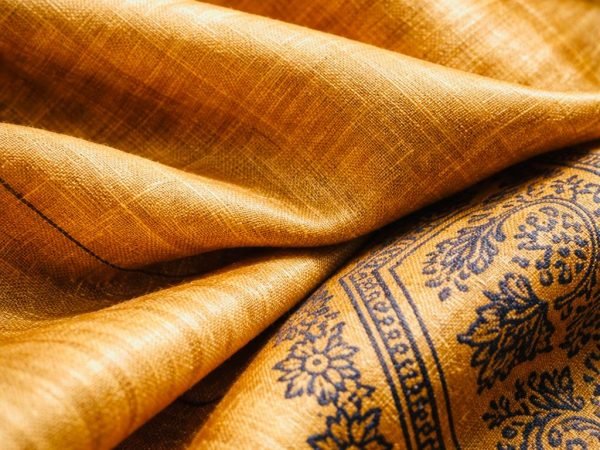
Tussar silk is silk from the forest. Unlike mulberry silk — produced by silkworms fed on cultivated mulberry leaves — Tussar comes from wild silkworms that feed on trees like Asan, Arjun, and Som in the forests of Jharkhand, Bihar, and Odisha. This gives Tussar its distinctive character: a warm natural golden-beige colour, a slightly coarser texture, and a matte finish that is entirely its own.
.
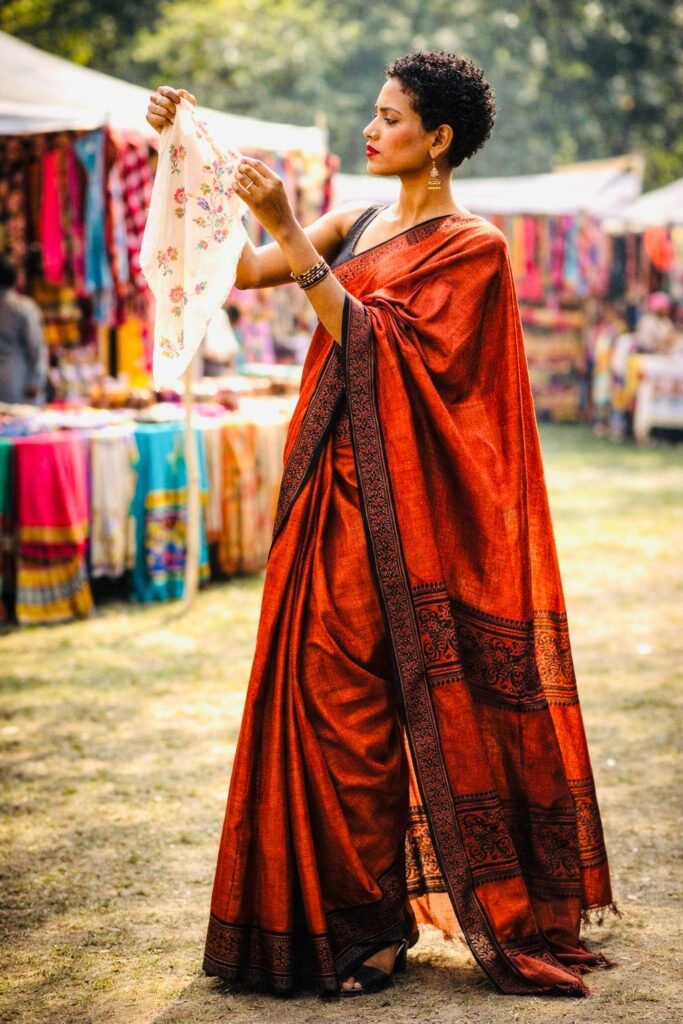
Tussar cannot be bleached to pure white — its natural pigment is part of its identity. Tussar sarees are dyed in colours that work with the fabric's inherent warmth: rich terracottas, deep indigos, forest greens, burnt siennas. These colours do not fight the fabric — they deepen it. The result is a palette that feels entirely Indian, rooted in the earth and the forest that produced the raw material.
.
What makes Tussar particularly precious is its texture. It has a subtle sheen without the high gloss of mulberry silk, a slight body that makes it drape beautifully, and a warmth to the touch that feels alive. Tussar sarees are often printed with traditional motifs using block printing, or left plain to let the natural colour speak for themselves.

Muslin

West Bengal — the legendary fine cotton of the subcontinent
WhatsApp Image 2026-03-24 at 9.22.39 PM (1)
WhatsApp Image 2026-03-24 at 9.29.00 PM
Muslin

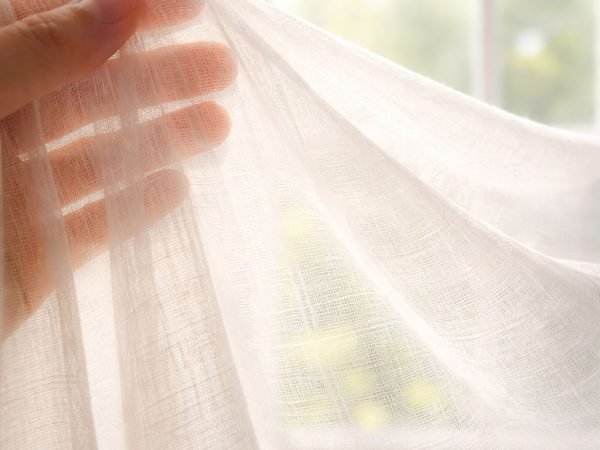
Muslin is the fabric that made India famous. When European traders first arrived and encountered the fine handwoven cotton of Bengal, they struggled to find words for it. The Mughal emperors called it woven air — baft hawa. Others called it running water, evening dew. A saree of the finest Dhaka muslin could be passed through a finger ring and folded into a matchbox.

The finest Dhaka muslin no longer exists in its original form. But muslin as a category of fine handwoven cotton continues in Bengal and Bangladesh, carried forward by weavers who have inherited some of the technique. What remains is still extraordinary — a fabric so light that sunlight passes through it, so fine that it seems barely there against the skin.

Mull cotton — a lighter variation widely worn across India — shares the same essential character: extraordinary lightness, beautiful drape, and a transparency that creates a layered, luminous effect when worn. At Hastkaar-E-Khaas, our mull and muslin sarees are chosen for the fineness of their weave — a fabric this delicate demands the most attentive hands.

Organza

Varanasi — where silk becomes light itself
WhatsApp Image 2026-03-24 at 9.29.01 PM (1)
WhatsApp Image 2026-03-24 at 10.36.18 PM
Organza

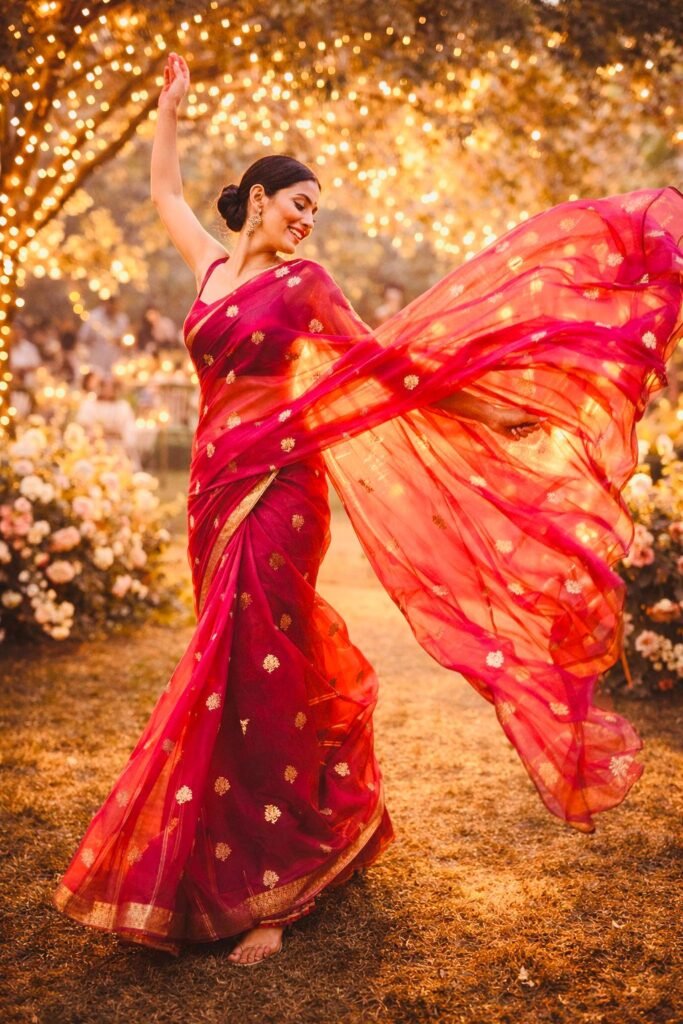
Organza is silk in its most ethereal form. Made by twisting silk filaments tightly and weaving them into an open, very fine fabric that is simultaneously transparent and crisp. The result holds its shape while remaining weightless — stiff enough to drape in dramatic folds while light enough to flutter in the slightest breeze. When organza catches light, it seems to hold it, becoming luminous in a way that no other fabric achieves.

The organza tradition in India is concentrated in Varanasi, where the same families who weave heavy brocaded Banarasi silks also produce silk organza of exceptional quality. Banarasi organza sarees are typically worked with zari — gold and silver metallic thread — creating an effect of extraordinary richness without heaviness.

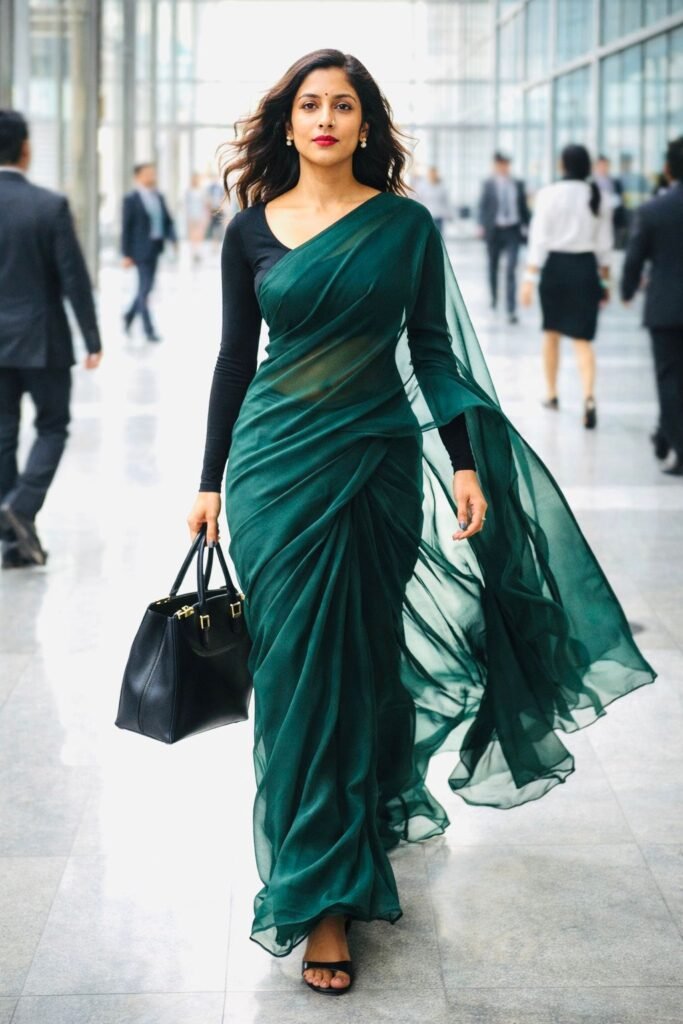
Organza is a fabric for occasions — for evenings when the light is low and movement is visible. But it is also being worn by contemporary women in less expected ways — as a dramatic statement drape, layered over a contrasting slip, or simply as the kind of garment that makes ordinary moments feel ceremonial

Georgette

Varanasi — where the finest georgette sarees are woven and crafted
WhatsApp Image 2026-03-24 at 10.36.19 PM (1)
WhatsApp Image 2026-03-24 at 10.36.19 PM (2)
Georgette

Georgette is the fabric of constant motion. Made by weaving highly twisted yarns in both the warp and the weft, it has a characteristic crepe-like texture — slightly rough to the touch, with a matte surface that absorbs rather than reflects light. This gives georgette its most important quality: it flows. It moves with the body rather than against it, creating a fluid, rippling drape that is almost liquid in quality.

Pure silk georgette is different from the polyester georgette that floods the mass market. Silk georgette drapes more beautifully, breathes against the skin, and ages with grace — becoming softer and more supple with wear. Silk georgette sarees from Varanasi are often worked with Chikankari embroidery, with printed motifs, or left plain in solid colours where the fabric's extraordinary drape does all the work.

Georgette is one of the great all-occasion fabrics. A solid-colour georgette saree in deep burgundy or forest green with a contrasting blouse is as appropriate for a board meeting as for a dinner. Georgette printed with traditional block prints or contemporary designs becomes something entirely different — casual, expressive, deeply joyful.

Tissue

Varanasi and Kanchipuram — woven light and gold
WhatsApp Image 2026-03-24 at 10.36.20 PM (1)
WhatsApp Image 2026-03-24 at 10.36.20 PM (2)
Tissue

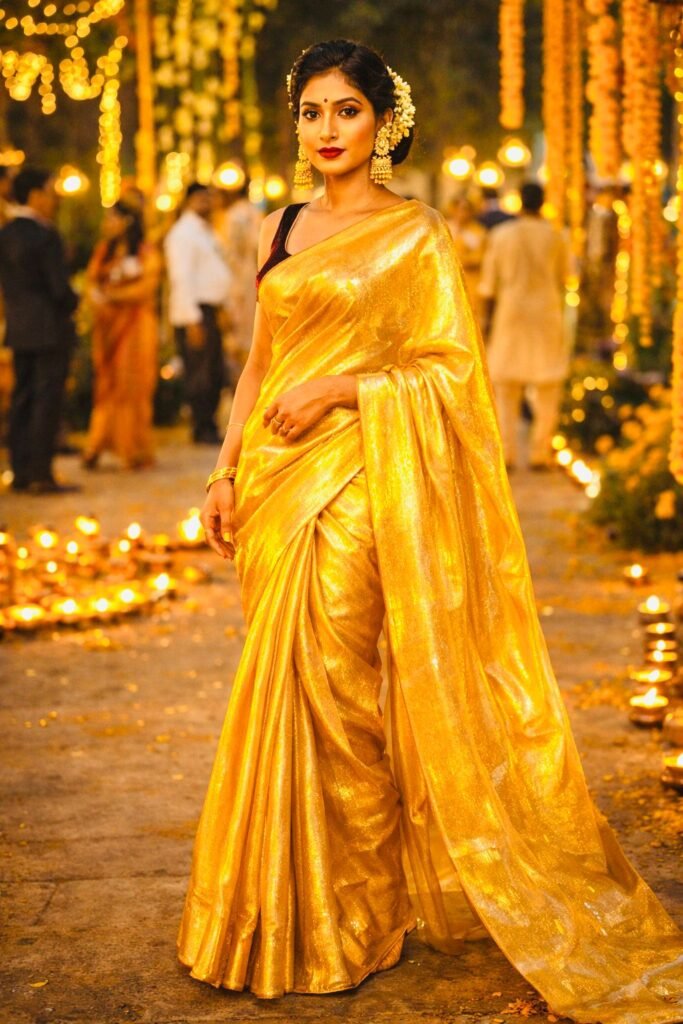
Tissue fabric is what happens when the weaver decides to make cloth from light itself. Created by weaving metallic threads — traditionally real gold and silver zari — into a base of fine silk or silk-cotton, creating a fabric that shimmers and glimmers with every movement. Tissue sarees are among the most visually dramatic garments in the Indian textile vocabulary — they catch every source of light and return it multiplied.

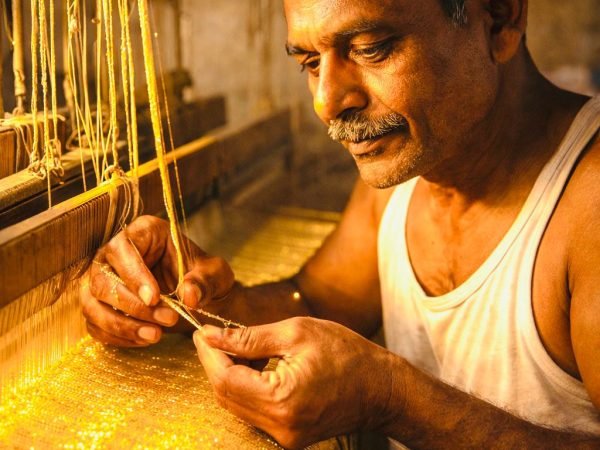
The weaving of tissue requires extraordinary technical skill because metallic threads are far less forgiving than silk or cotton. They cannot be eased or adjusted once placed. The great tissue weaving traditions of Varanasi represent some of the highest achievements of Indian textile craft — families who have been working exclusively with gold and silver thread for four or five generations.

A tissue saree is a statement garment, unambiguously celebratory. But contemporary weavers are also producing tissue in lighter weights and softer combinations — pale gold on ivory, silver on blush — that feel sophisticated rather than heavy. These lighter tissue sarees bring the beauty of this ancient weave into a contemporary wardrobe without the formality of traditional bridal tissue.

Chikankari

Lucknow, Uttar Pradesh — the shadow work of the Nawabs
WhatsApp Image 2026-03-24 at 10.41.03 PM
WhatsApp Image 2026-03-24 at 10.36.20 PM (2)
Chikankari

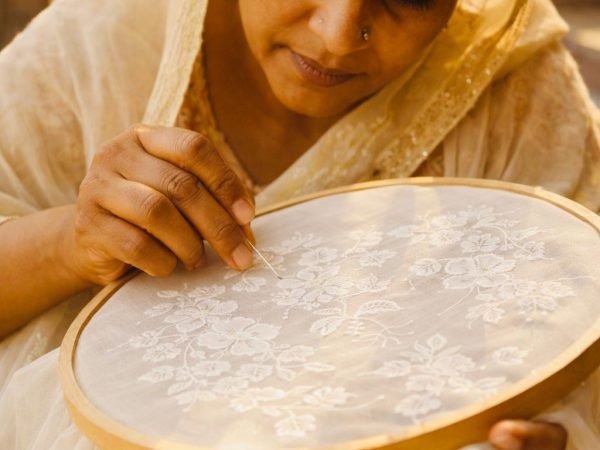
Chikankari is the most delicate embroidery tradition in India — a white-on-white hand embroidery technique developed in Lucknow under the patronage of the Nawabs of Awadh in the 18th century. The word Chikankari is believed to derive from the Persian word chikan, meaning delicate embroidery. The technique involves embroidering white thread on a white or light-coloured fabric — typically fine cotton, muslin, or georgette — to create patterns that are visible only through the play of light and shadow on the raised or pierced stitches. The result is a garment of extraordinary subtlety and refinement — a garment that reveals itself slowly, the more carefully you look.

Chikankari uses over thirty individual stitch types, each with its own name and its own visual character. The most characteristic are the shadow work stitches — stitches worked on the reverse of the fabric that create a shadowed, translucent effect visible from the front. The jaali stitch creates a fine mesh of pierced fabric that resembles lacework. The murri stitch creates tiny raised dots. The phanda creates flat, rounded embossed shapes. Each stitch requires a specific needle, a specific thread tension, and a specific technique that takes years of practice to master. The finest Chikankari artisans are women who have been embroidering since childhood, inheriting the technique from their mothers and grandmothers.

The Chikankari tradition is concentrated in the old city of Lucknow — particularly in the mohallas of Chowk and Yahiyaganj — where thousands of women embroiderers work from home, passing cloth from household to household in a complex production chain. A single Chikankari saree can pass through the hands of a dozen different women — one for the outline stitch, one for the shadow work, one for the jaali, one for the finishing — each contributing her specialisation to the final garment. When you wear a Chikankari piece from Hastkaar-E-Khaas, you are wearing the combined skill of this entire community.

Banarasi

Varanasi, Uttar Pradesh — woven in the holy city for over five centuries
WhatsApp Image 2026-03-24 at 10.41.03 PM
WhatsApp Image 2026-03-24 at 10.36.20 PM (2)
Banarasi

Banarasi weaving is one of the oldest and most celebrated textile traditions in the world. The city of Varanasi — one of the most ancient continuously inhabited cities on earth — has been producing silk sarees of extraordinary richness since at least the 13th century. The Banarasi saree is defined by its use of zari — metallic thread made from gold or silver — woven into the fabric itself to create patterns of breathtaking intricacy. The brocade technique used in Banarasi weaving, known as the Jacquard system in its mechanised form but executed entirely by hand in traditional workshops, allows the weaver to create designs of almost limitless complexity.

The motifs of the Banarasi saree are drawn from a vocabulary that has been accumulating for centuries: the kalga, a mango or paisley motif that arrived with Mughal textile traditions and became entirely Indian; the buta, a small floral or geometric repeat scattered across the body of the saree; the jaal, an allover net pattern of incredible intricacy; and the konia, a motif placed specifically in the corner of the saree's pallu. Each motif has a name, a history, and a particular placement in the grammar of Banarasi design. A master weaver knows this grammar as deeply as a poet knows language.

There are several varieties of Banarasi weave, each with its own character. Katan is the purest silk brocade — dense, heavy, and lustrous. Organza Banarasi is weightless and transparent with glittering zari motifs. Shattir is a subtle, understated weave for daily elegance. Tanchoi has an allover woven pattern without a floating warp. Each requires different skills, different timing, and a different relationship between the weaver and the loom.

Kanjivaram

Kanchipuram, Tamil Nadu — the silk of temples and queens
WhatsApp Image 2026-03-24 at 10.41.03 PM
WhatsApp Image 2026-03-24 at 10.36.20 PM (2)
Kanjivaram

The Kanjivaram saree is the gold standard of Indian silk weaving. Made in the temple town of Kanchipuram in Tamil Nadu — a town so associated with silk that it has been called the Silk City of India — the Kanjivaram saree is defined by three qualities that no other saree tradition shares in combination: the use of pure mulberry silk, the use of pure zari made from real silver coated with gold, and the interlocking weft technique that creates the saree's most distinctive feature — the contrasting border.

The Kanjivaram border is woven separately from the body of the saree and then interlocked with it during weaving — a technique so painstaking that it takes two weavers working in coordination to achieve it, one working the body and one working the border simultaneously. The result is a saree where the border appears to be a separate piece of cloth — different in colour, different in pattern, different in character — but is in fact woven in as one continuous piece. This is the identifying mark of a genuine Kanjivaram and cannot be faked.

The weight of a Kanjivaram saree is its own statement. The silk is dense and heavy — not because it is thick, but because the thread count is extraordinarily high. A single Kanjivaram saree can take between three and thirty days to weave, depending on the complexity of the design. The weavers of Kanchipuram have been practising their craft for generations, and the knowledge of how to create the particular weight, drape, and luminosity of a genuine Kanjivaram is passed from parent to child with the same care as any sacred inheritance.

Kantha

West Bengal and Bangladesh — the embroidered soul of Bengal
WhatsApp Image 2026-03-24 at 10.41.03 PM
WhatsApp Image 2026-03-24 at 10.36.20 PM (2)
Kantha

Kantha is not a weave — it is an embroidery tradition. But it is so deeply woven into the identity of Bengal, so intimately connected to the women who practise it, and so central to the sarees that Hastkaar-E-Khaas carries from this region, that to speak of Bengali textiles without speaking of Kantha would be to tell an incomplete story. The word Kantha comes from the Sanskrit word for rags — a reminder that this tradition began with women stitching together old pieces of worn-out cloth into quilts and garments for their families, embroidering them with the running stitch that is Kantha's signature.

The Kantha running stitch is deceptively simple — a straight stitch that passes in and out of the fabric in regular intervals, building up a pattern line by line. In the hands of a skilled Kantha artisan, this simple stitch becomes capable of extraordinary complexity. Kantha embroidery can render a lotus flower with petals so detailed that each one has its own shading. It can create a fish, a boat, a woman carrying water, a peacock in full display — all from the single repeated motion of a needle going in and out, in and out. The patterns are drawn from the natural and mythological world of Bengal: fish, birds, flowers, the tree of life, the wheel of the sun.

Contemporary Kantha has evolved from its origins in repurposed cloth to a celebrated embroidery style applied to fine cotton and silk sarees. Kantha sarees from West Bengal carry the same running stitch tradition on handloom cotton or silk grounds, creating garments of extraordinary beauty. A Kantha saree takes weeks or months to complete — each one is unique, because no two artisans stitch in exactly the same way, and no motif is ever exactly repeated.

Chanderi

Chanderi, Madhya Pradesh — the fabric of translucent elegance
WhatsApp Image 2026-03-24 at 10.41.03 PM
WhatsApp Image 2026-03-24 at 10.36.20 PM (2)
Chanderi

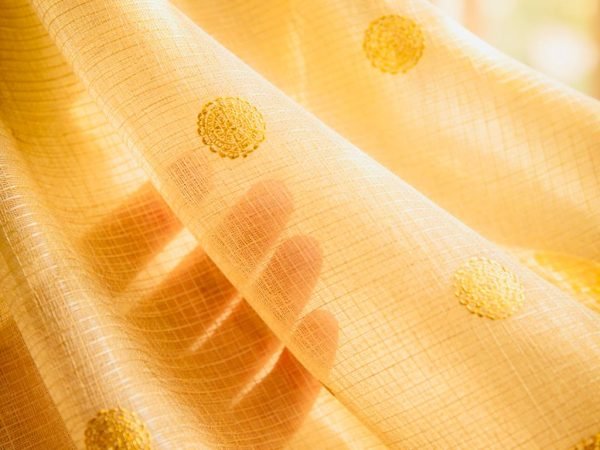
Chanderi is a town in Madhya Pradesh that has been producing extraordinarily fine fabric for at least five centuries. The Chanderi saree is defined by its characteristic translucency — the fabric is woven so finely that light passes through it, giving it a luminous, almost otherworldly quality. This translucency comes from the combination of silk and cotton that is the defining feature of the most classic Chanderi: a silk warp that gives the fabric its sheen and its slight translucency, and a cotton weft that gives it body, breathability, and drape.

The distinctive motif of Chanderi weaving is the ashrafi — a small gold coin motif woven into the fabric using extra weft threads, placed at regular intervals across the body of the saree. This motif has been part of Chanderi weaving for centuries and is one of the ways to identify a genuine piece. The borders of Chanderi sarees are typically woven in a contrasting pattern — geometric or floral — that frames the translucent body with definition and richness. Many Chanderi sarees also feature small woven butis across the body, created by floating extra weft threads over the background weave.

There are three varieties of Chanderi — pure silk, silk-cotton blend, and pure cotton — each with its own character. The pure silk Chanderi is the most ethereal, with a high sheen and extreme translucency. The silk-cotton is the most wearable — light enough for daily use, beautiful enough for any occasion. The pure cotton Chanderi has the most texture and earthiness, and takes the richest colours. All three share the same quality of lightness that makes Chanderi one of the most beloved summer fabrics in India.

Paithani

Paithan, Maharashtra — the jewel of the Deccan
WhatsApp Image 2026-03-24 at 10.41.03 PM
WhatsApp Image 2026-03-24 at 10.36.20 PM (2)
Paithani

The Paithani saree is the pride of Maharashtra. Made in the ancient town of Paithan on the banks of the Godavari river — a town that was once the capital of the Satavahana dynasty — the Paithani has been considered the most precious of all Indian sarees for over two thousand years. The defining technique of the Paithani is the oblique interlocking weft — a weaving method in which different coloured silk threads are interlocked at an angle rather than woven straight across. This technique, called tapestry weaving in other traditions, creates the characteristic diagonal meet of colours at the boundary between the body and the border, and allows the weaver to build intricate motifs in pure silk without any floating threads.

The motifs of the Paithani are drawn from the natural world of the Deccan plateau: the peacock in full display, the lotus flower, the parrot, the vine, the flowering tree. These motifs are built into the fabric thread by thread — the weaver placing each coloured butterfly bobbin individually to create the design. The pallu of a Paithani saree is its showpiece: a dense field of peacocks, flowers, and vines woven in pure silk zari against a contrasting ground, each motif placed with absolute precision. A Paithani pallu can contain hundreds of individual motifs, each one placed by hand.

A single Paithani saree can take anywhere from a month to several years to complete, depending on its complexity. The most elaborate Paithani sarees — the ones with allover peacock designs across both body and border, worked in pure gold zari — are among the most expensive garments in India, and are treated as family heirlooms to be passed from mother to daughter across generations. Even a simpler Paithani, worked in two or three colours on a plain ground, carries the weight of this extraordinary tradition.

Pochampally Ikat

Pochampally, Telangana — the village that gave its name to a global weave
WhatsApp Image 2026-03-24 at 10.41.03 PM
WhatsApp Image 2026-03-24 at 10.36.20 PM (2)
Pochampally Ikat

Ikat is a weaving technique in which the threads are dyed before they are woven — a process of extraordinary complexity that requires the weaver to plan the finished pattern in the thread before a single pass of the shuttle has been made. In Pochampally Ikat, both the warp and the weft threads are tie-dyed in precise patterns — a technique called double ikat that is practised in only a handful of places in the world. When these pre-dyed threads are placed on the loom and woven together, the dyed sections align to create the characteristic geometric patterns of Pochampally: diamonds, chevrons, zigzags, and interlocking shapes in vivid, saturated colours.

The characteristic visual quality of Pochampally Ikat — and of all ikat — is a slight blurring at the edges of every motif, a quality called feathering that comes from the natural movement of threads during dyeing and weaving. This blurring is not a flaw. It is the signature of genuine ikat, the proof that the pattern was created in the thread before weaving rather than printed or embroidered after. A Pochampally Ikat saree with perfectly sharp-edged motifs is not an ikat at all — it is a printed imitation.

The town of Pochampally — now called Bhoodan Pochampally — in Telangana gave its name to a weaving tradition that has spread across the Deccan and been recognised by UNESCO as an intangible cultural heritage. Pochampally Ikat sarees are woven in both silk and cotton, with the silk versions particularly prized for the way the ikat colours shimmer and shift against the silk's natural lustre. The colour combinations of Pochampally — deep magenta with forest green, cobalt blue with saffron, black with gold — are bold, joyful, and entirely its own.

Sambalpuri Ikat

Sambalpur, Odisha — the sacred weave of western Odisha
WhatsApp Image 2026-03-24 at 10.41.03 PM
WhatsApp Image 2026-03-24 at 10.36.20 PM (2)
Sambalpuri Ikat

Sambalpuri Ikat from Odisha is one of India's most celebrated weaving traditions — a GI-tagged craft with a history stretching back over five centuries. Like Pochampally, Sambalpuri uses the tie-and-dye resist technique applied to threads before weaving, but the Sambalpuri tradition has developed its own distinctive vocabulary of motifs: the shankha or conch shell, the chakra or wheel, the phula or flower, and the deer — all drawn from the religious and natural iconography of Odisha's temple culture.

Sambalpuri sarees are woven in cotton and silk, with the Kataki variety — a fine cotton Sambalpuri — being among the most widely worn in Odisha. The Sambalpuri Silk saree is the most prized, with the ikat patterns shimmering against the silk ground in combinations of deep red and black, saffron and white, or forest green and gold that feel entirely rooted in the landscape and culture of the region.

The weaving communities of Sambalpur — predominantly the Bhulia caste — have been the custodians of this tradition for generations. The knowledge of how to calculate, tie, and dye the threads to produce the exact alignment required for the ikat pattern is passed orally and practically from parent to child. The mathematics involved — calculating how much the threads will shrink during dyeing, how they will shift during weaving — is extraordinary, performed entirely in the weaver's head without any written notation.

Patola

Patan, Gujarat — the double ikat of the Salvis
WhatsApp Image 2026-03-24 at 10.41.03 PM
WhatsApp Image 2026-03-24 at 10.36.20 PM (2)
Patola

Patola is the most technically demanding weaving tradition in India — and arguably the most technically demanding in the world. A double ikat saree from Patan in Gujarat requires the precise pre-dyeing of both the warp and the weft threads in patterns that will align exactly when woven together. The mathematics of this process — calculating how threads will shrink, how they will shift, how the two sets of pre-dyed patterns will intersect to create the finished image — is so complex that the entire calculation is carried out mentally by the weaver, without any tools or diagrams. The tradition is held exclusively by one family caste — the Salvi family — and the knowledge has been passed within this community for at least seven centuries.

A genuine Patola saree from Patan takes four to six months to complete for a single piece, and the price reflects this extraordinary investment of skill and time. The designs of Patola are geometric and bold — interlocking diamonds, elephants, parrots, flowers — rendered in the characteristic way that double ikat patterns reverse themselves: turn a Patola saree over and the pattern is identical on both sides, because the colour is in the thread itself rather than applied to the surface.

The Patola tradition is so demanding that only three or four families in Patan still practise the true double ikat technique. Cheaper single-ikat sarees from other regions are sometimes sold as Patola, but the test is simple: a genuine Patola is identical on both sides. It is a garment that takes six months to make and is designed to last a lifetime — many Patola sarees in use today were made several generations ago and have been carefully preserved as family treasures.

Jamdani

West Bengal and Dhaka — the muslin tradition of the Bengal delta
WhatsApp Image 2026-03-24 at 10.41.03 PM
WhatsApp Image 2026-03-24 at 10.36.20 PM (2)
Jamdani

Jamdani is a weaving tradition from the Bengal delta — one of the few textile crafts in the world to be recognised as an Intangible Cultural Heritage of Humanity by UNESCO. The word Jamdani is Persian in origin: Jam means flower, Dani means vase — a name that captures the essence of a tradition in which floral patterns are woven directly into a fine muslin ground using extra weft threads, creating motifs that appear to float on the surface of the fabric. Jamdani is not embroidery — the pattern is created entirely in the weaving process, with each extra weft thread placed individually by the weaver.

The technique of Jamdani weaving is intricate and slow. Two weavers typically work side by side on the same loom — one passing the shuttle, one placing the supplementary weft threads that create the design. The pattern is held in the weaver's memory, passed down orally, and executed without any mechanical guides. The finest Jamdani sarees, woven on the lightest muslin grounds, can take several months to complete, with hundreds of thousands of individual thread placements creating a single design.

The motifs of Jamdani are drawn from the natural world — flowers, vines, leaves, geometric patterns — rendered in a style that is simultaneously intricate and airy. On a fine muslin ground, Jamdani patterns seem to float, because the ground itself is nearly invisible. Contemporary Jamdani is woven on both muslin and cotton grounds in a wide range of colours — from traditional white-on-white to bold contemporary combinations — making it one of the most versatile and beautiful weaving traditions in the world.

Maheshwari

Maheshwar, Madhya Pradesh — woven on the banks of the Narmada
WhatsApp Image 2026-03-24 at 10.41.03 PM
WhatsApp Image 2026-03-24 at 10.36.20 PM (2)
Maheshwari

Maheshwari sarees come from the historic town of Maheshwar on the banks of the Narmada river in Madhya Pradesh — a town whose fort, built by the 18th-century queen Ahilyabai Holkar, overlooks the river from a dramatic clifftop. It was Ahilyabai herself who is credited with bringing weavers from Gujarat and Surat to establish the Maheshwari weaving tradition in her capital, gifting the tradition to the people of Maheshwar as part of her lifelong effort to revive the arts and crafts of her kingdom. The sarees that emerged from this royal patronage became one of the most distinctive in India.

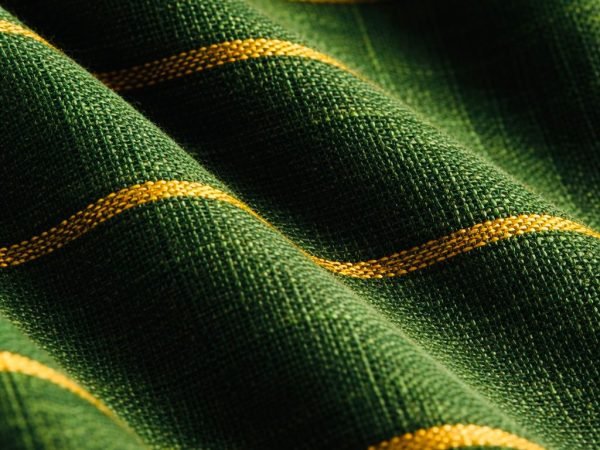
The Maheshwari saree is immediately recognisable by two features: its reversible border and its particular combinations of silk and cotton. The Maheshwari border is woven with a special technique that produces a different pattern on each side — one side shows a particular stripe or check, the other shows its reverse. This reversibility is unique to Maheshwari and is one of the tests of a genuine piece. The body of a Maheshwari saree is typically a plain or striped silkcotton blend, woven in the richest colours — deep indigo, forest green, terracotta, crimson — that are Maheshwar's signature palette.

Today, the Maheshwari weaving tradition is maintained by the Rehwa Society — a cooperative established in Maheshwar that has supported weavers and preserved the tradition for decades. The cooperative works with natural dyes, with organic fibre, and with designs that honour the original vocabulary of Maheshwari while responding to contemporary taste. Buying a Maheshwari saree is not just buying a beautiful garment — it is supporting a living weaving community on the banks of a sacred river.

Zari & Zardozi

Varanasi and Lucknow, Uttar Pradesh — gold and silver thread embroidery
WhatsApp Image 2026-03-24 at 10.41.03 PM
WhatsApp Image 2026-03-24 at 10.36.20 PM (2)
Zari & Zardozi

Zari and Zardozi represent the most opulent end of the Indian embroidery tradition — a tradition of working with metallic thread that arrived in India with the Mughal courts and became so thoroughly integrated into Indian textile culture that it is now inseparable from it. Zari is the metallic thread itself — originally made from real gold or silver drawn into wire and wrapped around a silk core, now made from copper wire coated with metallic salts or genuine silver. Zardozi — from the Persian words for gold and sewing — is the embroidery technique that uses this metallic thread to create designs of extraordinary richness on fabric.

Traditional Zardozi embroidery is worked with a hooked needle called an ari on fabric stretched tightly across a wooden frame. The metallic thread is worked from above and below the fabric simultaneously — one hand guiding the hook on the surface, one hand feeding the thread from beneath. The designs built up in this way can range from simple outlined motifs filled with chain stitch in metallic thread to fully three-dimensional sculptural embroidery in which the metallic thread is raised on padding to create designs that stand above the surface of the fabric. The finest Zardozi work, still practised in Lucknow and Varanasi, uses real silver and gold thread worked into patterns of extraordinary complexity.

Zari work in weaving — as opposed to embroidered Zardozi — is the metallic thread woven directly into the fabric during the weaving process, as in Banarasi brocade or Kanjivaram silk. This woven zari becomes part of the fabric's structure and cannot be separated from it. Embroidered Zardozi, by contrast, is applied after weaving, sitting on the surface of the fabric and creating a different kind of richness — raised, dimensional, catching and reflecting light from every direction. Both traditions share the same fundamental material — metallic thread — and the same fundamental ambition: to make cloth that carries the quality of precious metal.

Phulkari

Punjab — the flowering embroidery of the five rivers
WhatsApp Image 2026-03-24 at 10.41.03 PM
WhatsApp Image 2026-03-24 at 10.36.20 PM (2)
Phulkari

Phulkari means flower work — and the name captures the essence of this extraordinary embroidery tradition from Punjab. Phulkari is a form of embroidery worked in darning stitch on coarse handloom cotton or khaddar — the slightly rough, plain-woven fabric that is the traditional textile of Punjab. The embroidery is done from the reverse of the fabric, covering the ground so densely with bright silk thread that the finished piece appears to be made entirely of silk embroidery with the cotton ground barely visible. The patterns are geometric — diamonds, chevrons, interlocking shapes — built up from the precise horizontal and vertical placement of the darning stitch.

The tradition of Phulkari was historically practised by women of Punjab for their own families — mothers embroidering for their daughters' trousseaux, grandmothers embroidering gifts for new brides. The most elaborate form of Phulkari is the Bagh — meaning garden — in which the embroidery covers the entire surface of the fabric, creating a complete field of colour and geometry that is among the most visually spectacular of all Indian embroideries. A Bagh takes months or years to complete and was traditionally considered one of the most precious gifts a mother could give her daughter.

The colours of Phulkari are its joy. The silk thread used is dyed in the most intense, saturated colours — brilliant magenta, saffron yellow, peacock blue, emerald green, pure white — and these colours are placed against each other and against the dark cotton ground with an instinctive understanding of contrast and rhythm that has been accumulated over generations. A Phulkari piece in full bloom is one of the most joyful things in Indian textile art — a burst of colour and geometry that carries the energy of Punjab itself.

Kashmiri Sozni

Kashmir — the needle painting of the valley
WhatsApp Image 2026-03-24 at 10.41.03 PM
WhatsApp Image 2026-03-24 at 10.36.20 PM (2)
Kashmiri Sozni

Kashmiri Sozni embroidery is one of the most refined and demanding needle arts in the world. The word sozni refers to the fine needle used in this tradition — a needle so slender that it barely leaves a trace in the fabric it passes through. Sozni embroidery is worked on fine wool or pashmina shawls and fabric in a chain stitch so small and so even that the embroidery has the appearance of a woven pattern rather than a stitched one. A skilled Sozni artisan can make stitches so fine that a single centimetre of their work contains dozens of individual chain stitches, each one perfectly uniform.

The designs of Kashmiri Sozni embroidery draw from a vocabulary of extraordinary richness — the chinar leaf, the cypress tree, the lotus, the paisley or buta motif that has become one of the most recognisable motifs in world textile design. These motifs are worked in fine silk thread on the fabric ground, building up dense, interlocking patterns that cover the surface of the shawl or garment in layers of colour and form. The finest Sozni work is entirely bilateral — the same on both sides of the fabric — and a piece worked entirely in Sozni can take a single artisan more than a year to complete.

The Sozni tradition is practised almost exclusively by men in Kashmir — a historical anomaly in the world of embroidery, where the craft is usually the province of women. The embroiderers of Kashmir — concentrated in Srinagar and the surrounding villages — learn their craft from their fathers, typically beginning as children and spending years in apprenticeship before they are considered skilled enough to work on fine pashmina. A genuine Sozni-embroidered pashmina shawl is among the most precious textile objects made anywhere in the world today.

Gota Patti

Rajasthan — the gold ribbon work of the desert
WhatsApp Image 2026-03-24 at 10.41.03 PM
WhatsApp Image 2026-03-24 at 10.36.20 PM (2)
Gota Patti

Gota Patti is one of Rajasthan's most distinctive and dazzling embroidery traditions — a technique of applying strips of woven gold or silver ribbon to fabric to create patterns that catch and reflect light with extraordinary brilliance. The word gota refers to the metallic ribbon itself — a narrow strip of real or imitation gold or silver thread woven into a flat band — and patti means strip or leaf. The technique involves cutting the gota ribbon into various shapes — petals, leaves, circles, diamonds — and applying these metallic shapes to the surface of the fabric using a fine thread that catches the edge of each piece and secures it without puncturing the metallic surface.

Gota Patti is the embroidery of celebration. Its origins lie in the royal courts of Rajasthan — the great Rajput kingdoms of Jaipur, Jodhpur, and Udaipur — where the women of the court wore garments encrusted with gold ribbon work for festivals, weddings, and ceremonial occasions. The tradition was practised by skilled male artisans who worked in the palace workshops, and the designs they created — flowers, peacocks, geometric patterns, the teardrop shapes called keri — were both standardised and endlessly inventive, using the same vocabulary of shapes in constantly new arrangements.

Contemporary Gota Patti has become one of the most widely used embellishment techniques in Indian fashion, but the finest traditional work — executed with real gold ribbon on fine silk or organza — remains a specialist craft practised by a relatively small community of artisans in Jaipur. The combination of fine fabric and brilliant metallic ribbon creates an effect that is uniquely Indian — opulent but not heavy, festive but not crude, brilliant but not garish. A Gota Patti saree or dupatta in full sunlight is quite simply one of the most beautiful things that Indian craft can produce.

Leheriya

Rajasthan — the wave-dyed cloth of the desert
WhatsApp Image 2026-03-24 at 10.41.03 PM
WhatsApp Image 2026-03-24 at 10.36.20 PM (2)
Leheriya

Leheriya means wave — and the name captures the visual essence of this tie-and-dye technique from Rajasthan perfectly. Leheriya is created by rolling the fabric diagonally along its length into a tight cylinder and then tying it at intervals with thread before dyeing. When the fabric is unrolled after dyeing, the tied sections have resisted the dye and the undyed areas create a pattern of diagonal stripes across the fabric — stripes that follow the diagonal of the roll, creating the characteristic wave effect that gives the technique its name. The colours of Leheriya are the intense, saturated colours of Rajasthan: brilliant yellow, deep crimson, peacock blue, saffron orange.

The Leheriya tradition is concentrated in the city of Jaipur, where it has been practised for centuries as a festive and seasonal craft — traditionally associated with the monsoon season and with the festival of Teej, when women dress in Leheriya to celebrate the arrival of the rains. The connection between the diagonal wave pattern and the concept of waves and rain is not accidental — the visual vocabulary of Leheriya is deeply connected to the celebration of water in a desert landscape where rain is precious and rare.

A more complex variant of Leheriya is called Mothda — in which the fabric is rolled in two directions, creating a diamond or checked pattern rather than simple diagonal stripes. The finest Leheriya and Mothda work, executed in pure silk with multiple dye baths creating subtle gradations of colour within each stripe, is among the most beautiful of all Indian tie-and-dye traditions. A Leheriya saree in full sunlight — the diagonal stripes in brilliant contrasting colours flowing across the fabric — is pure visual joy.

Kalamkari

Andhra Pradesh and Telangana — the painted cloth of ancient India
WhatsApp Image 2026-03-24 at 10.41.03 PM
WhatsApp Image 2026-03-24 at 10.36.20 PM (2)
Kalamkari

Kalamkari — literally pen work — is one of the oldest textile painting traditions in India, with a history stretching back over three thousand years. The technique involves painting or blockprinting fabric with natural dyes derived from plants, minerals, and vegetables, creating designs of extraordinary richness and narrative complexity. There are two distinct schools of Kalamkari — the Srikalahasti style from Andhra Pradesh, which is entirely hand-drawn using a bamboo pen or kalam, and the Machilipatnam style which uses carved wooden blocks — and while both share the use of natural dyes and the same broad design vocabulary, their visual character is quite different.

The Srikalahasti Kalamkari tradition is the older and more demanding of the two — a tradition in which every line of every design is drawn freehand by the artist, without preliminary sketching or mechanical assistance. The designs draw from the great epics of India — the Ramayana and Mahabharata — and from the iconographic traditions of the Hindu temples of Andhra Pradesh. Figures of gods, scenes from mythology, the great battles of the epics — all rendered in the characteristic Kalamkari style, with its bold outlines, its rich earth colours, and its extraordinary narrative density. A single Kalamkari saree pallu can contain dozens of individual figures and scenes.

The natural dyes used in Kalamkari create a palette that is unlike any other in Indian textile art: the deep rust of myrobalan, the clear blue of indigo, the warm brown of tamarind seed coat, the soft yellow of pomegranate rind. These colours are applied in sequence — the fabric passing through multiple dye baths, each colour fixed before the next is applied — in a process that can take weeks for a complex piece. The result is colours that have a depth and warmth that synthetic dyes cannot replicate, colours that seem to glow with an inner light rather than sitting on the surface of the fabric.

Every craft on this page has a garment in our shop.

Every garment in our shop carries the story of its craft.

Shopping Cart
Scroll to Top