

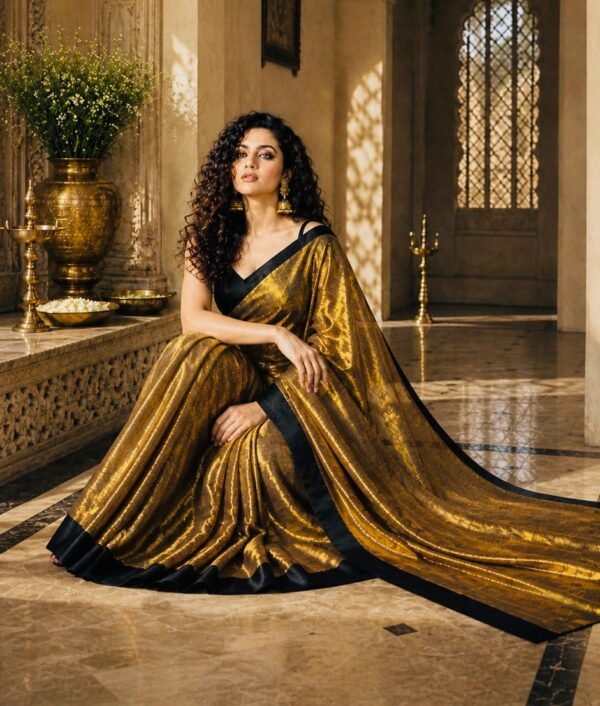
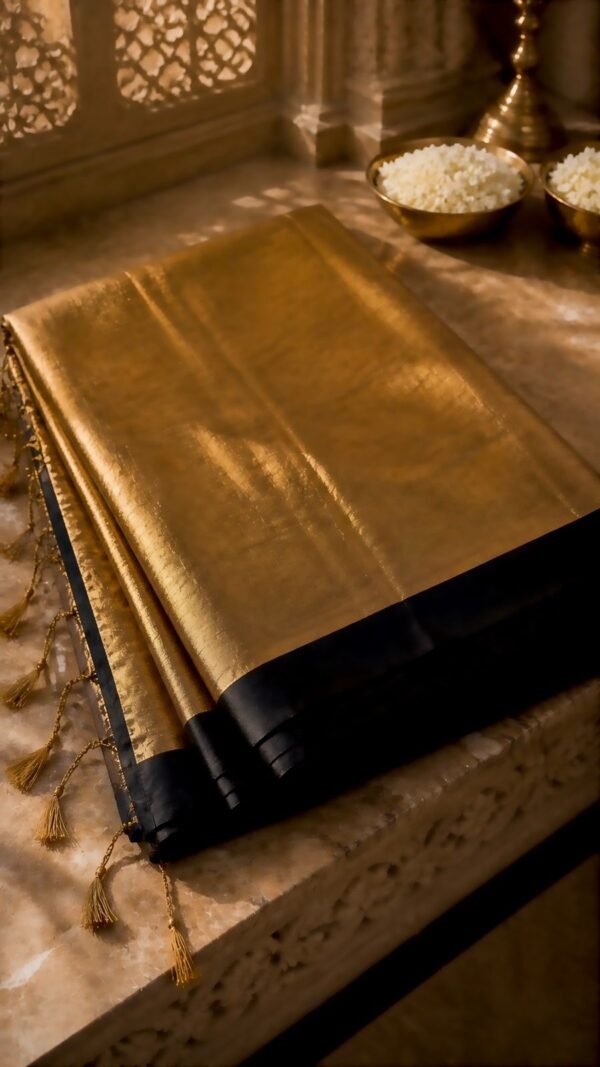










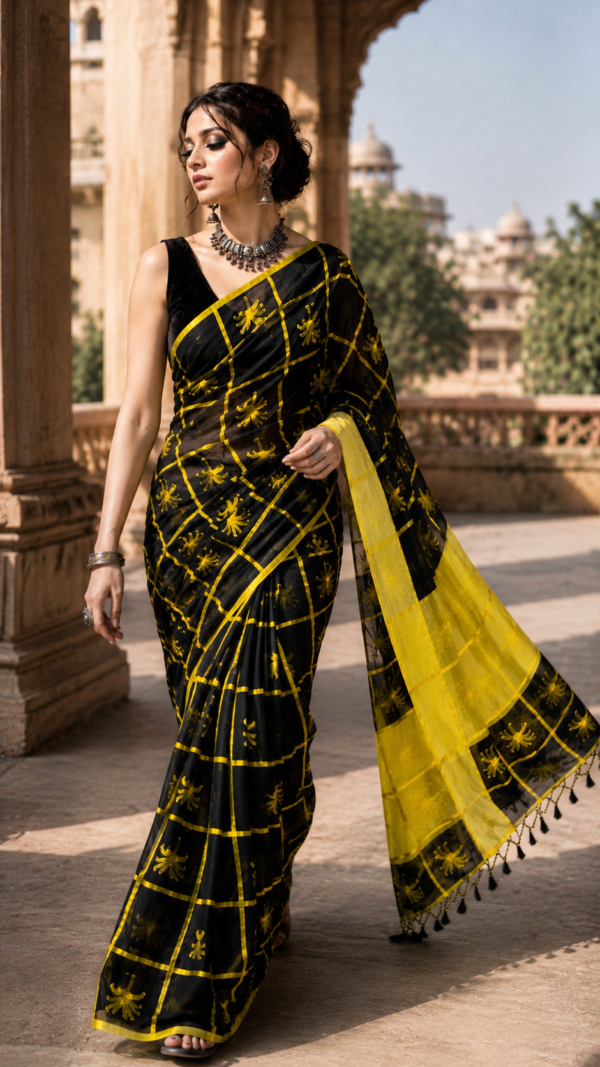
RagaMul Cotton Tissue Saree in Antique Gold with Black Border
Sarees₹3,200.00
& Free ShippingA raga is a climate.
A specific hour. A specific quality of light.
A feeling the body recognises before the mind names it.
The Bengali weaver counted threads the width of a hair.
Then laid gold between them.
Thread by thread. At the loom. Before the first row was finished.
The fabric arrived already knowing what it was.
The black border speaks once.
Then stops.
The weaver left nothing after it.
A raga ends the same way.
Mul cotton is Bengal’s finest weave tradition — the cotton the Mughal emperors called woven air, so fine the weavers counted individual threads, each the width of a human hair. The finest Dhaka counts reached 1,800 threads per inch. This saree is woven from that cotton.
Tissue weaving builds gold into that foundation at the loom. The zari threads — flat metallic, mirror-edged — are laid into the warp and weft as the fabric is constructed. The shimmer is structural. The fabric arrived from the loom already glowing.
The finished cloth holds light differently depending on the source. Diya flame, afternoon sun, the warm tungsten of a wedding mandap — the zari reads each one and returns something specific. The cotton breathes underneath. The gold holds above. Together they produce a fabric that is both honest and luminous.
The black border is a decision made before the loom was set. Against all that gold, the weaver chose a single clean line of black — the discipline that makes the gold possible to look at. The saree is named Raga. A raga creates a specific climate: a time of day, a quality of light, a feeling the body already knows. This gold, this weight, this border, this hour. Worn.
Bengal has been weaving cotton since before Europe had looms. The Dhaka tradition produced muslin so fine the Mughals gave it names: woven wind, running water, evening dew. The weavers counted threads individually. The finest counts reached 1,800 threads per inch. Mul cotton comes from this discipline — fine-count, loosely woven, air-light. This is the foundation this saree is built on.
Tissue weaving introduces gold into that foundation at the point of construction. The weaver sets up the loom with zari alongside the cotton — flat metallic thread running through the warp and weft in a rhythm so consistent the finished fabric appears to glow from within. The gold was present from the first row. It is part of the architecture of the cloth.
The black border on Raga is woven separately and joined to the gold body with precision — no transition stripe, no softening. The line between gold and black is exact. A raga needs the moment of silence at its end. The notes before the silence are what the listener carries home. The weaver of this border understood that.
Wash: Dry clean recommended for long-term preservation of the zari tissue weave.
- Hand wash: Cold water, mild detergent — do not soak, do not wring. The zari is woven into the structure; rough handling distorts the metallic thread.
- Do not: Bleach, harsh detergents, or machine wash. The zari and the cotton both require gentle chemistry.
- First wash: Dry clean only. After the first clean, careful hand washing is acceptable.
- Iron: Low heat on the reverse side. Direct heat on gold tissue will damage the metallic thread.
- Dry: Always in shade. Direct sun oxidises zari over time. Store the light this saree carries.
- Store: Folded in a clean muslin cloth, away from humidity. Tissue paper between the folds prevents tarnishing and crease-set.
| Dimensions | 5.5 cm |
|---|---|
| Saree Length | 5.5 metres |
| Blouse Piece Length | 0.8 metres |


Reviews
There are no reviews yet.