
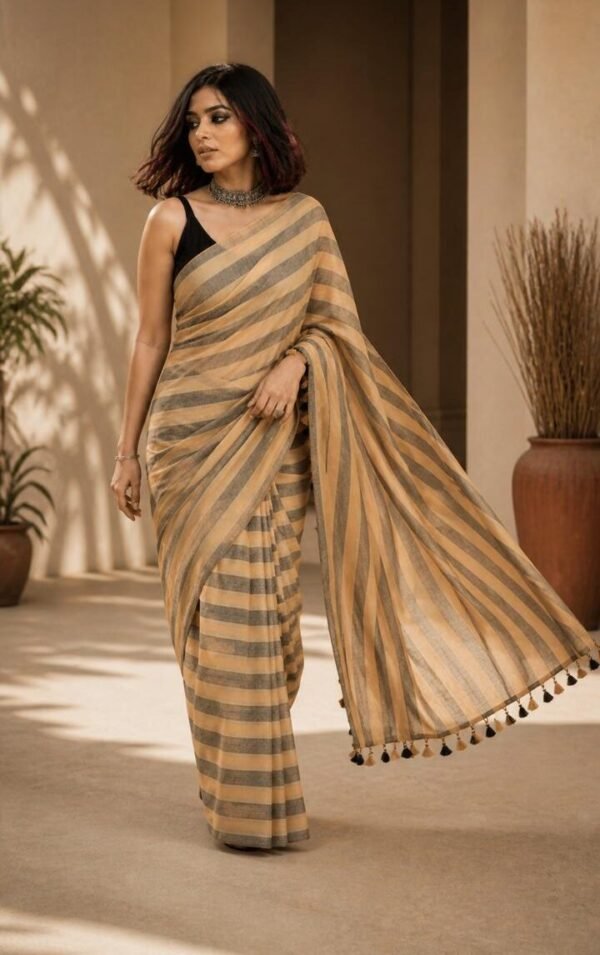
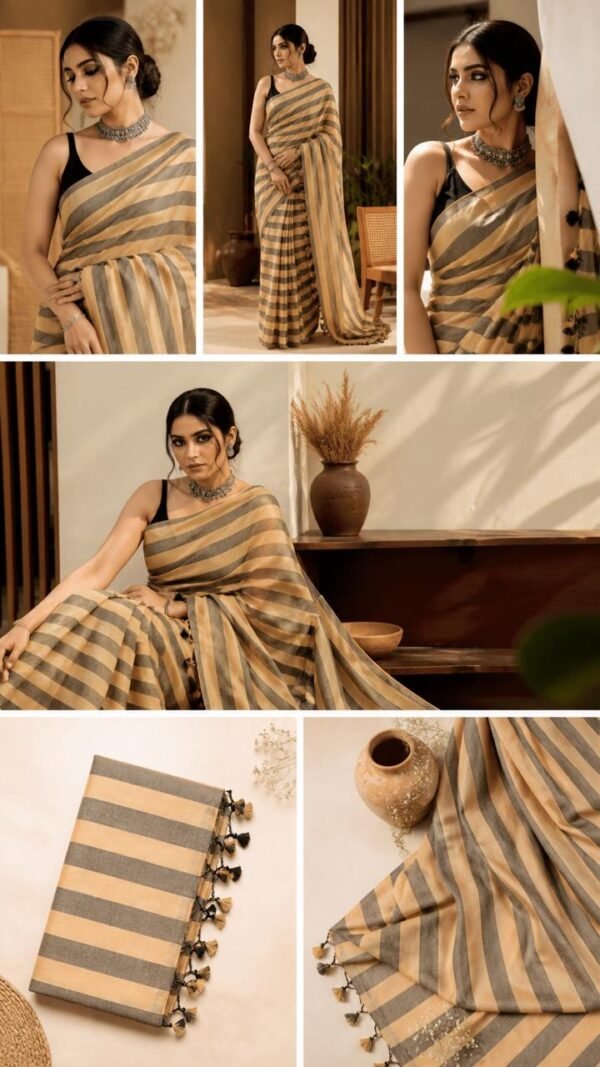
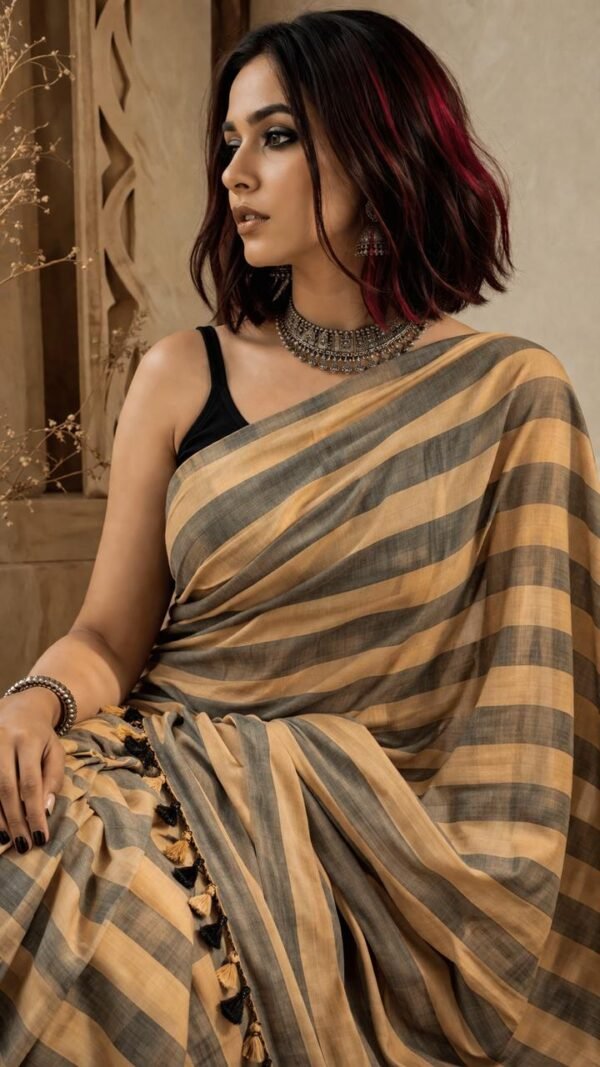
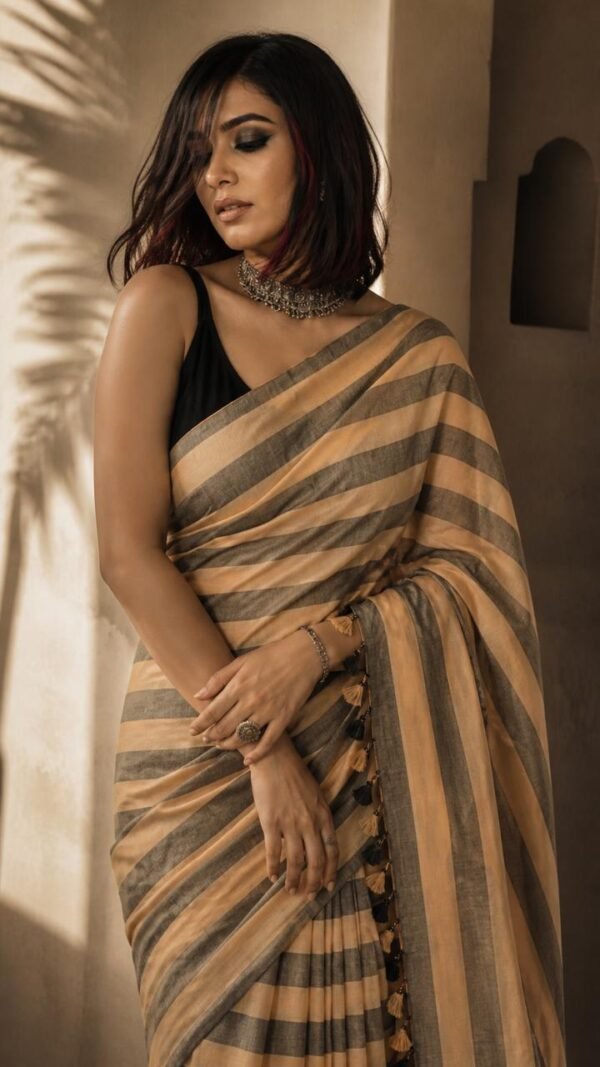



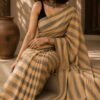
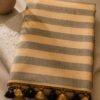
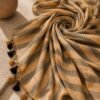
Rekha Handloom Cotton Saree in Camel and Charcoal Stripe
Sarees₹2,200.00
& Free ShippingThe weaver made no decisions about where to put the design.
The design is everywhere.
Camel and charcoal.
The colours of the Indian earth at its most permanent.
The stripe has no beginning and no end.
It runs from the first thread to the last,
without asking for permission.
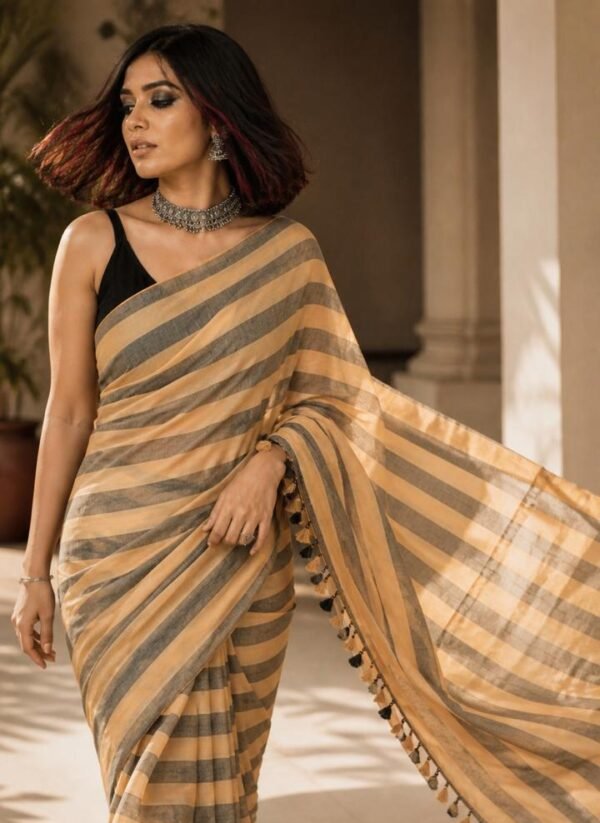
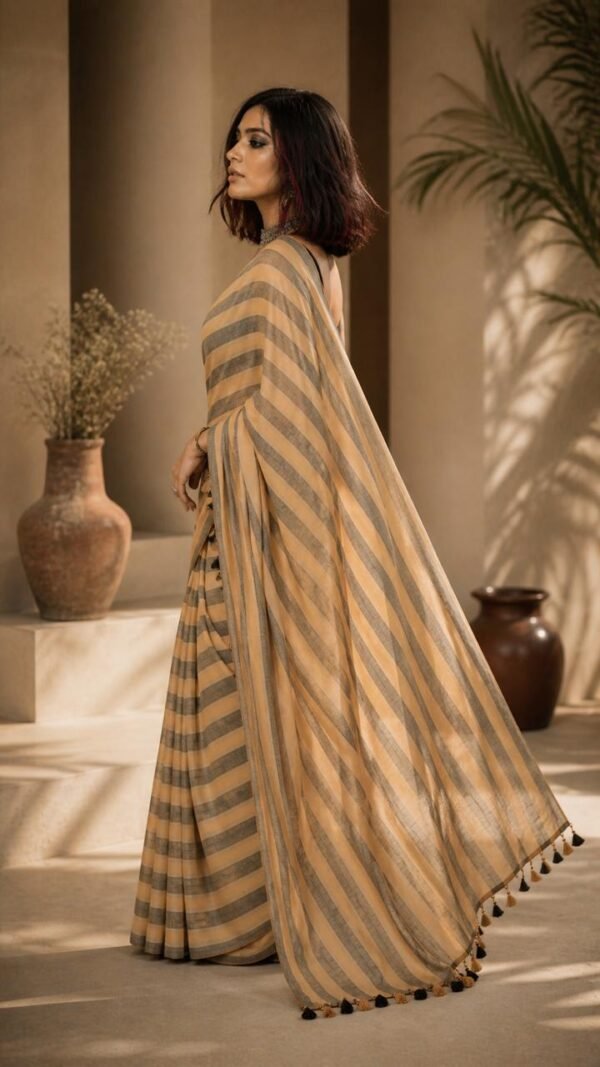
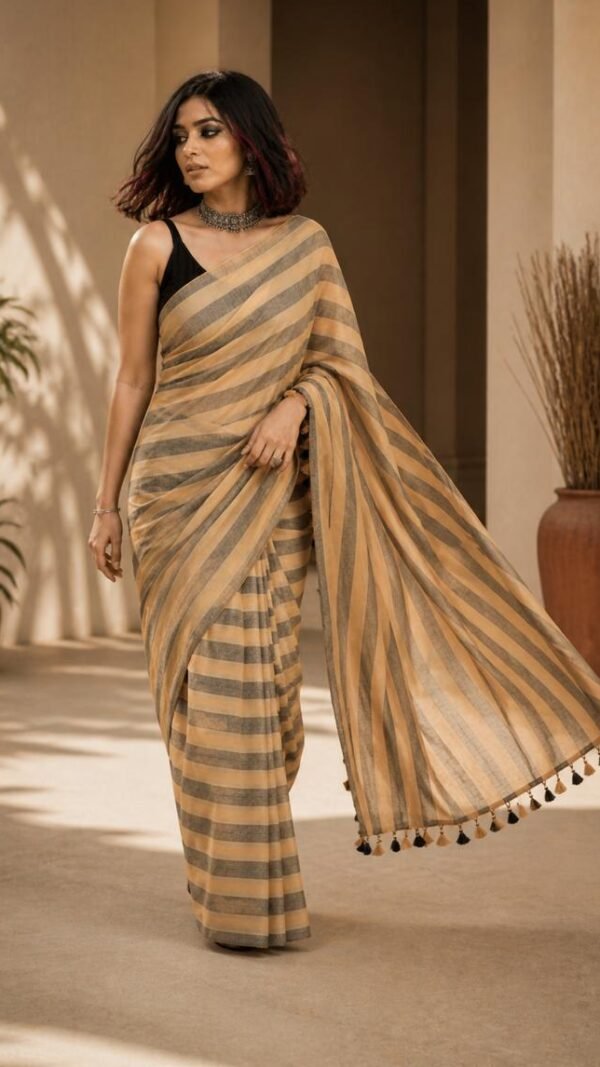
The tassels move with the woman.
The rest of the saree follows.
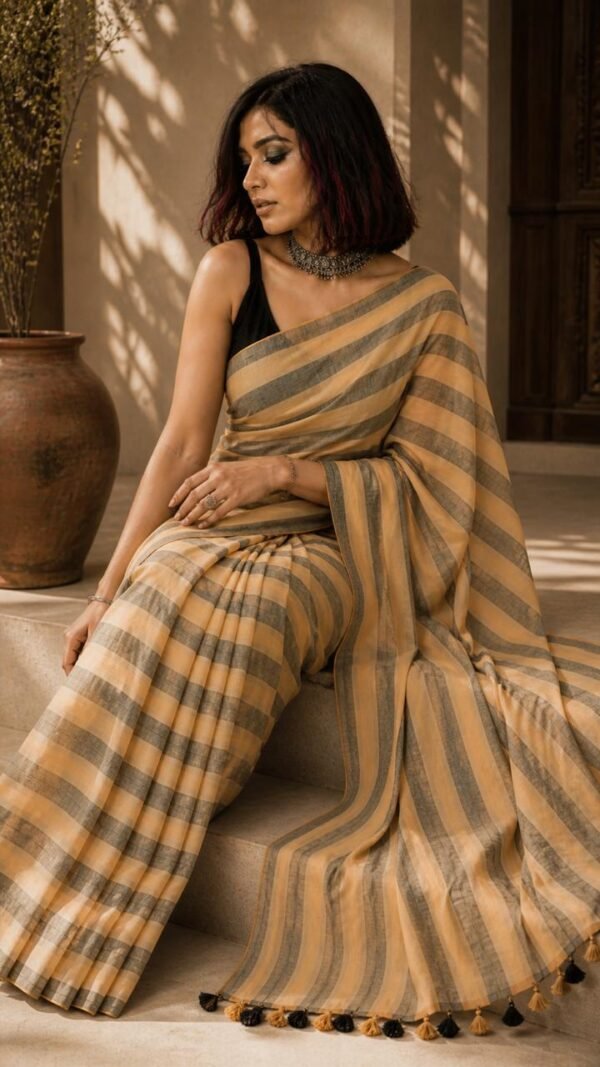
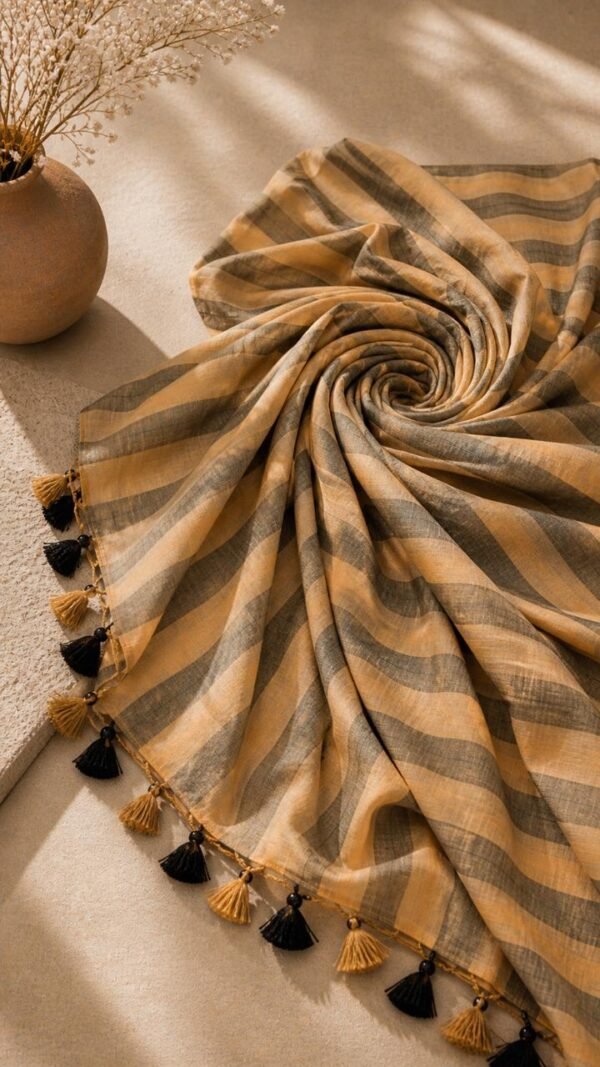
The stripe saree is the most structurally honest thing the handloom makes. There is no motif to design, no pallu to plan separately, no border to join after the fact. There is only the warp, the colour sequence, and the discipline to hold it exactly — camel and charcoal alternating in even bands — across the full 5.5 metres without interruption.
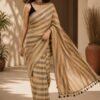
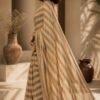
Bengal handloom cotton is the right material for this kind of work. The weave is tight enough to hold the stripe edge clean — where camel meets charcoal, the line is exact. The cotton is fine enough to move. In the image, the pallu is in motion; the fabric has caught the air and held it. A heavier cotton cannot do that. This one does it naturally.
The colours are camel and charcoal. Both are extracted from the Indian earth — one the colour of the dry riverbed in summer, one the colour of the monsoon sky before the rain arrives. Together they make a palette that reads as contemporary as it is ancient. Neither colour is trying to stand out. Both colours succeed completely.
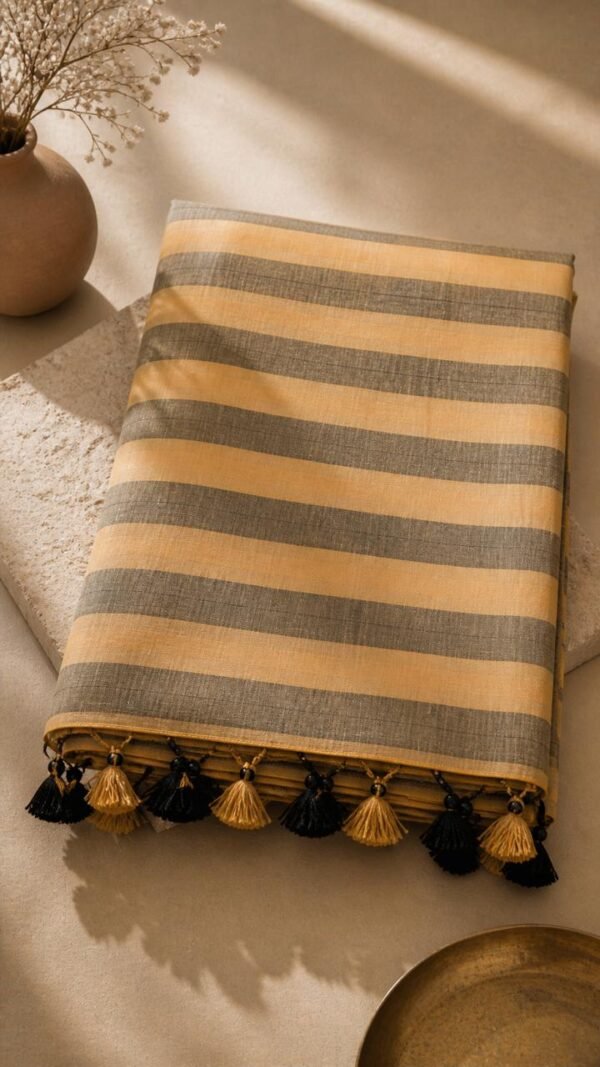
The pallu tassels are bicolour — black and tan, knotted by hand and weighted. They swing when the woman walks. They are the only part of this saree that does not hold still. The name Rekha means line. It also means the path something has made through space. This saree is for a woman in motion. The pallu follows.
The stripe is the first pattern the handloom ever made. Before supplementary weaving, before block printing, before embroidery — there was the stripe. Two colours in the warp. The loom does the rest. The discipline is in making the stripe hold: the colour count exact, the tension even, the bands equal from the first centimetre to the last.
Bengal handloom cotton has been producing stripe work for centuries. The tradition is called pat or patli — the striped weave — and it has dressed everyone from rural Bengal to the urban Indian woman who rediscovered it in the last decade and decided it was exactly what she needed. The appeal is permanent: a pattern with no period, no occasion, no region. A stripe works everywhere the woman takes it.
The camel and charcoal palette in this saree is a contemporary choice made in a classical technique. The Bengal weaver who made Rekha set up the warp with these two colours in the proportion visible in the finished cloth, and wove it straight through — no pattern change, no variation, no pallu differentiation. The stripe runs end to end. The tassels were knotted at the hem by hand after the weaving was done — each one a bicolour knot in black and tan, weighted, hung at even intervals along the pallu edge.
| Dimensions | 5.5 cm |
|---|---|
| Saree Length | 5.5 metres |
| Blouse Piece Length | 0.8 metres |
Reviews
There are no reviews yet.