
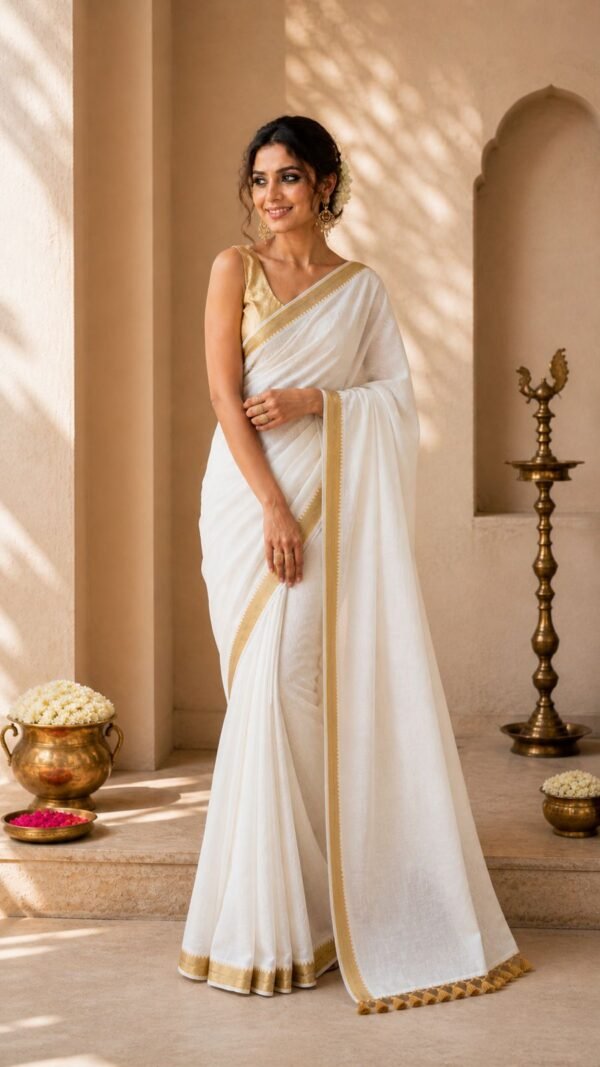
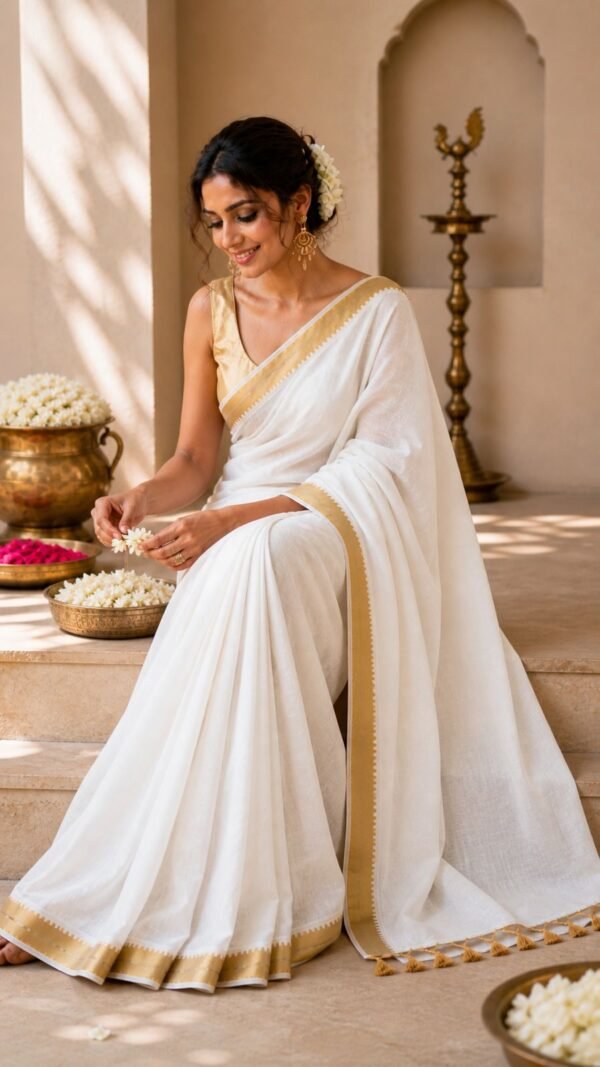





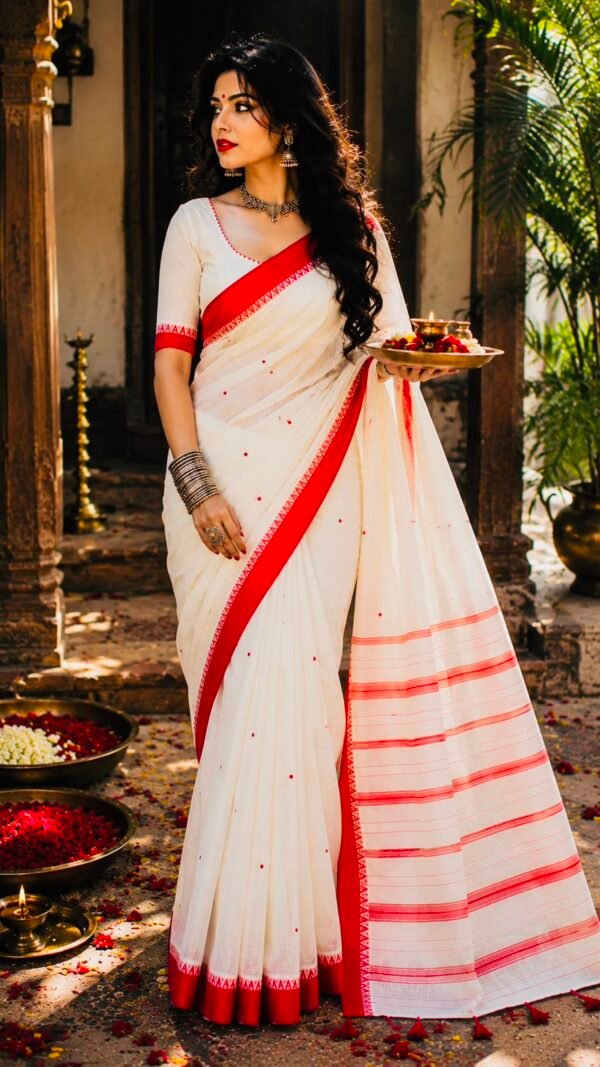
Ujjwala Mul Cotton Kasavu Saree in Ivory White with Gold Zari Border
Sarees₹2,800.00
& Free ShippingKerala women do not wear white because it is plain.
They wear it because in Kerala, white carries everything.
The white of Onam morning.
The white of the threshold freshly laid with kolam.
The white that holds every beginning the culture has ever honoured.
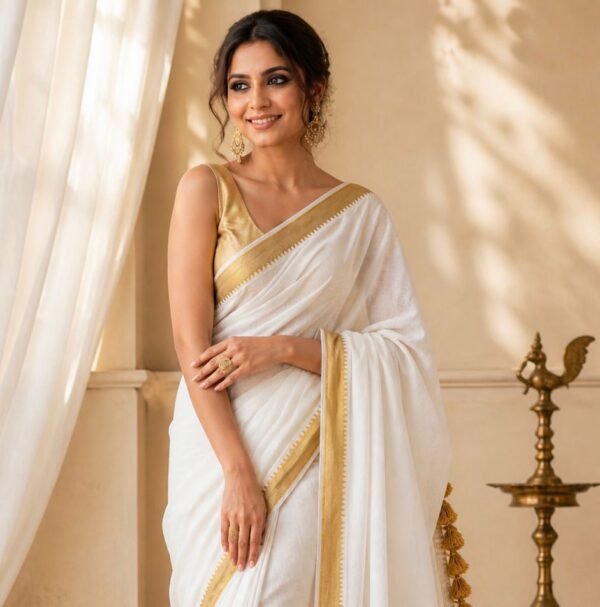
The kasavu gold is the answer the white has been building toward.
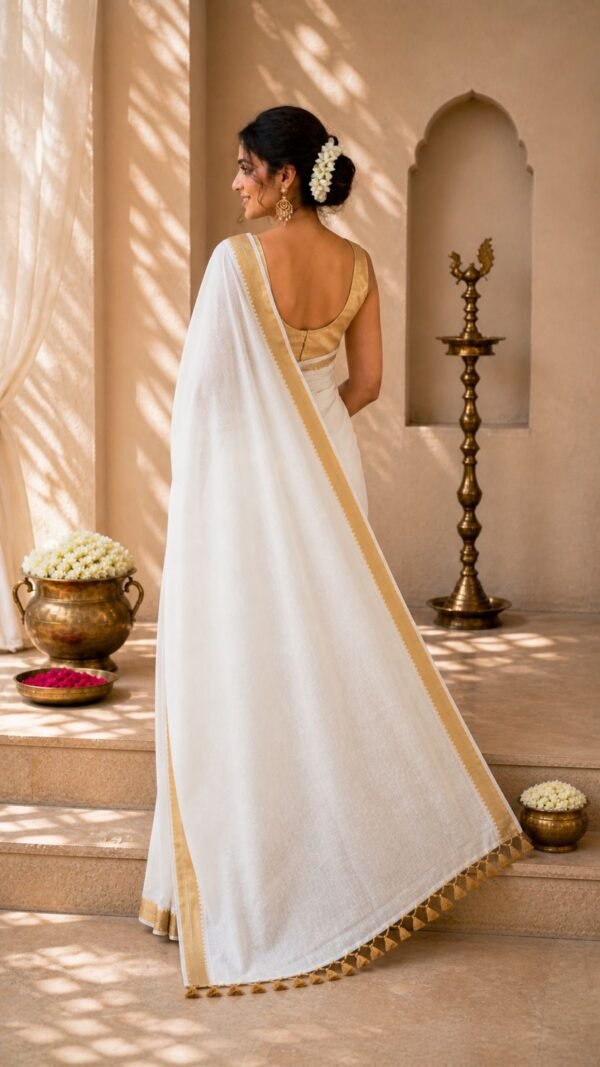
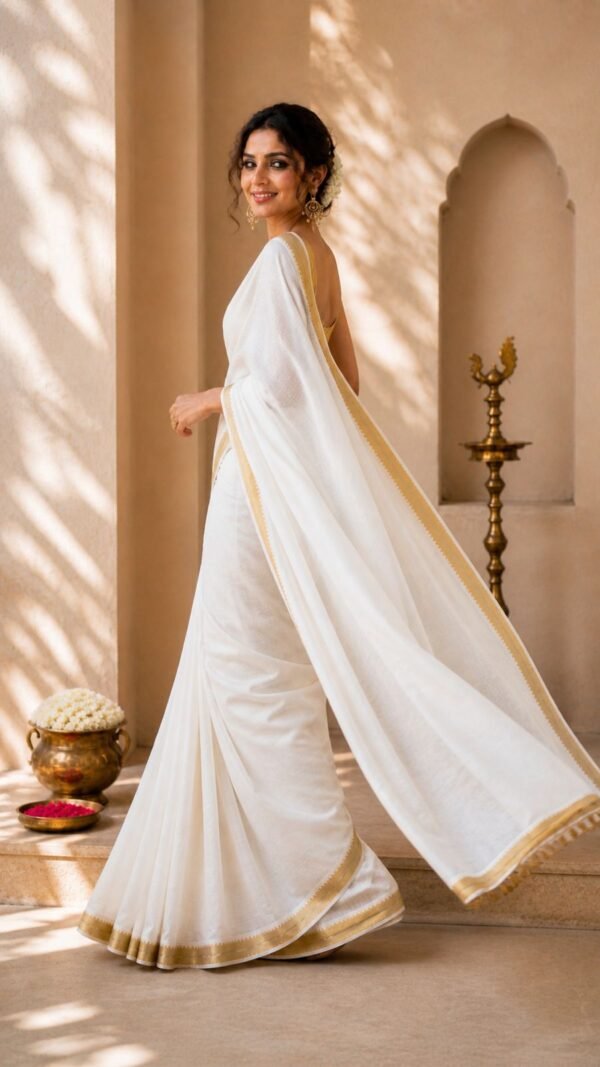
The tassels are the only part of this saree that moves.
They announce the woman walking.
Everything else holds still.
Kasavu is the name Kerala gives to the gold zari border that has run along the edge of its white sarees for centuries. It is the border worn at Onam, at temple processions, at every occasion the culture marks as significant. The word itself means gold thread work. This saree carries that border — the zari woven into the hem and the running border at the Kerala handloom, thread by thread, as the fabric was made.
Mul cotton makes this tradition breathable. The Kerala kasavu saree has traditionally been woven in heavier cotton — the set mundu cotton that holds its shape and its drape with authority. In mul, the same kasavu gold sits on a fabric so fine it moves in the air. The white reads differently at different hours: warm ivory in morning light, pure white under fluorescent temple lighting, luminous against the flame of a nilavilakku.
The pallu tassels are gold and weighted. This is a deliberate detail from the Kerala weaving tradition — the kunjalam, the tassel cluster that swings at the end of the pallu when the woman moves. They are not decoration. They are the announcement of arrival.
The name Ujjwala means radiant in Sanskrit. It is the quality of light that comes from within a thing, from the material itself, rather than from what falls on it. This white, in this light, is that.
Kerala has been weaving white cotton with gold borders for longer than the tradition has a recorded beginning. The kasavu saree — the white saree with the gold zari border — is the ceremonial dress of Kerala women, the saree worn at Onam, at Vishu, at temple festivals, at weddings. The weavers who make it are concentrated in Balaramapuram and Chendamangalam — two weaving clusters in Kerala whose names are synonymous with kasavu.
The gold border is not applied to the white cotton. It is woven into the cotton at the loom. The weaver sets up the warp with cotton and zari in the proportion the pattern demands, and the border grows with the fabric — gold and white inseparable from the first thread. The precision required for the kasavu border is significant. A miscount in the zari thread changes the pattern across the full length of the saree.
This saree brings that tradition into mul cotton — the fine-count Bengali weave that carries weight and drape with remarkable lightness. The kasavu border and the pallu tassels are intact. The fabric underneath is lighter than the tradition usually allows. The result is a saree that wears like air and looks like ceremony.
- Wash: Dry clean strongly recommended — both for the white cotton and for the zari border and pallu tassels.
- Hand wash: If hand washing: cold water only, mild detergent. Wash the white body and the zari border gently. Do not scrub the border or wring the tassels.
- White care: Wash separately from all coloured garments. White mul cotton can pick up colour from other fabrics in water.
- Do not: Bleach yellows cotton permanently. For any staining on the white body, consult a dry cleaner.
- Iron: Medium heat on the white body. Avoid ironing directly on the zari border or the tassels. Press the border from the reverse side.
- Dry: Always in shade. Sun-drying white cotton causes it to yellow over time. This white was made to last — store it from the light that would change it.
- Store: Folded in a clean white muslin cloth. Keep away from other coloured garments. Humidity tarnishes zari; store in a dry, cool place.
| Dimensions | 5.5 cm |
|---|---|
| Saree Length | 5.5 metres |
| Blouse Piece Length | 0.8 metres |
Reviews
There are no reviews yet.