
Megh Linen Cotton Ikat Saree in Navy Blue with Multicolour Pallu and Tassels
Sarees, Suits & Kurtas₹3,200.00
& Free ShippingMegh means cloud.
The specific Sanskrit word for the rain cloud
that carries the monsoon on its shoulders
and does not ask the sky for permission.The ikat pattern is not applied to this fabric.
It is woven into it.
The white feathers across the navy were dyed
into the thread before the thread was woven,
the pattern decided before the loom was set.The body is the cloud.
The pallu is what the cloud carries:
yellow, red, olive, blue —
the colours that come after the rain.
Ikat is a resist-dyeing technique applied to thread, not to fabric. The weaver ties sections of the weft thread in a resist pattern before the thread is dyed, then removes the ties after dyeing. The tied sections remain the original colour; the untied sections take the dye. When this dyed thread is woven into the fabric, the pattern appears — but not with the clean edges of a print or an embroidered motif. The ikat edge is feathered, slightly blurred, because the resist never covers the thread boundary with perfect precision and because the thread shifts infinitesimally during weaving. This blur is the technique’s defining characteristic. It is the proof that the pattern was in the thread before the fabric existed.
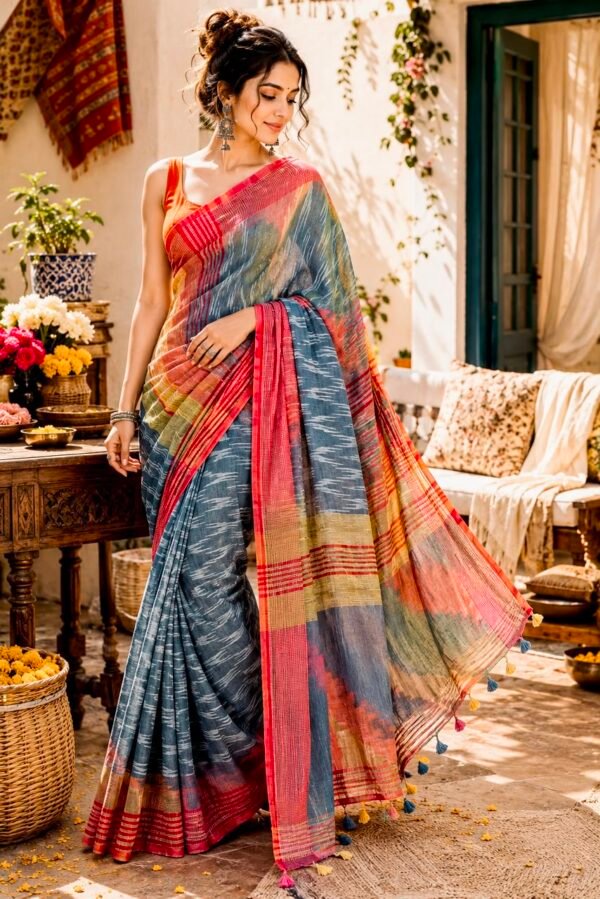
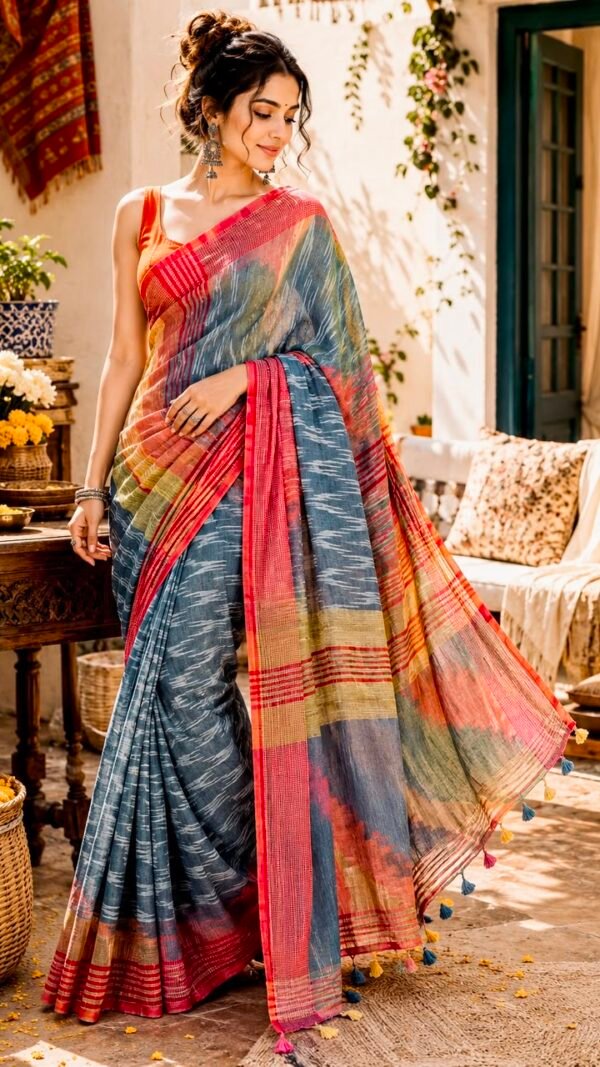
The navy body of this saree carries a weft ikat pattern in white and lighter blue — the characteristic horizontal brush-stroke forms visible across the full body, each one blurred at its edges with the specific feathering that identifies ikat. On the linen-cotton base, the feathering reads as particularly clean: the linen component in the blend holds the thread position during weaving more precisely than soft cotton alone, so the ikat edge has the feather without losing the form. The navy ground is deep and consistent; the white ikat pattern above it reads as marks on water, as brush strokes on the surface of a lake just before the rain reaches it.
The pallu breaks from the body with complete intention: where the body is deep navy with quiet white ikat, the pallu carries horizontal weft stripes in yellow, olive, red, pink, and blue — the full colour palette that the navy body held in reserve, released at the pallu in a single wide-band sequence. The transition from the single-colour ikat body to the multicolour striped pallu is the saree’s compositional logic: the body is the cloud; the pallu is what the cloud carries. The multicolour tassels at the hem — yellow, pink, blue — carry the three strongest palette colours of the pallu beyond the fabric edge.
The setting in the reference images is a Rajasthani courtyard rich with flowers — marigolds in baskets, scattered daisy and rose petals on the stone floor, a wall-hung Phulkari textile in the background. The woman is smiling: the only saree in the collection photographed with the model’s full expression. The name is Megh. The rain cloud before it breaks.
Ikat weaving in India has two great centres: Odisha, where the Sambalpuri tradition produces cotton ikat in both warp and weft, and Andhra Pradesh/Telangana, where the Pochampally tradition produces some of the world’s finest silk and cotton double-ikat. Both traditions share the same fundamental technique: the resist-dyeing of thread before weaving, the pattern built into the yarn before the loom is set. The weaver who makes an ikat saree makes two decisions — first the design, which determines how the thread is tied and dyed, and second the weaving, which determines how the dyed thread is placed on the loom. Both decisions must be correct for the pattern to appear.
The weft ikat on this linen-cotton saree is applied to the weft thread only — the horizontal threads that run across the width of the fabric. The warp threads are the solid navy ground; the weft ikat threads, with their tied resist sections, are woven across the warp at each pass, the ikat sections appearing as the horizontal brushstroke forms visible on the finished body. The linen component in the linen-cotton blend adds structural precision to the weave: linen’s natural stiffness keeps the weft thread position more stable during weaving than soft cotton, producing ikat edges that are feathered without being blurred beyond legibility.
The multicolour pallu is a separate weaving construction: the weaver changes the weft thread colour at the pallu section, building the wide horizontal stripe bands one at a time as the pallu progresses. For Megh, each stripe is a single saturated colour — yellow, olive, red, pink, blue — introduced at the pallu boundary and maintained for the stripe width. The red running border carries zari lines in fine gold, visible as the border’s metallic edge. The multicolour tassels are attached by hand at the pallu hem after weaving. Each tassel matches one of the pallu stripe colours.
• Wash: Hand wash in cold water with a mild detergent. The ikat resist-dyed thread and the multicolour pallu stripes are each different dye lots; cold water protects all of them simultaneously.
• First wash: Wash separately. The deep navy and the multicolour pallu stripes may each release slight colour on the first wash. Normal. Keep away from light fabrics.
• Ikat body: Do not scrub the navy ikat body. The weft ikat pattern is structurally woven in and will not wash out, but mechanical abrasion can affect the feathered edge definition over time.
• Tassels: Handle the multicolour tassels gently. Each tassel is a different colour; they may bleed onto each other if wet together under pressure. Lay flat and separate to dry.
• Do not: Machine wash or bleach. The multiple dye lots in the ikat thread, the pallu stripes, and the tassels all require gentle handling.
• Iron: Medium heat on the reverse side. The linen component in the blend benefits from ironing while slightly damp. Avoid ironing the tassels directly.
• Dry: In shade. The deep navy and the multicolour pallu colours are all susceptible to fading under sustained UV exposure.
• Store: Folded in clean muslin. Tissue paper between folds. Keep away from direct light.
Related products
-
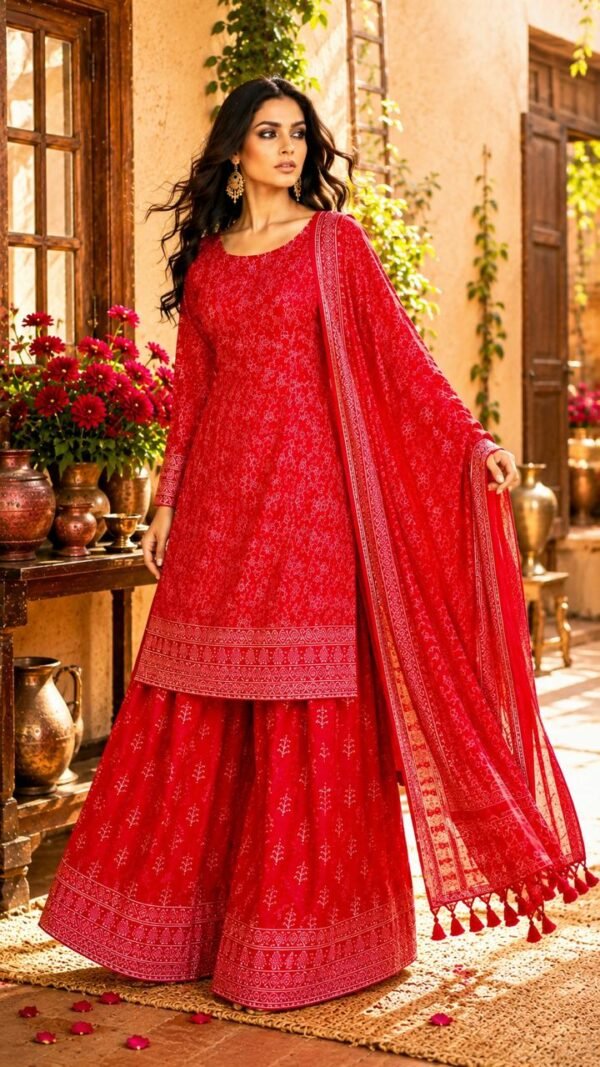
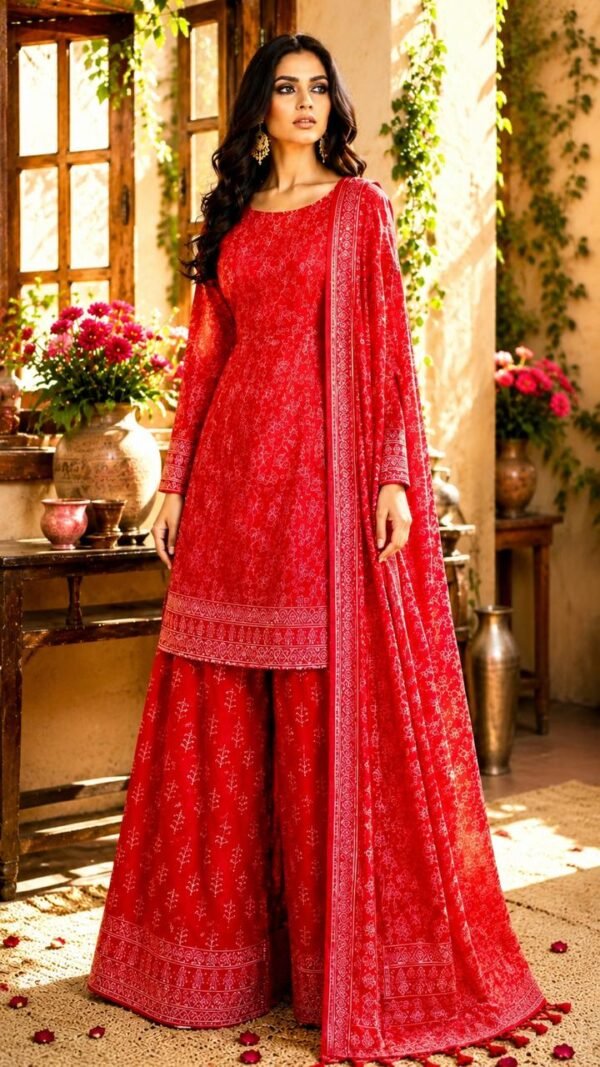
Gulmohar Chanderi Kurta and Cotton Sharara Suit Set in Crimson with Zari Border
Suits & Kurtas ₹4,200.00 Add to cart -
Gulmohar Chanderi Kurta and Cotton Sharara Suit Set in Crimson with Zari Border
Suits & Kurtas ₹4,200.00 Add to cart
Reviews
There are no reviews yet.