
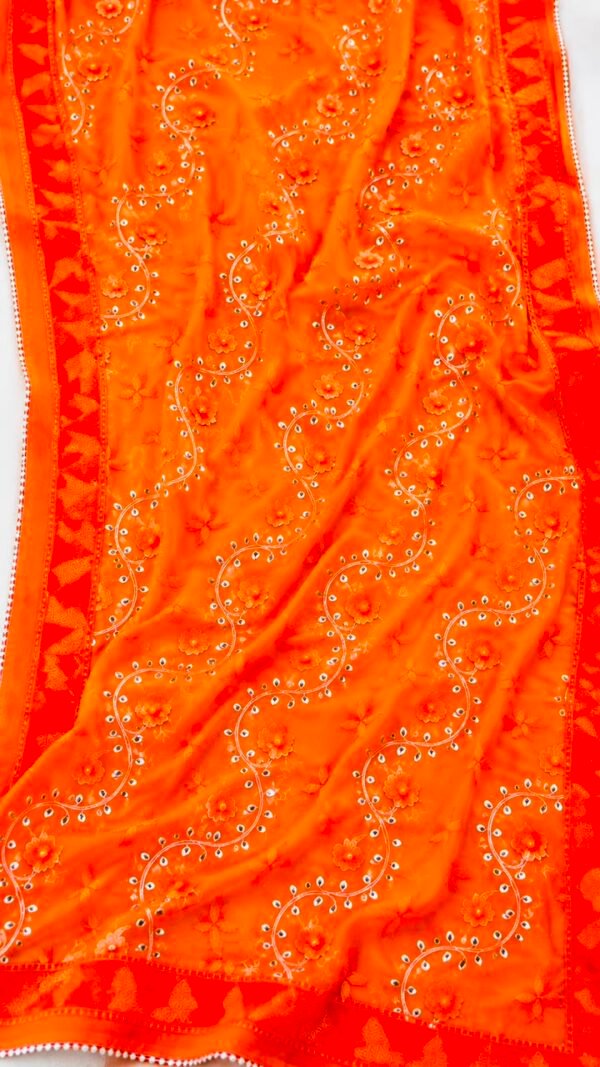
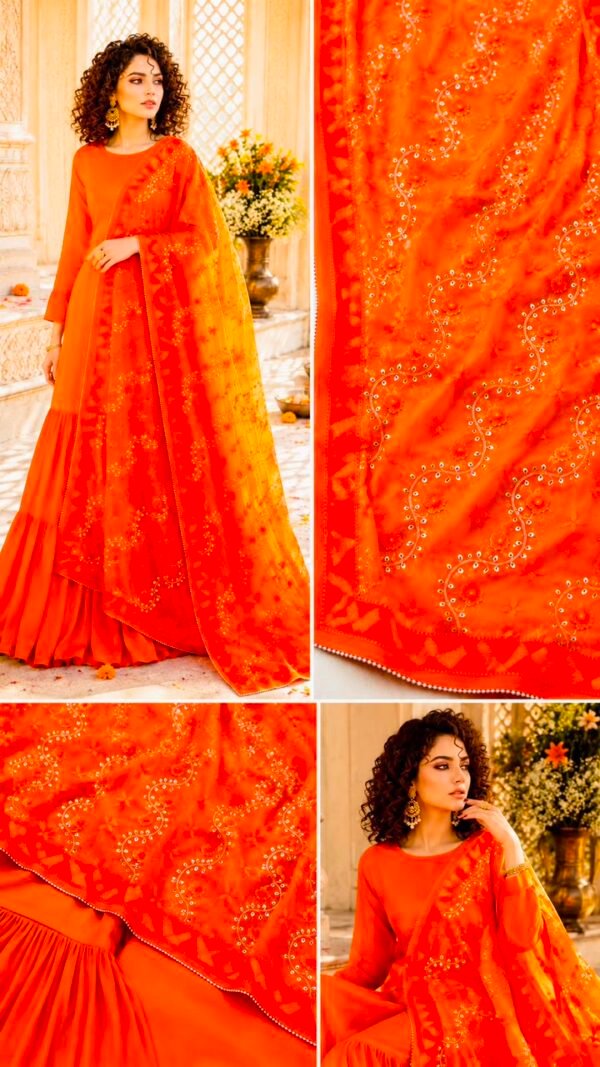



NoorChiffon Dupatta in White with Phulkari Hand Embroidery in Turquoise
Sarees₹8,250.00
& Free ShippingNoor means light.
The Urdu word for the specific light
that does not come from the sun
but from the thing that holds it —
the white cloth that has been embroidered
until the embroidery itself becomes luminous. Phulkari means flower work.
The Punjab needlewomen have been making it
for celebrations, for weddings, for daughters
going from one home to another.
The colour chosen for this one is turquoise —
the colour that travels furthest in light.
On chiffon, the Phulkari moves.
The geometric diamonds float
rather than sit.
The weight of the embroidery
and the lightness of the chiffon
are a conversation the cloth has been having
every time it has been lifted.
Phulkari means flower work: the hand embroidery tradition of Punjab, worked on cotton cloth in bright silk or cotton thread, the running stitch crossing and filling the geometric forms from the reverse side until the front surface is covered in colour. The Phulkari tradition is among the oldest in North India — documented from the 15th century, practised continuously in the villages of Punjab as the embroidery that women made for celebrations: for themselves, for their daughters, for the ceremonies that moved a woman from her parental home to her marital one. The colours chosen for Phulkari are always the most saturated available: the tradition does not moderate its colour choices.
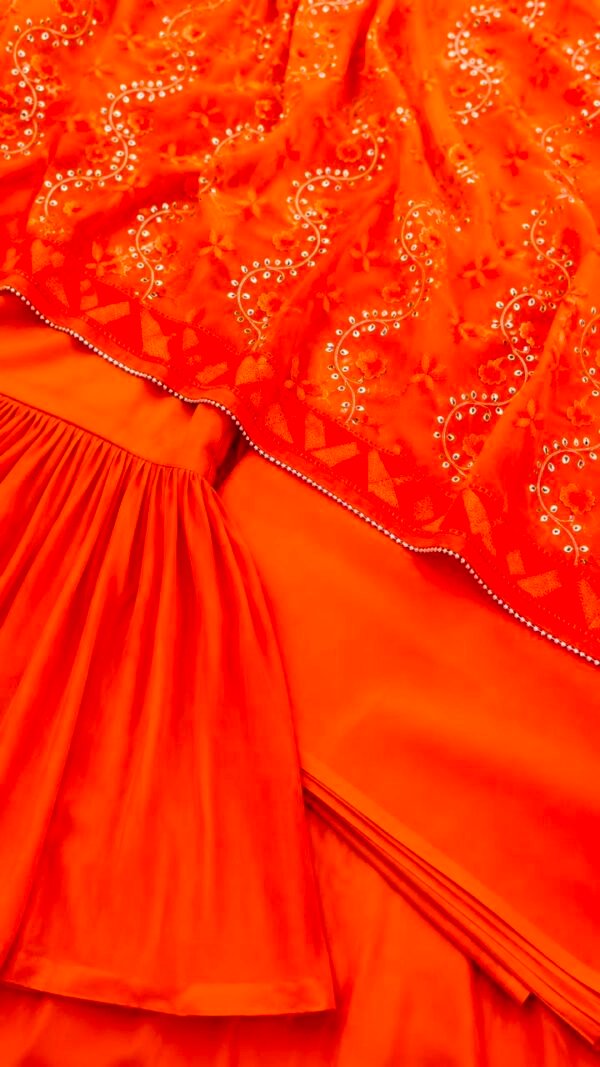
The turquoise on this white chiffon is the Phulkari at its most contemporary: bright, clean, and at maximum electric saturation. The geometric diamond and square motifs of the border carry the traditional Phulkari vocabulary — the same forms that have appeared in Punjab embroidery for centuries, now in the specific turquoise that reads as bright against white even at the furthest viewing distance. The border covers the full dupatta width in a dense geometric band: squares within squares, diamond forms, and running geometric sequences in the bright turquoise thread. Across the white chiffon body, small scattered buti — individual embroidered flower motifs in the same turquoise — establish the Phulkari vocabulary across the full surface, each one placed at generous intervals so the white ground between them is as present as the buti.
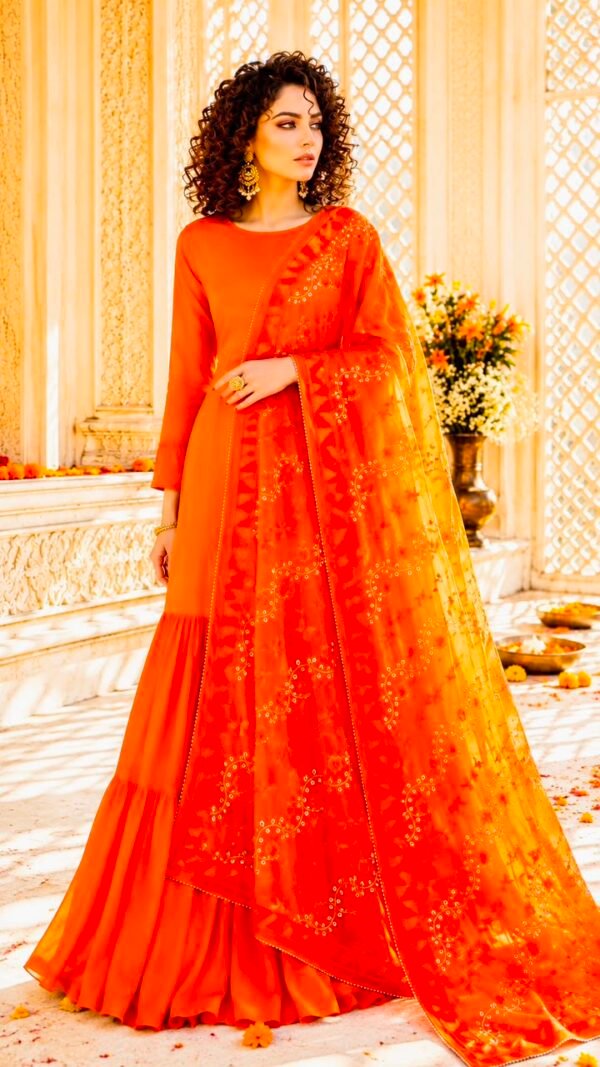
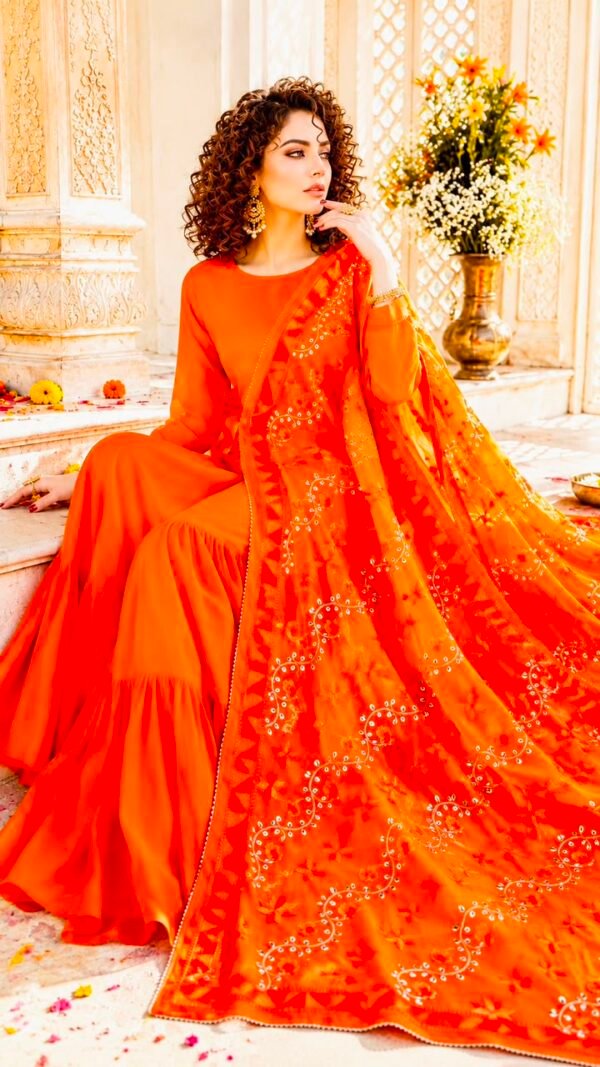
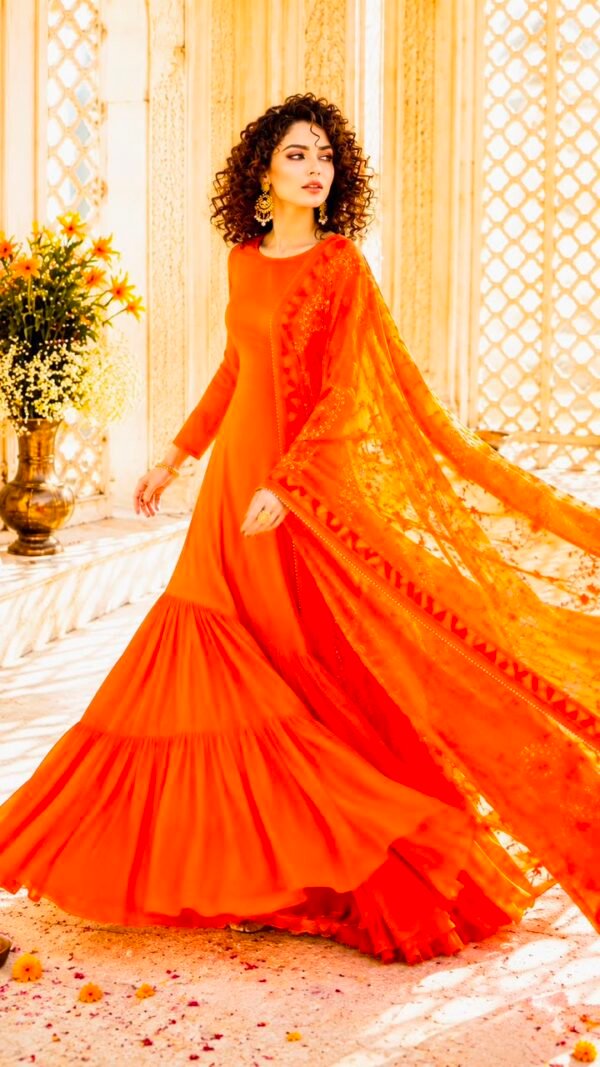
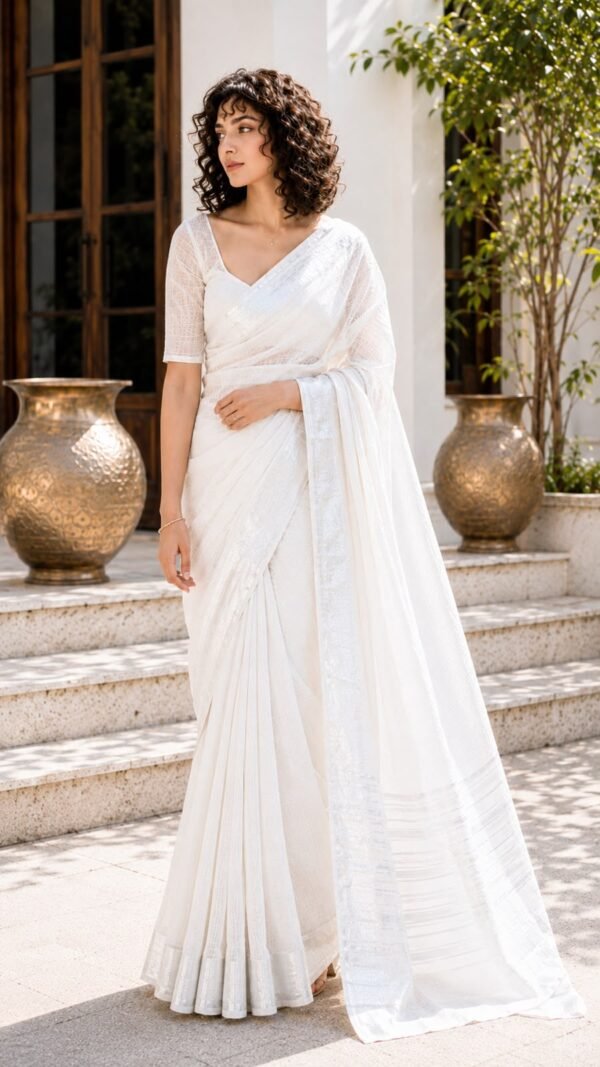
The fabric is chiffon: the lightest, most transparent weave in the dupatta category. On chiffon, the Phulkari embroidery has a different quality from the same embroidery on cotton. The geometric border diamonds sit on a surface that moves with any current of air, the embroidery adding weight while the chiffon resists it, the two in continuous conversation. In the reference images, the dupatta is seen draped over a plain baby blue suit and falling in the natural curves that chiffon produces: the Phulkari border visible as a moving geometric band as the dupatta drapes from shoulder to hem. The white chiffon makes the turquoise appear to float slightly above the surface rather than sitting on it.
Noor is a standalone dupatta: sold without a suit, without a kurta, without a bottom. It is the component that transforms any plain outfit into an occasion. A plain white salwar-kameez with Noor becomes a Phulkari ensemble. A plain coloured suit with Noor gains the turquoise of the embroidery. Any black outfit with Noor is transformed completely. The name is Noor: the light that comes from the thing that holds it, not from the sun.
Phulkari is Punjab’s embroidery tradition: the hand-worked geometric and floral forms in bright thread on plain cotton or chiffon that have covered Punjab’s ceremonial occasions for centuries. Unlike the Kantha running stitch of Bengal or the Chikankari flat and shadow stitch of Lucknow, Phulkari works primarily from the reverse side of the fabric: the darning stitch passes through the cloth from the back, covering the warp or weft threads in sequence, the front surface showing only the long float of the thread between passes. The result is a surface that appears to be a solid field of colour with no visible stitch structure — the thread floats covering the ground fabric completely within each motif.
The geometric Phulkari on this dupatta uses the diamond and square vocabulary that is the tradition’s oldest formal register. The bagh (garden) Phulkari covers the full cloth surface in continuous pattern; the border Phulkari concentrates the embroidery at the cloth edges while leaving the body relatively plain. Noor uses the border composition: the dense geometric band at the dupatta border with scattered buti across the body — the most restrained and most contemporary Phulkari format, the tradition’s discipline showing in what it leaves undone as much as in what it covers.
Chiffon as a Phulkari base is a contemporary choice. The tradition began on the thick, plain-weave cotton of Punjab’s village handloom — a fabric that held the embroidery thread firmly and kept the geometric forms precise. On chiffon, the same thread floats on a surface that moves: the Phulkari border is as precise in its geometric structure, but the ground beneath it is translucent and in motion. The effect is the Phulkari tradition held at its lightest possible weight, the embroidery making the cloth luminous rather than heavy. Phulkari on chiffon is the tradition wearing its best evening clothes.
- Wash: Dry clean recommended. Chiffon is delicate and the Phulkari thread floats on the surface are vulnerable to snagging and distortion in water.
- Hand wash (if needed): Cold water only, very mild detergent, no soaking. Hold the dupatta by its non-embroidered sections. Do not rub or pull the Phulkari border or buti.
- First wash: Dry clean only. The turquoise thread may release slight colour on the first water wash. The white chiffon is vulnerable to any colour transfer.
- Chiffon: Do not wring. Do not twist. Press water out gently by laying flat between two clean towels. Chiffon distorts permanently when wrung or squeezed.
- Phulkari thread floats: The long thread floats of the Phulkari tradition sit proud of the chiffon surface. Do not catch, snag, or pull them. A single pulled float distorts the geometric form permanently.
- Do not: Machine wash, bleach, or wring.
- Iron: Low heat on the reverse side only, very gently. Never iron the Phulkari embroidery from the front.
- Dry: Lay flat in shade. Chiffon should never be hung to dry — the weight of the wet fabric will stretch it permanently. Lay on a clean dry towel.
- Store: Folded loosely in clean tissue paper, then in muslin. Do not fold tightly through the Phulkari border — the thread floats hold the fold crease permanently. Keep away from direct light.
Reviews
There are no reviews yet.