
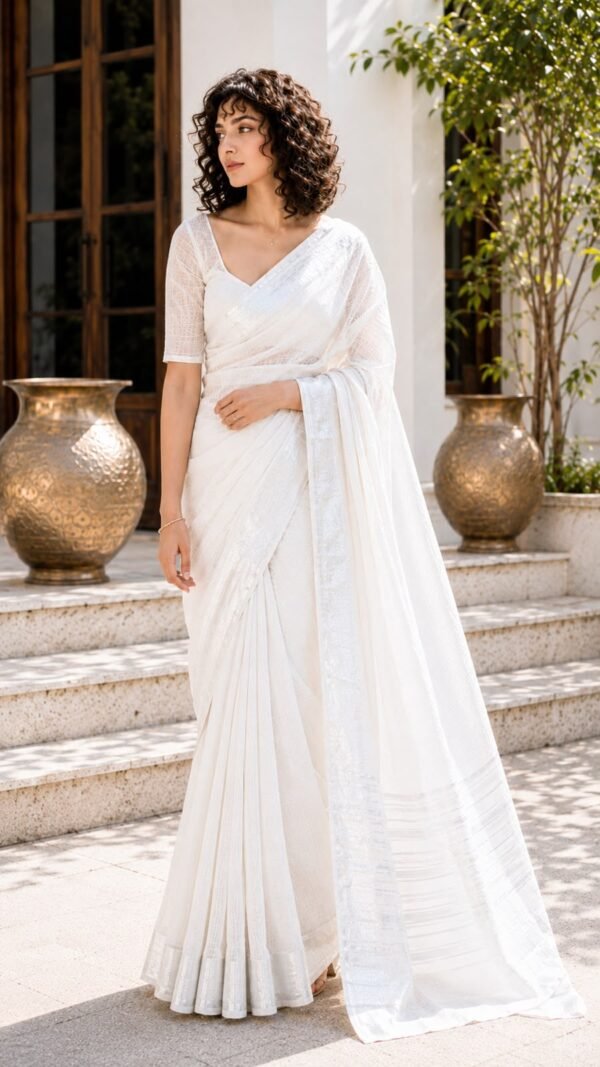
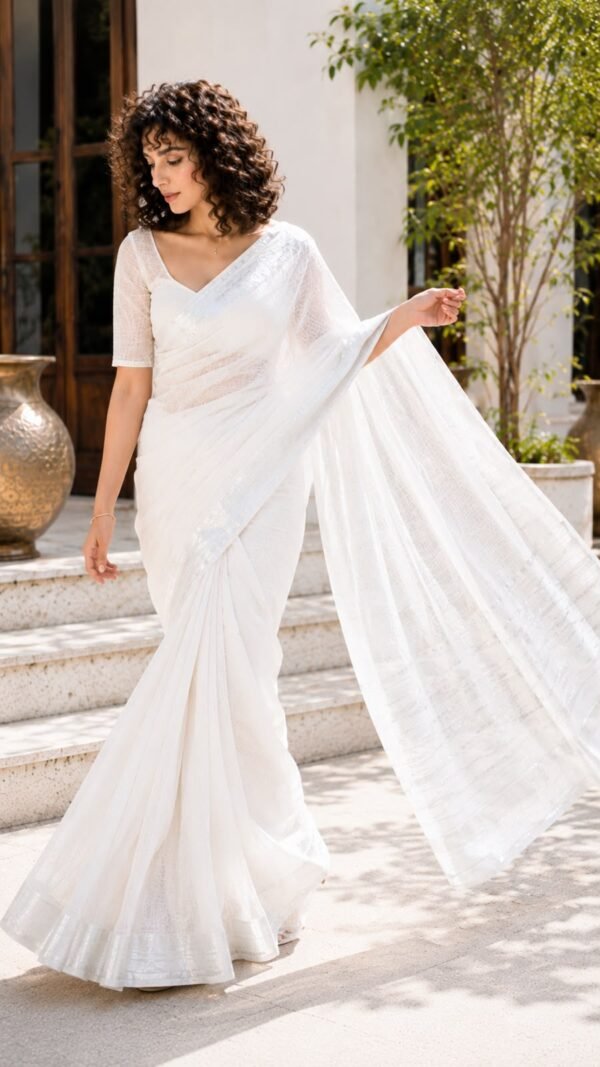




Sveta Pure Linen-by-Linen Saree in Off-White with Self-Stripe Border
Sarees, Suits & Kurtas₹3,200.00
& Free ShippingSveta means pure white.
In Sanskrit it is the colour of jasmine,
of the conch shell,
of the morning before the sun has decided
what colour the day will be.Linen-by-linen means both threads are linen.
The warp and the weft.
The fibre in both directions.
No compromise in either.The texture is the weave being honest
about what it is made from.
Linen does not pretend to be smooth.
It is exactly as textured as the plant it came from.
That is the quality.
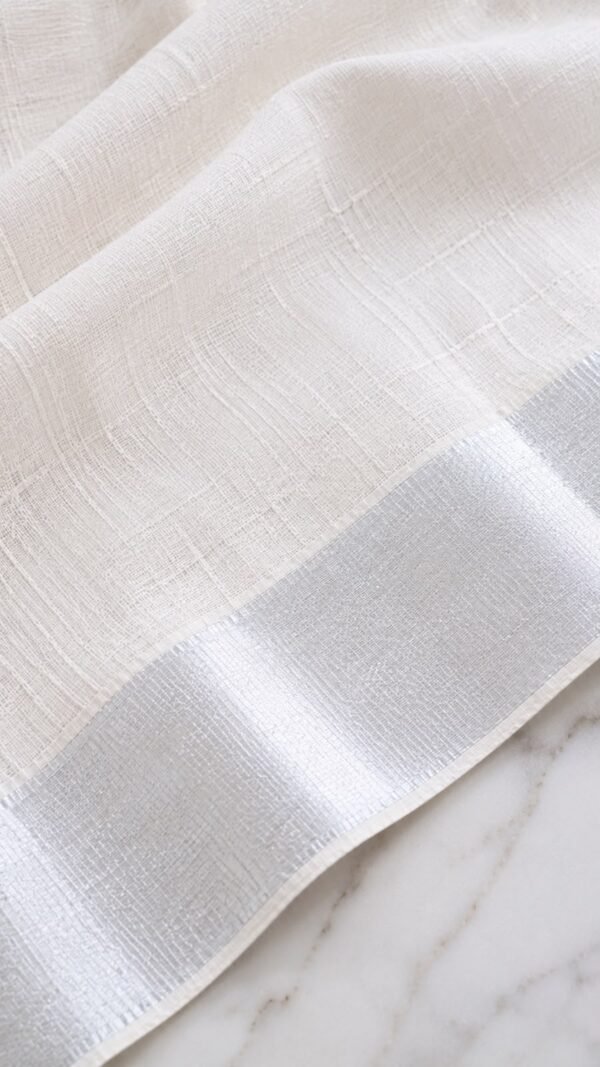
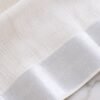
Linen-by-linen means the fabric was woven with linen thread in both warp and weft — no cotton in the weft to soften it, no blended thread in either direction to even out the texture. Pure flax both ways. The fabric that results is the most structurally honest textile in the collection: every quality the finished saree has comes from what linen is, not from what another fibre added to it. The body has the slight stiffness of new linen and the visible natural texture of the flax fibre itself — the crosshatch of warp and weft visible in the close-up as a fine irregular grid, each thread slightly different in diameter from its neighbour, the surface gently irregular, breathing.
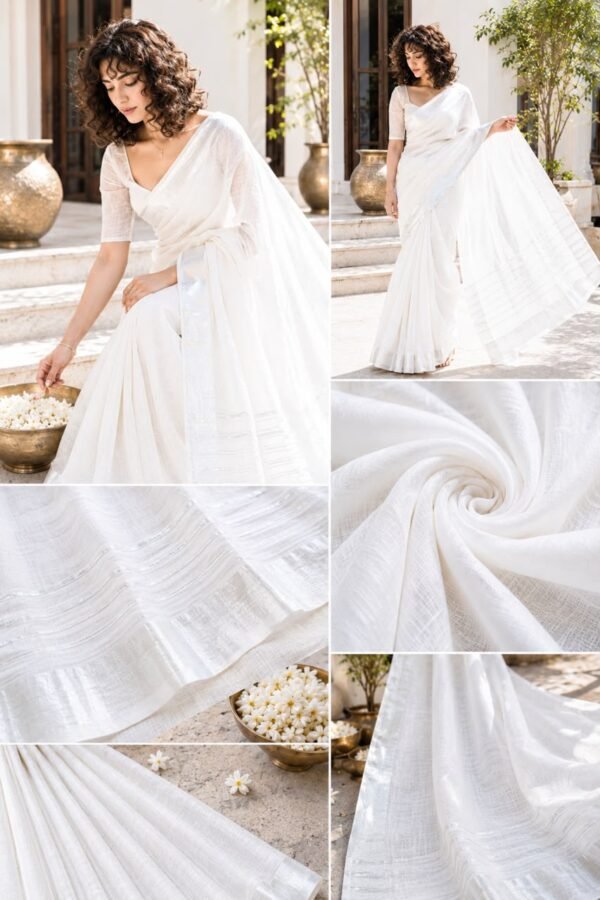
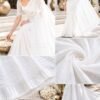
The off-white is not quite white. It is the natural colour of the flax fibre after minimal processing — warmer than the optical white of bleached cotton, cooler than the cream of raw silk. In direct afternoon light, as in the reference images, it reads as a luminous near-white. In shade, it deepens very slightly, revealing the warmth underneath. The fabric close-ups show the texture at its most explicit: the swirled and pleated shots reveal the surface as a continuous landscape of linen structure, each fold of the fabric showing a slightly different facet of the same texture.
The self-stripe border runs along the hem and the running border as a slightly denser woven band in the same off-white — the stripe built by a change in weft density rather than a change in colour, visible as a subtle shift in the surface texture at the border edge. In the fabric close-up of the border area, the transition from body to border is a variation in weave structure: the body slightly looser, the border slightly more packed. No colour change. No metallic thread. Just linen being more of itself at the edge.
The reference images were shot in a white courtyard with jasmine in a brass bowl — the most minimal, most elemental setting in the collection. Jasmine, white marble, brass, linen. The photographer understood what this saree required: nothing competing with the texture, nothing distracting from the fabric being exactly what it is. The name is Sveta. Pure white in Sanskrit. The colour of jasmine. The colour of the morning before the day has decided anything yet.
Linen is the oldest woven fibre in human textile history — flax-fibre cloth found in ancient Egyptian tombs, in the garments of the Harappan civilisation, in the oldest extant textiles on every continent where flax could be grown. In India, linen weaving on the handloom is a living craft: the flax fibre is processed, spun into yarn, and woven in the same tradition that has produced handloom cotton and silk for centuries, but with the specific discipline that linen demands. Linen thread does not behave like cotton on the loom. It is stiffer, less elastic, and requires greater tension in the warp. The weaver who works in linen-by-linen has adjusted every aspect of the loom for a fibre that will not forgive imprecision.
The self-stripe border on this saree is produced by changing the weft density at the border section: the weaver introduces more weft passes per centimetre at the border position, building a denser band in the same off-white linen. The change is structural — a difference in thread count per centimetre between the body and the border — visible as a subtle texture shift rather than a colour or pattern shift. This kind of self-stripe requires the weaver to maintain the density change consistently across the full length of the border while maintaining the looser body weave simultaneously. The discipline is in the transition: the body and the border are woven in the same continuous motion, the density shift happening at the border edge with every weft pass.
The off-white colour of this saree is the natural colour of the processed linen yarn — no dye added, no bleaching applied. The flax fibre in its processed form carries this warm near-white as its own colour. The fabric will not fade because there is no applied colour to fade. The texture will develop over time: linen softens with washing and wearing, the initial slight stiffness giving way to a drape that becomes more supple and more personal the longer the fabric is worn.
- Wash: Hand wash in cold to lukewarm water with a mild, pH-neutral detergent. Pure linen tolerates slightly warmer water than cotton, but cold water is safest for preserving the natural off-white colour.
- Separate: Wash separately from coloured garments. The off-white linen will pick up colour from other fabrics in water, and the change is permanent.
- Do not: Linen tears when twisted under tension while wet. Press the water out gently and support the full weight of the wet fabric as you move it.
- Do not: Machine wash. The mechanical agitation and spinning of a washing machine are incompatible with linen-by-linen at this thread count.
- Ageing note: Linen softens with every wash. A new linen saree has a characteristic slight stiffness — the flax fibre in its fresh woven state. With each wash and each wearing, the fabric becomes more supple, the drape improves, and the texture settles into itself. This is not a defect. It is the correct behaviour of pure linen. This saree will be better in two years than it is the day it arrives.
- Iron: Linen irons best while slightly damp, on the front face, at medium-high heat. The heat and moisture together relax the flax fibres and produce the best surface. Iron the self-stripe border from the reverse side only.
- Dry: In shade, flat or draped over a clean surface. Avoid hanging while wet — the weight of wet linen stretches the fabric at the hanging point. Do not sun-dry — the off-white will yellow under prolonged UV.
- Store: Folded in clean white muslin. Linen does not crease permanently the way cotton can, but sharp fold lines benefit from tissue paper between folds. Keep away from direct light and humidity.
Related products
-
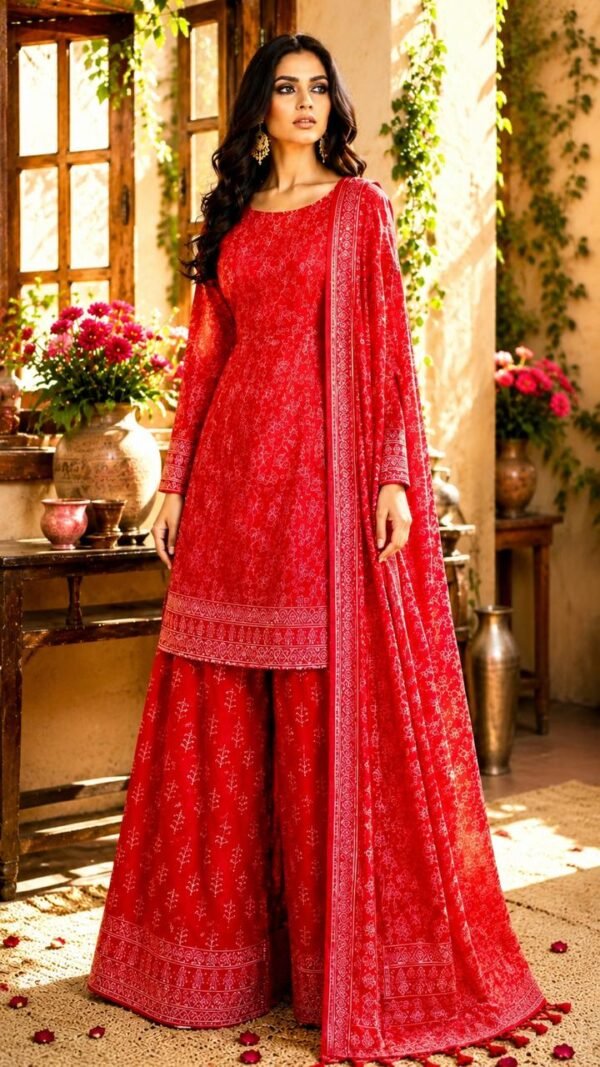
Gulmohar Chanderi Kurta and Cotton Sharara Suit Set in Crimson with Zari Border
Suits & Kurtas ₹4,200.00 Add to cart -
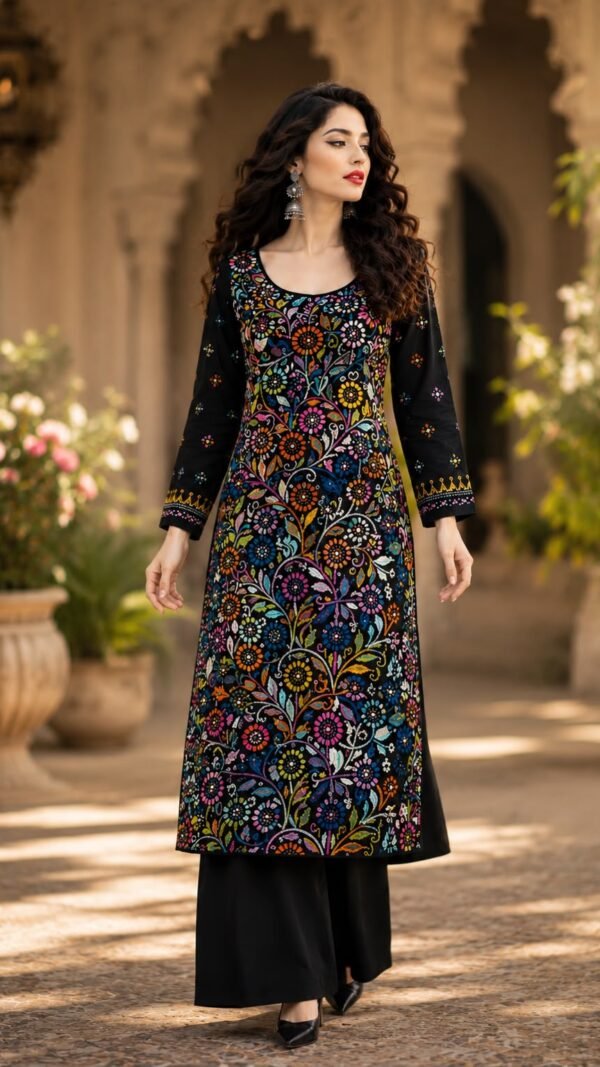
Utsav Kantha Hand-Embroidered Kurta in Black with Multicolour Garden Front
Suits & Kurtas ₹3,800.00 Add to cart
Reviews
There are no reviews yet.