
Utsav Kantha Hand-Embroidered Kurta in Black with Multicolour Garden Front
Suits & Kurtas₹3,800.00
& Free ShippingUtsav means festival.
The Sanskrit word for the gathering
where every colour appears simultaneously
and none of them is wrong. The Kantha needlewoman chose black for the ground
because black is the only colour
that holds every other colour at its full strength.
On white, the colours would compete.
On black, they celebrate.
The garden on this front panel
was built one running stitch at a time.
The orange flower. The pink spiral.
The yellow centre. The green leaf turning blue.
The needle moved through the black cotton
the way a festival moves through a city:
from one colour to the next,
without stopping.
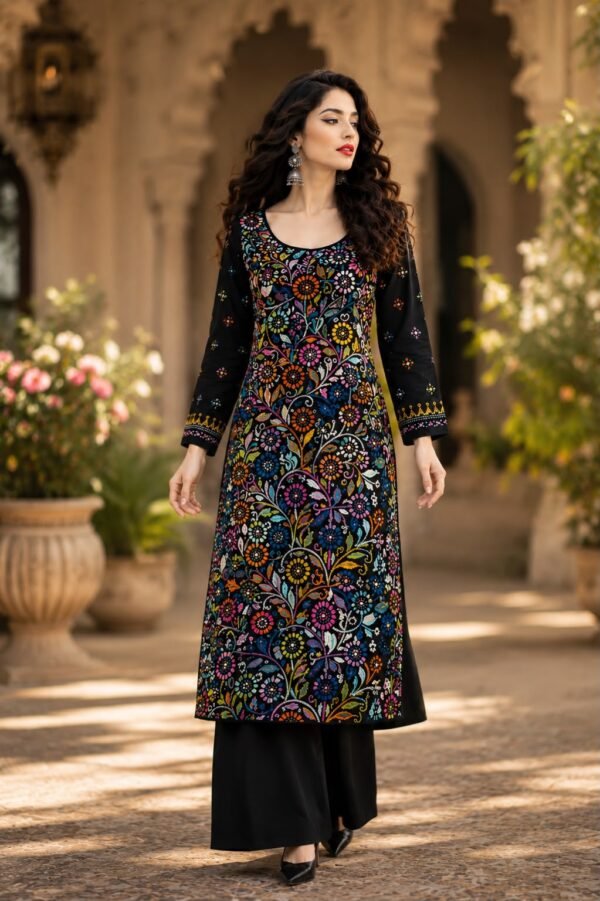
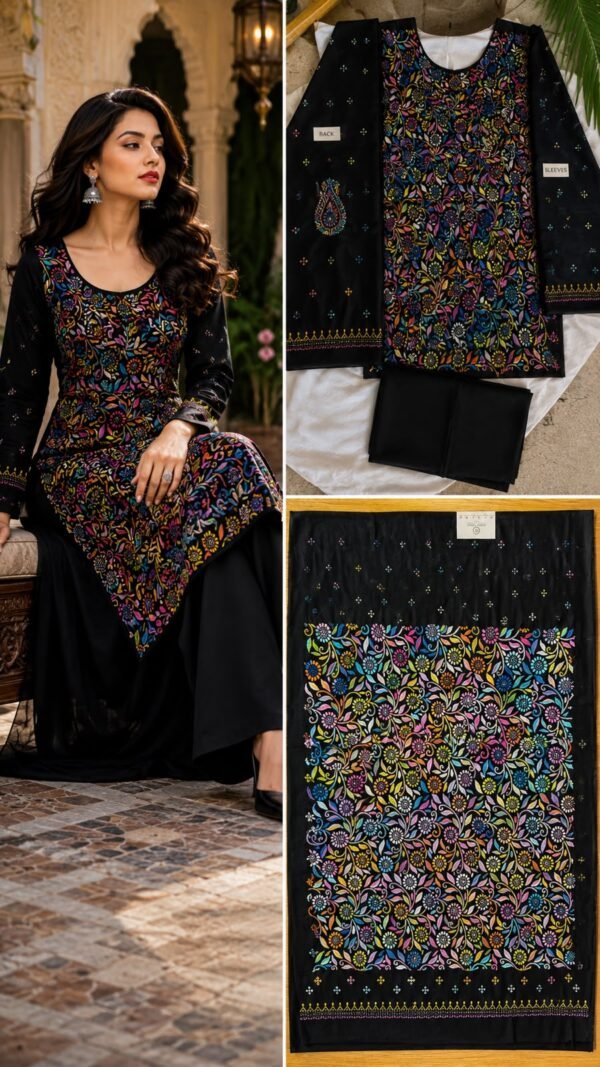
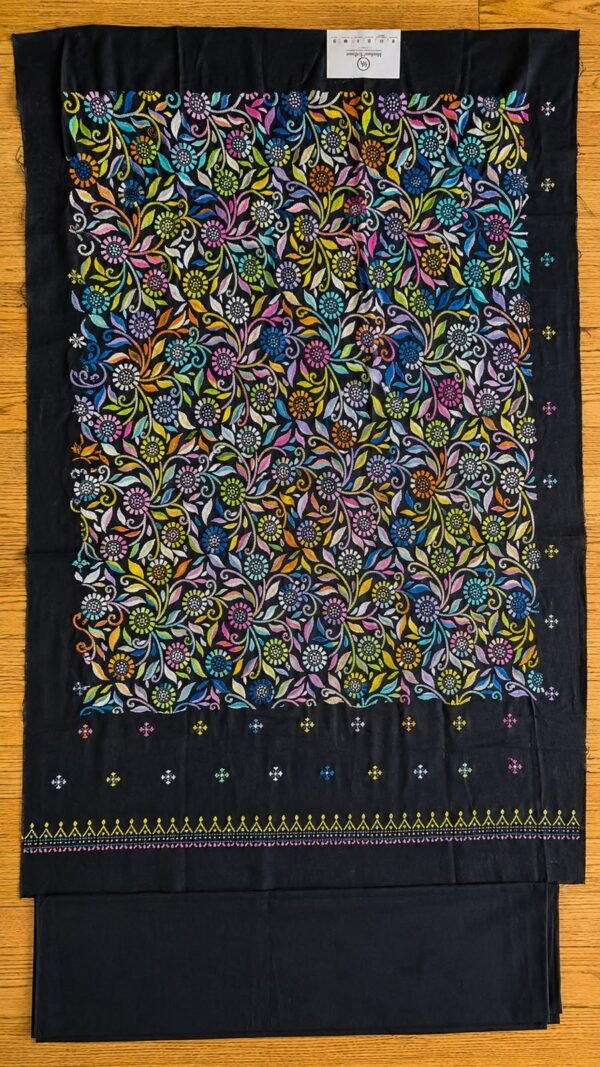
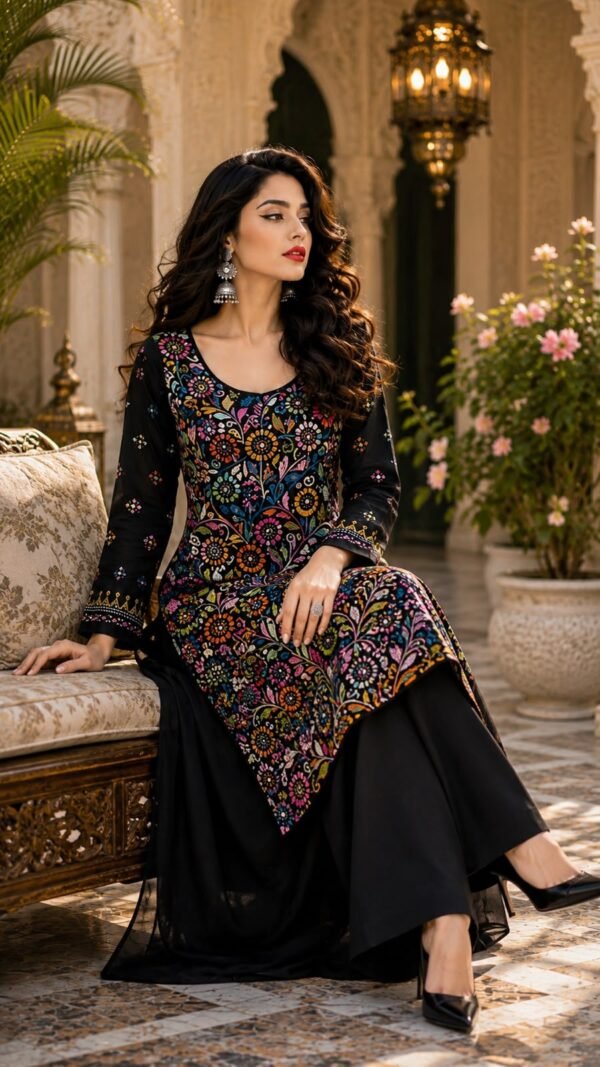
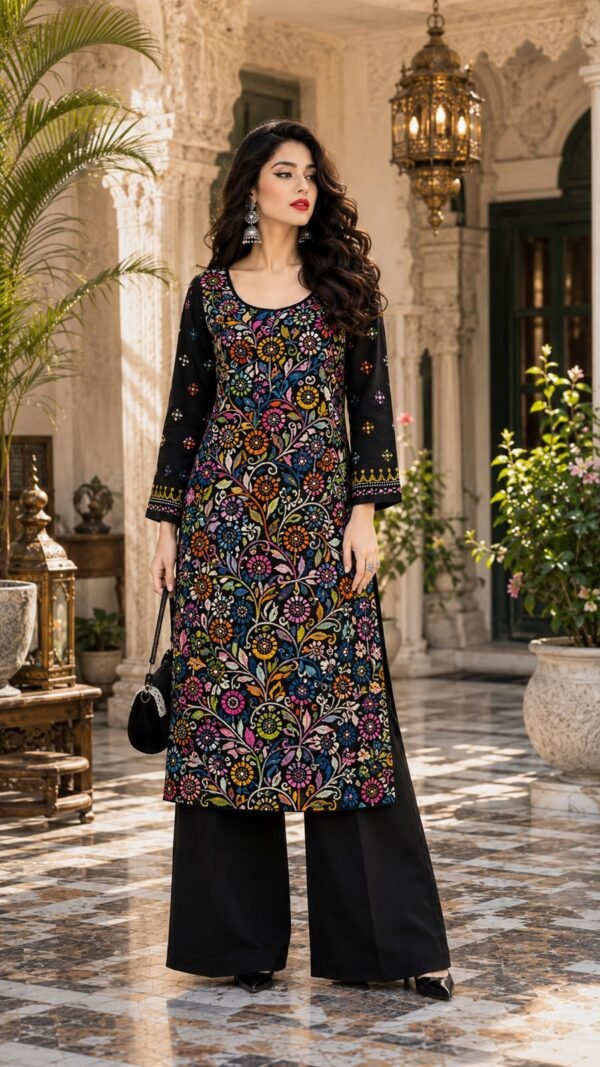
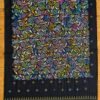
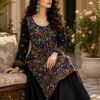
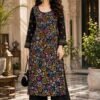
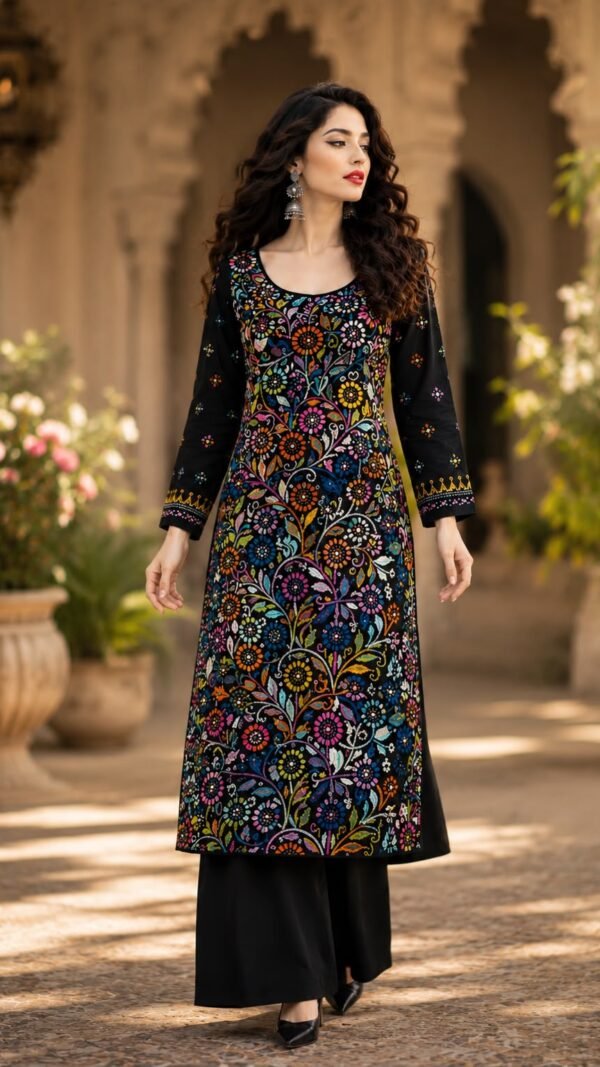
The most embroidery-dense piece in the collection is not a saree. It is this kurta. The entire front panel from neckline to hem carries a dense, continuous Kantha embroidery garden in multicolour thread on black cotton: circular floral mandala forms in orange, pink, and yellow; scrolling vines in green, teal, and cobalt; leaves in lime, olive, and coral; small flower clusters in white and red scattered at the vine junctions. The black cotton ground disappears almost entirely under the embroidery — at the reference image distance, the front reads as a complete field of colour. At close range, the individual running stitches of the Kantha technique become visible: the same short, even running stitch that fills every form, the texture of the stitch itself the texture of the colour.
Black was the deliberate choice for the ground and it is the correct one. The Kantha embroidery tradition on black cotton is a specific contemporary evolution of the heritage form — the original Kantha used white or cream cotton, and the colours of the thread read against the natural ground. On black, the same thread colours read at their maximum saturation: the orange is louder, the yellow warmer, the teal more electric, the pink more intense. Every colour the needlewoman chose for this garden is showing its fullest possible self because the ground underneath it absorbs everything it does not reflect.
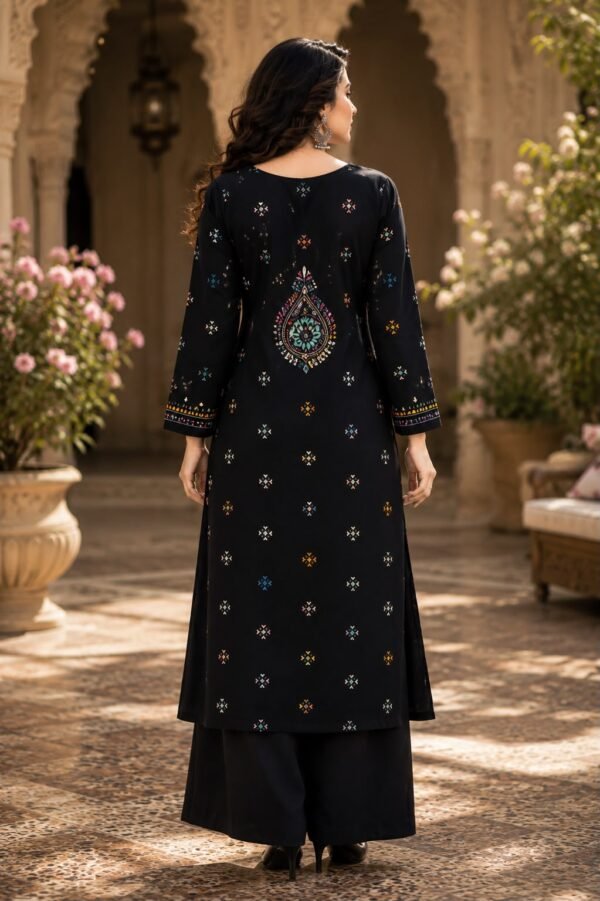
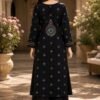
The sleeves are plain black, carrying the composition’s restraint: against the dense multicolour front, the plain black sleeve gives the eye a moment of rest. Near the cuff, a decorative embroidery band and scattered small buti introduce the embroidery vocabulary at a quieter scale, the same thread colours in smaller forms. The back carries central buti and a border — the Kantha garden continuing on a different surface, the full composition visible from the front, the quieter vocabulary from behind.
This kurta comes without a bottom or dupatta: it is a complete statement on its own. The reference image pairs it with a plain black palazzo — the correct pairing, the plain black below allowing the embroidered front to be the garment’s entire argument. The name is Utsav: festival, the gathering where every colour appears simultaneously and none of them is wrong.
The Kantha running stitch described across the saree collection — in Phool, Rani, and the Kantha dupatta — appears here at its highest density on the largest continuous surface the collection offers. A saree Kantha is distributed across 5.5 metres: the embroidery present but not dominant across the full body. A kurta Kantha front is concentrated on approximately 0.8 metres of front panel: the same running stitch tradition, on a fraction of the surface, producing a coverage that the saree form does not achieve.
The multicolour Kantha tradition on black cotton is a specific regional Bengali development: the heritage Kantha used discarded white sari cloth as both the base and the thread source, the coloured thread salvaged from the sari borders. Contemporary Kantha on black cotton uses purpose-made embroidery thread in full saturation colours, the needle working directly onto the dyed black cotton. The running stitch fills every form completely — each petal of each flower built from parallel rows of short running stitches placed so closely together the stitched surface covers the ground fabric entirely within the form. Outside the form, the black cotton is visible as the ground. The transition from embroidered form to black ground is the Kantha’s most characteristic edge: not the hard outline of a drawn motif, but the edge of a field of stitches, the last stitch of one form placed directly adjacent to the first stitch of the ground.
• Wash: Dry clean recommended for the first wash. The density of the multicolour Kantha embroidery means multiple dye lots are present on one surface.
• Hand wash: Cold water, mild detergent. Turn inside out. Do not scrub the embroidered front.
• Colour: The multicolour thread may release slight colour on early washes. Wash separately. The black cotton ground will also release on first wash.
• Do not: Machine wash, wring, or bleach.
• Iron: Low heat on the reverse side only. Never iron on the multicolour Kantha front directly.
• Dry: In shade. The multicolour thread and the black cotton are both UV-sensitive.
• Store: Folded in clean dark muslin. Tissue paper between folds at the front embroidery section.
Reviews
There are no reviews yet.