
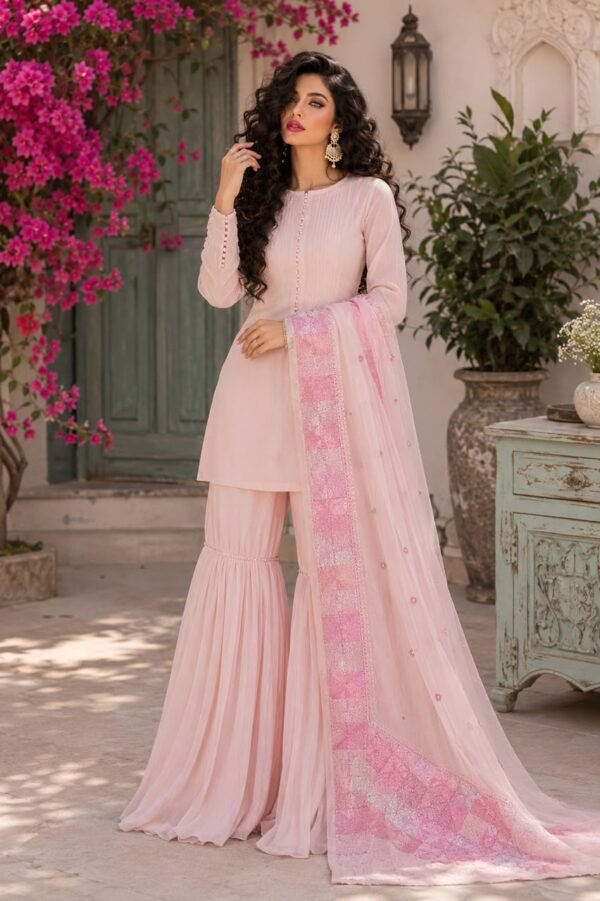
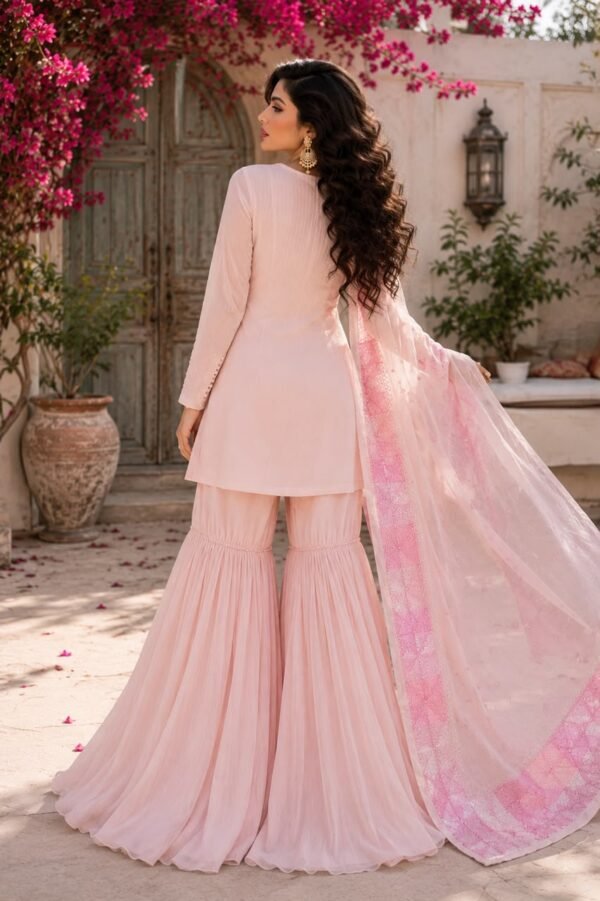





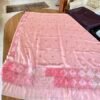
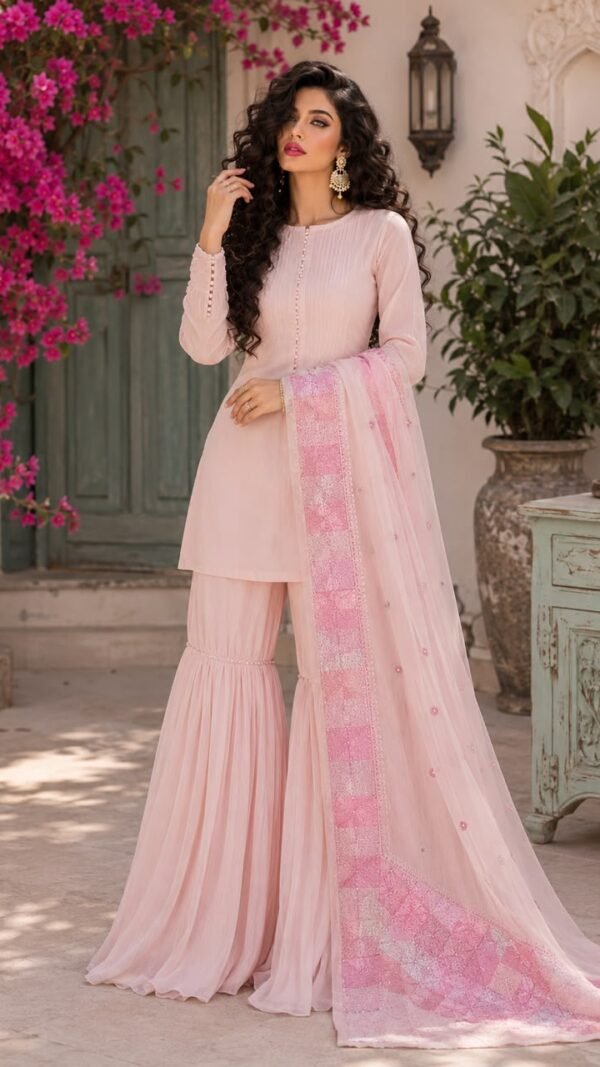
Motia Chiffon Dupatta in Baby Pink with Phulkari Geometric Border and Pearl-Centred Flower Buti
Dupattas₹8,250.00
& Free ShippingMotia is the night jasmine.
The small flower that opens in the dark
and places a single pearl at its centre
as if it knew that someone
would be looking closely.The needlewoman built each flower
from satin stitch petals,
raised from the baby pink chiffon surface,
and placed the pearl at the centre of each one.
The flower stands slightly above the fabric.
The fabric is the garden it grows from.The Phulkari border at the hem
is the geometry that holds the garden.
Tonal pink on baby pink —
the warmest border in the collection,
the one that never raises its voice.
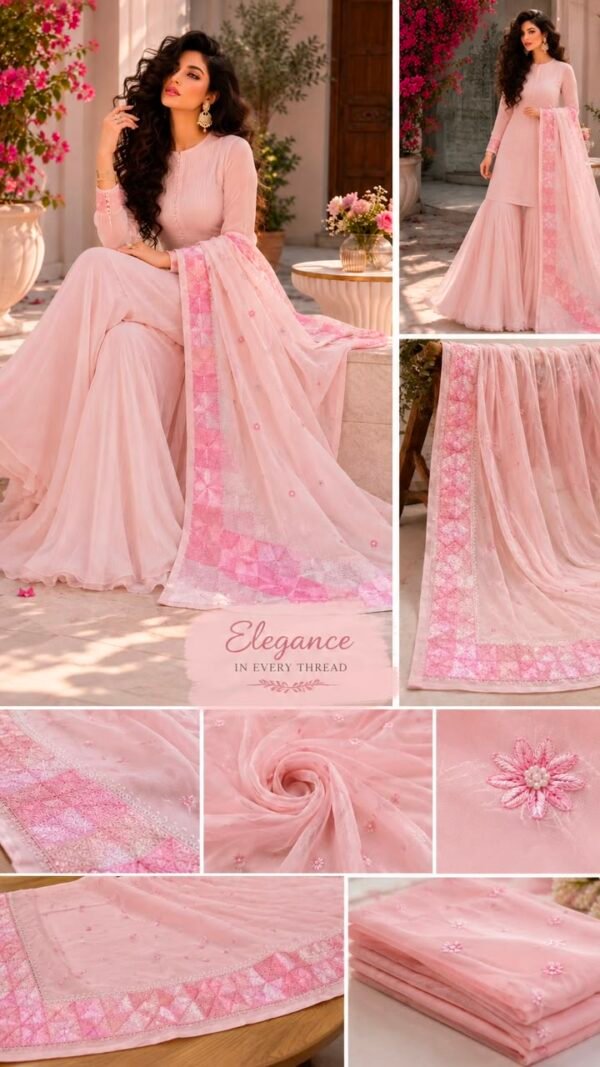
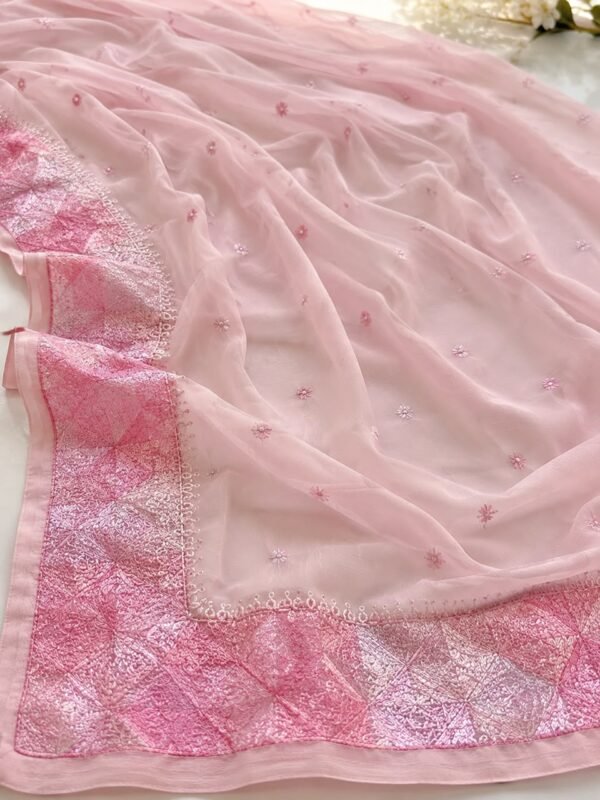
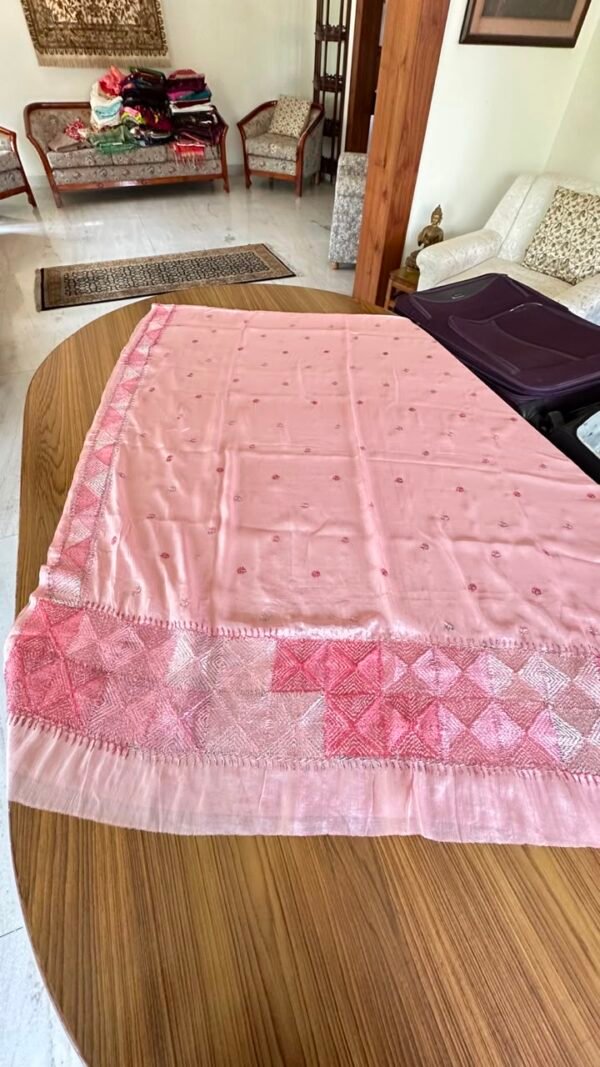
This is the only dupatta in the collection with dimensional embroidery: the flower buti on the baby pink chiffon body are not flat running-stitch forms but satin-stitch petals built up from the fabric surface, each petal individually worked in the same baby pink thread to a slightly raised height, and a pearl or pearl-effect bead placed at the flower’s centre. The flower stands slightly proud of the chiffon. When the dupatta moves, the dimensional flowers hold their form — the satin stitch structure maintaining the raised petals through the movement of the underlying chiffon. In the reference image close-up, the three-dimensional quality of the flower is visible: the petal edges slightly higher than the chiffon surface, the pearl at the centre catching the light independently of the surrounding fabric.
Alongside the dimensional flowers, smaller flat Phulkari buti — the standard running-stitch flower form — are scattered across the body in the same pink thread. The two buti types together create a body composition with two levels: the raised satin flowers as the focal points and the flat Phulkari buti as the quieter field between them. At the distance of normal wearing, both types read as scattered flowers across the baby pink ground. At the close range visible in the reference images, the dimensional flowers reveal their specific construction.
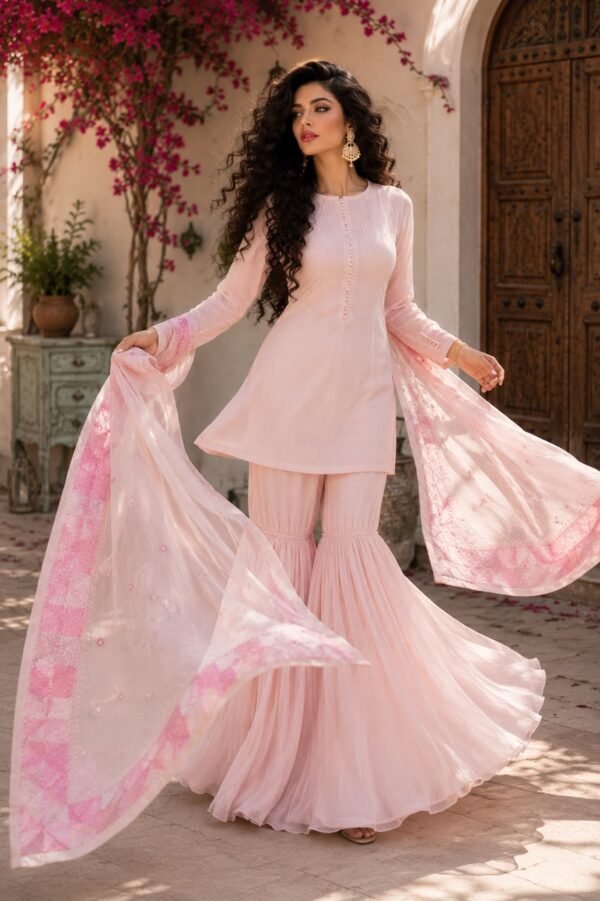
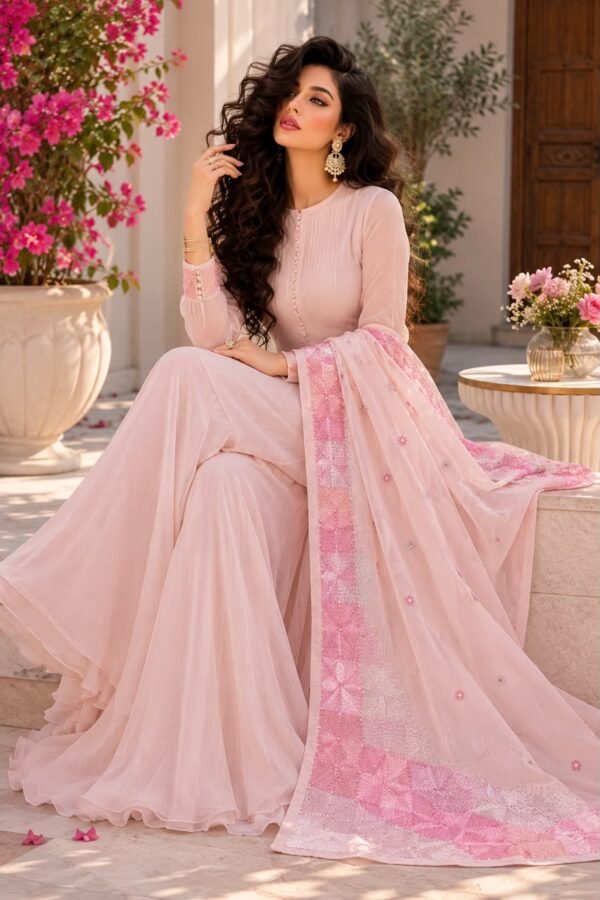
The Phulkari border at the hem uses the tonal approach: warm pink and lighter pink/white within the same pink family, the diamond and triangular geometric forms of the border embroidered in the two tones of the same colour rather than in contrasting colours. This is the most tonal border in the dupatta collection — even more restrained than Malati’s peach-on-cream — because here the two values are the same colour at different saturations. From a distance, the border reads as a single warm pink band. Close-up, the geometric forms are revealed in the tonal variation.
The baby pink chiffon is the softest ground in the collection: cooler than the peach of Komal, warmer than the white of Phulwari and Svarna, the specific pink of the sky at the very first moment of sunrise before the orange arrives. In the reference images, the setting is a pale blush-cream courtyard with roses and bougainvillea. The baby pink dupatta in this setting is the collection’s most consistently pink image: the fabric, the flowers in the background, and the setting all within the same warm-pale register. The name is Motia: the night jasmine, the small flower with the pearl at its centre.
The dimensional satin-stitch flower buti on Motia is the only three-dimensional embroidery element in the dupatta collection. The satin stitch is worked by passing the thread back and forth across the petal form in parallel passes, each pass placed immediately adjacent to the last, until the petal area is completely covered with parallel thread. The density and slight tension of the parallel passes builds the thread up from the fabric surface, producing the slight raised height visible in the close-up. The petal shape is established by the outline of the satin stitch area; the raised quality comes from the thread density.
The pearl at the flower’s centre is the buti’s finishing element: placed after the petals are complete, the pearl sits at the intersection of the petal passes, the raised petals radiating outward from the pearl as a real flower radiates from its seed. The pearl’s own slight surface — the round curve catching light differently from the flat thread of the petals — is what makes the close-up of these buti distinctive from any other embroidery in the collection. Every other buti in the collection is a flat thread form. Motia’s buti have depth.
The tonal Phulkari border uses the same running-stitch float technique as all the collection’s Phulkari embroidery, but within a single colour’s value range rather than between two colours. The geometric forms — diamond and triangular elements — are built in two values of pink: a slightly deeper warm pink and a lighter near-white pink. The value variation is subtle enough to read as texture at distance and as two-tone embroidery at close range.
• Wash: Dry clean only. The dimensional satin-stitch flowers and pearl centres are the most delicate embroidery element in the collection.
• Pearl centres: The pearls or pearl-effect beads at the flower centres are the most vulnerable element. Water immersion can loosen the thread holding the pearl in place over repeated washes. Dry clean protects them permanently.
• Satin stitch petals: The raised satin-stitch petals can be crushed by pressure, folding, or rough handling. The dimensional quality is permanent but can be flattened by sustained pressure. Handle the buti areas with care.
• Chiffon: 100% pure chiffon — do not wring, twist, or machine wash. Press water out gently if ever dampened. Lay flat immediately.
• Baby pink dye: Do not expose to bleach or harsh detergents. The baby pink is a soft dye lot that whitens under chemical exposure.
• Do not: Machine wash, hand wash, wring, bleach, fold tightly through the dimensional buti.
• Iron: Low heat, reverse side only. Never iron on the dimensional flowers from the front — heat permanently flattens the satin stitch raised petals. Never iron over the pearl centres.
• Dry: In shade. Baby pink is UV-sensitive and will shift toward a cooler, more muted tone under extended direct sun.
• Store: Rolled in acid-free tissue, not folded — folding through the dimensional buti crushes the raised petals. Keep in a clean dark storage.
Related products
-
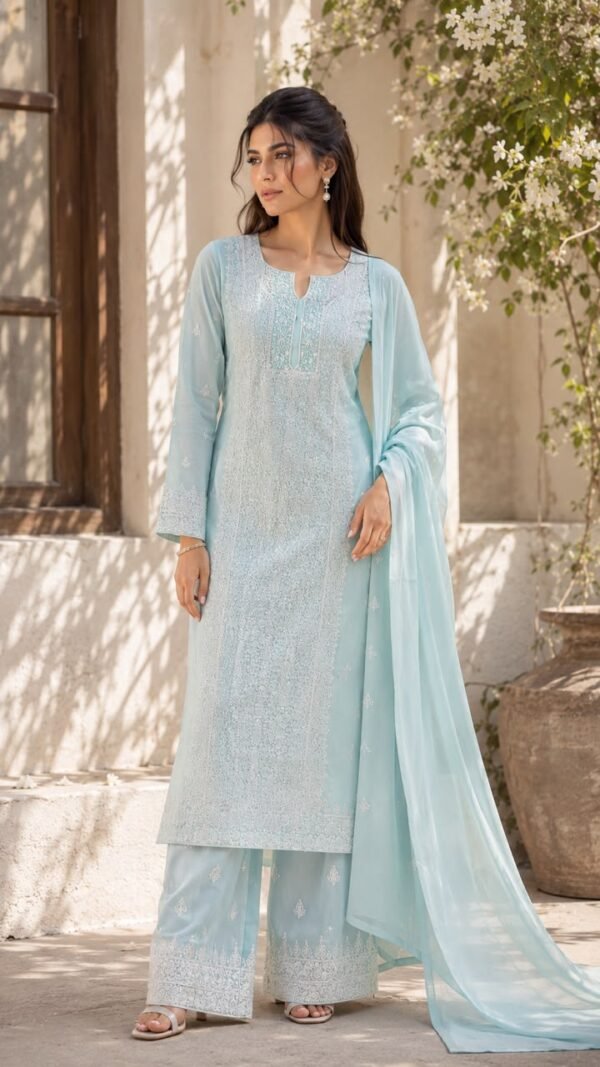
ShabnamChikankari and Kashmiri Kadai Embroidered Suit in Ice Blue
Suits & Kurtas ₹6,800.00 Add to cart -
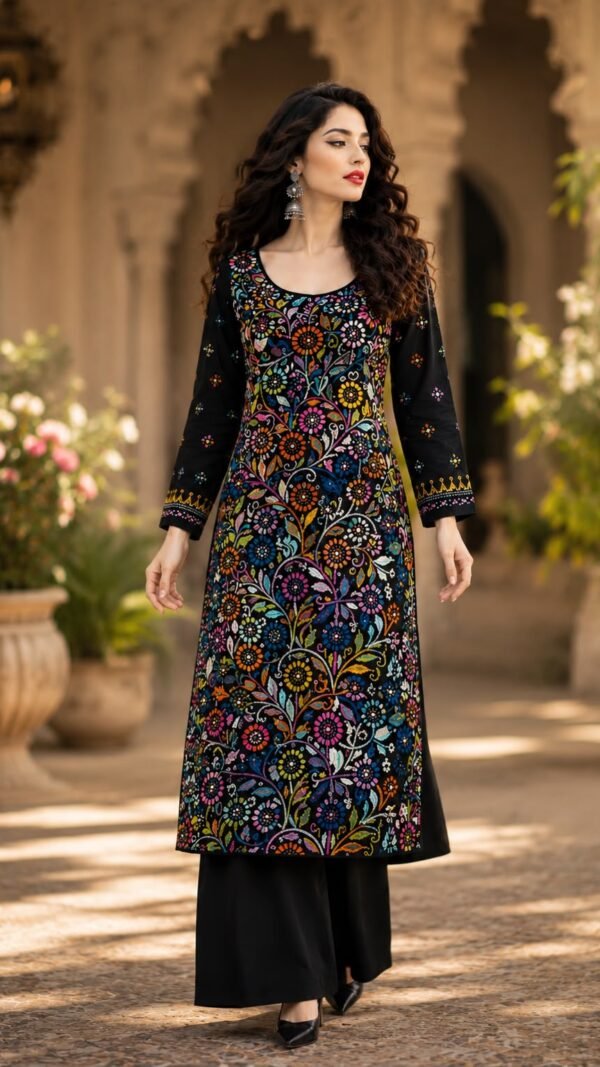
Utsav Kantha Hand-Embroidered Kurta in Black with Multicolour Garden Front
Suits & Kurtas ₹3,800.00 Add to cart

Reviews
There are no reviews yet.