
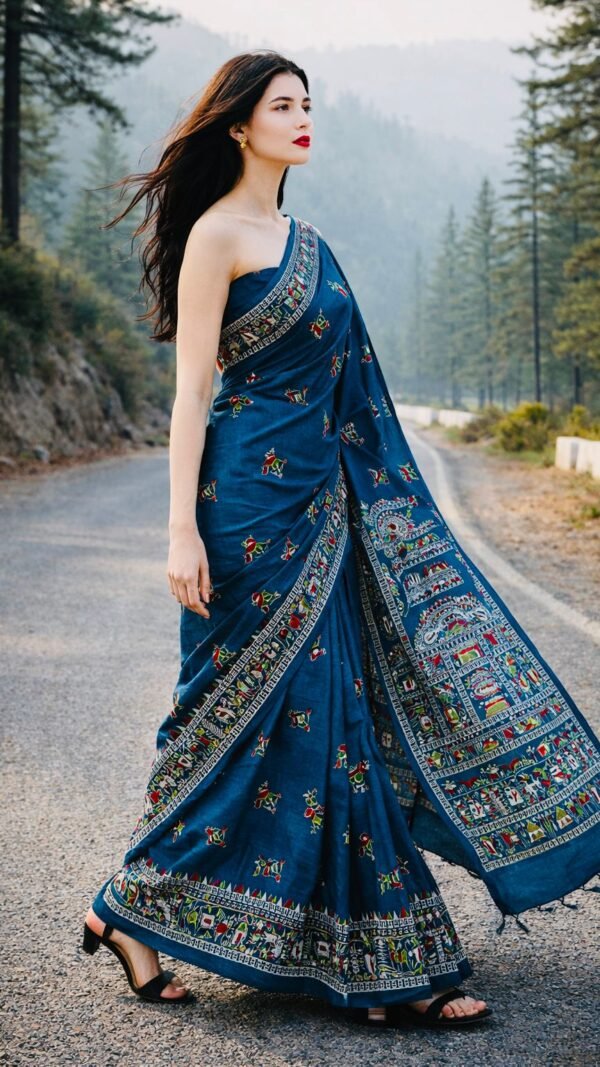
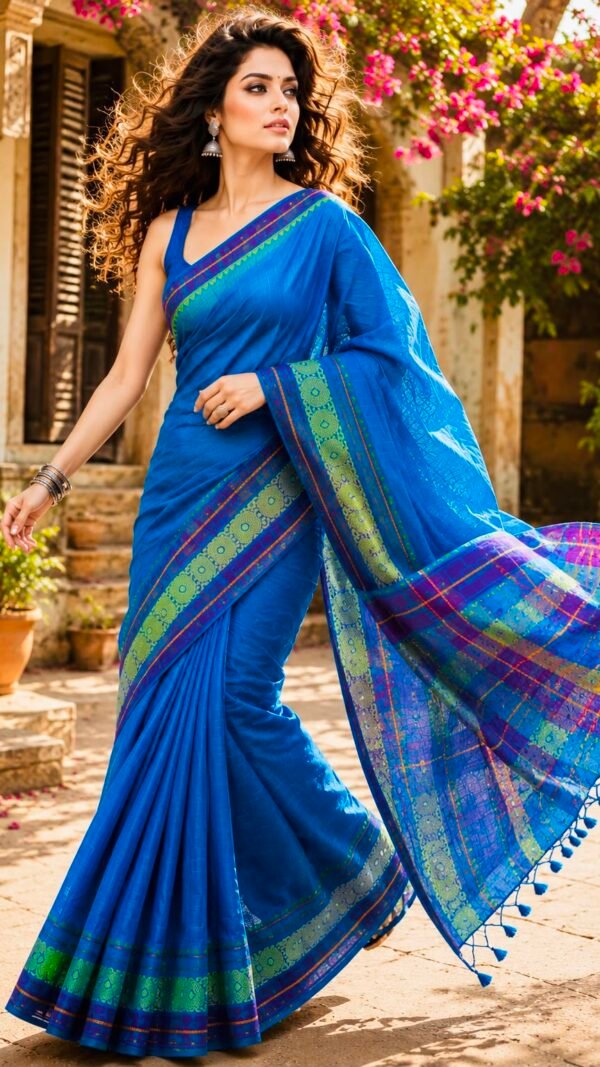
Indraneel Handloom Cotton Saree in Royal Blue with Multicolour Temple Border —
Sarees₹2,800.00
& Free ShippingIndraneel is Indra’s blue.
The blue of the storm king.
The blue the Sanskrit poets put at the centre of every sky
because it is the most certain blue that exists.The body is plain.
The body does not need to be anything other than this blue.
Everything else the saree does
it does at the border.Green temple floral. Purple weft stripe.
Orange zari line. Navy blue tassel.
The border carries everything the blue body held in reserve.
The border is where the storm resolves.
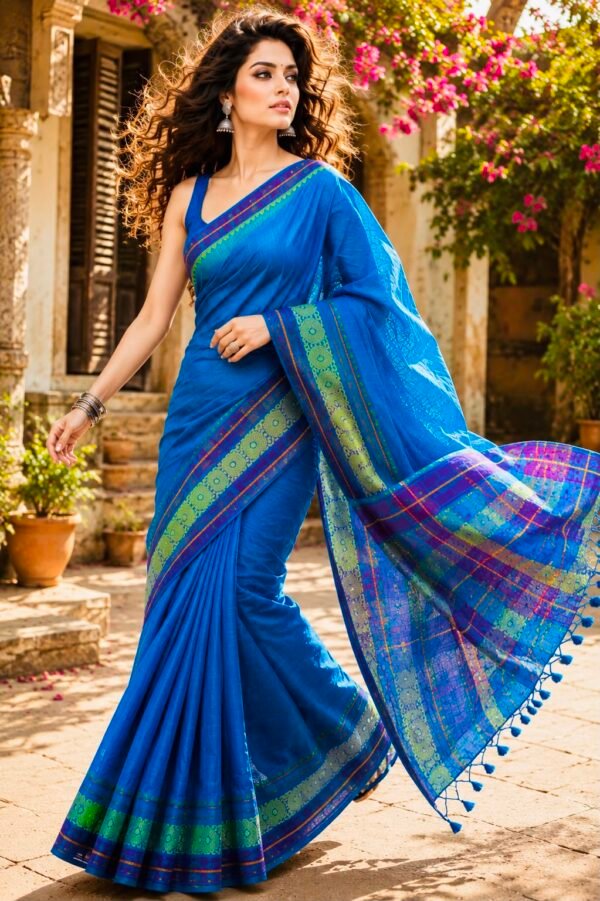
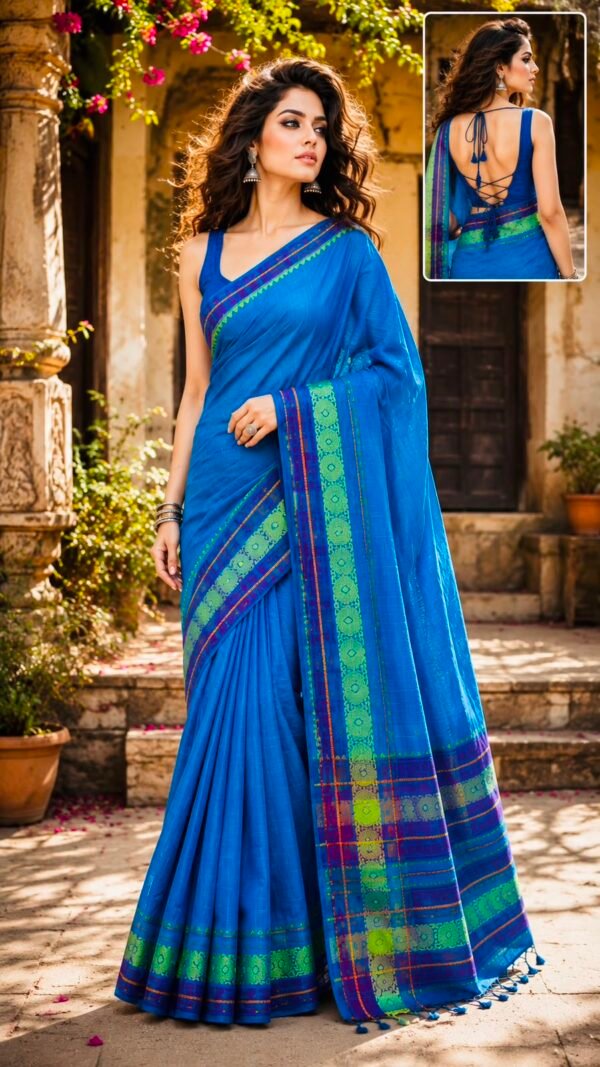
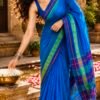
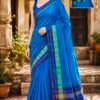
Royal blue is a colour that requires nothing. It is complete in itself — the specific intense blue that sits between cobalt and electric, too warm to be cold, too saturated to be academic. In the collection’s blue family, this royal blue is the loudest: louder than the navy of Antariksh, brighter than the steel blue of Neelam, more saturated than the ikat navy of Megh. It is the blue the eye goes to first in any room. The plain body of this saree carries it across the full 5.5 metres without relief, without embellishment, and without apology.
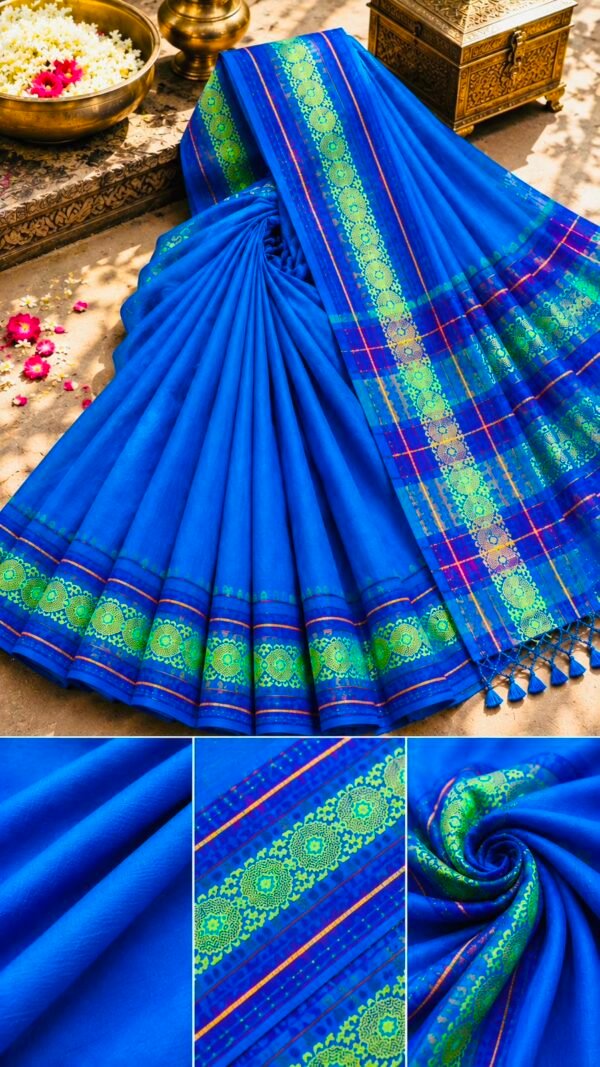
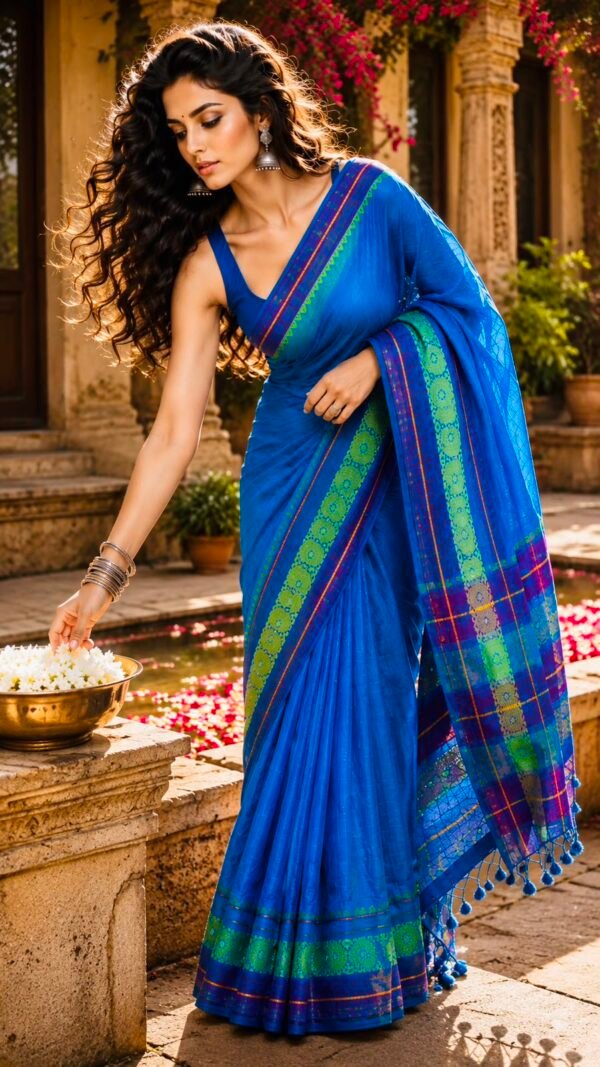
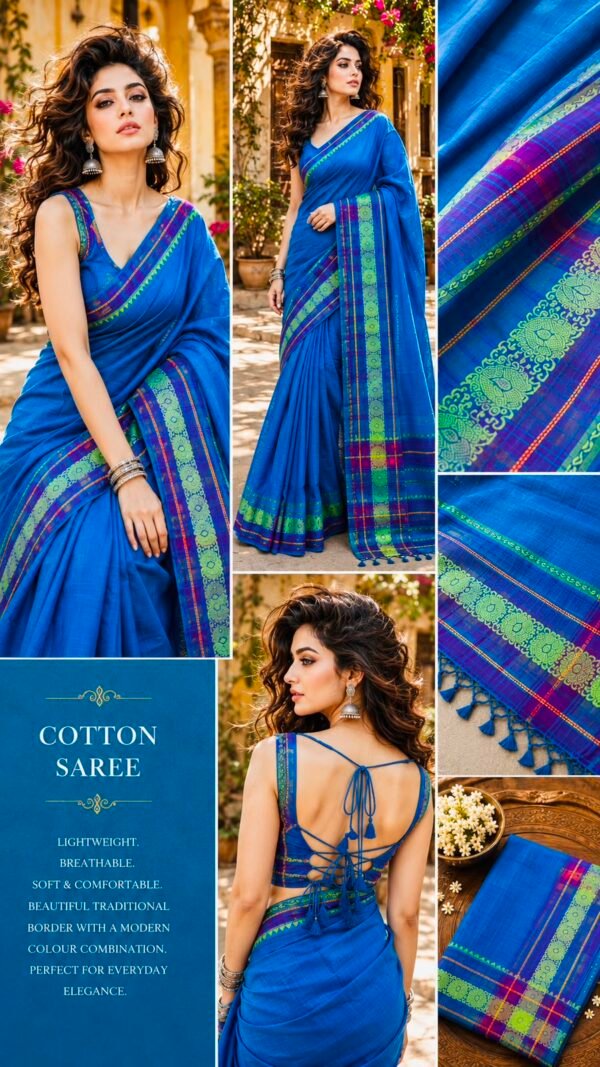
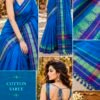
The handloom cotton body has a slight visible weave texture — the characteristic surface of Bengal handloom, faintly irregular, breathing. In the fabric close-up, the thread structure is visible as a gentle crosshatch across the royal blue ground. The body is not perfectly smooth. It does not pretend to be. The texture tells the hand that this was made on a loom by a weaver, not rolled out of a machine. In direct light, as in the terracotta courtyard setting of the reference images, the royal blue picks up the warm terracotta ambient and holds it while returning a cooler blue. The contrast of this blue against warm stone is complete.
The border is the saree’s second language. Against the plain royal blue body, the multicolour temple border carries an entire composition: a green silk-effect floral and temple motif band running the full border width, flanked by purple weft stripes, orange-gold zari lines, and thin stripe sequences that repeat the border vocabulary at smaller scale along the running border. The green against the royal blue is the most historically loaded colour combination in South Indian textile tradition — the specific pairing of peacock green and royal blue that appears in Kanjivaram borders, in temple gopuram mosaic tiles, in the colour vocabulary of Carnatic classical performance. The border knows this. The weaver knew this when the border sequence was set on the loom.
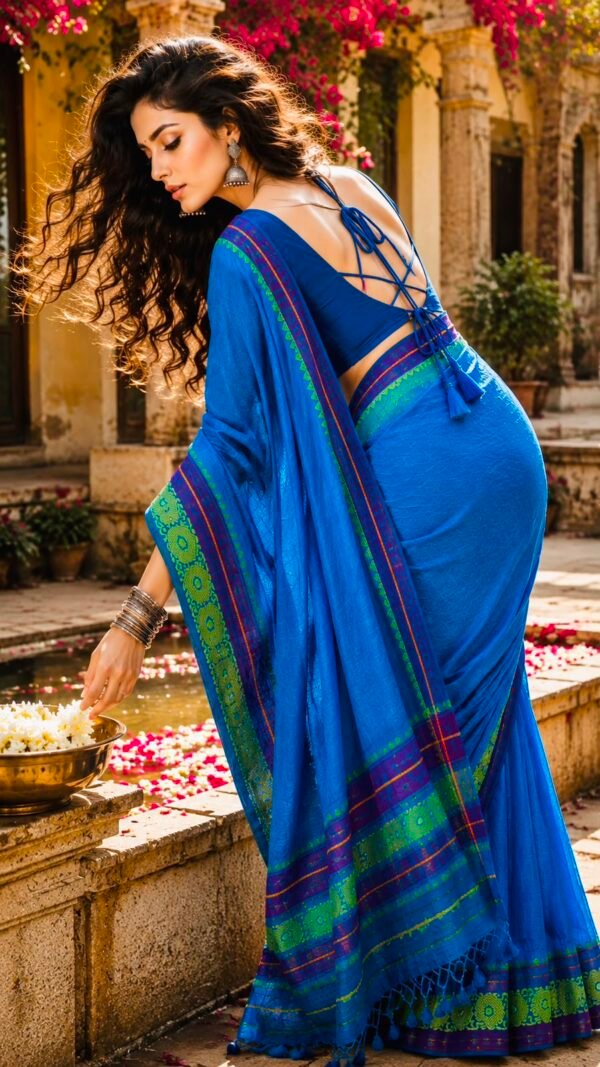
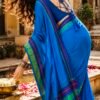
The navy blue tassels at the pallu hem are the border’s final word: the deepest shade of the body colour, dense and individually knotted, clustered at even intervals along the full pallu hem. The matching blouse has a lace-up back tie detail in the same royal blue cord — visible in the back-view reference image, the tie falling to the waist, the open back framing the pallu drape. The name is Indraneel: sapphire, the storm king’s blue, the most certain blue the Sanskrit poets knew.
The Bengal handloom cotton tradition produces a fabric that is distinguished by its breathability and its natural surface texture. The plain weave — warp and weft at right angles, each weft pass alternating over and under the warp threads in sequence — creates the visible crosshatch surface visible in the fabric close-up. The slight irregularity of the handloom surface is a function of the human hand at the shuttle: the weft tension varies slightly from pass to pass, and the finished cloth carries this variation as the texture that distinguishes handloom from power loom.
The multicolour temple border is built in the supplementary weft technique: each colour band introduced at the border section as a separate weft thread, maintained across the full border width for the band’s height, then withdrawn as the next colour begins. For the Indraneel border, the sequence includes a green silk-effect floral and temple motif band — the floral pattern built by the supplementary weft thread passing over and under specific warp threads to create the motif — flanked by purple, orange-gold, and stripe sequences. The full border construction requires the weaver to maintain multiple thread colours simultaneously, changing between them at the precise band boundaries across the full border length.
The navy tassels at the pallu hem are attached after the weaving is complete, each tassel individually knotted to the hem edge at measured intervals. The tassel colour — navy rather than royal blue — is a deliberate deepening at the hem: the border’s final note, slightly more interior than the electric blue body. The blouse piece is cut from the same royal blue handloom cotton, with the same slight surface texture as the saree body. The lace-up cord detail visible in the reference images is produced from the same royal blue thread as the body fabric.
- Wash: Hand wash in cold water with a mild, colour-safe detergent. The royal blue and the multicolour border are each different dye lots.
- First wash: Wash separately in cold water. The royal blue and the green and purple border colours may each release slight colour on the first wash. Keep away from light fabrics. Will not recur.
- Border: Wash gently through the multicolour border section. The supplementary weft threads in the green floral band are slightly raised; do not scrub.
- Tassels: Handle the navy tassels gently. Press gently and lay flat to dry.
- Do not: Machine wash or bleach. Machine agitation can cause the border colours to bleed into the royal blue body.
- Iron: Medium heat on the royal blue body, reverse side. Avoid direct ironing on the border floral motifs.
- Dry: In shade. The royal blue is UV-sensitive; sustained direct sun fades saturated blues more quickly than muted tones.
- Store: Folded in clean muslin. The royal blue can transfer colour in humid storage to light-coloured fabrics. Keep separately.
Reviews
There are no reviews yet.