
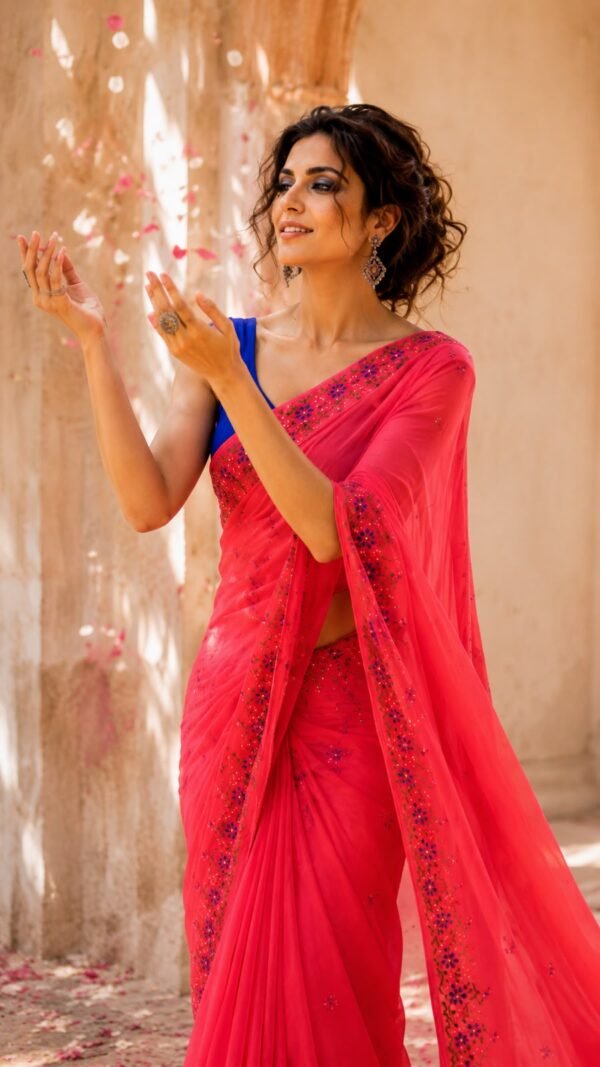
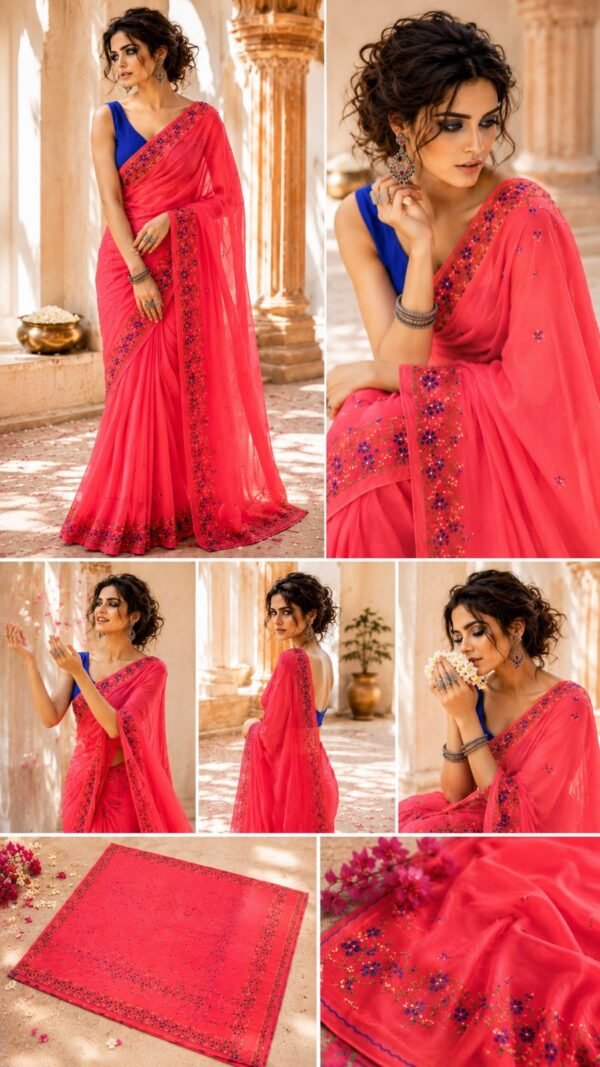






Phool Kantha Hand-Embroidered Cotton Saree in Coral with Multicolour Floral Border
Sarees₹3,400.00
& Free ShippingPhool means flower.
The simplest word for the thing
that the needle has been chasing
since the first woman in Bengal
picked up a thread and decided
to make the cloth more like the world. The coral ground is the sky before sunrise.
The Kantha flowers across the border
are what the light finds first.
Each flower was stitched by a hand.
Each stitch placed by the same hand.
Nothing on this saree happened faster
than a hand could make it.
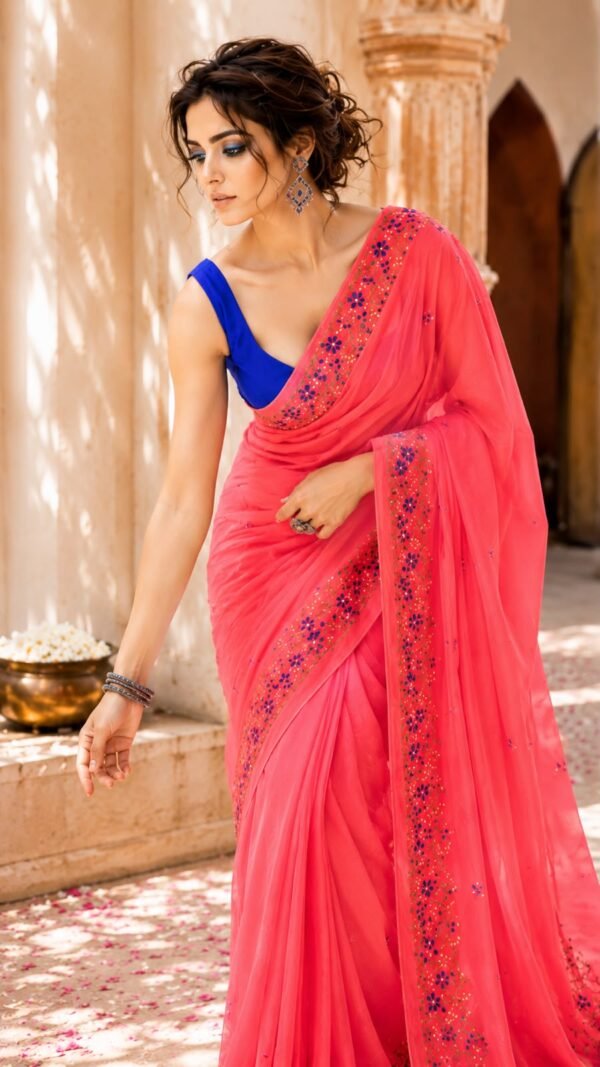
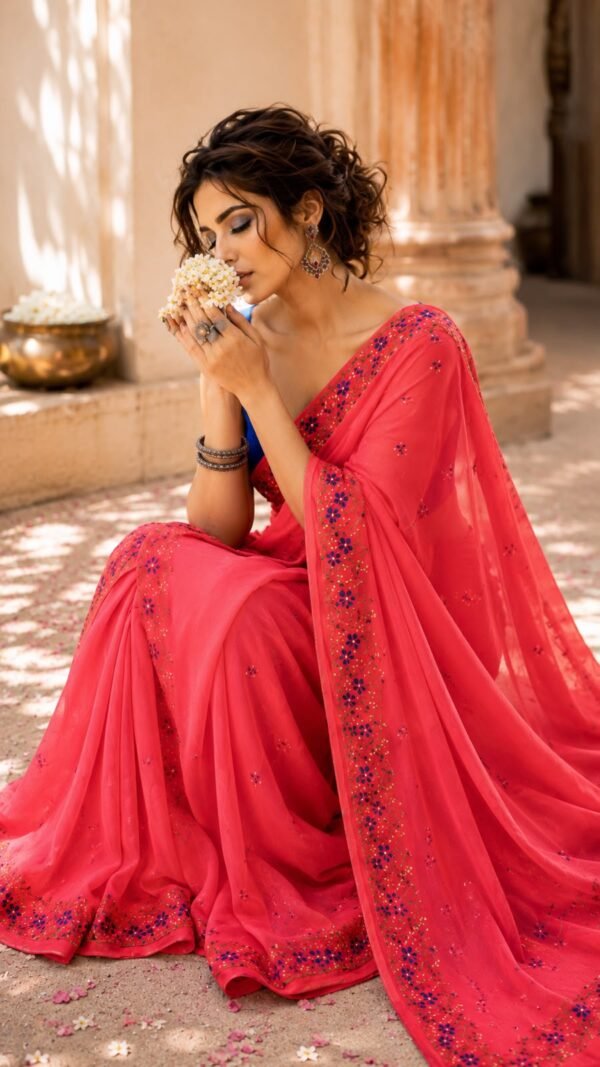
The coral ground is the base and the argument. Not the flamboyant pink of Gulaal or the deep wine of the ember sarees — this is the coral of the first light before sunrise, the specific warm pink that carries both orange and rose in the same surface. On cotton, at this depth, the colour breathes. The saree moves in it with a quality that heavier fabric cannot replicate. This is a light cotton that happens to be carrying hand embroidery across its full border and scattered flowers across its body.
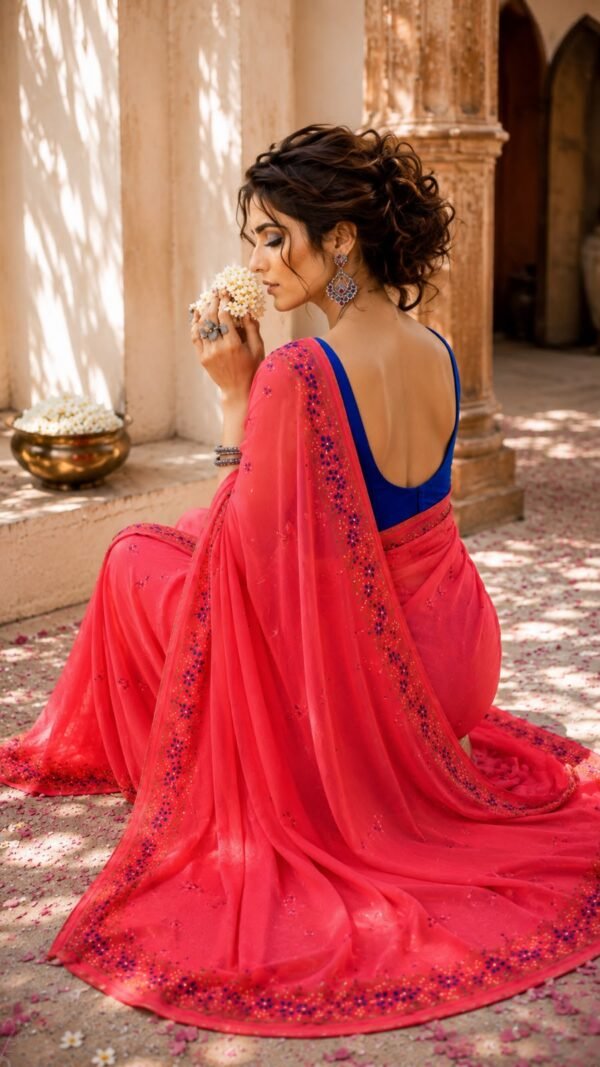
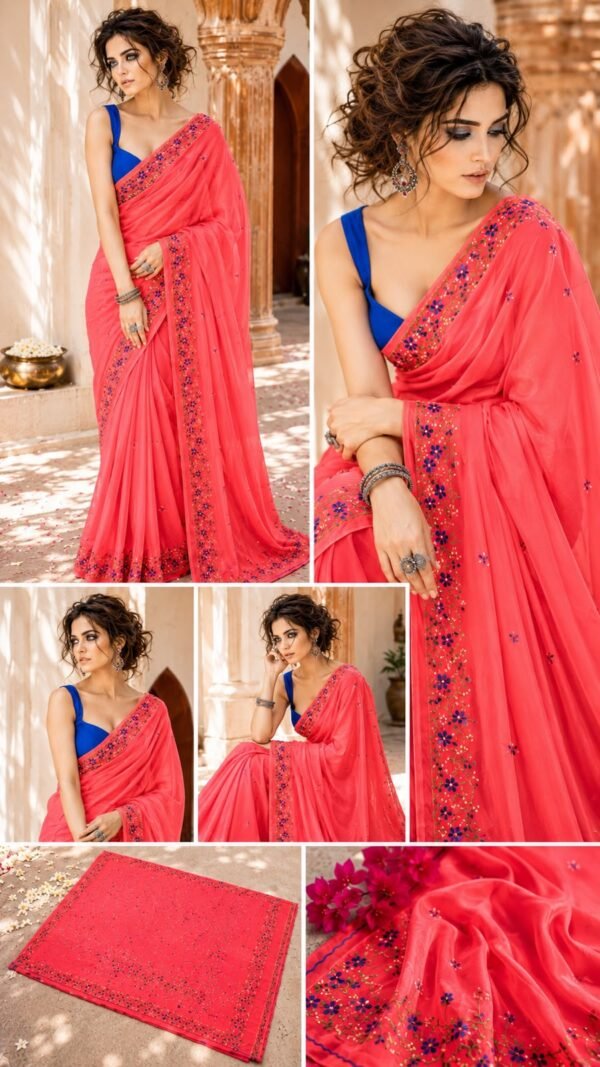
The Kantha running stitch is the oldest stitch in embroidery and the foundation of the Bengal tradition: the needle enters the fabric, travels a fixed number of threads, surfaces, enters again. The flowers in the border of this saree were built from this stitch alone, the embroiderer counting threads and turning the needle at each petal edge to build the form. The border carries a continuous line of small multicolour flowers — blue, purple, gold, yellow, white on the coral ground — running the full length of the running border and across the pallu. The density of the border means hundreds of individual flowers, each one built stitch by stitch.
Across the coral body, small Kantha buti are scattered — individual floral motifs placed at intervals across the full 5.5 metres. Each buti is a separate embroidery event: the embroiderer returning to the cloth, locating the position, and building the small flower with the same running stitch sequence used for the border motifs. The buti are visible in the fabric close-up and in the full-figure images as small points of colour across the coral ground. At a distance the body reads as almost plain. Closer, every flower becomes visible.
In the reference images, the model wears the saree with a royal blue blouse that is not included. The blue picks up the strongest colour in the embroidered flowers and creates a two-colour argument: the coral and the blue, the flower and the sky, the warmth and the cool. The name is Phool. The simplest word in the language for the thing the needle has been chasing since the first woman in Bengal decided to make the cloth more like the world.
Kantha embroidery began in Bengal as the craft of necessity: women stitching together layers of worn saris with the running stitch to make quilts, filling the surface with embroidered images from the mythology and daily life they knew. The stitch — the kantha stitch, the running stitch — held the layers together and simultaneously became the image. The quilting was the art. Over centuries, the tradition moved from recycled cloth to purpose-made fabric: new cotton sarees, silk stoles, and dupattas embroidered from scratch with the same running stitch vocabulary.
The Kantha tradition on a saree is among the most labour-intensive constructions in the collection. The embroiderer works across the full 5.5 metres, building the border first — the continuous flower sequence running the length of the running border and into the pallu — and then the scattered body buti. Each flower in the border requires the embroiderer to count thread positions for each petal, stem, and leaf. Each buti across the body is a separately considered embroidery event. The work on Phool represents days of embroidery by a single pair of hands.
The colour palette for the Kantha flowers on this saree is the Bengal tradition’s own: blue, purple, gold, yellow, and white on the coral ground — the colours chosen not from a design brief but from the embroiderer’s knowledge of what this combination produces. The blue flowers against the coral ground create the sharpest contrast; the gold and yellow read as warmth; the white reads as light. Together they make a border that looks like a garden in the specific light this saree was made to be worn in: Rajasthani sandstone in the afternoon, warm and specific, already ancient.
• Wash: Dry clean strongly recommended. The multicolour Kantha embroidery threads are many different dye lots; dry cleaning protects all of them simultaneously across the full border length.
• Hand wash: If hand washing: cold water only, very mild detergent, absolutely no scrubbing on the embroidered border or buti. Submerge gently, press water through the fabric by hand, do not rub or wring.
• First wash: Dry clean only for the first wash. The embroidery threads may run if the first wash is not professionally handled. After the first dry clean, careful cold hand washing is acceptable.
• Embroidery: Never scrub or rub the border or the body buti. The running stitches lie on the surface of the cotton; aggressive handling will pull them loose or distort the tension of the stitch across the border sequence.
• Do not: Machine wash or wring. Machine agitation will pull and tangle the embroidery threads. Wringing concentrates stress at specific stitch points and will break the border continuity.
• Iron: Low heat on the cotton ground from the reverse side only. Never iron on the embroidered border or the buti. The embroidery threads are raised from the base fabric; direct heat flattens them and can melt some thread colours.
• Dry: Always flat in shade. Do not hang while wet — the embroidery weight pulls unevenly at the hanging point. Lay flat on a clean surface to dry.
• Store: Rolled loosely around acid-free tissue or folded in clean muslin with tissue between folds. Never fold along the embroidered border line. Store away from light, humidity, and direct pressure.
Reviews
There are no reviews yet.