
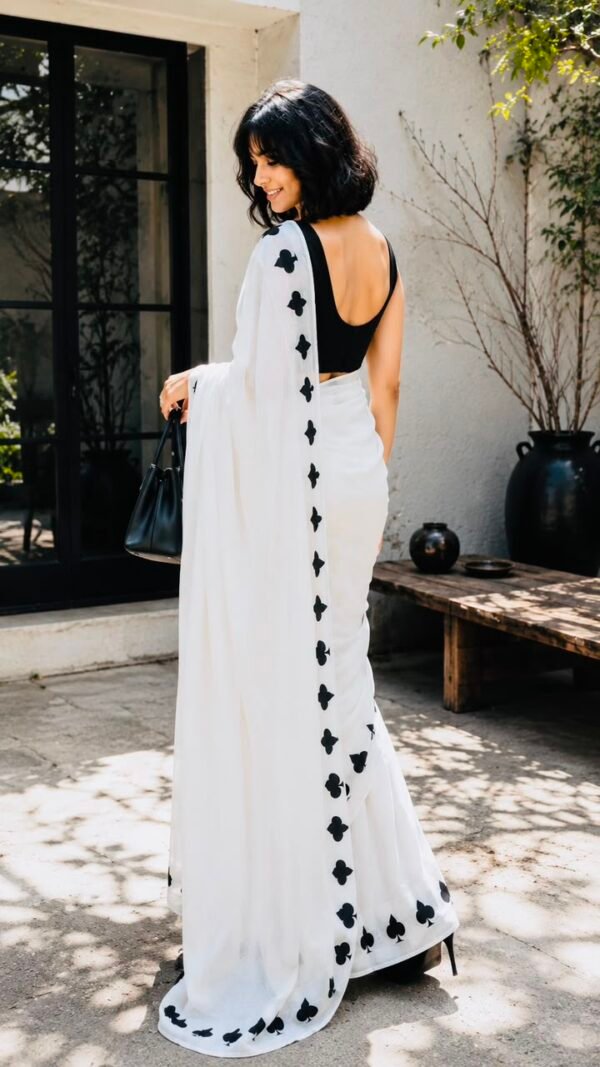
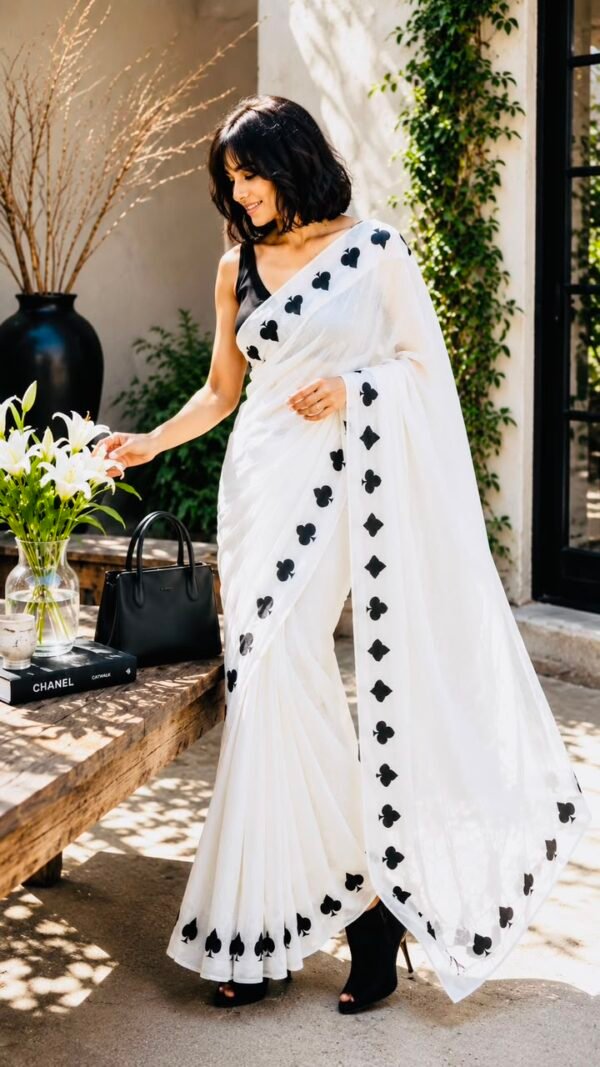
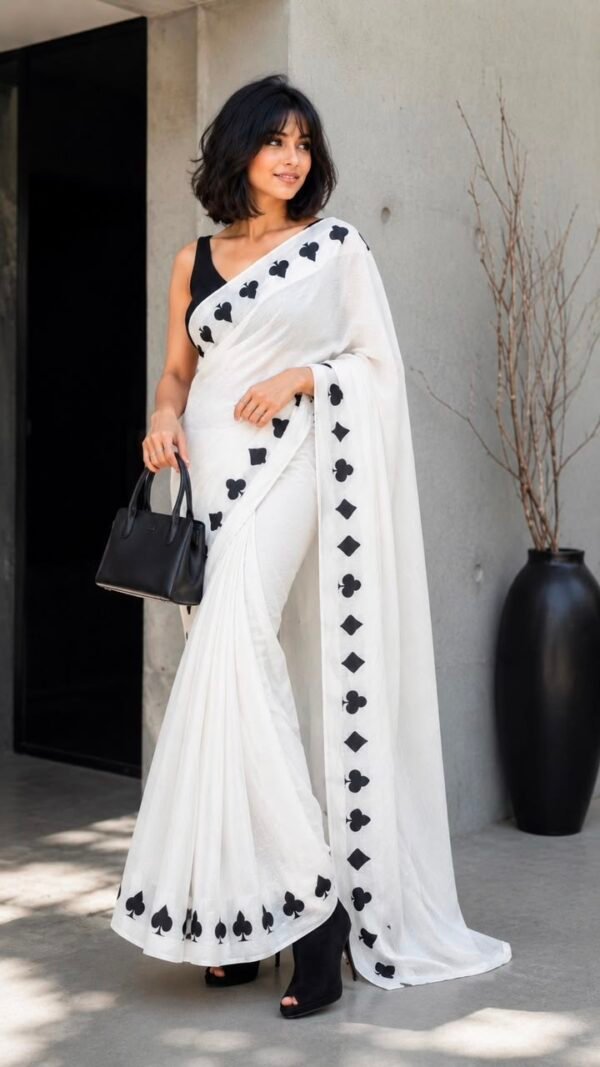






Khel Cotton Saree in White with Playing Card Suit Border
Sarees, Suits & Kurtas₹3,000.00
& Free ShippingKhel means game.
It means play.
It means the thing you do when you already know the rules
and have decided to be interesting anyway.The saree is six thousand years old.
The four suits are five hundred.
The woman wearing them together
is not confused about the timeline.
She has decided the timeline is the point.Spade. Heart. Club. Diamond.
Running along the hem of a fine white cotton
in the most graphic black
since the first screen printer understood
what white cotton could hold.
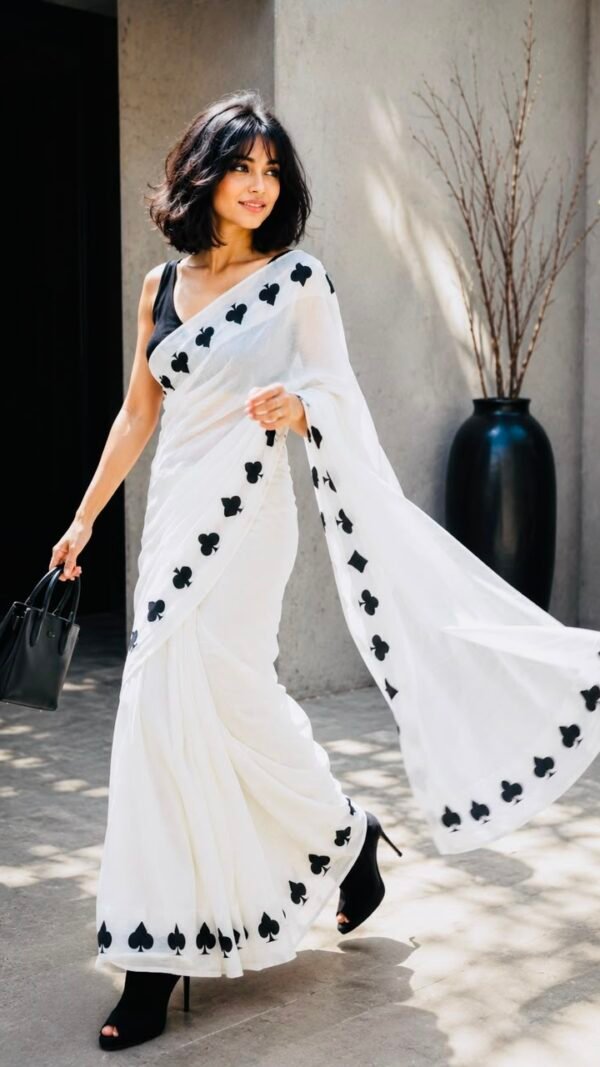
The playing card suit was designed in France in the 15th century. The spade: a modified pike-head from the sword suits of earlier German card decks. The heart: inverted from the original cup symbol, simplified to graphic perfection. The club: from the acorn, another German suit, reduced to its most recognisable form. The diamond: the clearest geometry of the four, the one that has changed the least across five centuries. Together the four suits are among the most globally recognised symbols in visual culture — understood immediately in every country that has ever played cards, which is most of them.
On a white cotton saree border, they are a complete visual argument: the oldest continuous textile tradition in India wearing the most internationally legible graphic vocabulary on its hem. Not as decoration. As a decision. The designer who chose these four symbols for this border understood that a saree is a blank canvas as much as it is a tradition, and that the tradition is strong enough to hold anything the contemporary world wants to put on it.
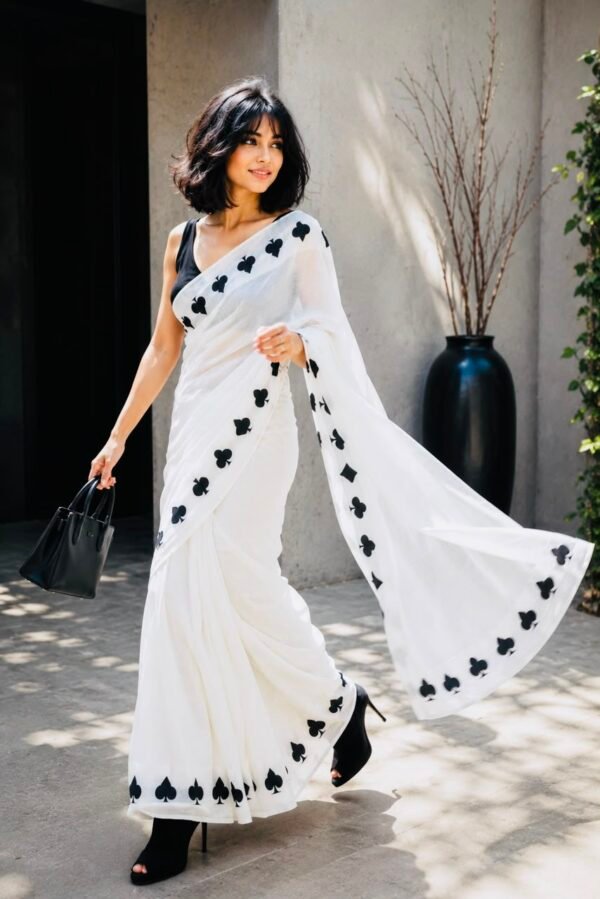
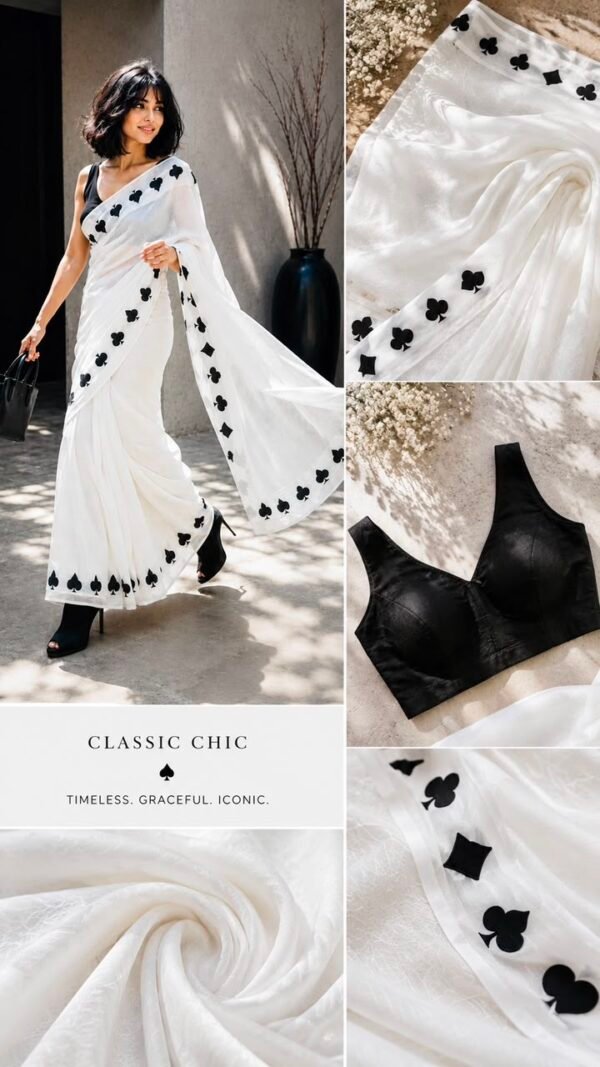
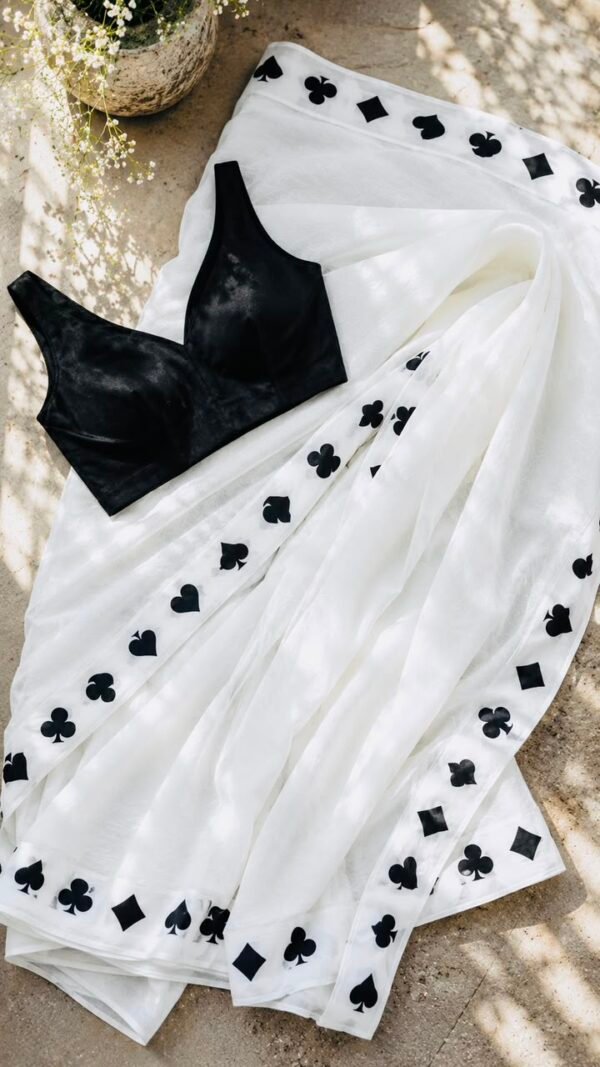
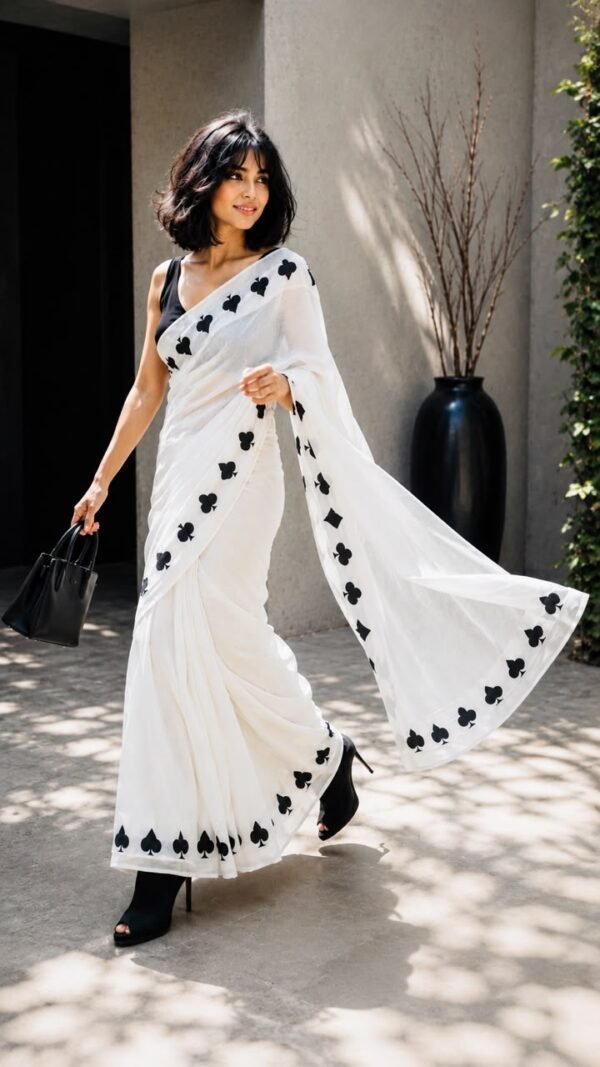
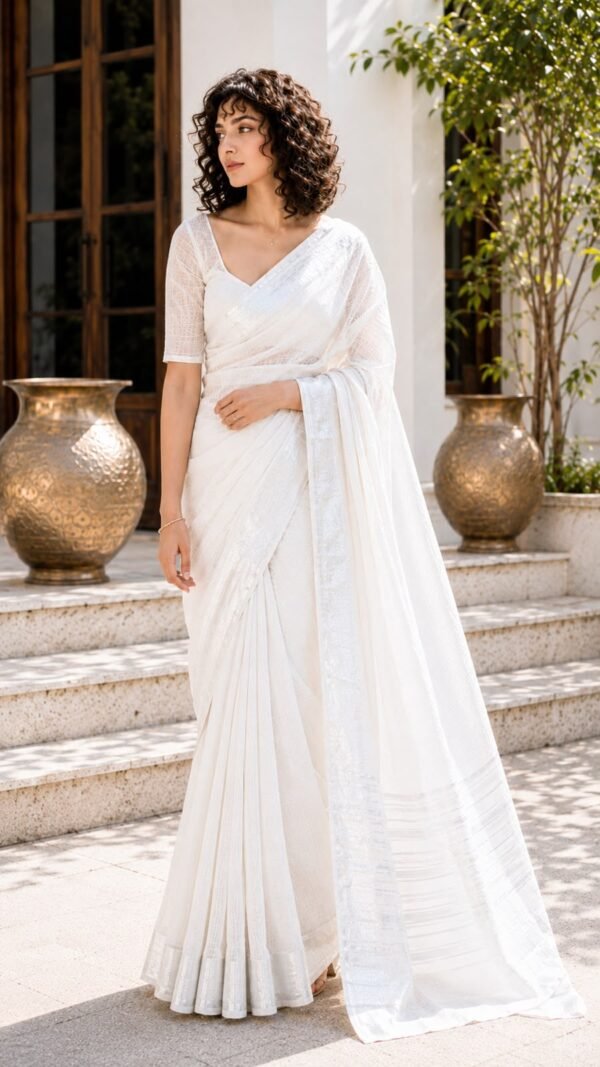
The white cotton body is fine and slightly translucent, with a natural drape that falls in clean soft folds. The fabric catches dappled light in the product shot — the shadow patterns of the overhead foliage visible across the plain white surface. Plain white cotton at this fineness reads as quiet luxury: the absence of pattern on the body makes each suit in the border more present. The border runs along the full hem and the running border: spade, heart, club, diamond, in sequence, each one large enough to be clearly legible from a normal wearing distance, each one placed at even intervals along the border band.
The black unstitched blouse piece is the final decision. Black velvet or black cotton — either reads as the border’s own colour given the full surface of the blouse. The border vocabulary and the blouse are the same black. The white body is between them. The name is Khel: game, play, the thing you do when you already know the rules and have decided to be interesting anyway.
The saree has always held contemporary design. The Jamdani weavers of Dhaka put geometric forms into their muslin that could appear on any contemporary textile today. The Kantha embroiderers of Bengal placed aeroplanes and typewriters into their running stitches when those objects became part of their world. The tradition has never refused the present. It has incorporated it, on its own terms, in its own time.
The playing card suits on Khel are in that lineage: a designer who looked at the global graphic vocabulary and chose the four symbols that are most universally legible, most graphically resolved, and most tonally at ease on white cotton. The spade, heart, club, and diamond have five centuries of visual refinement behind them — they are, by this point, as classical as the tradition they have been placed on.
The production technique — confirm whether screen print, digital print, or applique — is the method used to place the suits on the white cotton border. Whatever the technique, the requirement was precision: each suit the same size, the same weight, the same depth of black, spaced at even intervals along the full border length. The border’s authority comes from its consistency. Each suit is a decision repeated the same way until it becomes a rule.
- Wash: Hand wash in cold water with a mild, pH-neutral detergent. The white body and the black border must be protected from each other — wash gently, do not let the border section sit in water while the black dye is active.
- First wash: Wash separately. The black border — whether printed, appliqued, or embroidered — may release slight colour on the first cold wash. Keep the border in motion through the water rather than soaking. Will not recur.
- White body: Keep away from all coloured garments permanently. Fine white cotton absorbs colour from other fabrics in water.
- Blouse piece: Wash the black blouse piece separately from the white saree. If the blouse is velvet, dry clean only.
- Do not: Bleach, wring, or machine wash. Machine agitation on fine translucent cotton distorts the fabric structure and can cause puckering around the border motifs.
- Iron: Low heat on the white body, reverse side. If the border motifs are printed or appliqued, do not iron directly over them. The black may transfer or smear under heat. Iron around the border, not on it.
- Dry: In shade. This is white cotton — sun-drying yellows the fabric over time. The black border is also UV-sensitive over extended direct exposure.
- Store: Folded in clean white muslin, away from all coloured garments. This saree is white. Store it accordingly.
Related products
-
ShabnamChikankari and Kashmiri Kadai Embroidered Suit in Ice Blue
Suits & Kurtas ₹6,800.00 Add to cart
Reviews
There are no reviews yet.