





Sandhya Bengal Handloom Cotton Saree in Magenta and Violet Stripe
Sarees, Suits & Kurtas₹2,400.00
& Free ShippingSandhya is the name for dusk in Sanskrit.
Not sunset. Not twilight. The specific moment
when the sky carries two colours simultaneously
and the eye cannot decide which one it is looking at.Magenta is the last of the sun.
Violet is the first of the dark.
The Bengal weaver set them side by side in the warp
and the loom held them there, equal,
for the full 5.5 metres.Neither colour gave way.
Neither was required to.
This is what the sky looks like
when it refuses to choose.
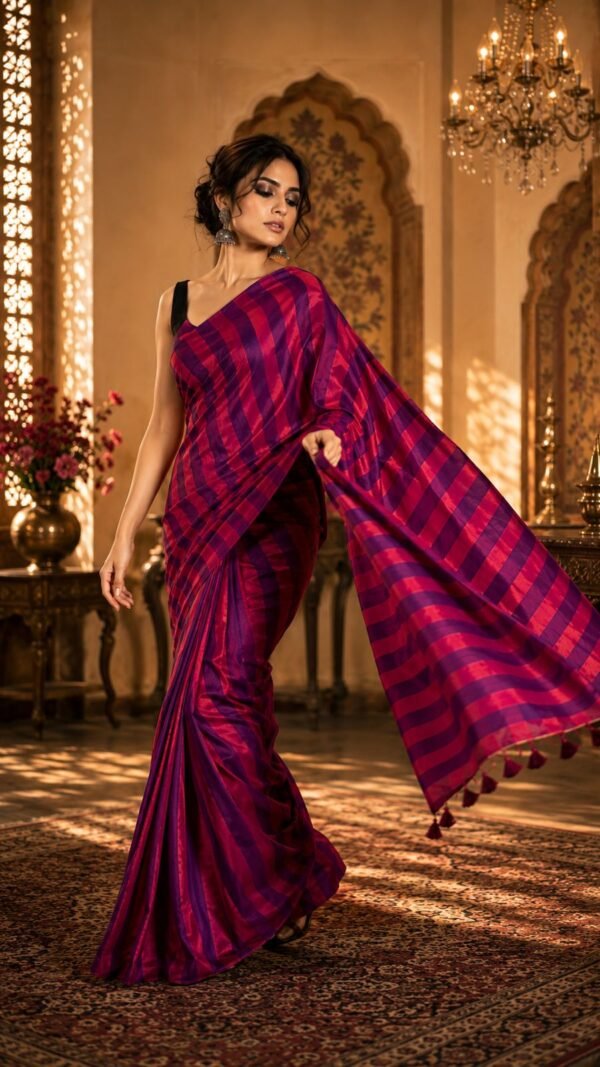
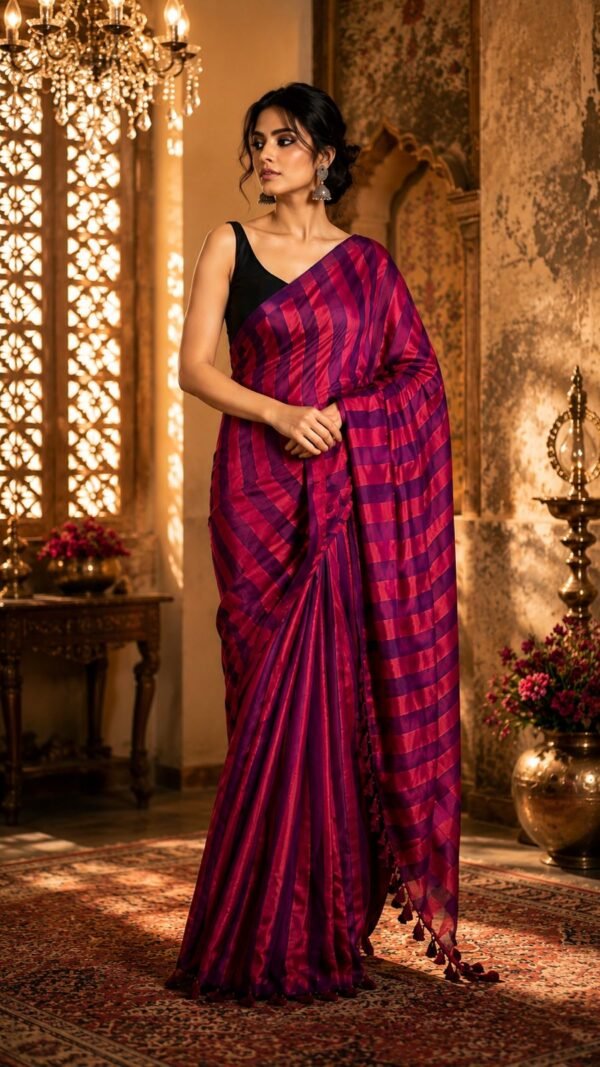
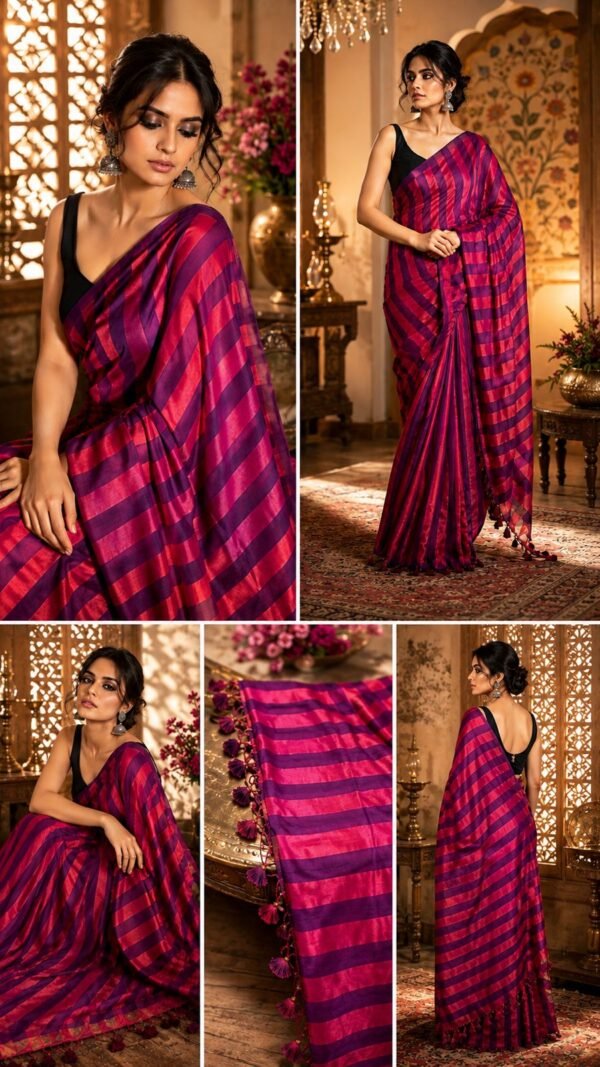
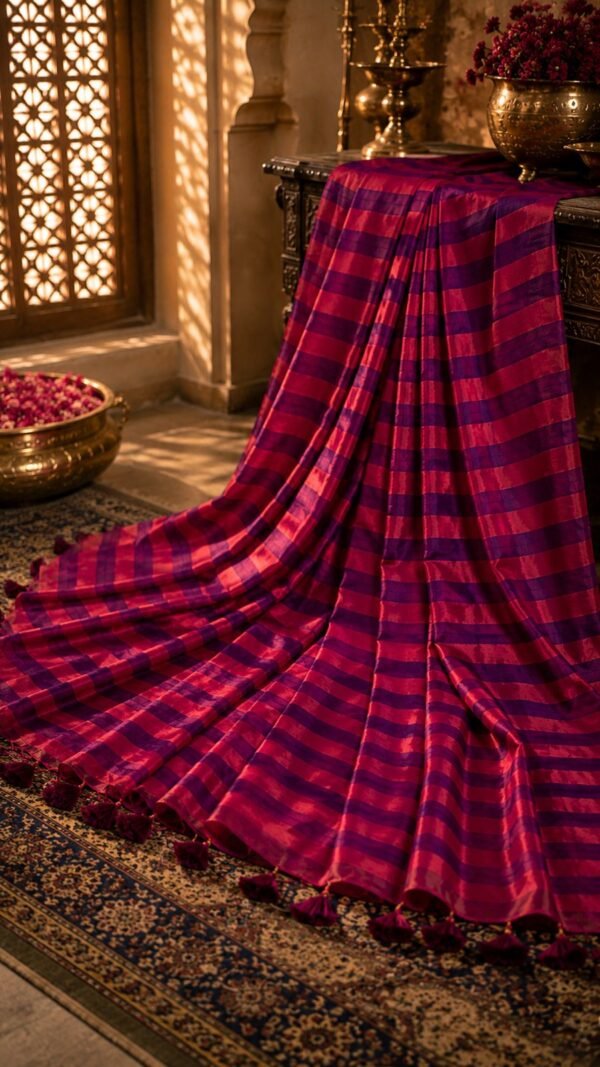
The two-colour warp stripe is the oldest pattern the handloom makes. The Bengal weaver sets the warp with two colours in the proportion the design requires — here, equal bands of magenta and deep violet, each one wide enough to register completely before the next begins — and the stripe is built into the fabric from the first thread. It cannot be separated from the cloth. It is the cloth.
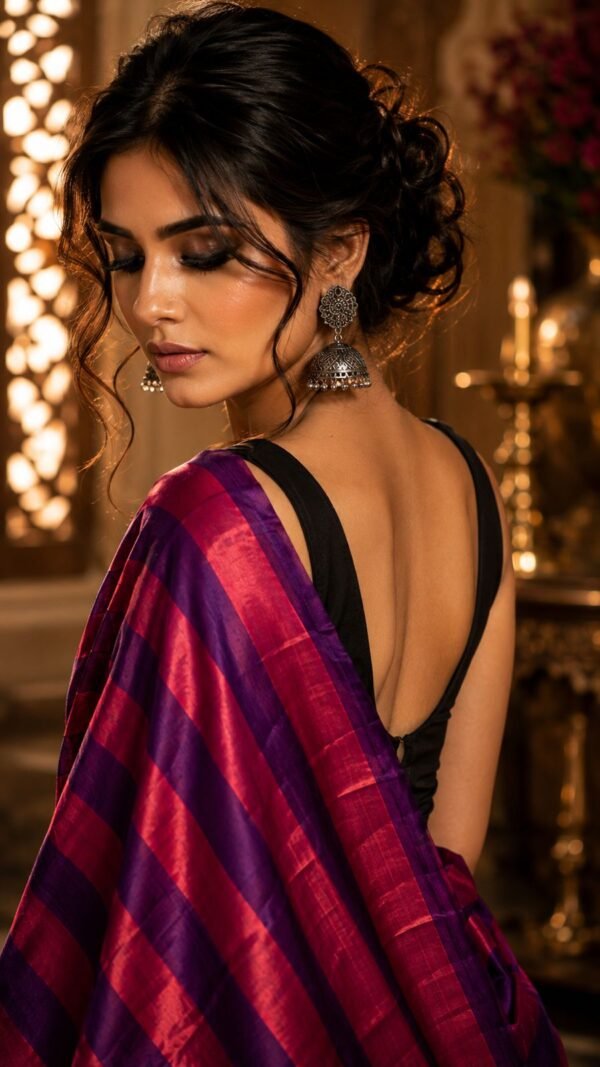
These two colours do something specific together that neither can do alone. Magenta and violet sit at opposite ends of the visible spectrum — one is the warmth of the sun at its last moment, one is the depth of the sky as it deepens toward night. Where they share a border in the stripe, the eye creates a third colour it has not been shown: a shimmer at the edge, a colour event that exists only in the transition. This is not a printing effect or a dye technique. It is a property of the eye looking at saturated complements at close range. The Bengal stripe at this scale and these colours produces it naturally.
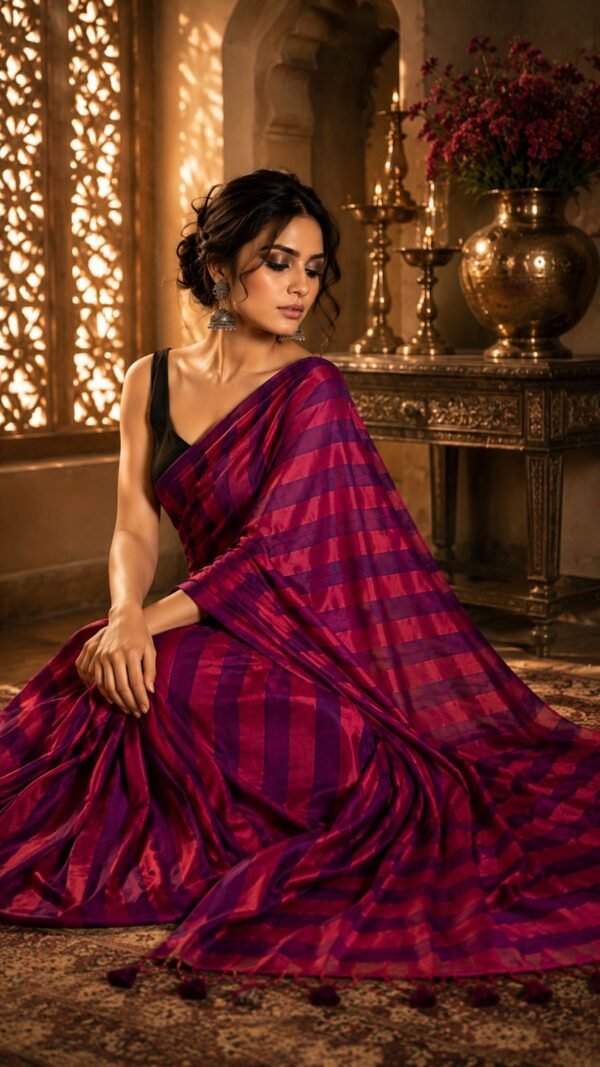
The cotton has a lustre finish — a slight sheen that catches the amber warmth of candlelight and the cool of natural daylight differently. In the reference images, the Mughal interior creates warm pools of amber light; the magenta stripes read warm, almost copper-toned, and the violet stripes deepen into blue-black. In the jali-filtered light of the carved marble window, both colours read differently again. The saree holds the room’s light and returns it changed.
The pallu tassels are multi-strand clusters in matching magenta and violet — bunched, heavy, swinging together when the pallu moves. They do not separate the two colours. They carry both simultaneously, the way the saree does, the way the sky does at exactly this hour. The name is Sandhya. The moment the sky refuses to choose between what it is leaving and what it is becoming.
The Bengal handloom stripe tradition — locally called patli or taant stripe — is among the oldest weave structures in Indian textile history. The warp is set with two colours in the proportion the pattern demands; the weave then proceeds in the same colour sequence, producing the stripe automatically as warp and weft intersect. The stripe is not applied to the fabric. It is the fabric’s structure. The two colours are inseparable from the first thread to the last.
The lustre cotton used for Sandhya is a specific preparation: the cotton yarn is treated to increase its surface reflectance before weaving, producing a fabric with a slight natural sheen that catches light differently from the matte handloom cottons elsewhere in this collection. In the Mughal interior of the reference images — the amber candlelight, the filtered light through carved marble jali, the warm reflection from Persian carpet and painted walls — the lustre cotton reads one colour in direct light and a different colour at an angle. The stripe doubles this effect: the magenta and violet each respond to the light source independently, creating a fabric that changes with every shift in the light source and every angle of the viewer.
The multi-strand tassel clusters at the pallu hem are the only element of this saree that was added after the weaving. Each cluster is hand-tied — multiple strands of magenta and violet thread gathered together, knotted at the top, and attached to the pallu edge at even intervals. The cluster tassels carry both colours together deliberately: the saree’s argument — that these two colours are one thing — continues to the very last detail.
• Wash: Hand wash in cold water with a mild, colour-safe detergent. The magenta and violet are two separate dye lots in one fabric; gentle washing protects both.
• First wash: Wash separately. Both the magenta and the violet may release slight colour on the first wash — normal for deep saturated dyes at these depths. Wash in cold water only. Will not recur after the first wash.
• Lustre finish: The slight sheen of the cotton is a surface treatment. Do not soak for extended periods and do not wring — both damage the lustre over time.
• Tassels: The multi-strand cluster tassels carry both colours together. Handle gently — do not pull the strands apart. Press gently, reshape the cluster, and lay flat to dry.
• Do not: Machine wash, bleach, or use fabric softener. All three affect the lustre finish and the deep dye colours.
• Iron: Medium heat on the cotton body from the reverse side. The lustre finish is heat-sensitive — do not iron from the front on the stripe surface. Avoid ironing the tassels.
• Dry: Always in shade. Both magenta and violet fade under prolonged UV exposure. The interaction of these two colours in light is the entire point of this saree. Protect it from the one thing it cannot argue back against.
• Store: Folded in clean muslin away from other garments and away from direct light. The lustre cotton can pick up colour from other fabrics in storage.
Related products
-
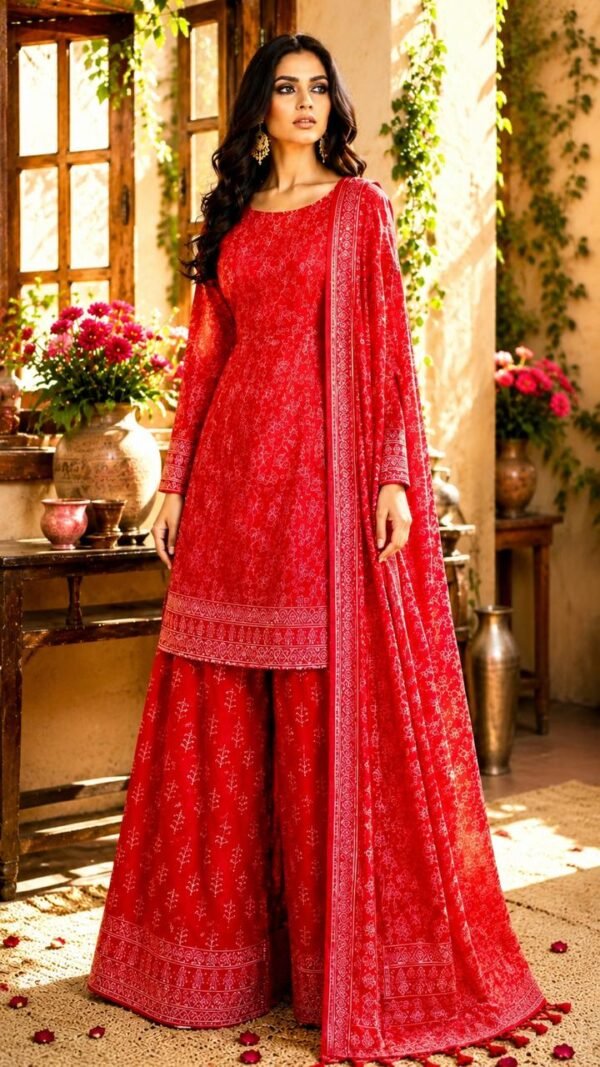
Gulmohar Chanderi Kurta and Cotton Sharara Suit Set in Crimson with Zari Border
Suits & Kurtas ₹4,200.00 Add to cart
Reviews
There are no reviews yet.