
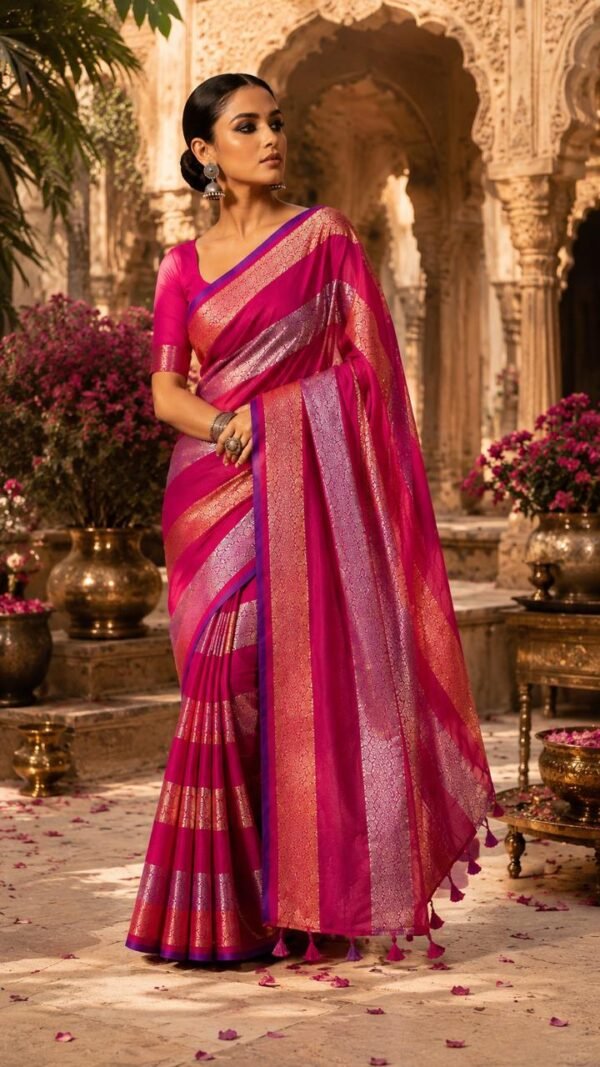
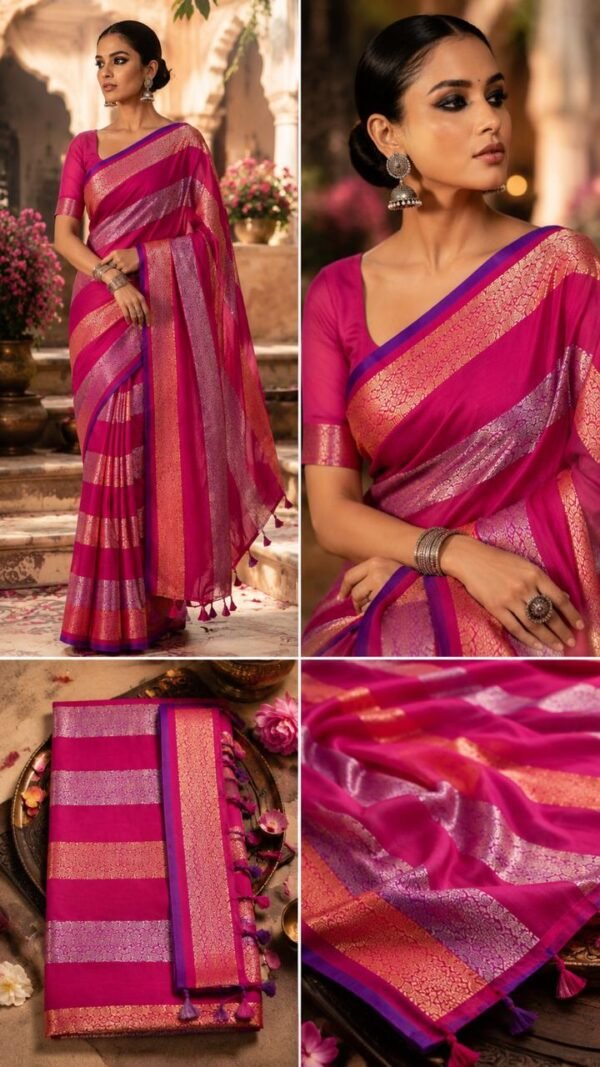
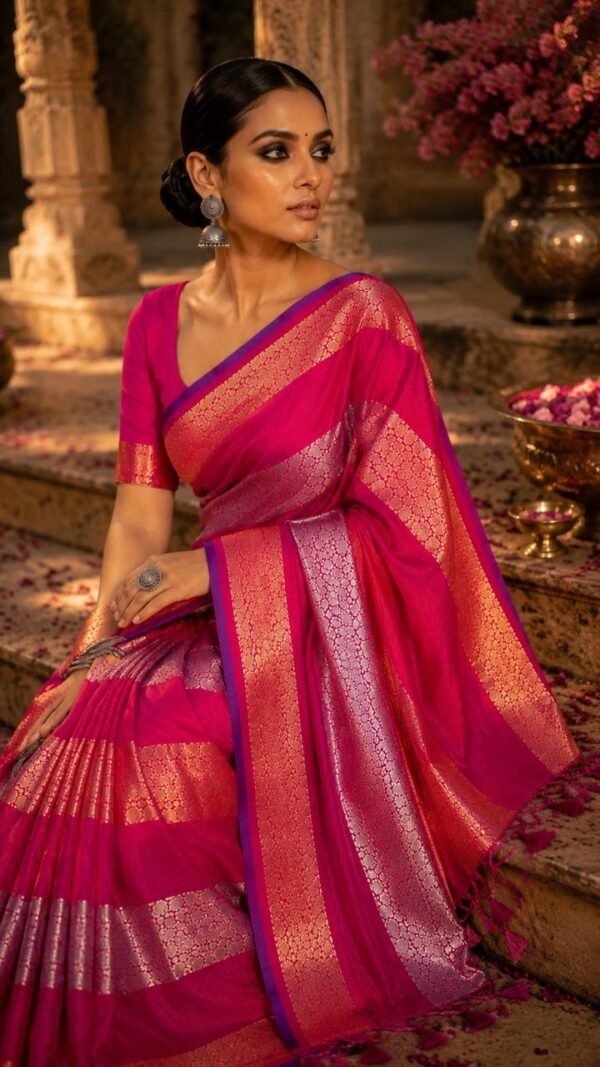
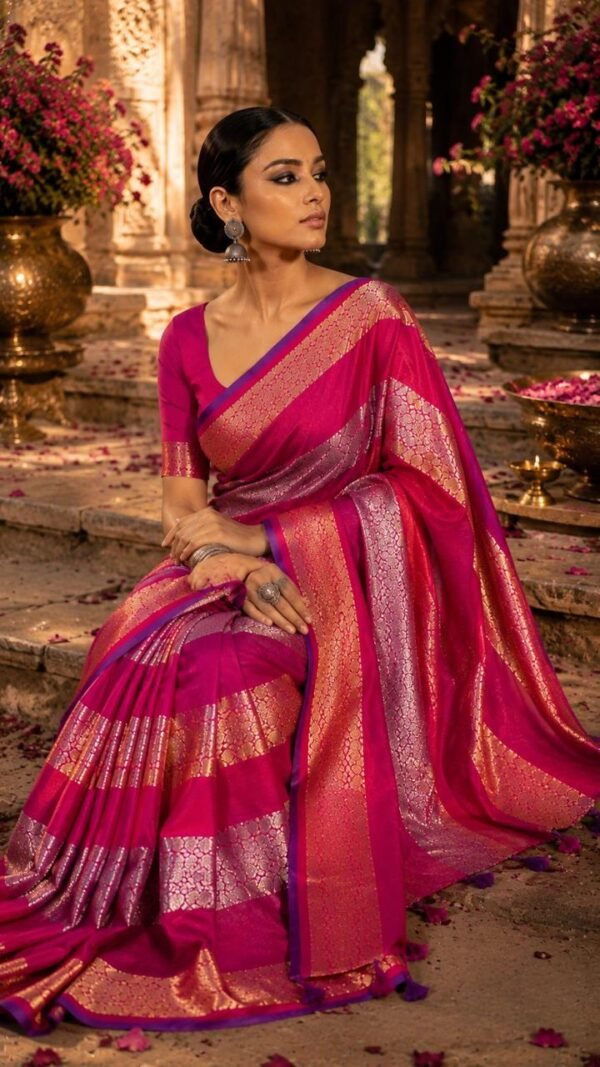
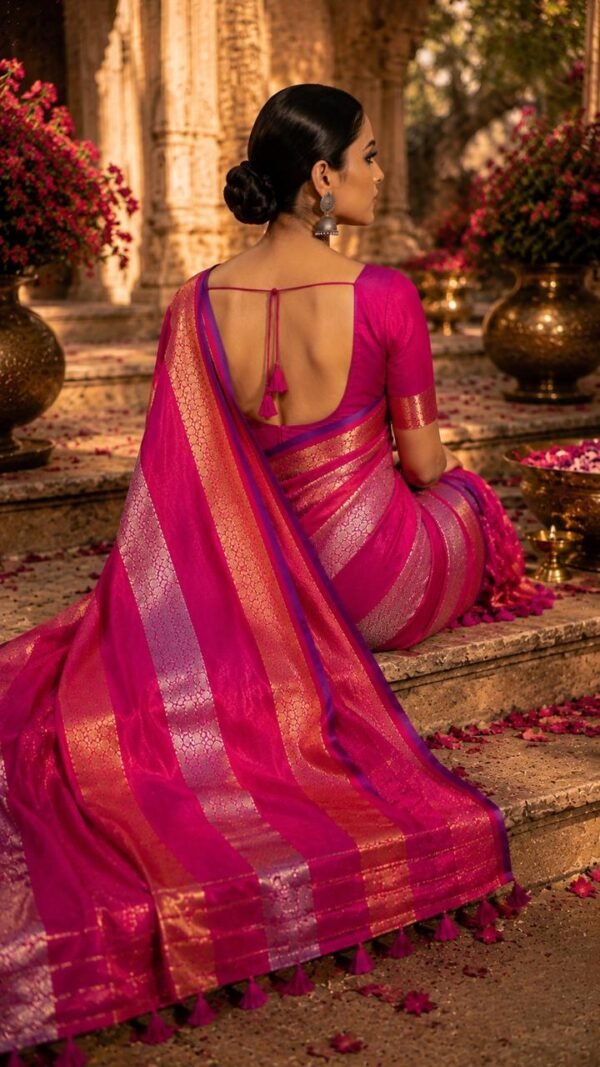
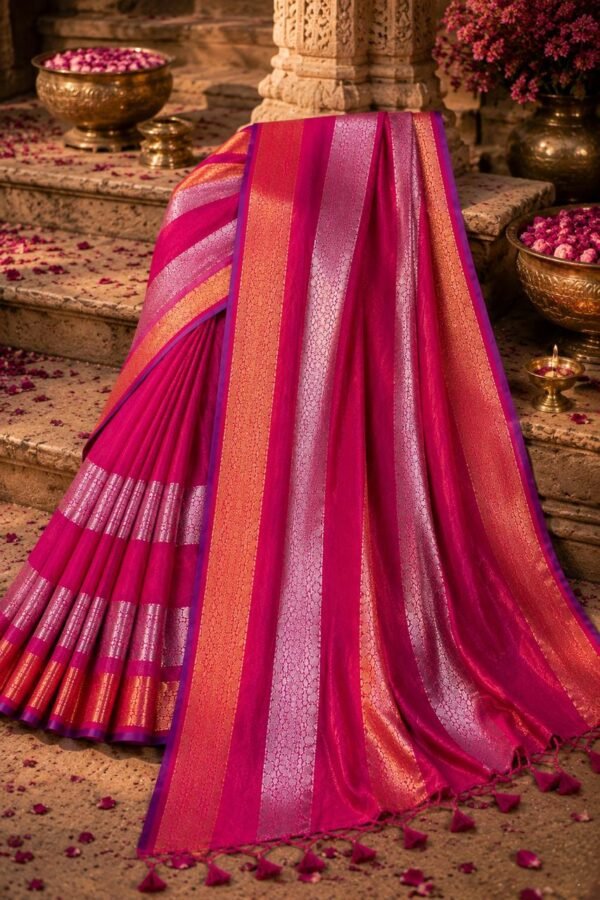
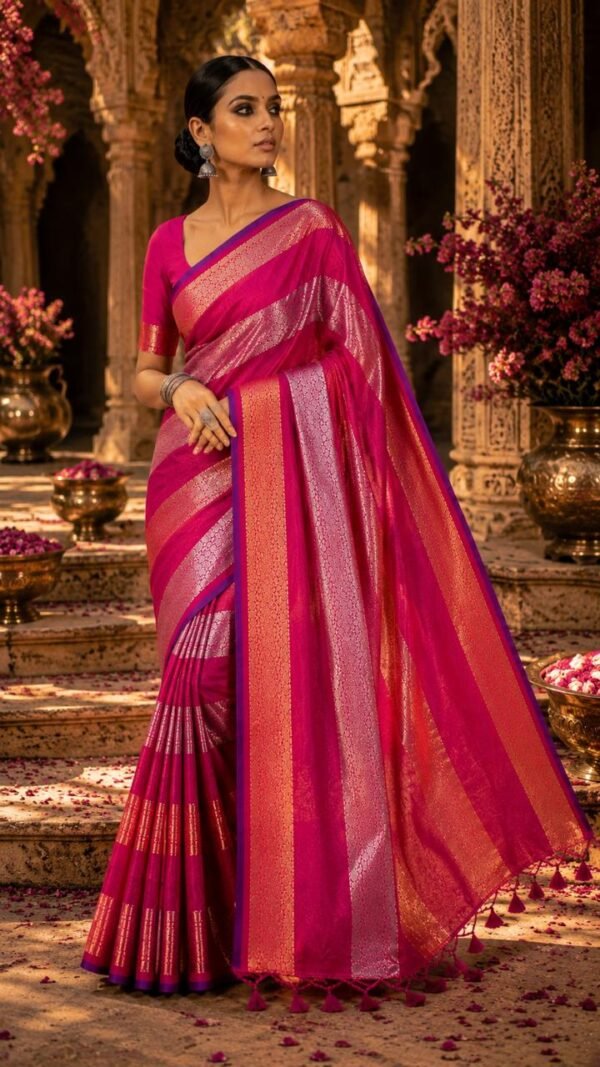
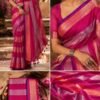
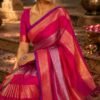
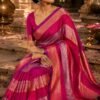
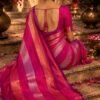
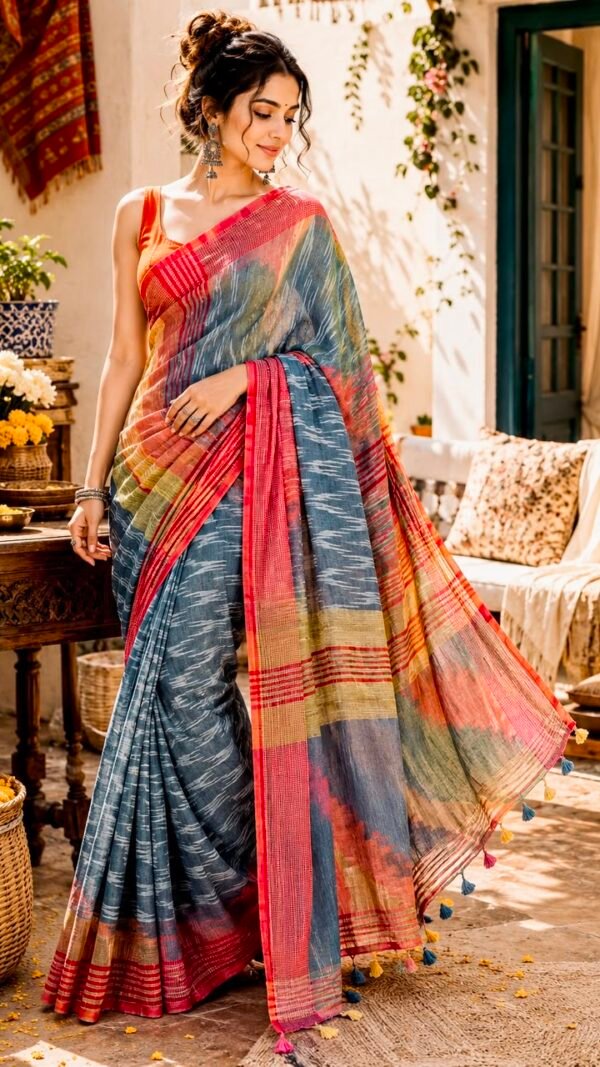
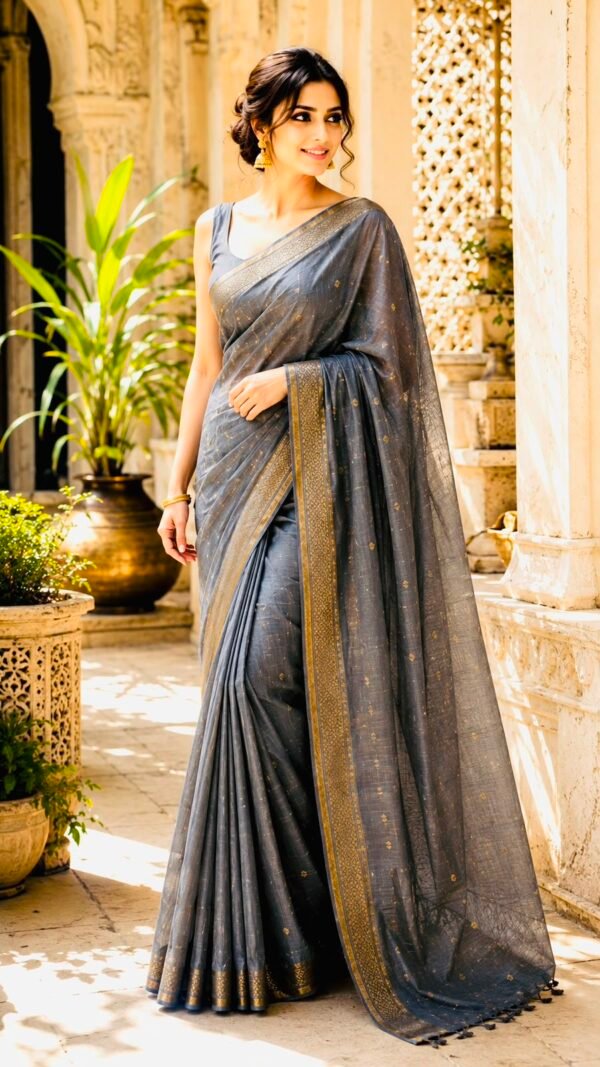
Shringaar Banarasi Cotton Saree in Magenta with Meenakari Zari Bands
Sarees₹3,600.00
& Free ShippingShringaar is the first rasa.
The rasa of love, beauty, adornment.
The Sanskrit texts placed it first among the nine emotions
because they understood that beauty
is not decoration.
It is a state of being. The gold bands and the silver bands alternate.
Neither gives way to the other.
Together they make the magenta between them
look like something that has been lit from within.
This is not a saree for a quiet room.
A quiet room is for later.
Meenakari is the art of laying multiple metals into a single surface — gold and silver, alternating, each in its own register. In jewellery, the meenakari craftsperson fires enamel into the grooves between metals. In Banarasi weaving, the meenakari weaver lays gold zari and silver zari in alternating horizontal bands, building each one into the cotton warp as the weaving progresses. The result is a fabric that holds two different lights simultaneously: gold is warm, silver is cool, and the magenta cotton between them reads as something a single-colour fabric never could.
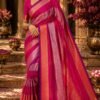
The body of this saree carries the full meenakari band sequence: alternating gold brocade bands and silver brocade bands, each one dense with a small floral-geometric repeat pattern, running horizontally across the full width of the fabric at regular intervals. The cotton between the bands is plain magenta — a deep, saturated hot pink with no surface texture. The contrast between the plain cotton intervals and the brocade bands is the saree’s visual grammar: plainness and richness in conversation, each making the other more visible.
The running border is a narrow violet-purple stripe — the colour that sits between the magenta body and the metallic bands on the colour spectrum, and holds the entire composition together at the hem. The pallu carries the band sequence more densely: the gold and silver meenakari bands increase in frequency toward the pallu end, so the saree builds in richness as it reaches its conclusion. The magenta tassels at the pallu hem are matched to the body colour, knotted by hand.
The fabric close-up in the reference images shows what meenakari cotton looks like when the light hits it at an angle: the gold bands warm, the silver bands cool, the cotton between them catching neither but holding both. In direct light this saree is one thing. In low light it is another. In the candlelight of a wedding mandap it is a third. All three are Shringaar — the rasa of the full flowering of the self, the emotion the Sanskrit aestheticians placed first among the nine because they understood that beauty is not decoration. It is where everything begins.
Varanasi has been weaving brocade for over two thousand years. The Banarasi tradition developed its meenakari weaving — the technique of laying two or more different metallic threads in alternating registers within the same fabric — under Mughal court patronage, when Persian weaving masters brought new technical vocabulary to the looms on the ghats of the Ganga. Meenakari means enamelled: the two-metal alternation in weaving mirrors the two-metal inlay in the jewellery tradition, both of them built from the same aesthetic principle — the interaction of different lights in the same surface.
The Banarasi meenakari weave is built on a Jacquard or dobby loom that can manage multiple thread colours in the weft simultaneously. The weaver sets up the loom with the gold zari, the silver zari, and the plain cotton thread in the sequence the design requires, then weaves the body in the pattern — plain cotton interval, gold brocade band, plain cotton interval, silver brocade band — repeating across the full 5.5 metres of the saree. The brocade band pattern itself is a small interlocking floral-geometric repeat woven with supplementary metallic weft on the cotton ground. Each band requires the weaver to introduce the metallic thread at the correct intervals across the full loom width, maintaining the pattern register from one end of the band to the other.
The violet-purple running border is a woven cotton stripe in a contrasting colour — not embroidered or printed, but built into the warp at the edge of the cloth. The magenta tassels at the pallu hem are attached by hand after weaving. This saree is entirely the product of the loom and the hand that built it. No machine printing, no surface embellishment added after the fact. Every element visible in the fabric was present in the weaver’s plan before the first thread was thrown.
- Wash: Dry clean strongly recommended for long-term preservation of the gold and silver meenakari bands.
- Hand wash: If hand washing: cold water only, mild detergent, do not soak or wring. The alternating gold and silver zari bands are woven in structurally but both metallic threads require gentle handling to maintain the brocade drape and the band edge quality.
- First wash: Dry clean only for the first wash. After the first clean, careful hand washing is acceptable.
- Metallic bands: Do not scrub the brocade bands. The supplementary metallic weft threads sit above the cotton ground; aggressive handling can distort the brocade pattern at the band edges.
- Tassels: Handle gently. Do not pull or wring. Press gently after washing and lay flat to reshape.
- Iron: Low heat on the magenta cotton body only. Do not iron directly on the gold or silver brocade bands — direct heat on metallic thread dulls the sheen and can fuse the threads together. Iron from the reverse side on the plain cotton intervals only.
- Dry: Always in shade. Both magenta and metallic zari are sensitive to prolonged UV exposure. The interaction of the gold and silver with the magenta is the entire point of this saree. Protect it from direct sun.
- Store: Folded in clean white muslin. Tissue paper between the folds to prevent the metallic bands from tarnishing. Store away from humidity and direct light.
Reviews
There are no reviews yet.