




Aaroh Cotton Tissue Saree in Weft Colour-Block Stripe
Sarees₹3,200.00
& Free ShippingAaroh is the ascending movement of a raga.
The notes climbing from their lowest point
to their highest,
each one a necessary step,
none skippable.
Deep violet.
Copper orange.
Magenta.
Blush.
The weaver set this sequence in the weft
before the saree existed.
The loom held each colour in its place
across the full 5.5 metres.
Every note. In order.
The scale complete.
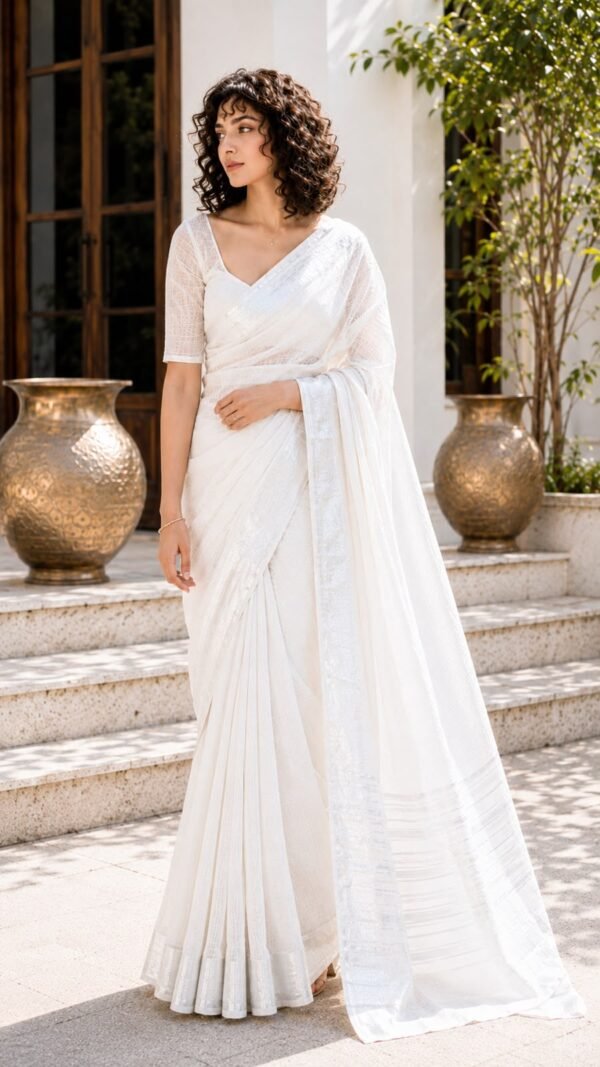
Cotton tissue carries metallic thread in its warp, giving the fabric a natural sheen that reads differently from every angle and in every light source. In candlelight, it glows warm. In daylight, it reflects cooler. At the junction where one weft colour meets the next, the metallic warp catches both colours simultaneously for a fraction of an inch — a transition zone that shimmers where the eye expects a clean edge. This is not a printing effect. It is what tissue does at the colour boundary.
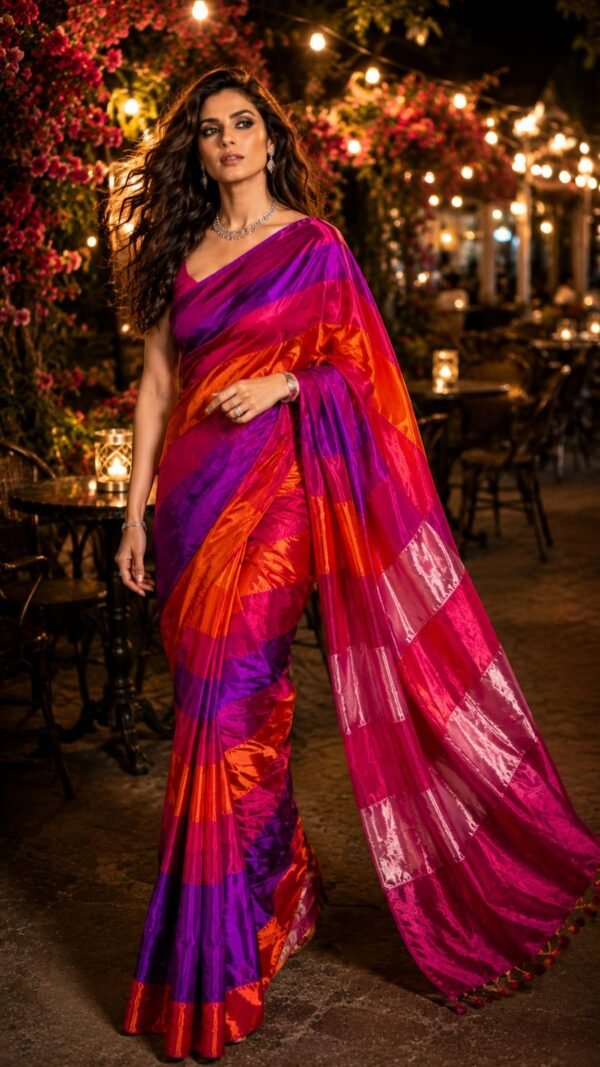
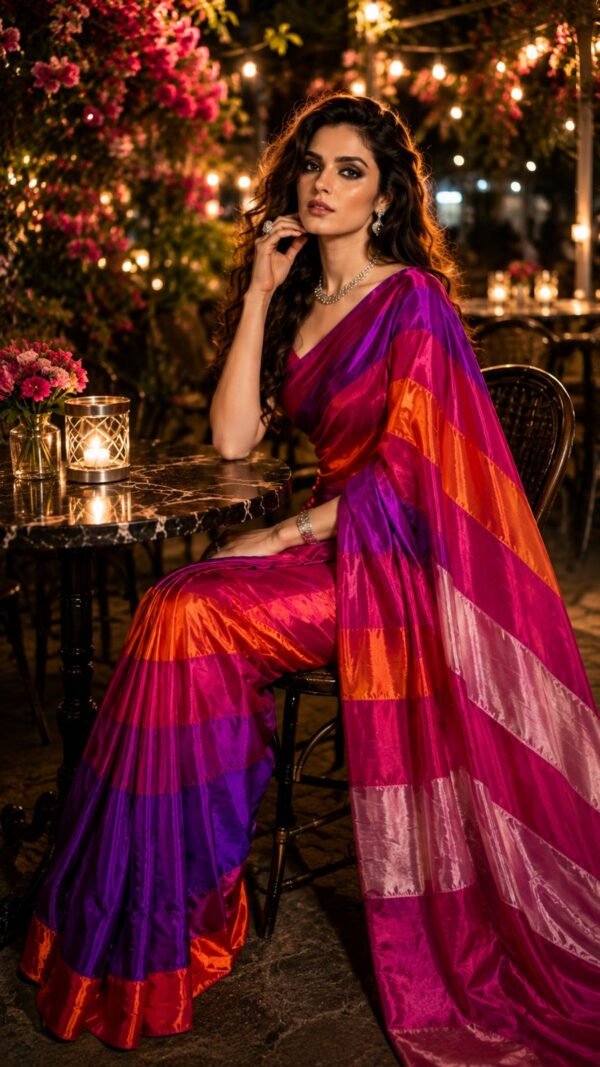
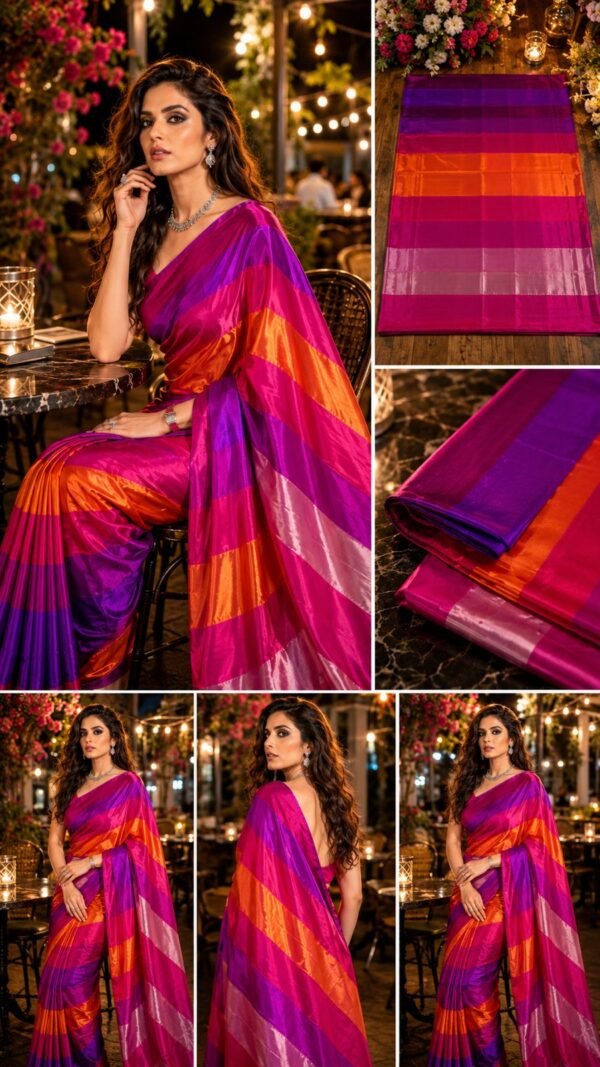
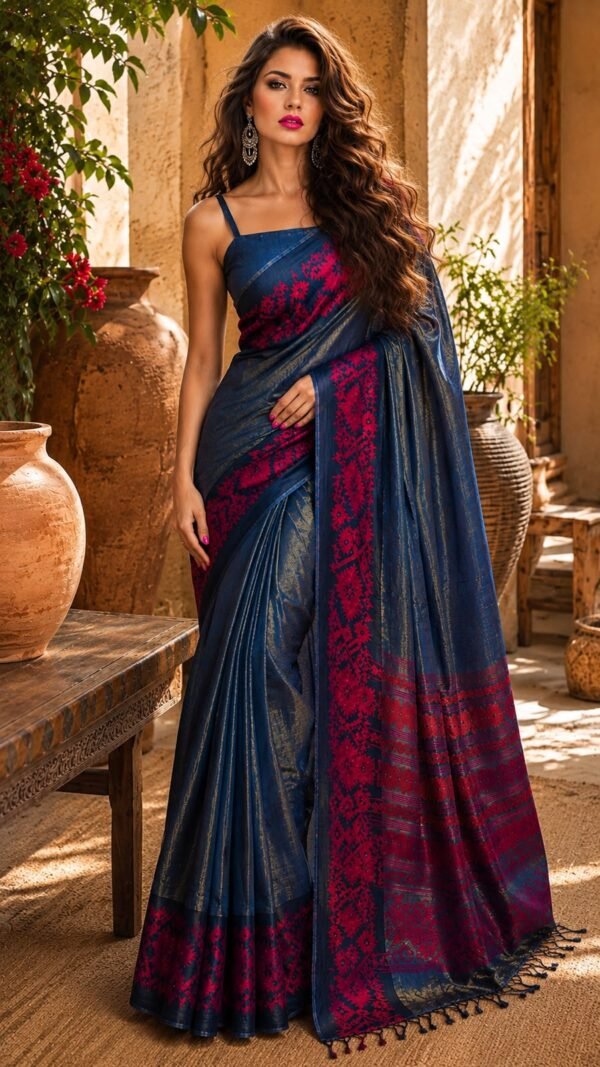
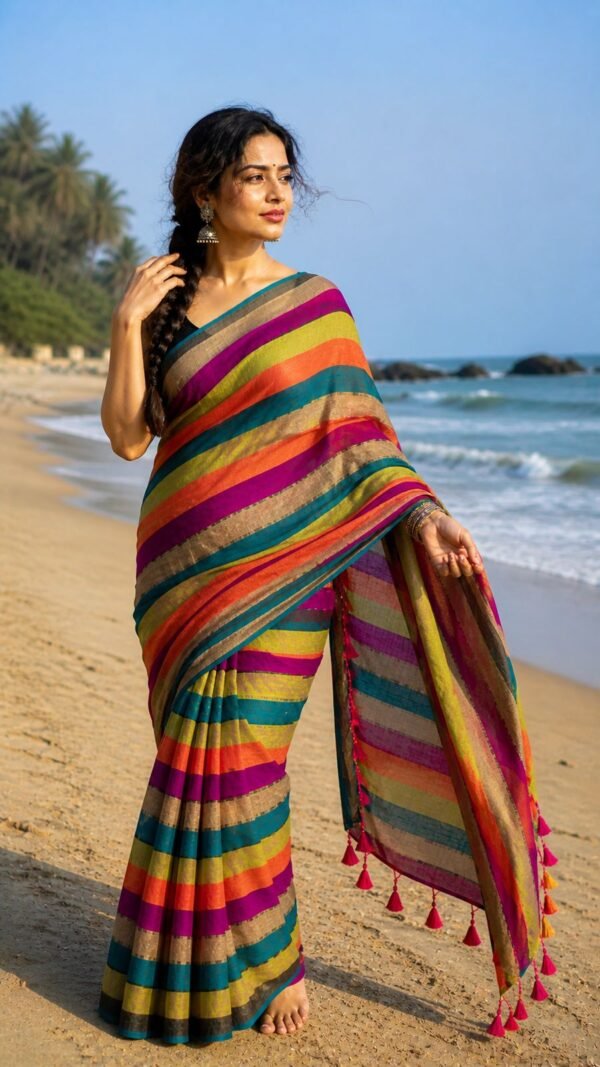
The four weft stripes are wide — wide enough that each colour reads as a full band rather than a narrow line. Deep violet at the base, copper-orange above it, magenta above that, blush-pink at the shoulder. Each band is a distinct colour family; each one occupies a different position in the colour temperature spectrum. The violet is cold. The orange is warm. The magenta is hot. The blush is soft. In sequence, ascending, they move from the coolest colour to the warmest and then resolve into something lighter and more delicate at the top. This is the logic of the aaroh: the scale does not repeat, it resolves.
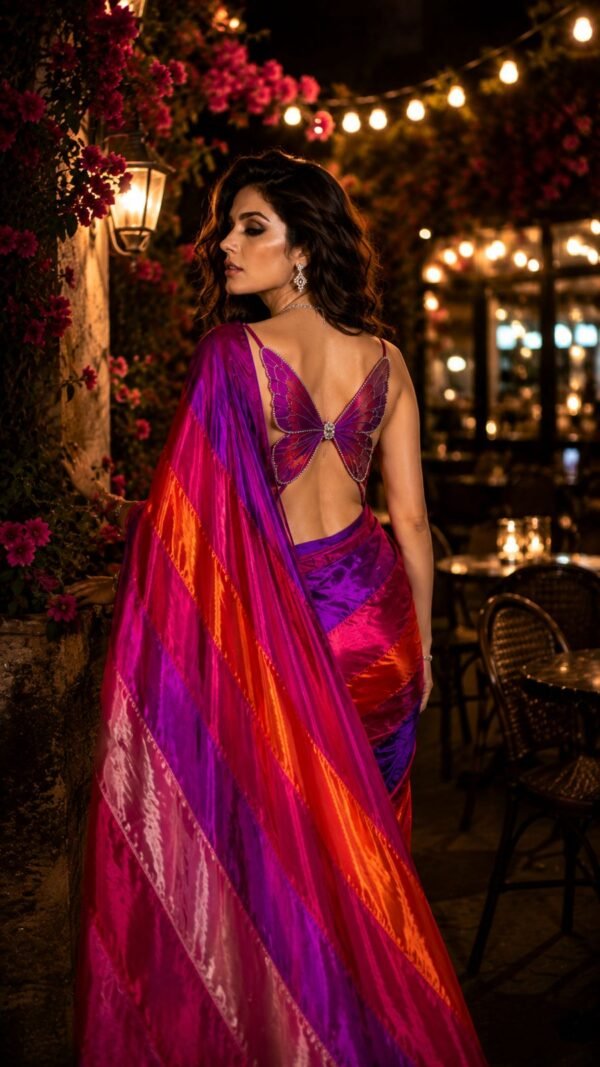
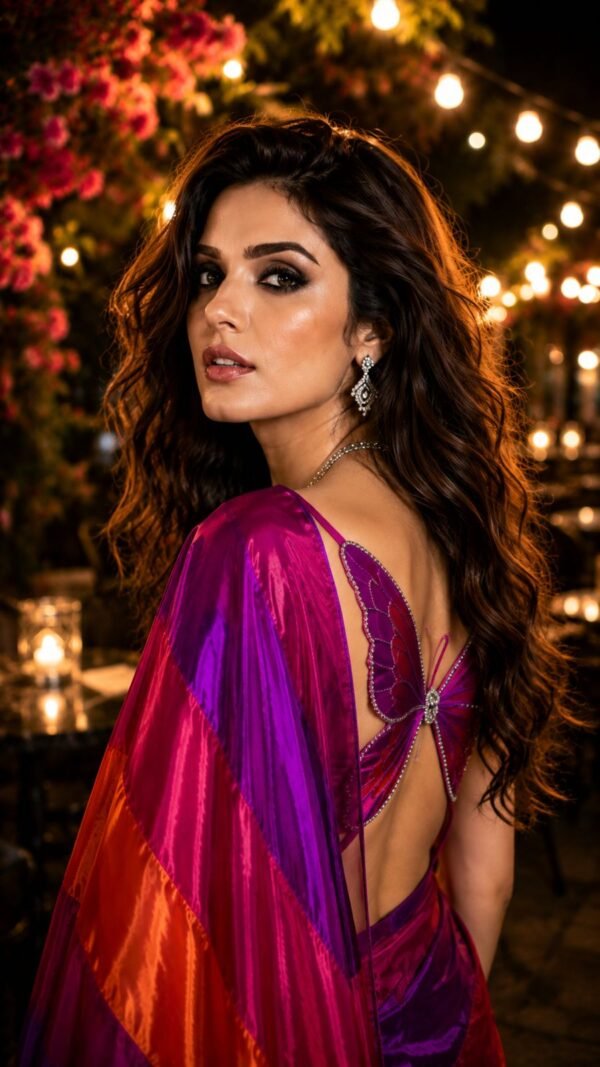
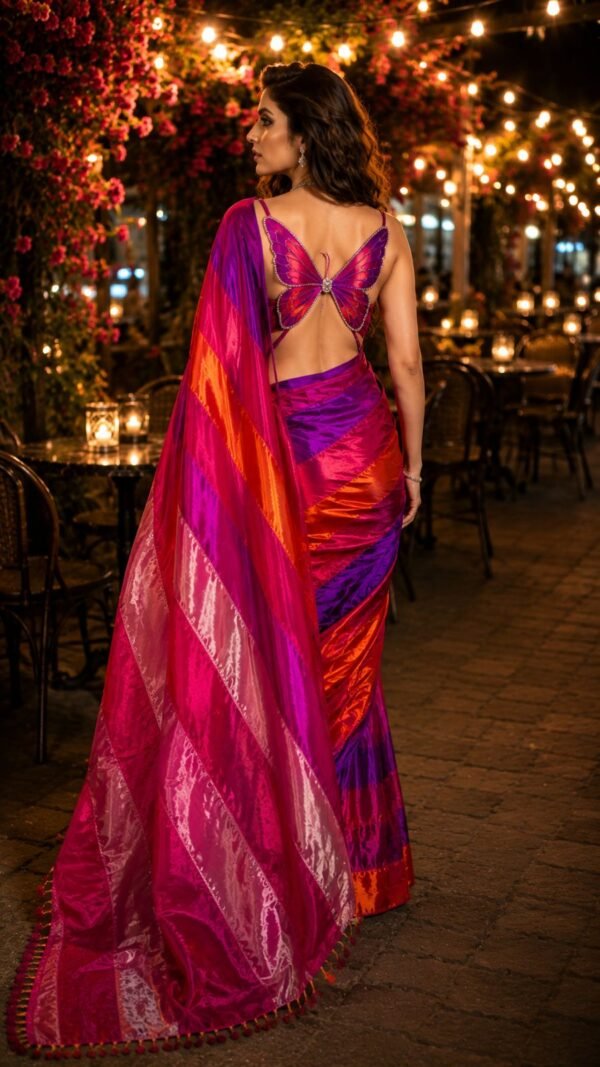
The reference images were shot in a candlelit garden restaurant — string lights overhead, lantern candles on marble tables, bougainvillea in the background. In this light, the copper-orange stripe reads almost molten, the violet reads deep and interior, the magenta glows at its full intensity. The blush reads silver at the shoulder where the string light falls directly on it. Four colours, four temperatures, one fabric, one evening. The tissue sheen means every change in position the woman makes is a different saree.
The pallu carries the full stripe sequence once more before the fabric ends. There is no separate pallu design, no contrasting section, no change of register. The aaroh continues to the last centimetre. The name is Aaroh: the ascending movement of the raga, each note in its necessary place, the scale complete only when all of them have been heard.
Cotton tissue is woven with metallic thread — gold or silver zari — running through the warp alongside the cotton. The metallic thread is not a surface decoration; it is part of the fabric’s architecture, present from the first thread to the last. The sheen the fabric carries is the light reflecting off this metallic warp — warm when the light source is warm, silver when it is cool, and at the transition between one weft colour and the next, both simultaneously for the fraction of an inch where the warp carries the boundary.
Weft colour-block stripe in tissue requires the weaver to change the weft colour at precise intervals across the full length of the fabric. Each colour change is a decision about where one band ends and the next begins. For Aaroh, the four weft colours — violet, copper-orange, magenta, blush — are set at equal band widths, so the stripe is even and the transitions are at regular intervals across the 5.5 metres. The discipline is in holding the boundary clean: the metallic warp catches both colours at the transition, creating the shimmer zone that tissue weft-stripe is known for, but the weaver must ensure the colour change in the weft itself happens at a single thread row rather than bleeding across multiple rows.
The lustre of this saree is higher than most of the tissue sarees in the collection — the metallic thread density in the warp is greater, and the cotton counts are finer. In the reference images, the fabric sheen is visible as a continuous surface event: the string lights overhead create individual reflections that move with the drape. Each fold of the saree reflects differently. This is what high-lustre tissue does that plain cotton or lower-density tissue cannot: it makes the fabric responsive to its environment, present in the light in a way that changes with every movement the woman makes.
• Wash: Dry clean strongly recommended for long-term preservation of the high-lustre tissue weave and the four weft stripe colours.
• Hand wash: If hand washing: cold water only, mild detergent, do not soak. The metallic warp and the four distinct dye colours all require gentle chemistry. Soaking can cause colour migration between stripes.
• First wash: Dry clean only for the first wash. After the first professional clean, careful hand washing is acceptable for subsequent washes.
• Do not: Wring, machine wash, or bleach. Wringing distorts the tissue drape and can cause the metallic warp threads to pucker. Machine agitation accelerates colour fade in the weft stripes.
• Iron: Low heat on the reverse side only. Direct heat on high-lustre cotton tissue flattens the metallic warp permanently and dulls the sheen. This saree’s sheen is not recoverable once lost to direct heat.
• Dry: Always in shade. The four saturated stripe colours — particularly the magenta and copper-orange — fade under prolonged UV exposure. The lustre also shifts under sustained direct sun.
• Store: Folded in clean white muslin. Tissue paper between the folds to prevent the metallic warp from tarnishing and the stripe dyes from transferring to each other. Store away from humidity and direct light.
| Dimensions | 5.5 cm |
|---|---|
| Saree Length | 5.5 metres |
| Blouse Piece Length | 0.8 metres |
Reviews
There are no reviews yet.