
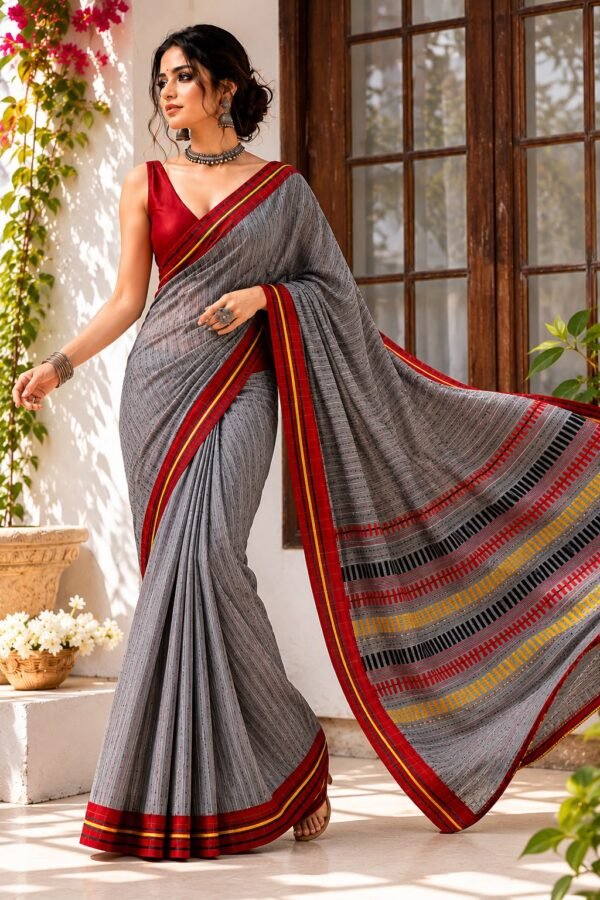
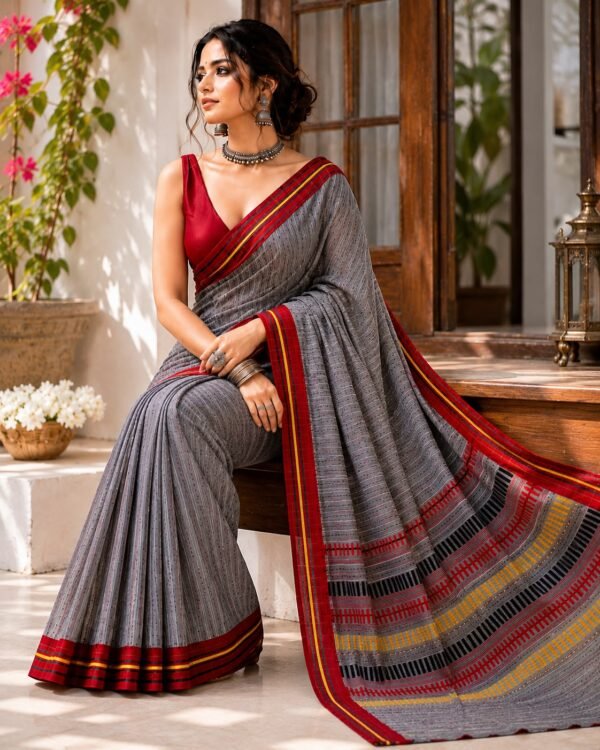
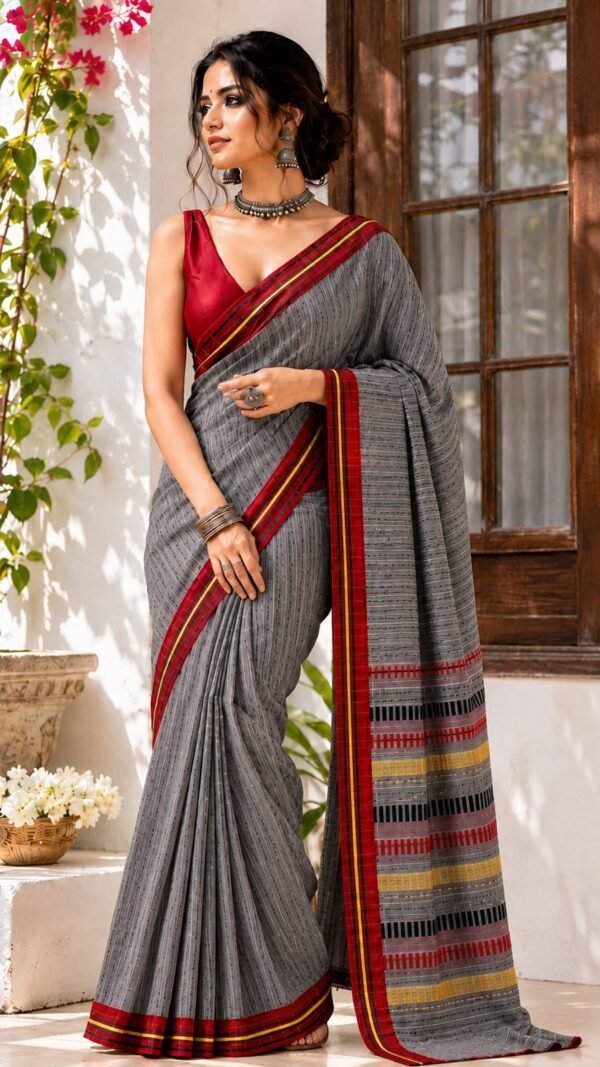
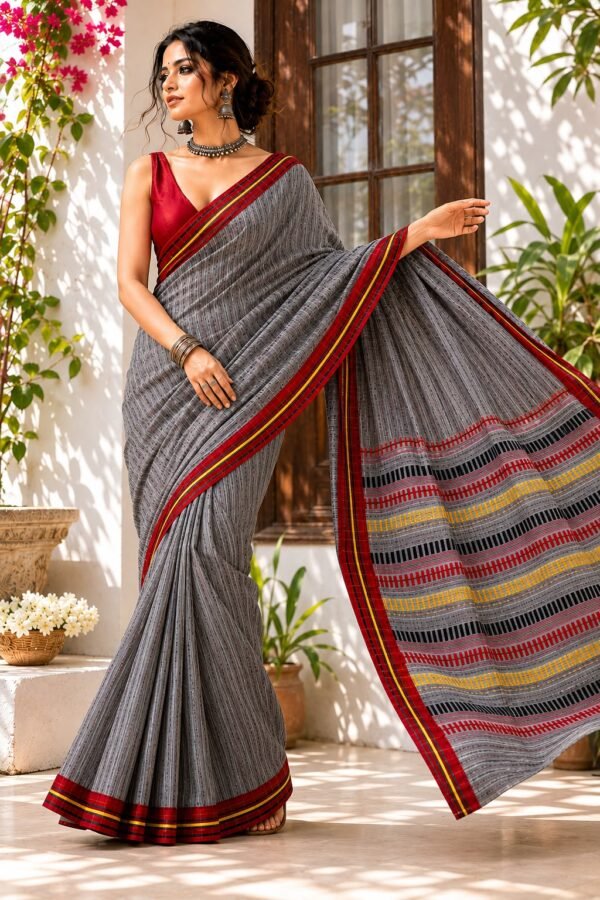
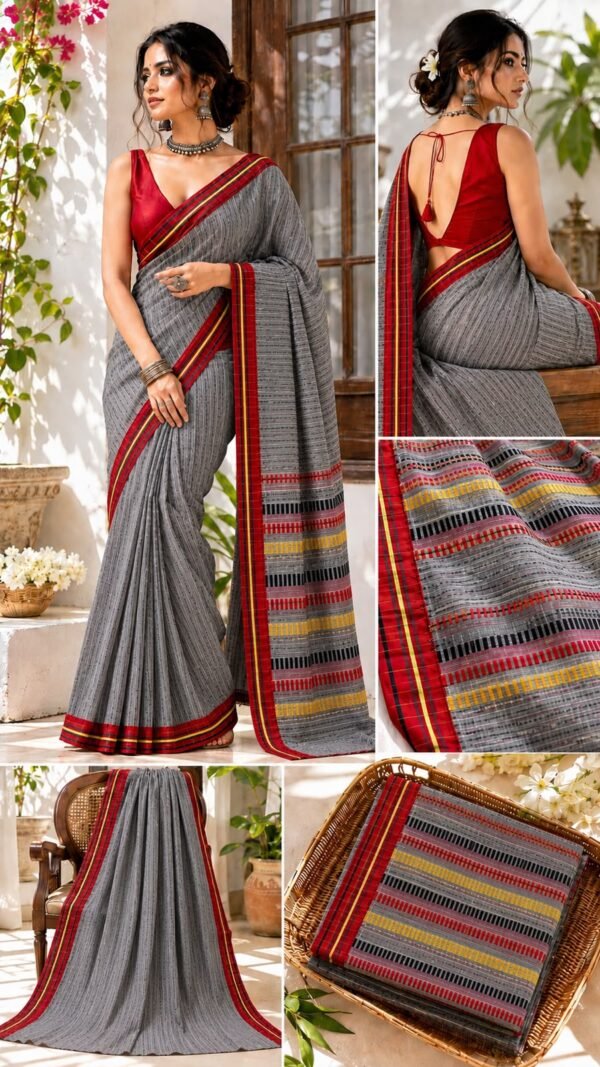
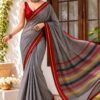


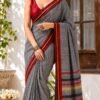
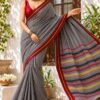
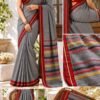
Dhoop Khadi Cotton Saree in Grey with Multicolour Supplementary Weft Pallu
Sarees₹2,200.00
& Free ShippingGrey is not the absence of colour.
It holds all of them, quietly,
until the light arrives and asks. The khadi spinner made this thread by hand.
The natural variation in the yarn
is the spinner’s breathing,
caught in the cotton as it twisted.
The body wears the grey without apology.
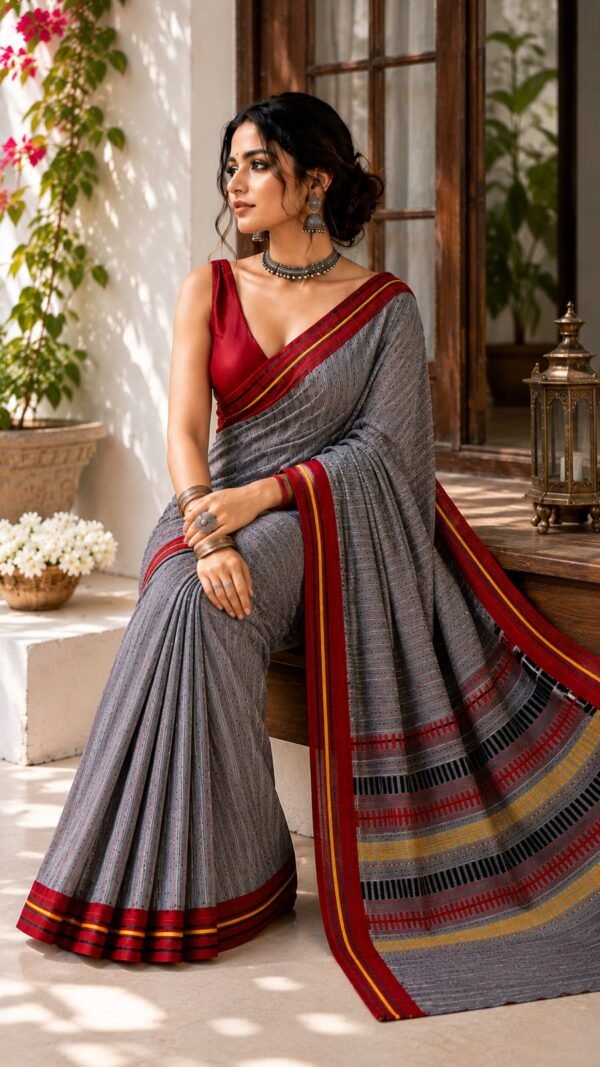
The pallu answers: red, yellow, black, blush.
Every colour the grey was holding,
released in sequence at the hem.
Khadi is cotton that was spun by a hand. Not a mill, not a machine — a hand holding a spindle, drawing the fibre out and twisting it into thread at the pace a human body sets. The yarn that results is not perfectly uniform. It varies slightly in thickness along its length, and the fabric woven from it carries this variation as a natural texture: the subtle unevenness of the surface, the slight slub of the body, the quality that makes khadi feel different from every other cotton even when your eyes have not told you what it is yet.
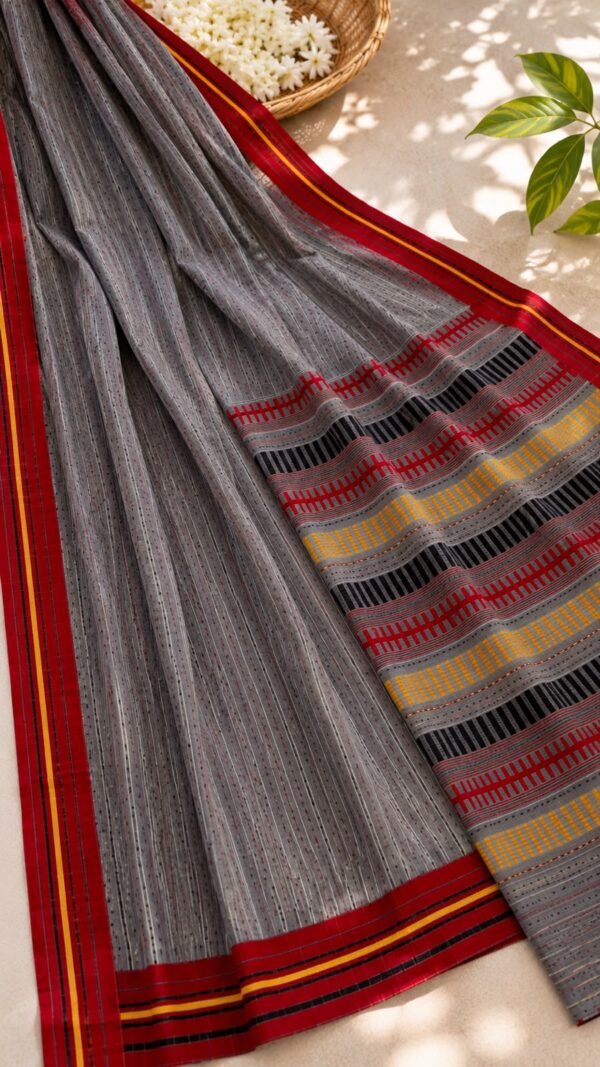
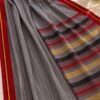
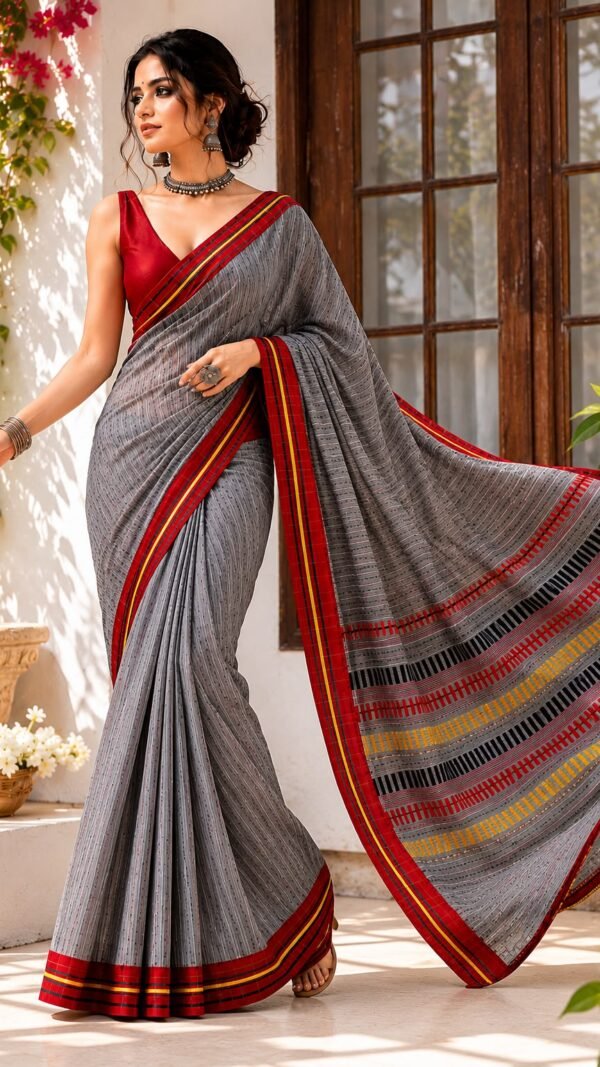
The grey of this saree is the grey of khadi: not the flat grey of synthetic fabric, but the grey of cotton at its most natural, with the warmth the fibre carries inside it. The body has a woven self-stripe — thin vertical lines in the same grey family, visible in the close-up as a fine pinstripe running through the full length of the fabric. The stripe is not a separate design element. It is the khadi weave itself, the slight variation in the weft thread sequence producing a texture the eye reads as line.
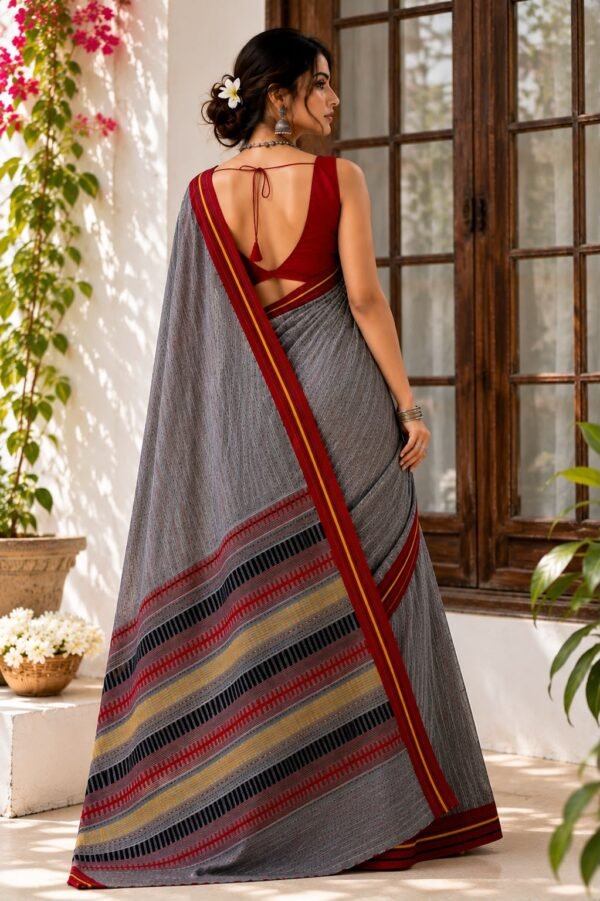
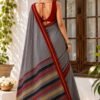
The running border carries a thin red stripe and a thin yellow stripe — two lines of colour along the full length of the saree at the hem edge, narrow enough that they read as the border’s boundary condition rather than its design. The pallu is where the saree makes its argument: dense supplementary weft bands in red, yellow, black, and blush-pink running horizontally across the full pallu width in alternating sequence. Each band is a separate colour change at the loom, the weaver introducing a new thread and holding it across the full pallu for each band’s height. The result is a pallu that carries every colour the grey body was holding and releases them in sequence.
In the reference images, the model wears a deep red blouse with a tie-back detail. The red pulls the pallu’s deepest colour from the hem to the shoulder. Against the grey body, the red is absolute. The name is Dhoop: sunlight, the quality of light that falls on a grey surface and finds everything that was already there.
Khadi is India’s hand-spun, handwoven cotton tradition — the cloth Gandhi wore as a political argument and a daily practice simultaneously. The spinning is done on a charkha or on a floor spindle: the spinner draws the raw cotton fibre out of the mass and twists it into thread by hand, regulating the thickness by feel, the tension of the body the only quality control instrument available. The thread that results is not uniform. It cannot be. The variation in the human hand across a day’s spinning is recorded in every metre of the finished cloth.
The khadi weaver works from this hand-spun thread. The warp is set up on a pit loom — the loom sunk into the ground, the weaver sitting at floor level, the shuttle passing by hand from one side to the other. The plain weave body of this saree was built one weft pass at a time, the thread carrying the natural slub variation of the hand-spun yarn into the fabric’s surface. The self-stripe visible in the body is a product of the weft sequence — the weaver alternating thread weights at precise intervals across the warp to produce the fine pinstripe texture.
The supplementary weft bands in the pallu are an additional layer of technical decision: the weaver introduces coloured supplementary thread at each band position, running it across the full pallu width for the band’s height, then withdrawing it when the band is complete. Each of the four colours — red, yellow, black, blush — is a separate thread introduced and withdrawn in sequence. The bands accumulate from the body edge of the pallu to the hem. At the hem, the running red and yellow border stripes frame the pallu’s full argument. The entire saree was made at one loom, by one pair of hands, from hand-spun thread.
- Wash: Hand wash in cold water with a mild detergent. Khadi cotton is robust but hand-spun thread requires gentle washing to maintain the natural slub texture over time.
- First wash: Wash separately in cold water. The grey body and the multicolour pallu bands may each release slight colour on the first wash. Normal for natural cotton dyes. Will not recur.
- Pallu bands: Wash gently through the supplementary weft band section. The coloured bands are woven in structurally but the thread sits slightly raised; do not scrub.
- Do not: Machine wash or wring. Khadi’s hand-spun structure is particularly vulnerable to machine agitation: the slub variations that give khadi its character can be damaged by the mechanical action.
- Iron: Medium heat on the cotton body. Khadi irons well and the warmth of the iron brings out the natural texture of the hand-spun thread. Iron from the front — unlike smooth cotton, khadi’s texture is enhanced by front ironing. Avoid ironing directly on the multicolour pallu bands.
- Dry: In shade. The grey and the multicolour pallu dyes are stable but sustained UV exposure affects cotton over time.
- Age note: Khadi softens with every wash. A new khadi saree has a slight stiffness that disappears after the first few washes, and the fabric settles into a drape that only gets better with wear. This is the correct behaviour of hand-spun cotton. Store in clean muslin and wear it often.
Reviews
There are no reviews yet.