
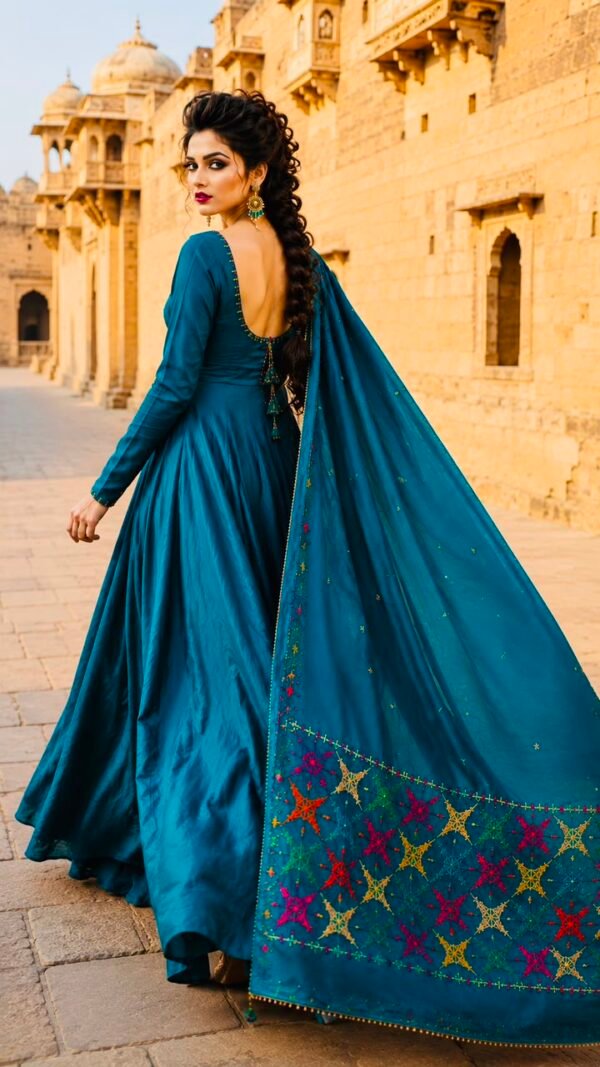
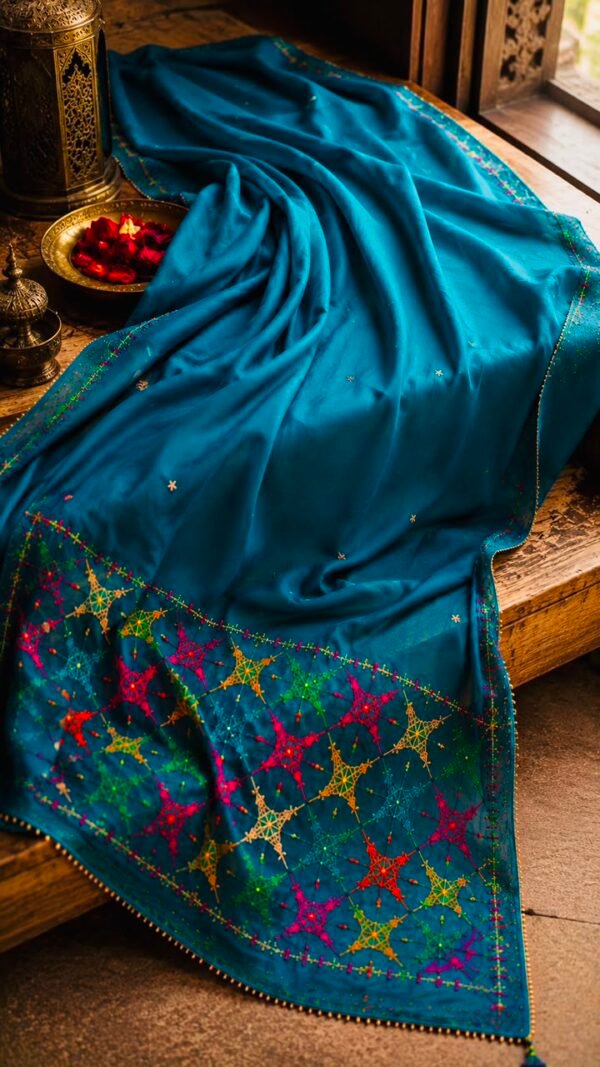
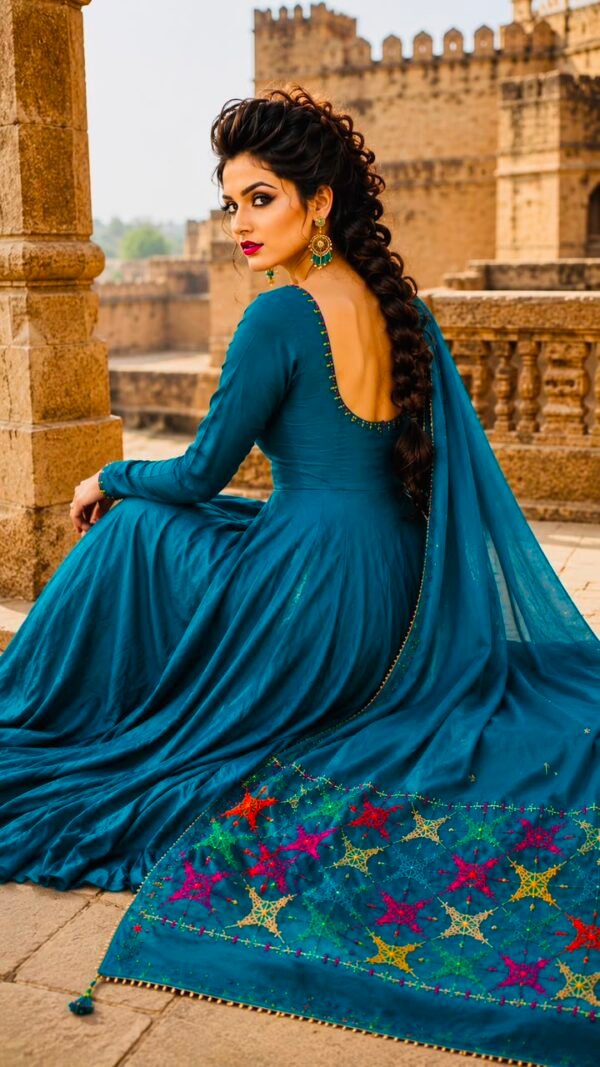
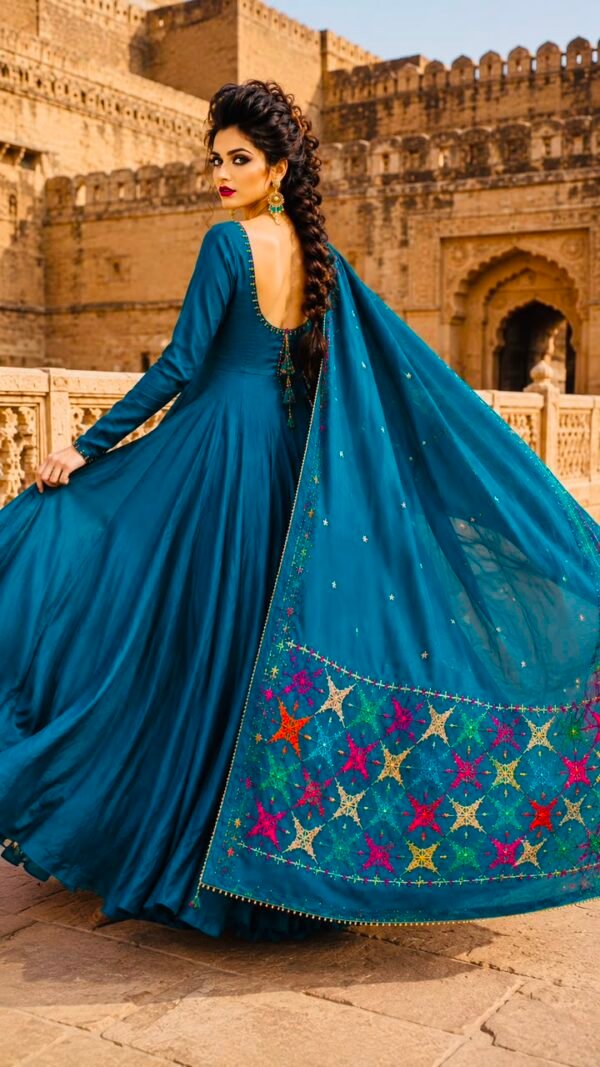
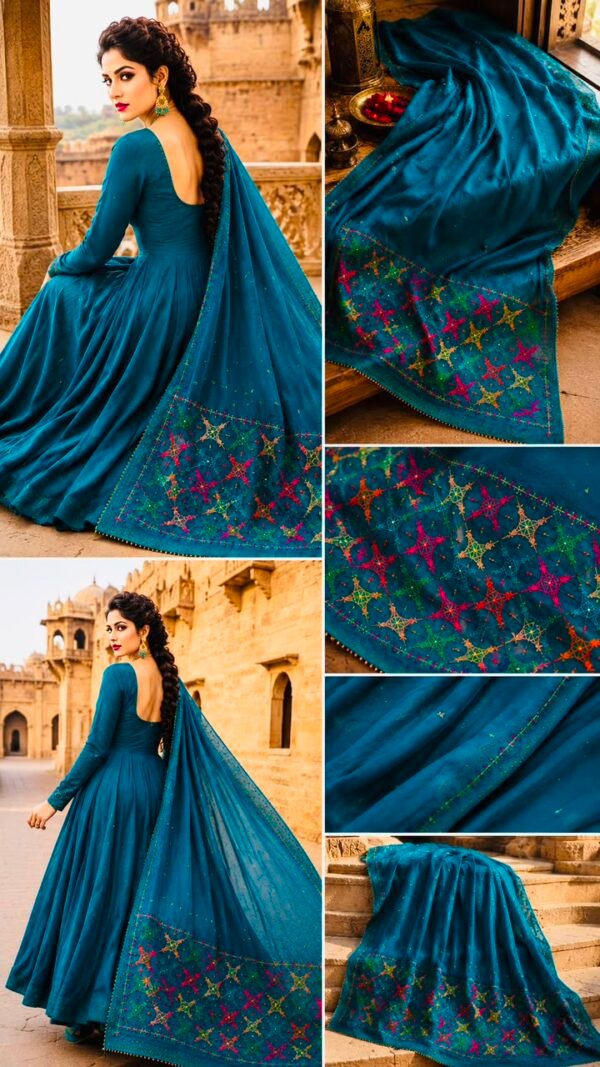
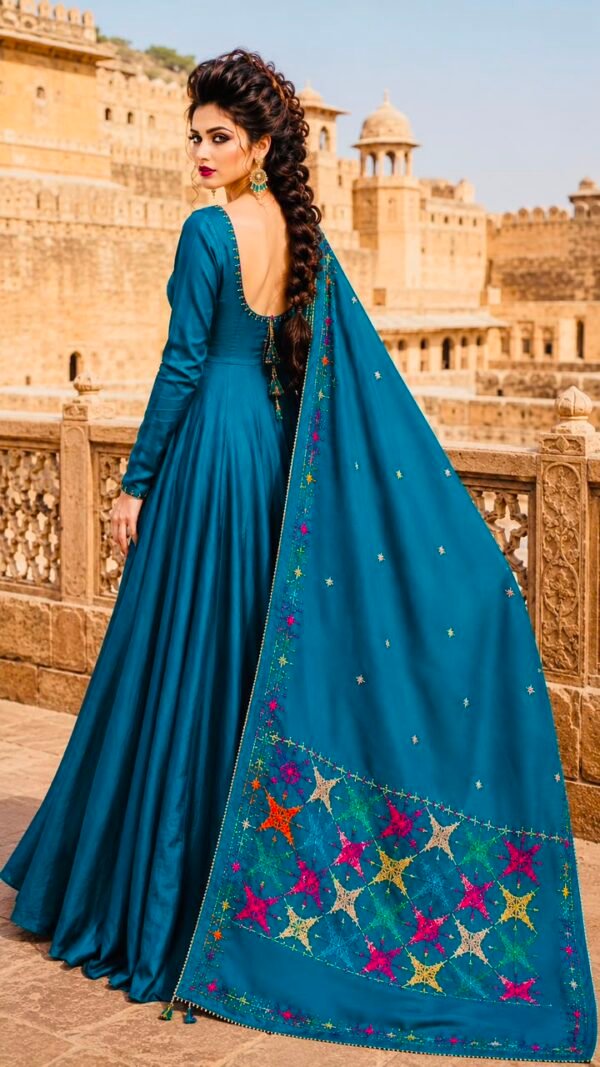
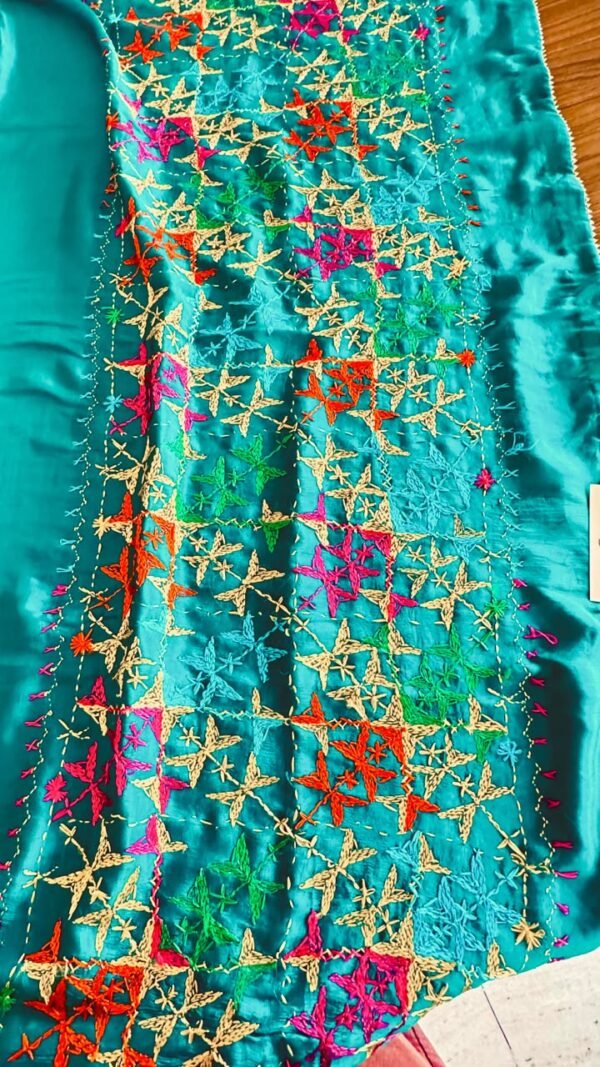


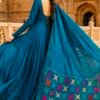
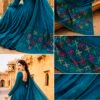
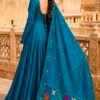
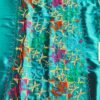
Prachi Tussar Silk Dupatta in Natural Cream with Phulkari Hand Embroidery in Peach and Silver
Dupattas₹8,250.00
& Free ShippingPrachi means the east.
The Sanskrit word for the direction the dawn comes from.
The sky at Prachi is not one colour.
It is the cream of what was night a moment ago,
the peach of what the light is doing now,
and the silver of what is still in between.Tussar silk holds the cream.
The silk of the wild silkworm,
the one that feeds on oak and arjun trees,
the one whose thread is never completely tamed.
The natural slub of the tussar surface
is the weave still remembering the tree.The Phulkari needlewoman brought the peach and the silver.
She placed the dawn colours
into the geometric forms
that Punjab has been filling since before the tradition had a name.
Tussar silk is not the silk of the domesticated Bombyx mori silkworm. It is the silk of the wild Antheraea mylitta silkworm — the silkworm that lives on the oak, arjun, and other forest trees of Jharkhand, Chhattisgarh, and Orissa, that is semi-domesticated rather than fully farmed, and whose cocoon produces a thicker, slightly irregular thread that cannot be completely smoothed into the even surface of mulberry silk. The resulting fabric carries a natural slub — a variation in thread diameter visible as a subtle texture across the surface. The colour of tussar, undyed, is the natural cream of the wild cocoon: warmer than white, cooler than ivory, the specific ecru of something that came from a forest and has not been bleached of that origin.
On this tussar ground, the Phulkari hand embroidery in soft peach and silver-grey creates the most restrained colour composition in the dupatta collection. The peach is the lightest possible warm tone — the specific pink that exists at the edge between rose and cream, the colour of the sky in the first minutes after sunrise. The silver-grey is the colour that the sky holds simultaneously: the cool that hasn’t fully left. Together the three colours of this dupatta — tussar cream, soft peach, silver-grey — are the specific palette of the half-hour before the full day arrives.
The Phulkari embroidery at the border carries the geometric diamond forms that are the tradition’s oldest vocabulary: large diamond motifs built from the running stitch float, the peach thread covering the diamond interior in the parallel passes that produce the Phulkari’s characteristic solid colour surface. The diamond forms are framed by silver-grey running stitch border stripes at the border edges, the cool thread outlining the warm form. At the body of the dupatta, smaller fan and floral forms in the same peach and silver scatter across the natural tussar ground at generous intervals — each one a complete Phulkari motif, the silk slub visible between them. The cream-white hand-tied tassels at the hem are the tussar’s own colour, knotted after the embroidery was complete.
In the reference images, the dupatta is worn with a plain cream anarkali and straight pants. The full composition — natural cream suit, tussar dupatta, peach and silver Phulkari border — is entirely within the most refined range of the North Indian festive palette. This dupatta does not announce its occasion loudly. It announces it with complete certainty. The name is Prachi: the east, the direction the dawn comes from, the sky in the specific colours the Phulkari needlewoman chose.
Tussar silk and Phulkari embroidery come from different traditions and different geographies. Tussar is the silk of the forest states — Jharkhand, Chhattisgarh, Orissa — where the wild Antheraea mylitta silkworm has been cultivated since antiquity. Phulkari is the embroidery of Punjab, worked on plain cotton or silk in the bright thread tradition that has clothed Punjab’s celebrations for centuries. Together, in this dupatta, they produce a combination that neither tradition produced alone: the matte, slightly textured surface of the tussar holding the geometric Phulkari in a restraint that the tradition’s typical vivid palette on bright cotton does not produce.
The Phulkari running stitch works the same way on tussar silk as on cotton: the darning stitch passes through the fabric from the reverse, covering the warp or weft threads in sequence, the front showing the long float of the thread between passes. On tussar, the float sits on a surface that has natural variation — the slub of the wild silk thread visible alongside the Phulkari thread. The peach Phulkari float and the natural tussar slub are in the same tonal family; the silver-grey Phulkari border stripe provides the cooler contrast that gives the composition its balance.
The hand-tied tassels at the hem are the finishing touch of the weaver or embroiderer: each tassel individually knotted from the tussar selvedge thread after the embroidery is complete, the fringe a natural continuation of the silk ground rather than an added element. On tussar, the tassel has the same slight irregularity as the fabric — the wild silk holding its character even in the fringe.
- Wash: Dry clean recommended. Tussar silk and hand Phulkari embroidery both benefit from professional first care.
- Hand wash (if dry clean unavailable): Cold water only, mild pH-neutral detergent. Tussar is more robust than mulberry silk and tolerates careful cold hand washing, but do not soak. Do not rub the Phulkari embroidery.
- Tussar silk: Tussar can release slight colour on the first wash even undyed — the natural gum in the wild silk releases in water. The cream colour may deepen very slightly after the first wash. Normal.
- Phulkari thread: The peach and silver-grey thread floats should not be scrubbed or pulled. Handle the dupatta through the non-embroidered sections when wet.
- Tassels: Handle the hand-tied tussar tassels gently. The tassel is the same silk as the body.
- Do not: Machine wash, wring, bleach, or use fabric softener. Fabric softener affects the natural slub texture of tussar.
- Iron: Low to medium heat, reverse side only, slightly damp. Tussar silk responds well to careful ironing and the natural slub is best handled with light pressure. Never iron the Phulkari embroidery from the front.
- Dry: In shade. Tussar silk is UV-stable but the natural cream will yellow over extended direct sun exposure. The Phulkari threads are also UV-sensitive.
- Store: Folded in clean cream or white muslin, away from direct light and humidity. Tussar silk does not require the same level of protection as fine mulberry silk but appreciates dark, cool storage.
Related products
-
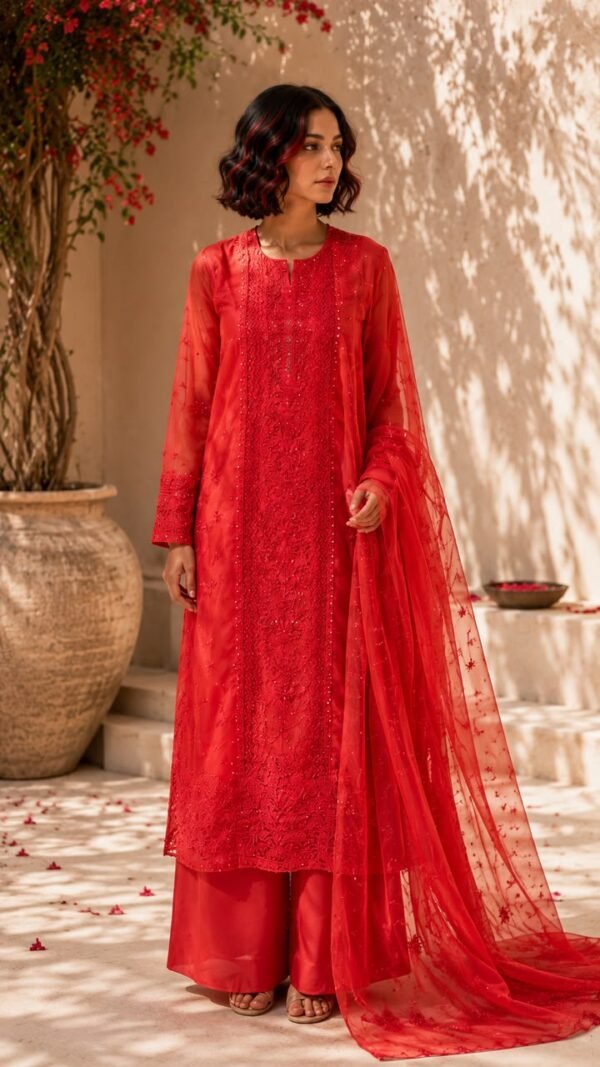
AnarOrganza Chikankari 3-Piece Stitched Suit in Tomato Red with Cotton Lining
Suits & Kurtas ₹18,000.00 Add to cart -
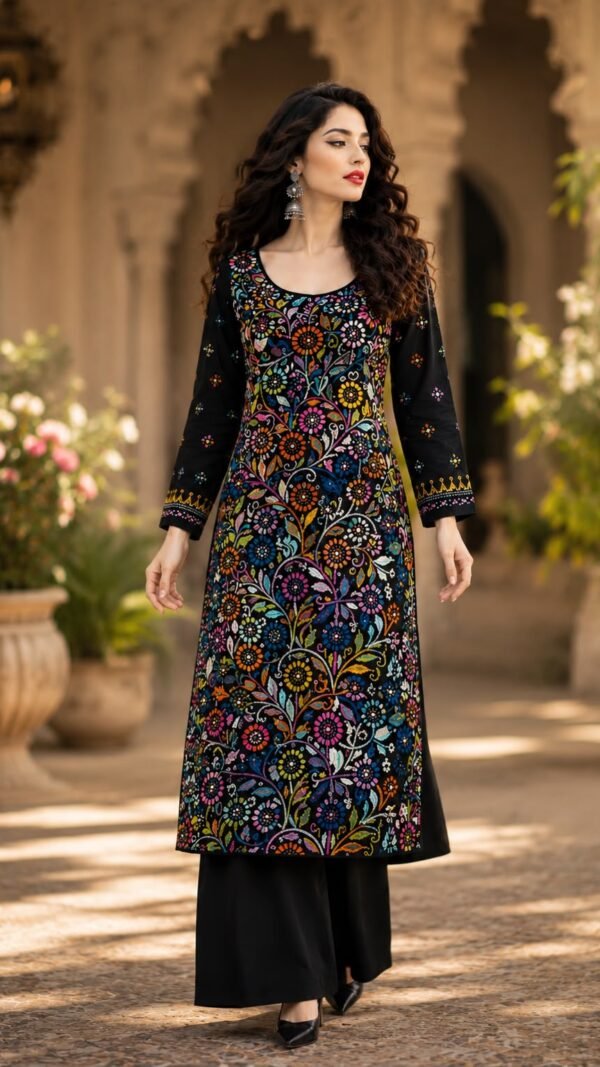
Utsav Kantha Hand-Embroidered Kurta in Black with Multicolour Garden Front
Suits & Kurtas ₹3,800.00 Add to cart
Reviews
There are no reviews yet.