


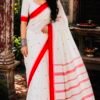


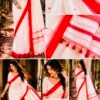

Arghya Cotton Silk Saree in White with Red Buti and Temple Border
Sarees, Suits & Kurtas₹3,400.00
& Free ShippingArghya is the first offering.
Flowers and water placed before the prayer,
before the lamp is lit,
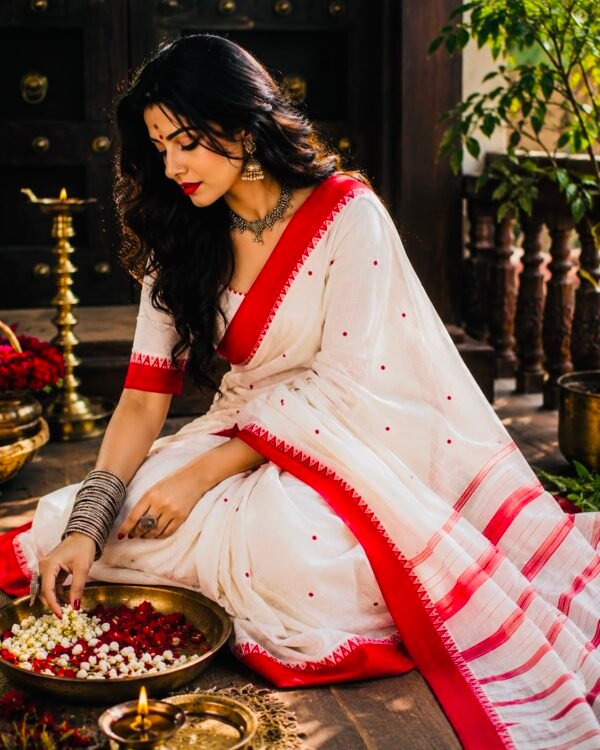
before the ceremony names itself.The red buti are those flowers.
Scattered across the white cotton-silk
the way jasmine is scattered on the puja thali —
each one placed, each one deliberate,
the whole pattern visible only from above.The silk in this cotton
gives the white its second quality:
the slight luminosity that tells the brass lamps
there is something here worth illuminating.
Cotton-silk is what the weaver produces when the question is: how do you keep the coolness of cotton and add the luminosity of silk? The answer is the blend. Cotton carries the temperature and the breathability. Silk carries the sheen — the slight surface luminosity that takes the same white and makes it respond differently to light. On a plain cotton body, the brass diya lamp creates a warm patch and the white recedes around it. On a cotton-silk body, the same lamp creates a warm patch and the white around it glows with it, the silk fibre in the blend amplifying rather than absorbing.
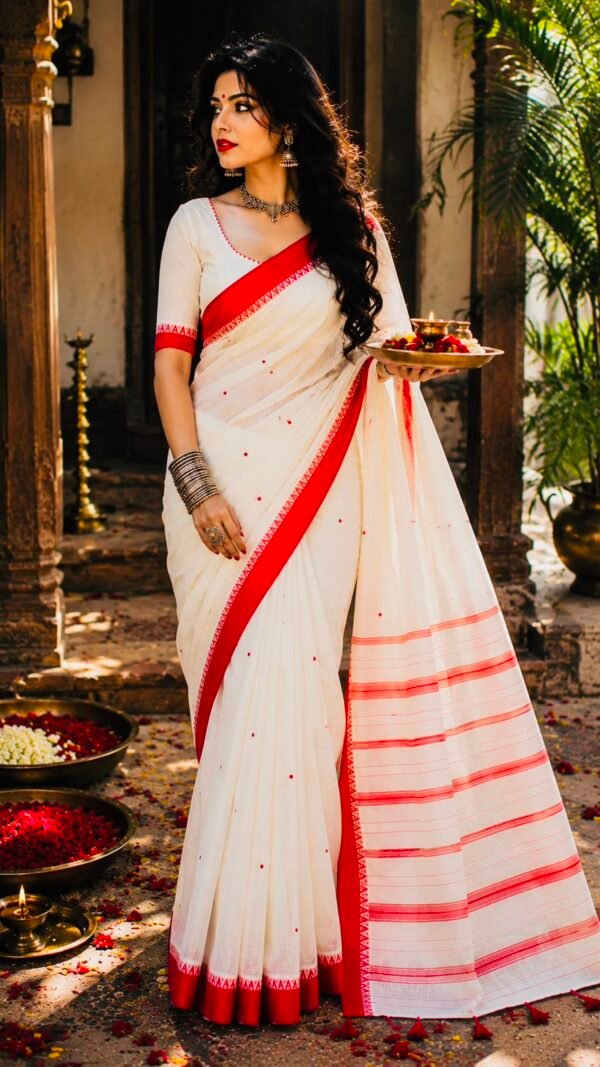
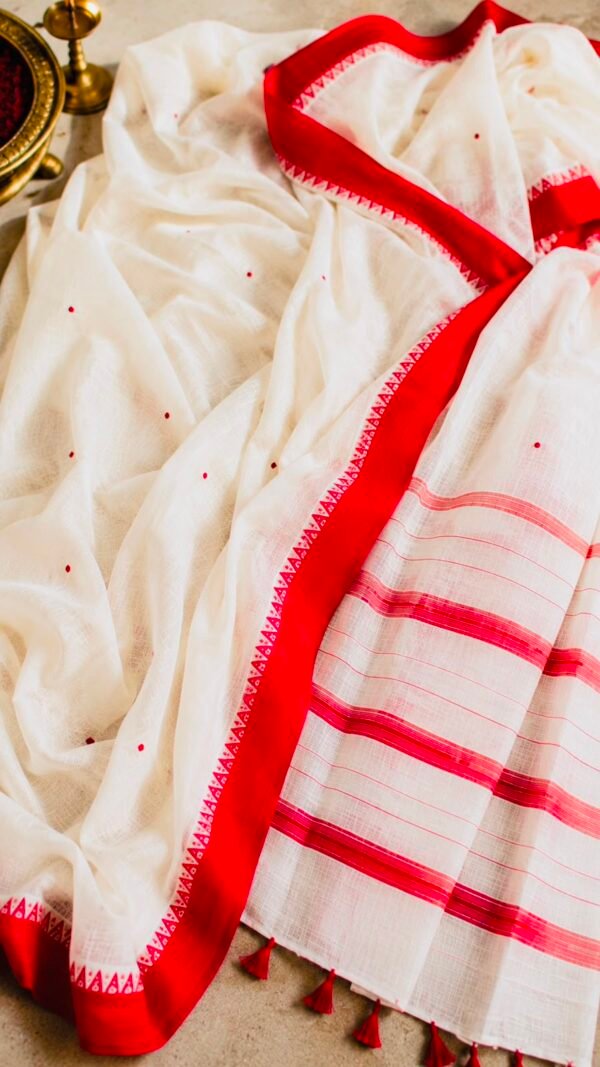
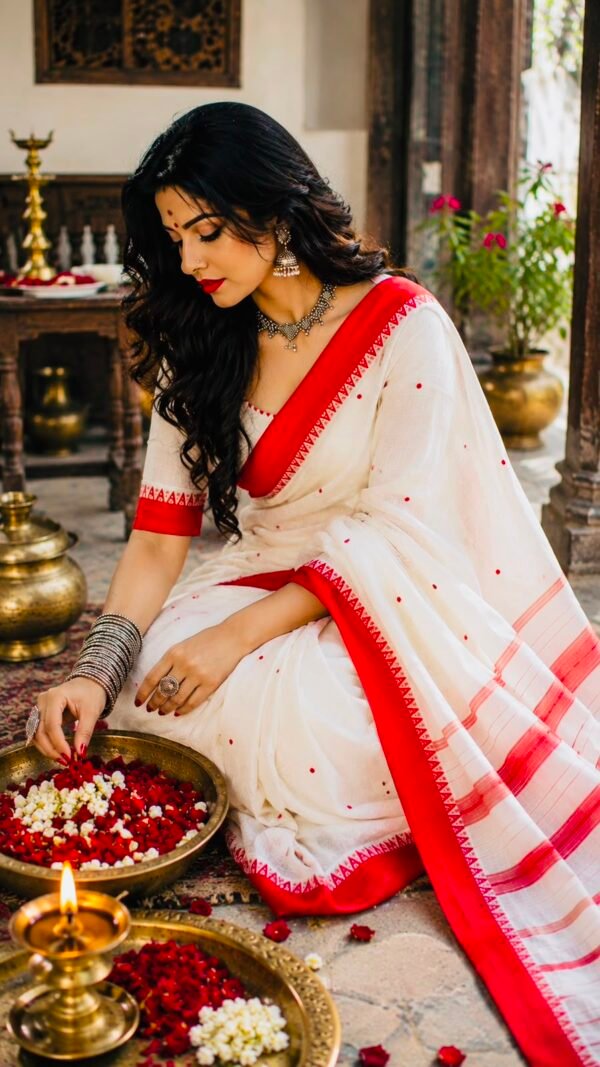
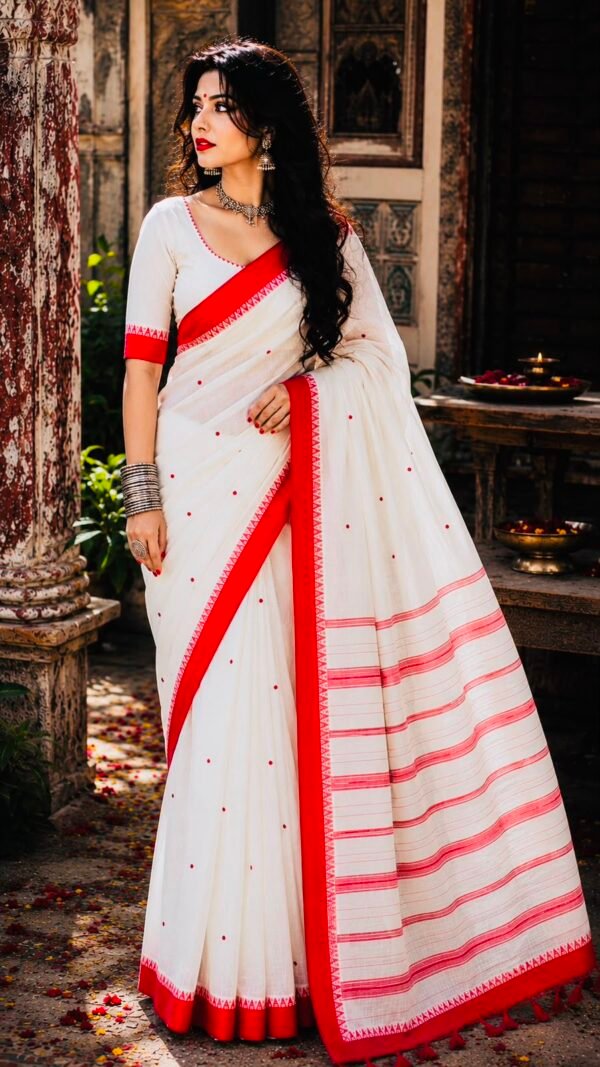
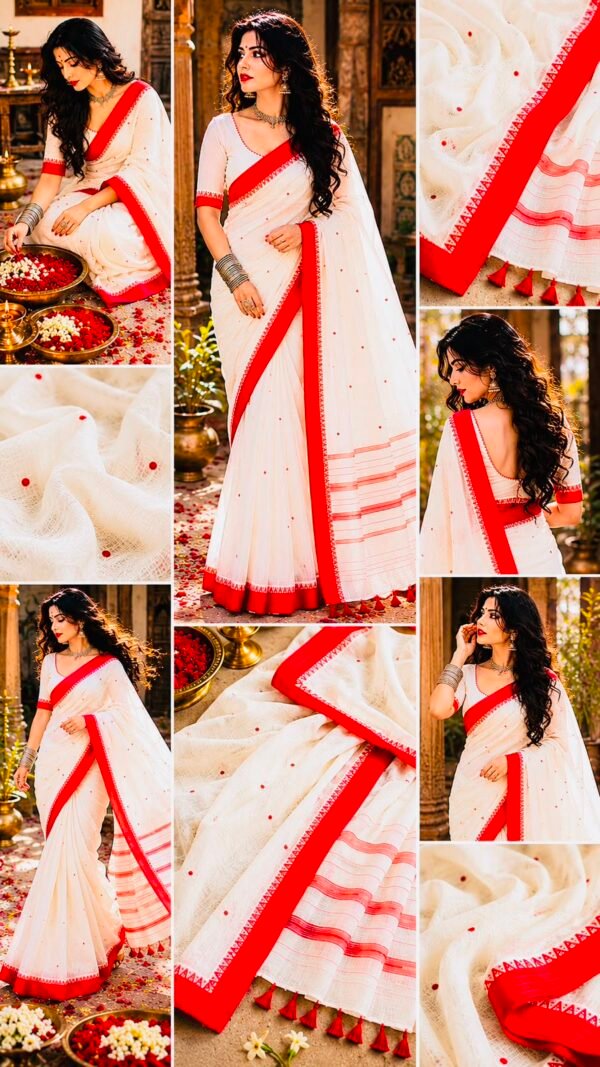
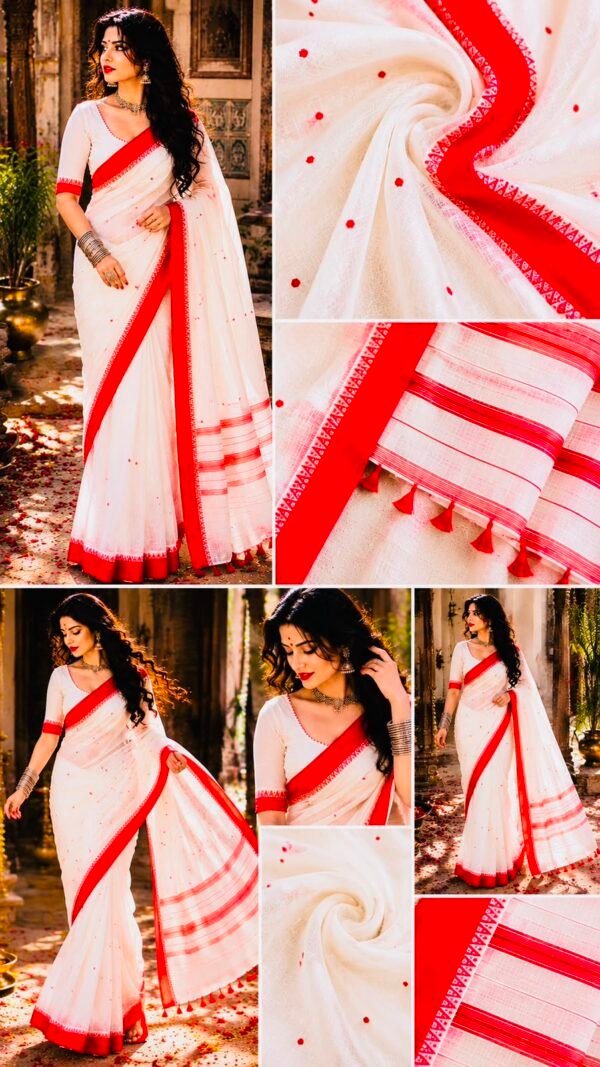
The scattered red buti across the white body are small supplementary weft motifs — each one a tiny dot or small geometric form in red thread, placed individually across the full body as the fabric was woven. They are not printed, not embroidered. They are part of the weave from the beginning. At a distance the white body reads as almost plain, the buti too small to register as individual elements. Closer, the body becomes a field of small red moments — the way the jasmine floats in the brass thali in the reference image, each flower placed, the whole pattern visible only when you have stopped moving.
The temple border is the tradition’s specific contribution to the white-and-red vocabulary: the repeating triangular flame-tip pattern — the same geometry that appears in temple gopurams, carved into stone across the subcontinent, woven here in red on the cotton-silk ground as a dense horizontal band along the full hem and running border. The pallu carries the border in horizontal stripe sequence — the red building from single stripe to full pallu density, the white body retreating as the red advances toward the hem. The matching blouse piece carries the same temple border at the cuff.
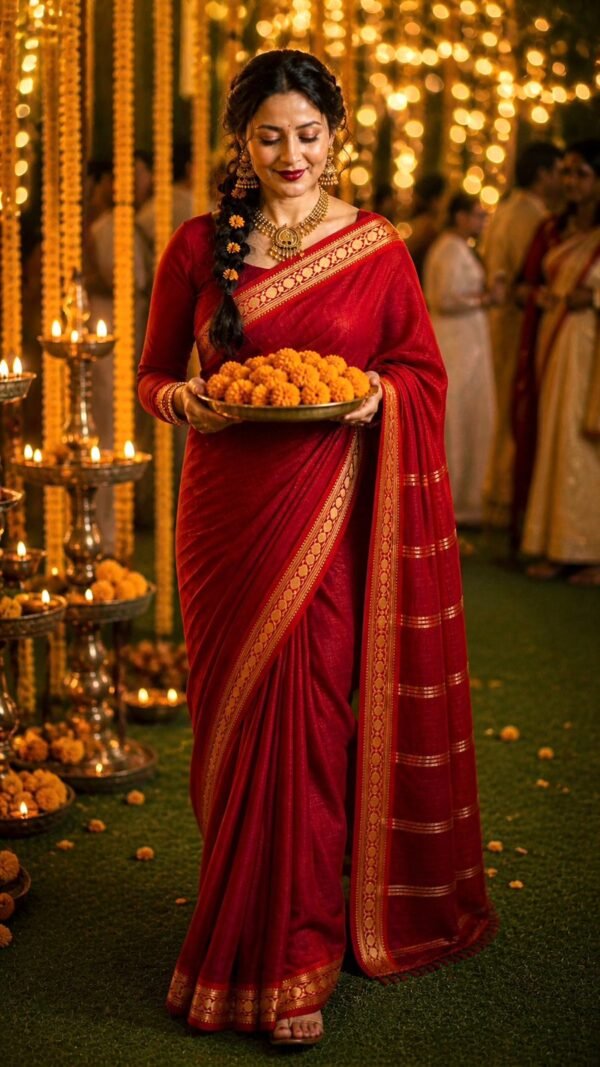
In the reference image, the woman is performing a puja — her hands in the brass thali with flower petals and jasmine, the diya burning at her feet, the carved wooden door behind her. The cotton-silk saree in this specific quality of lamp-warmed light is exactly what it was made for. The name is Arghya: the first offering, the flowers placed before the prayer begins. The ceremony has already started.
Cotton-silk weaving in Bengal is a specific technical tradition: the warp is set with silk thread at intervals alongside the cotton, so the two fibres run through the full length of the fabric simultaneously. The finished cloth carries both qualities in every centimetre: the cotton provides the breathable base, the silk provides the surface luminosity. The weaver cannot adjust the proportion of silk to cotton once the warp is set. The blend is decided before the first thread is thrown.
The red scattered buti are supplementary weft work: the red thread introduced at the specific weft positions for each buti, the motif built in two or three weft passes, then the thread withdrawn as the main weave resumes. Each buti across the white body is a separate weaving event. The distribution — the spacing that makes the buti read as scattered rather than gridded — is the weaver’s calibration, maintained by eye across the full 5.5 metres. The cotton-silk ground makes each small buti slightly more visible than it would be on pure cotton: the silk luminosity in the background catches the red thread from a slightly different angle.
The temple border is woven in the same red supplementary weft technique used for the buti, but at a much higher density: the triangular flame-tip pattern requires the weaver to introduce and withdraw the red thread at each triangle tip, building the repeating form across the full border width. The pallu stripe sequence builds on this structure — the border bands becoming more frequent as the pallu progresses, the red accumulating toward the hem. The matching blouse piece is cut from the same cotton-silk fabric in the same red, with the temple border woven at the cuff edge separately and attached at the finishing stage.
- Wash: Dry clean recommended for the cotton-silk blend and for long-term preservation of the red buti and border colours.
- Hand wash: If hand washing: cold water only, mild detergent, no soaking. The cotton-silk blend requires gentler handling than pure cotton — the silk component is more sensitive to heat and agitation.
- First wash: Wash separately in cold water. The red border, buti, and blouse piece may each release slight colour on the first wash. Wash all three pieces together but separately from all other garments.
- White body: Keep away from coloured garments permanently. White cotton-silk picks up colour from other fabrics in water.
- Buti and border: Handle gently through the buti and border sections. Do not scrub. The supplementary weft threads sit proud of the ground weave.
- Do not: Bleach, machine wash, or use fabric softener.
- Iron: Low to medium heat on the reverse side. The silk component in the blend is heat-sensitive. Never iron on the buti or the border from the front. The cotton-silk body benefits from ironing while slightly damp.
- Dry: Always in shade. White cotton-silk and red dyes are both UV-sensitive over extended exposure.
- Store: Folded in clean white muslin with tissue paper between folds. Keep the blouse piece with the saree, wrapped separately in its own muslin. Store away from direct light and humidity.
Related products
-
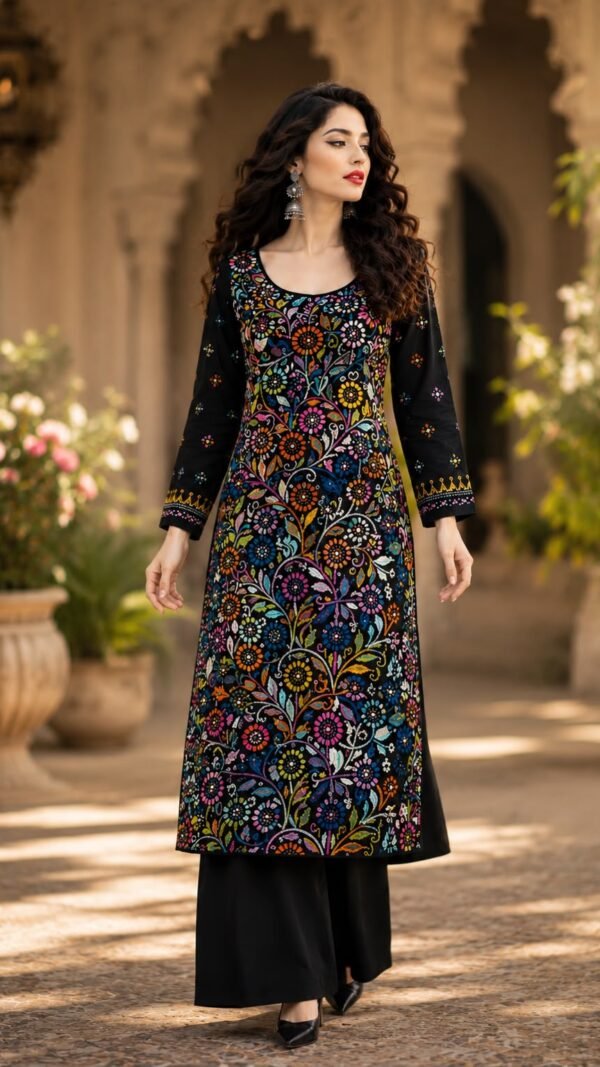
Utsav Kantha Hand-Embroidered Kurta in Black with Multicolour Garden Front
Suits & Kurtas ₹3,800.00 Add to cart -
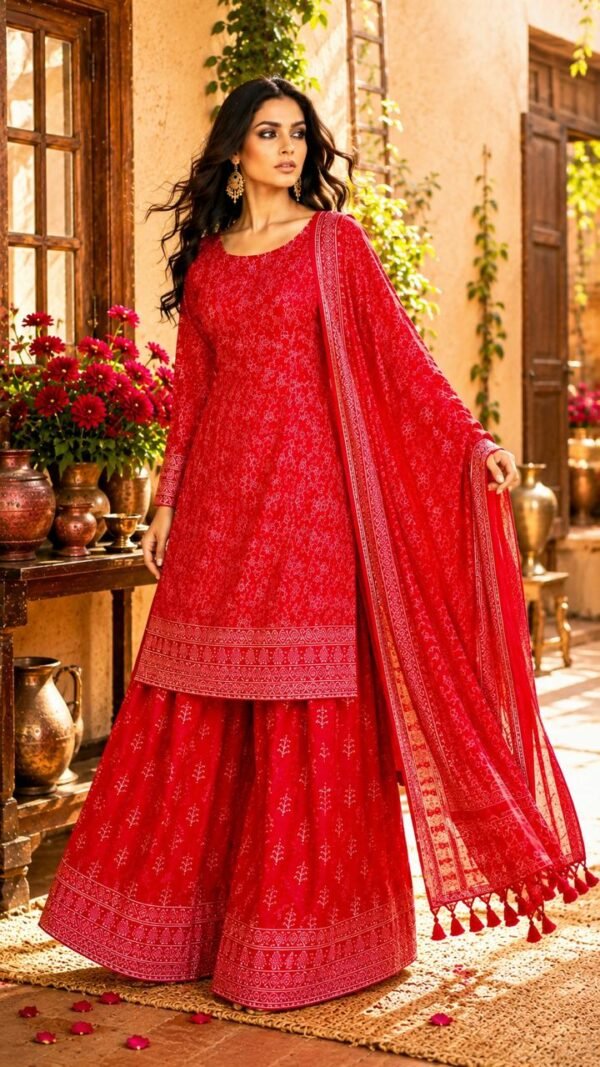
Gulmohar Chanderi Kurta and Cotton Sharara Suit Set in Crimson with Zari Border
Suits & Kurtas ₹4,200.00 Add to cart
Reviews
There are no reviews yet.