




Utsav Bengal Cotton Tissue Saree in Multicolour Stripe
Sarees, Suits & Kurtas₹2,800.00
& Free ShippingUtsav means festival.
But utsav also means the gathering of all things at once —
the moment when the lights are lit,
the marigolds are strung,
the diyas placed,
and the house finally looks the way it feels inside.
The Bengal weaver set six colours in the warp.
Navy. Olive. Magenta. Rust. Gold. Teal.
Each one complete in itself.
All of them, together, louder than any single one could be.The metallic ground catches the candlelight
the way a festival does —
from every direction simultaneously.
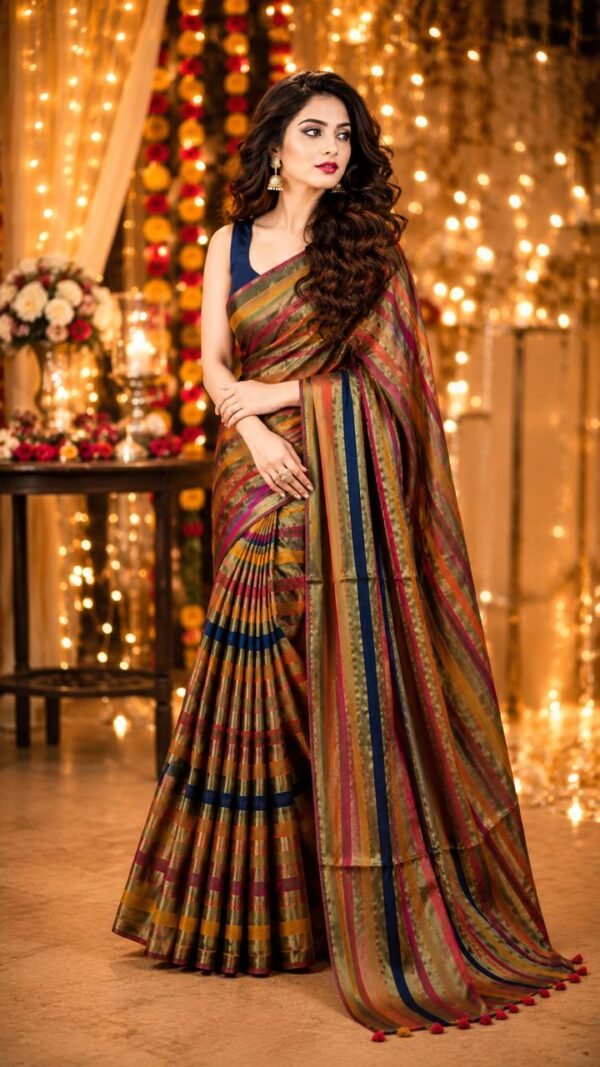
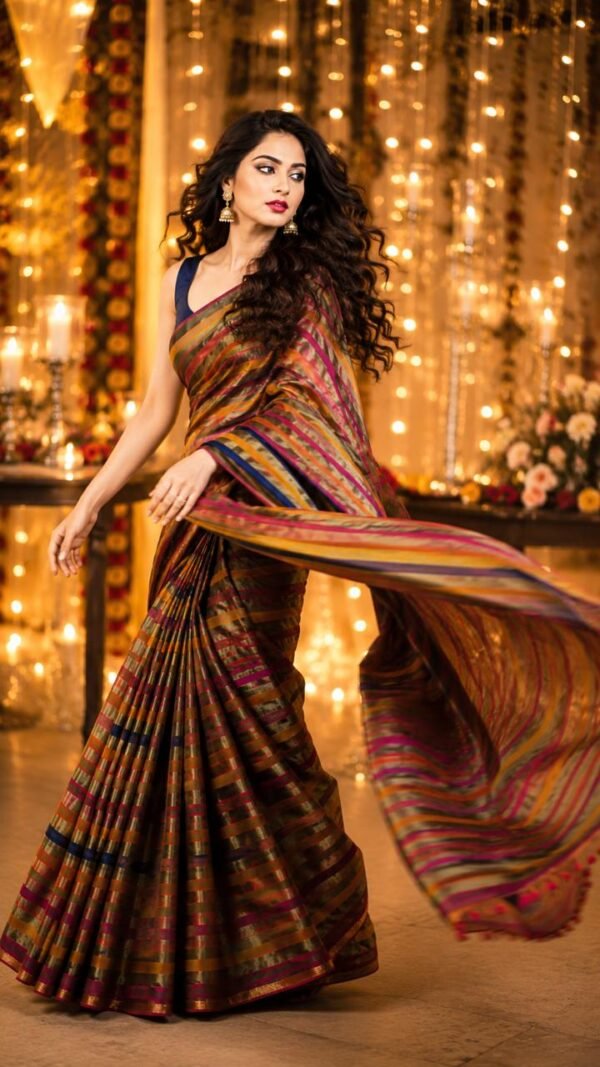
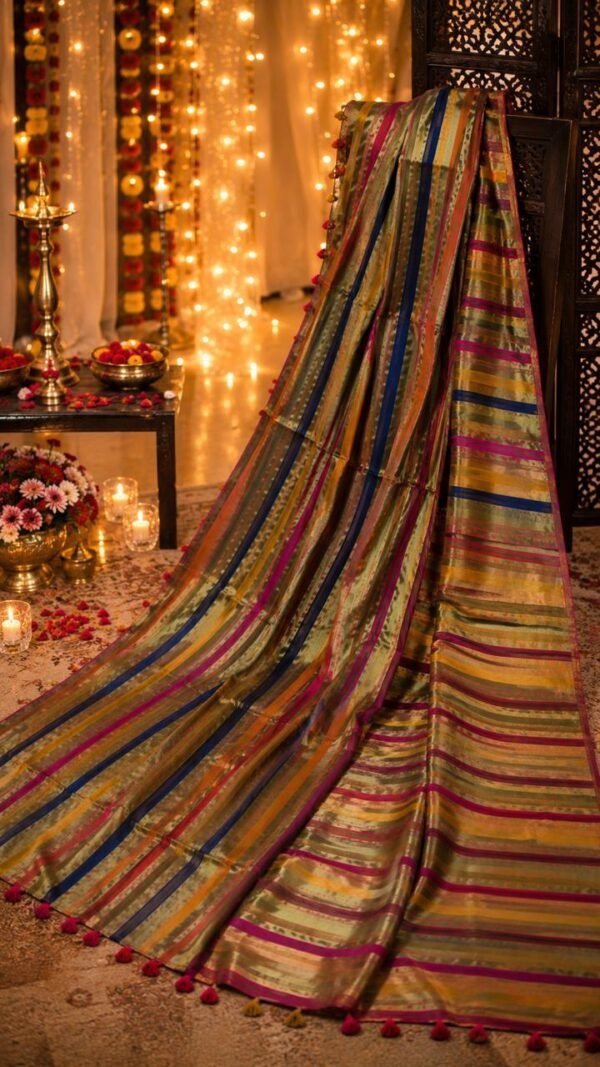
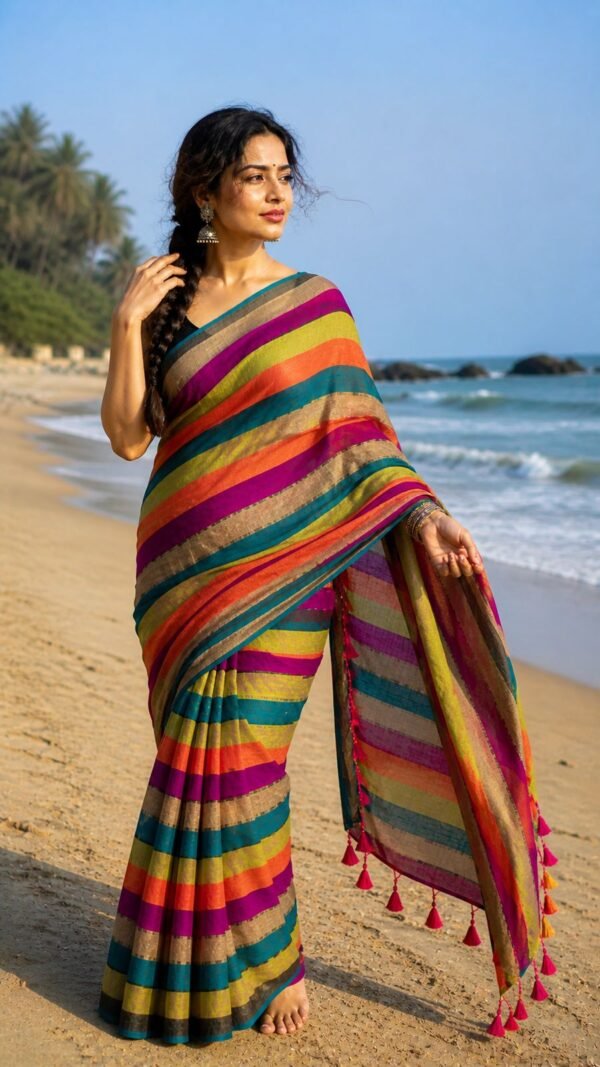
Cotton tissue is the meeting of two weaving intentions: the breathability of cotton and the light-catching quality of metallic thread. In this saree, a gold zari warp runs through the full body, giving the fabric a warm metallic ground that shifts between antique gold and olive-bronze depending on where the light falls. The multicolour stripes are set directly into this ground — not on top of it, not printed over it, woven into the same structure.
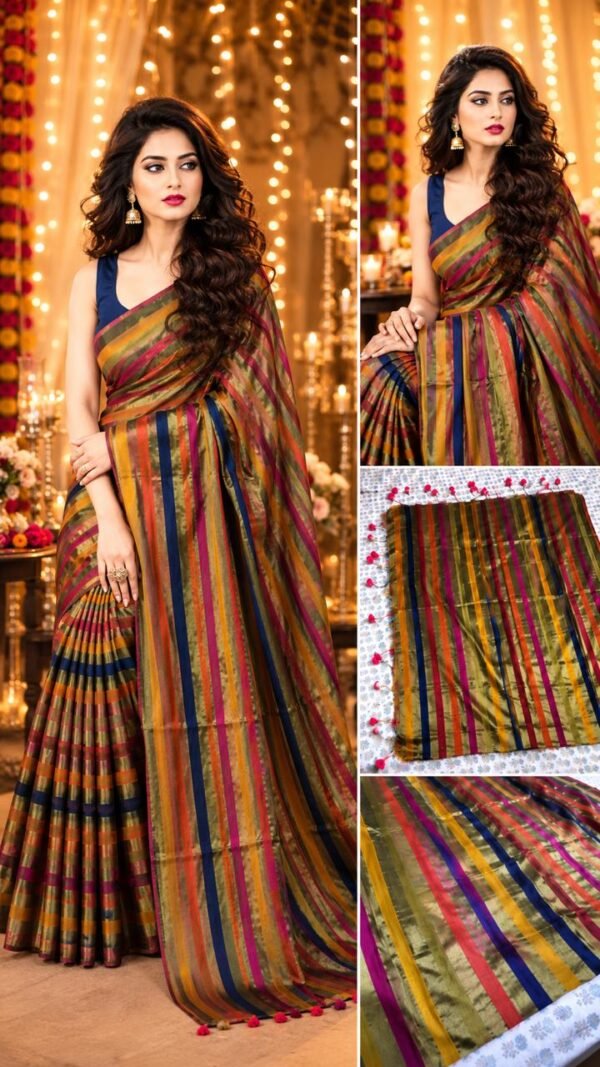
Six colours were set in the warp before the first weft thread was thrown: navy, olive, magenta, rust, gold, teal. Each stripe is a separate colour sequence, each one built into the fabric’s architecture from the beginning. Together they produce a palette that should not work as well as it does — six saturated colours on a metallic ground, each one in a different family, none of them obviously adjacent on any colour wheel. But the golden tissue ground holds them together the way a festival holds its disparate elements: the diyas and the marigolds and the string lights and the rangoli patterns are each their own thing, and together they produce something the individual parts cannot explain.
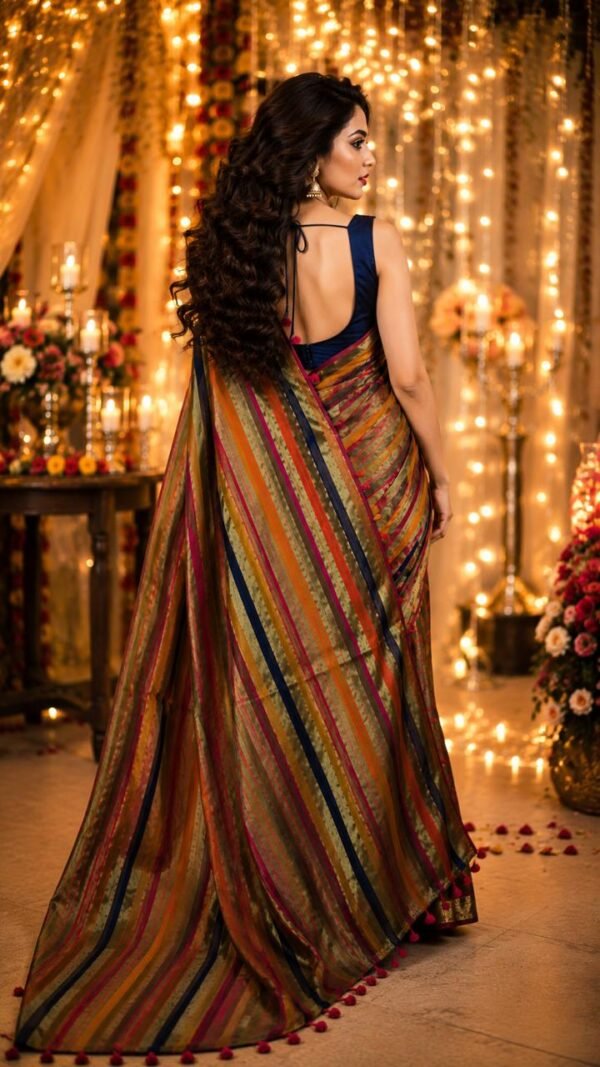
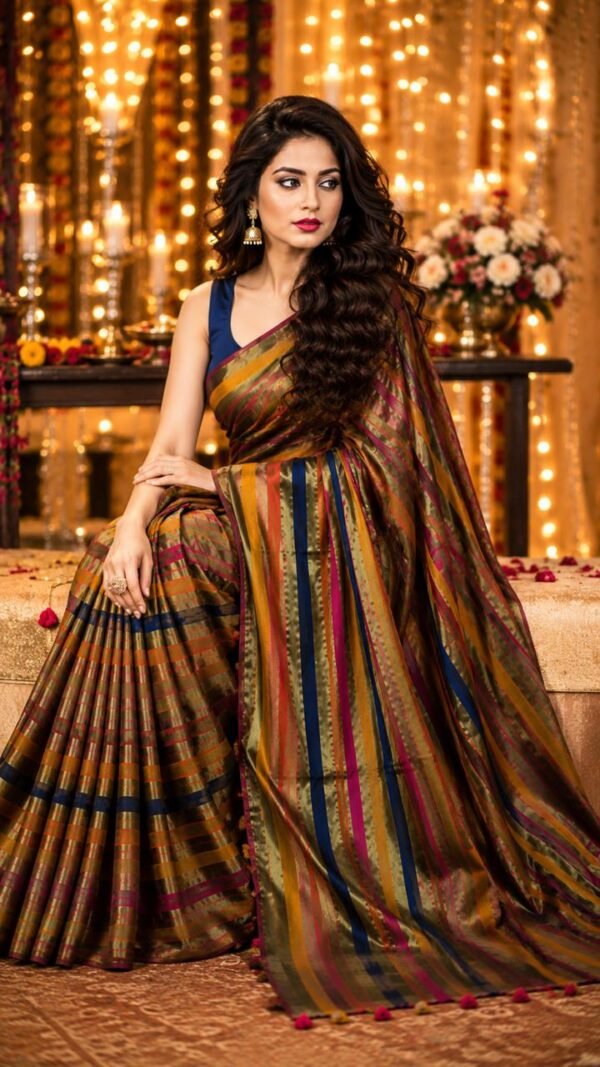
In the reference images, this saree is photographed in a Diwali interior at peak festivity — string lights, candelabras, marigold garlands, warm amber bokeh. The metallic cotton ground reads warm gold against the string lights, each stripe distinct, the full width of the fabric catching the ambient light from a dozen sources simultaneously. A plain cotton body at this weight would go flat in this light. The cotton tissue does not go flat. It receives the light and multiplies it.
The red pom-pom tassels at the pallu edge are small and densely clustered — a trim rather than individual tassels, running along the full pallu hem. Against the six-colour stripe, they do not compete. They finish. The name is Utsav: festival, celebration, the gathering of all good things into one place at one time. This saree was made for that gathering.
Bengal tissue weaving applies the metallic thread tradition to cotton: a gold zari warp is threaded through the cotton warp so that the metallic thread runs the full length of the fabric, giving it a ground that holds light. The technique brings the luminosity of silk tissue to the more breathable, more accessible cotton base — a fabric that glows without the weight of silk and without the formality that silk carries into certain occasions.
Multicolour warp stripe on a tissue ground requires the weaver to set up the loom with the full colour sequence before weaving begins. For Utsav, six separate thread colours were measured into the warp alongside the gold zari, each one threaded at the correct interval to produce the stripe width visible in the finished cloth. The stripe sequence is fixed at this stage — the weaver cannot adjust it after the first weft thread is thrown. The six-colour palette was a decision made before the saree existed.
The red pom-pom trim at the pallu hem is attached after the weaving is complete. Each pom-pom is individually formed and attached to the pallu edge at even intervals, creating the dense red trim line visible in the reference images. The flat-lay image in the collage shows the trim from above against the printed lining — each pom-pom spherical, clustered, the full trim running the complete pallu width. It is the last detail added to the saree before it is folded. The first detail the eye goes to when the pallu is extended.
- Wash: Dry clean recommended for long-term preservation of the gold zari tissue ground and the multicolour stripe dyes.
- Hand wash: If hand washing: cold water only, mild detergent, do not soak. The gold metallic warp and the six stripe dyes each require gentle chemistry. Soaking can cause the stripe dyes to bleed into each other.
- First wash: Dry clean only for the first wash. After the first professional clean, careful hand washing is acceptable.
- Pom-pom trim: Handle the pallu pom-pom trim with care. Do not pull or soak the trim section. Press gently and reshape the pom-poms after washing; lay flat to dry.
- Do not: Machine wash, wring, or bleach. The gold zari ground, the multiple stripe dyes, and the pom-pom trim all require gentle handling.
- Iron: Low heat on the reverse side only. Direct heat on cotton tissue dulls the metallic thread. Iron the cotton body carefully; avoid the pom-pom trim entirely.
- Dry: Always in shade. The multicolour stripe palette — particularly the magenta and rust — fades under prolonged direct UV exposure.
- Store: Folded in clean white muslin. Tissue paper between folds to prevent the metallic warp from tarnishing and the stripe dyes from transferring. Keep away from humidity and direct light.
Related products
-
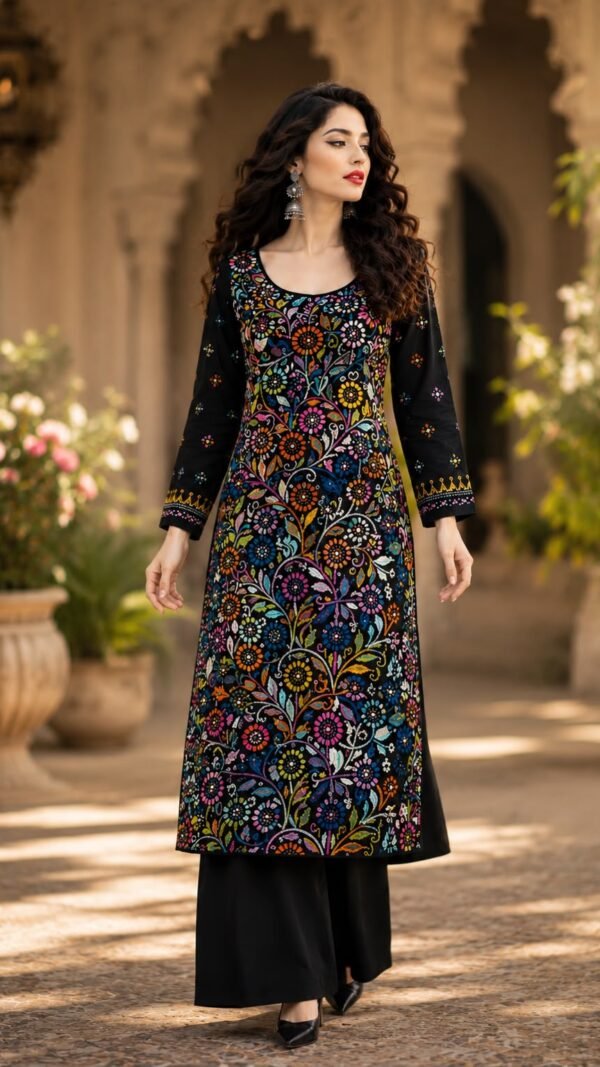
Utsav Kantha Hand-Embroidered Kurta in Black with Multicolour Garden Front
Suits & Kurtas ₹3,800.00 Add to cart
Reviews
There are no reviews yet.