
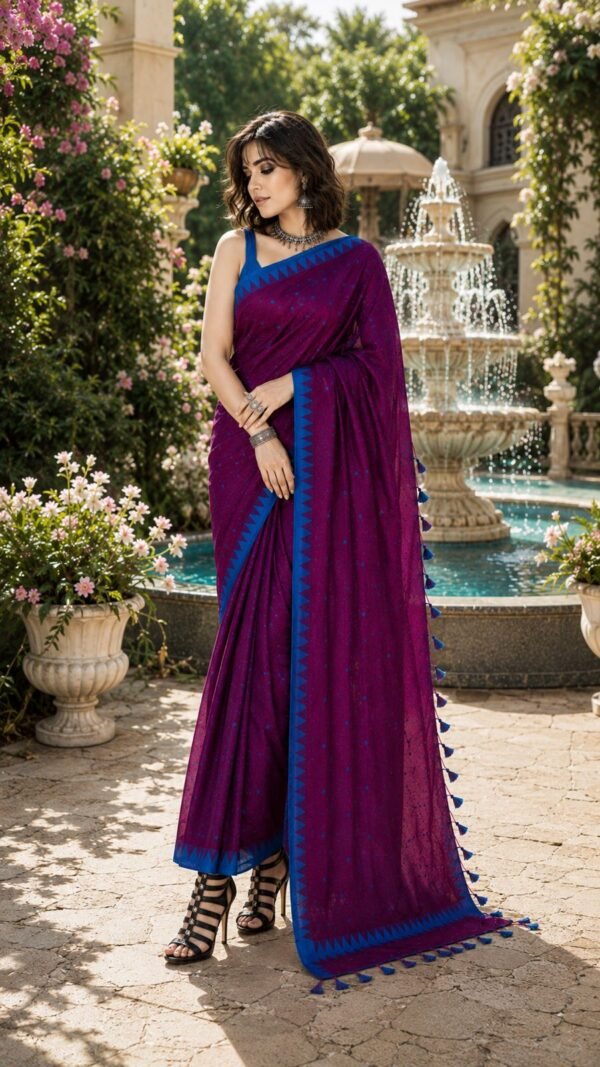
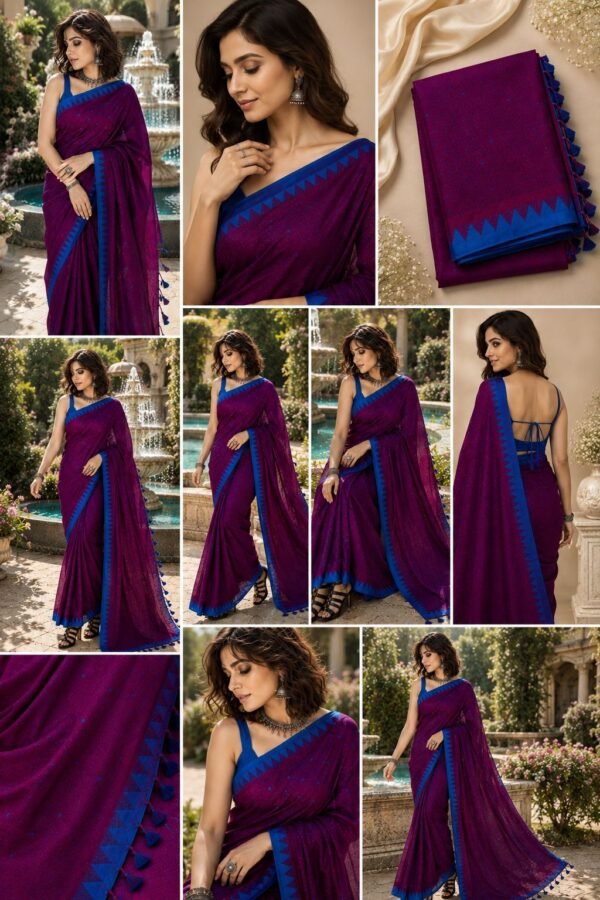
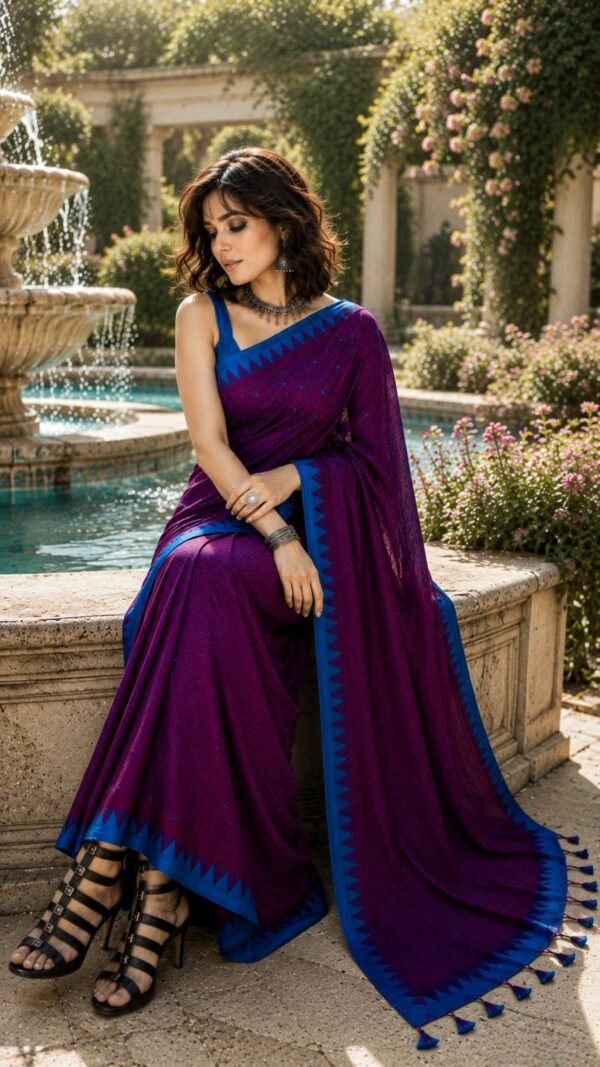











NilambariBengal Handloom Cotton Saree in Wine with Cobalt Buti and Temple Border
Sarees₹2,400.00
& Free ShippingNilambari is the raga of the dark cloud.
The raga sung in the deep monsoon,
when the sky is that particular shade of purple
and the first blue lightning is still deciding
whether to arrive.This is the purple of that sky.The cobalt buti are scattered the way the first drops fall —
not in a pattern, exactly,
but with a logic the eye believes immediately.
The blue temple border is the horizon.
The line where the cloud ends
and the storm begins.
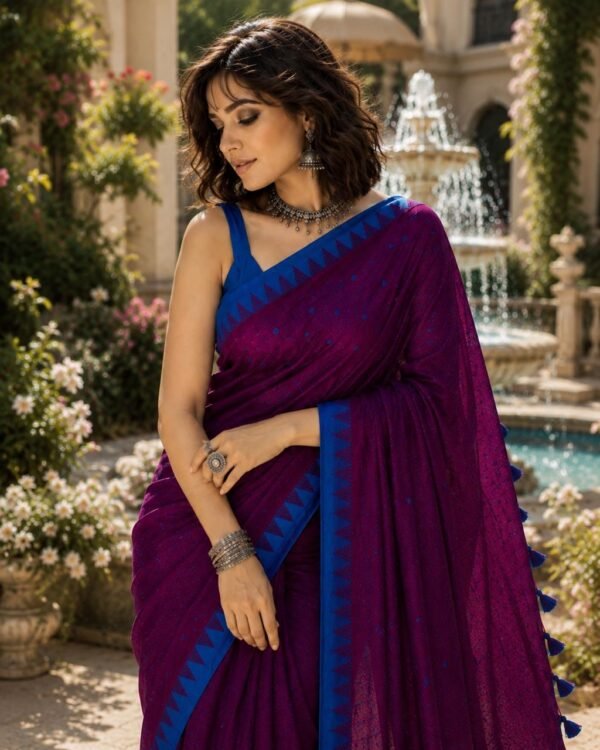
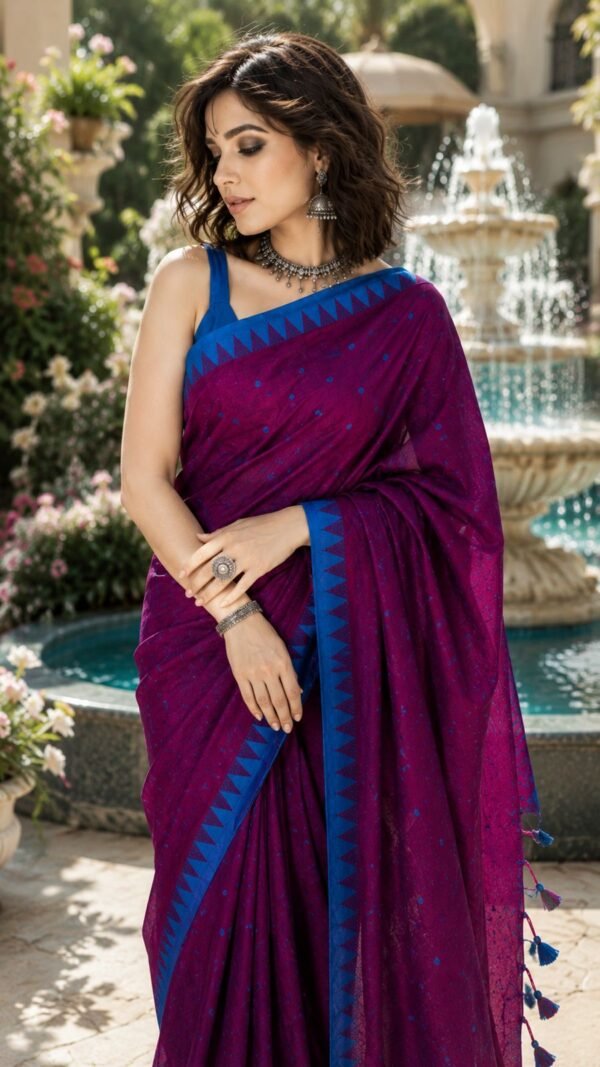
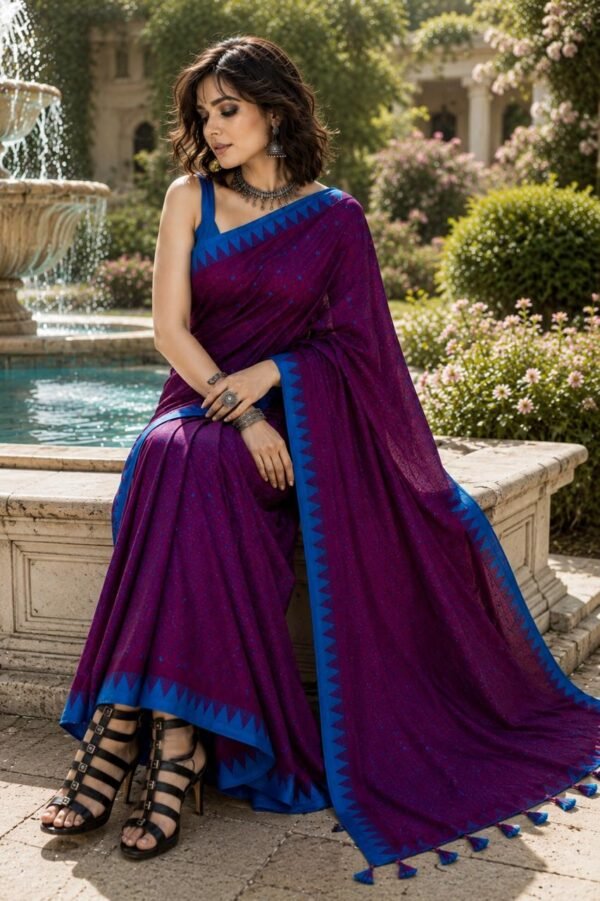
Bengal handloom cotton carries colour the way sky carries cloud — with depth and without apology. This body is wine: not a warm red, not a flat purple, but the specific depth of the grape at its darkest, the colour that sits between red and violet and belongs entirely to neither. Against white stone, against green garden, against direct afternoon light, it changes register. It does not repeat itself.
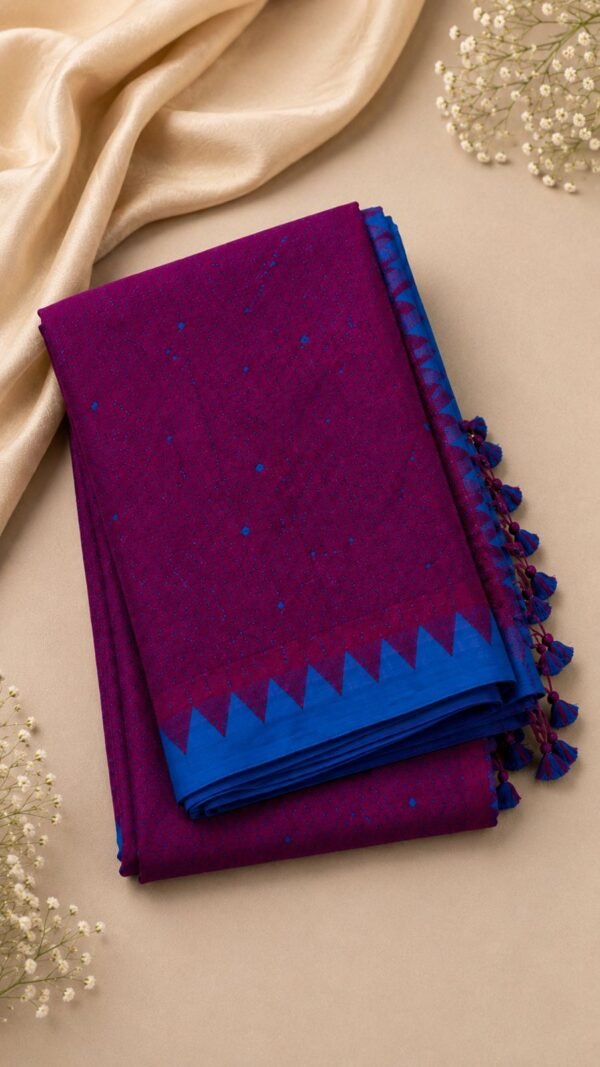
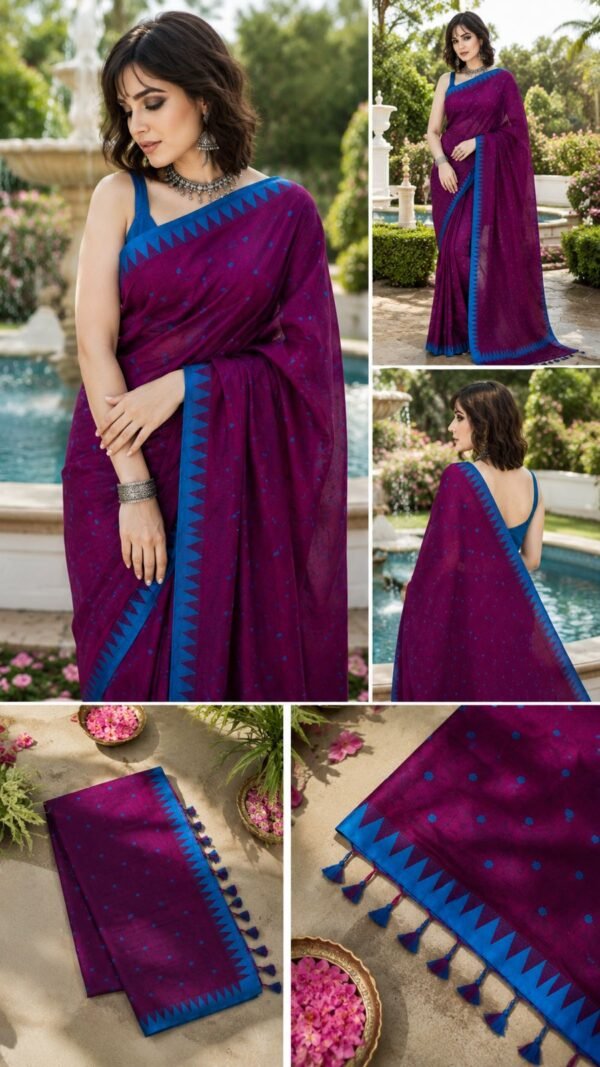
Scattered across the wine body are cobalt blue buti — small supplementary weft motifs, each one placed individually by the weaver as the fabric was made. They are not printed, not embroidered, not stamped on. Each buti is built by introducing blue thread across the weft at the exact position the pattern requires, building the motif row by row. The result is a scatter that looks casual and is not. Across 5.5 metres, every buti is in the right place.
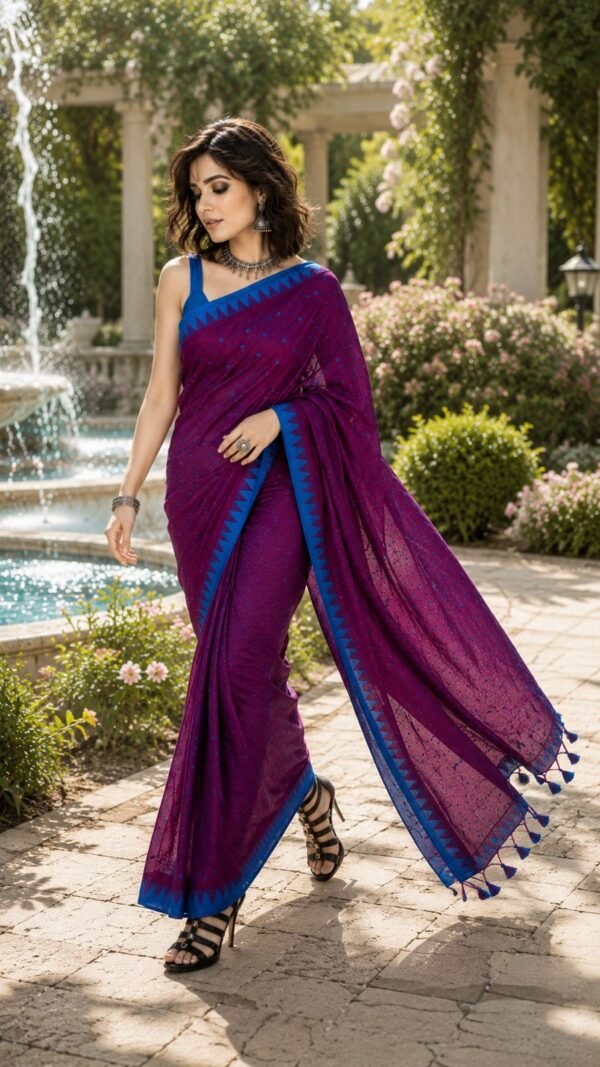
The border is cobalt blue with a temple pattern — the repeating triangular flame-tip geometry that recurs across Indian handloom traditions from Bengal to Chanderi to Varanasi. In blue on wine, the border does not ornament the saree. It defines it. The colour decision is the saree’s central argument: wine and cobalt have no warmth between them and no need of any. They are the colours of the sky in the last minutes before the monsoon arrives.
The pallu tassels are cobalt blue, knotted by hand, hung at even intervals along the hem. The name is Nilambari — the raga of the dark blue cloud, sung in the monsoon, the raga of the weather that has been building all day and is finally, completely, here.
Bengal’s handloom tradition has been producing scattered buti work for centuries. The technique is called jala or supplementary weft: the weaver introduces additional coloured thread into specific weft rows at specific positions, building a small motif row by row as the main body weaving progresses. The buti can be any motif the weaver knows — a flower, a diamond, a stylised burst, a small paisley. On this saree, the cobalt buti are small geometric forms, scattered at intervals across the full wine body, each one placed by hand.
The discipline of scattered buti work is in the placement. The motifs must appear random but must also be evenly distributed — no clustering, no gaps, no section of the body that feels overworked or empty. The Bengal weaver who made Nilambari made dozens of individual placement decisions across 5.5 metres of weaving. None of them show the calculation behind them. They look exactly like the first drops of rain.
The temple border in cobalt blue is extra-weft work in the same tradition: supplementary blue thread introduced at the border weft rows, building the triangular flame-tip pattern in sequence from the first row to the last. The border runs along the hem and through the pallu. The pallu carries the border on both edges, so that when the pallu is extended the blue frames the wine on three sides. The cobalt tassels at the pallu hem are attached by hand after the weaving is finished, knotted individually and spaced at even intervals.
- Wash: Hand wash in cold water with a mild detergent. The wine ground and cobalt buti both require gentle chemistry.
- First wash: Wash separately. The deep wine may release slight colour on the first wash. Normal for this depth of dye. Will not recur after the first wash.
- Buti care: Wash gently around the scattered buti — do not scrub. The supplementary weft motifs are structurally woven in but the thread sits proud of the base weave and requires gentle handling.
- Tassels: Handle gently around the cobalt tassel knots. Do not pull or wring. Press gently, reshape, and lay flat to dry.
- Do not: Machine wash or bleach. Both will damage the buti placement and the tassel structure.
- Iron: Medium heat on the wine cotton body. Iron from the reverse side to protect the buti surface threads. Avoid direct ironing on the border or tassels.
- Dry: Always in shade. Deep wine and cobalt both shift under prolonged direct sun. The depth of these colours is the point of the saree.
- Store: Folded in clean muslin. Keep away from other garments to prevent colour transfer. Keep away from humidity.
Reviews
There are no reviews yet.