
FerozaCotton Block Print Unstitched 3-Piece Suit in Feroza Teal
Suits & Kurtas₹5,200.00
& Free ShippingFeroza is the turquoise stone.
The Persian word for the colour
that belongs between blue and green
and is at home in neither,
and complete in both. The Jaipur block printer filled the kurta fabric
with the dense all-over floral
that is the tradition’s most refined register:
the same flower, turned ninety degrees, repeated,
until the whole surface is a garden.
The three pieces read separately.
The teal floral of the kurta,
the teal-on-cream vertical border of the palazzo,
the teal-and-white stripe of the dupatta.
Three interpretations of the same colour,
each in its own print vocabulary.
Out of stock
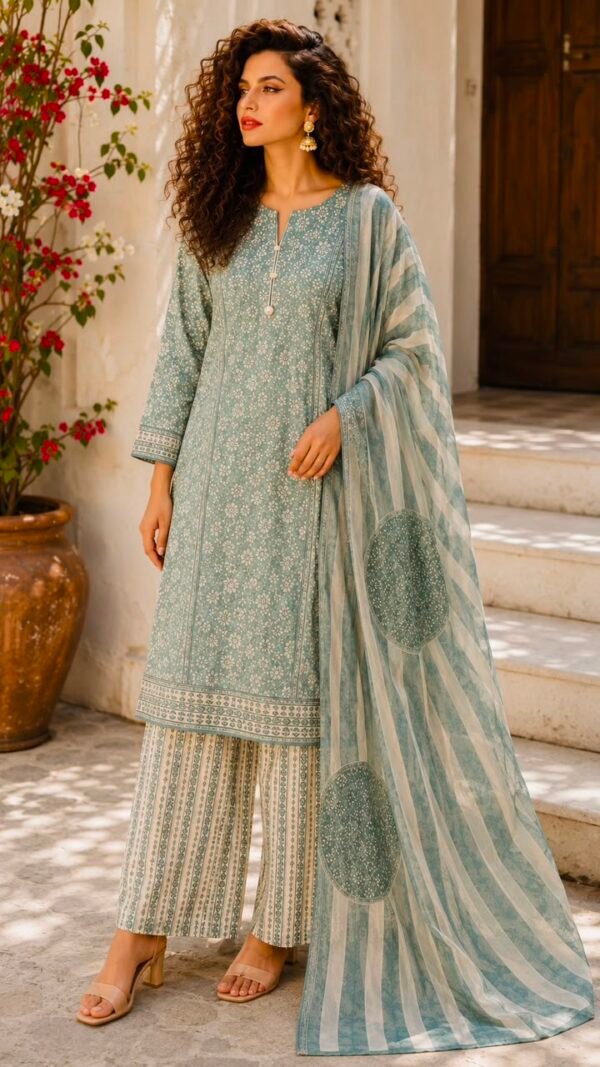
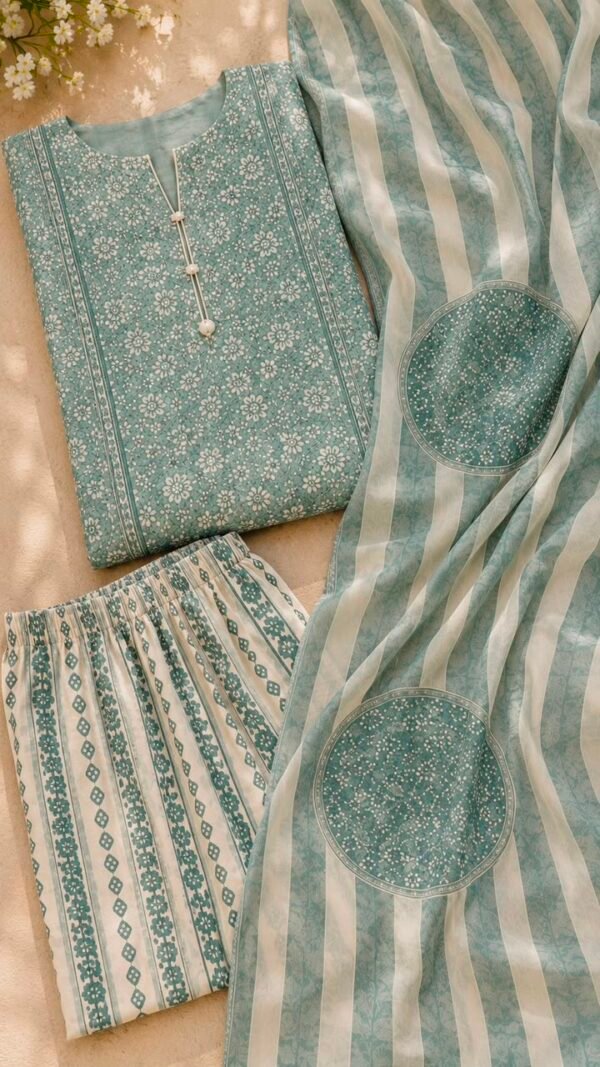
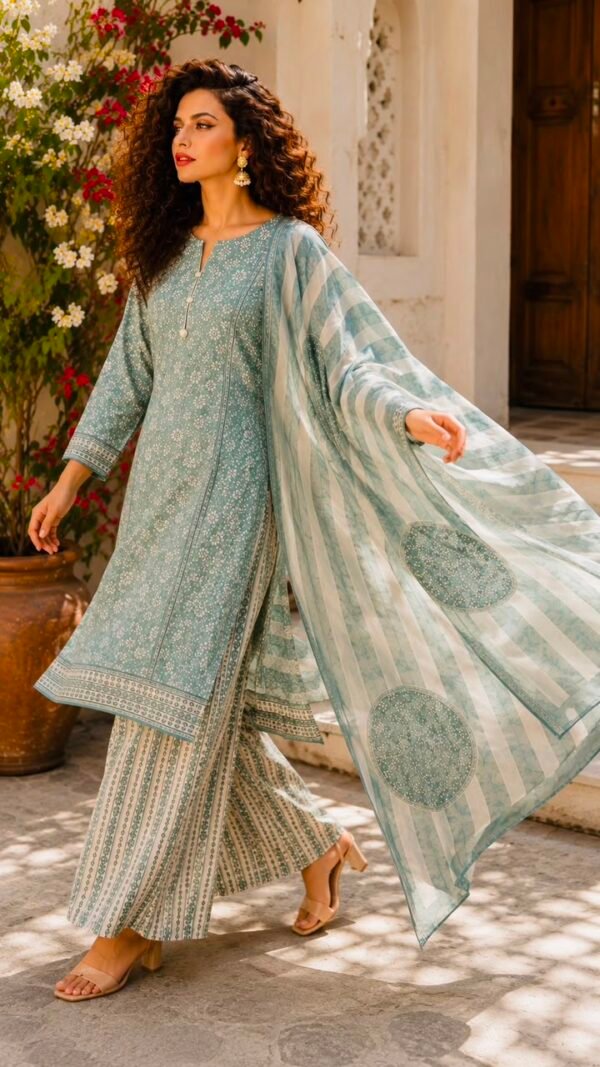
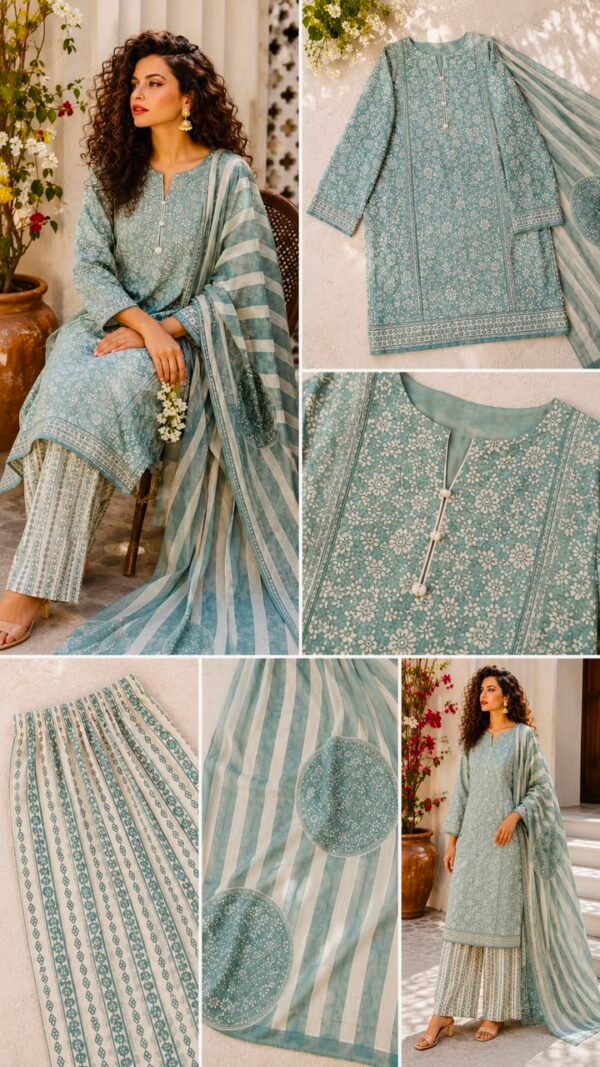
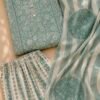
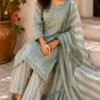
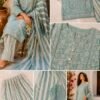
The kurta fabric carries the full Jaipur block print vocabulary: a dense all-over floral in teal on teal, white flowers pressing so closely together across the feroza ground that the background and the foreground are in near-equal proportion. The flowers are small — each a five-petalled form with a circular centre, printed at the scale of a fingernail, pressed in the repeating sequence that produces the all-over effect: the block pressed, lifted, placed again, the slight variation in ink density between impressions giving the surface the texture that distinguishes block from digital. The vertical stripe borders running down the center front panel define the kurta’s composition: the same floral vocabulary in a concentrated band on either side of the closure, distinguishing the frontal panel from the body. The pearl-button closure at the neckline is visible in both the flat-lay and the model images: a clean white button on a fine white cord against the feroza floral ground.
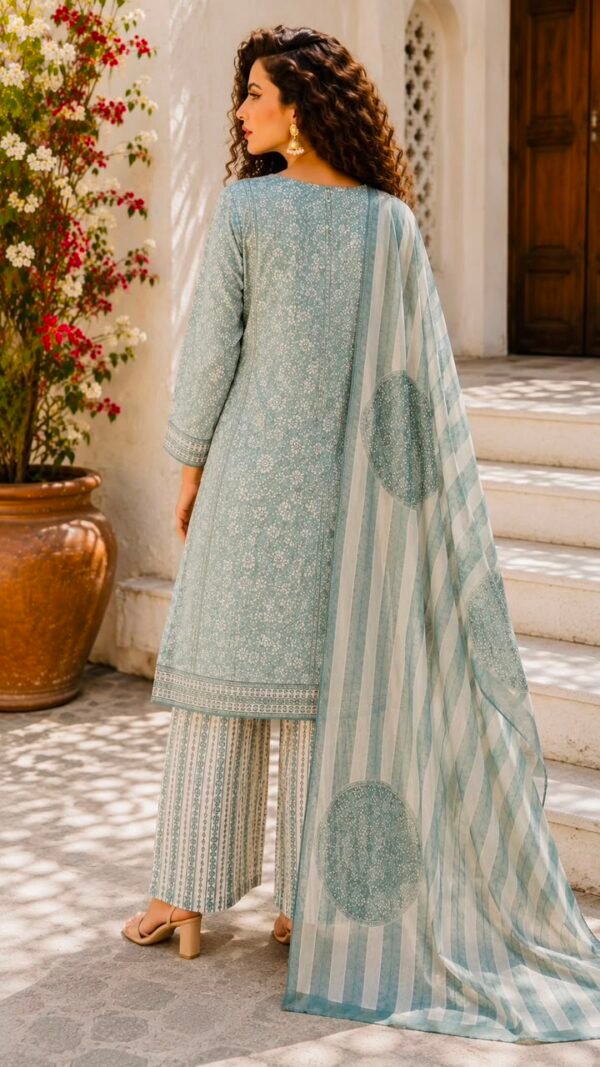
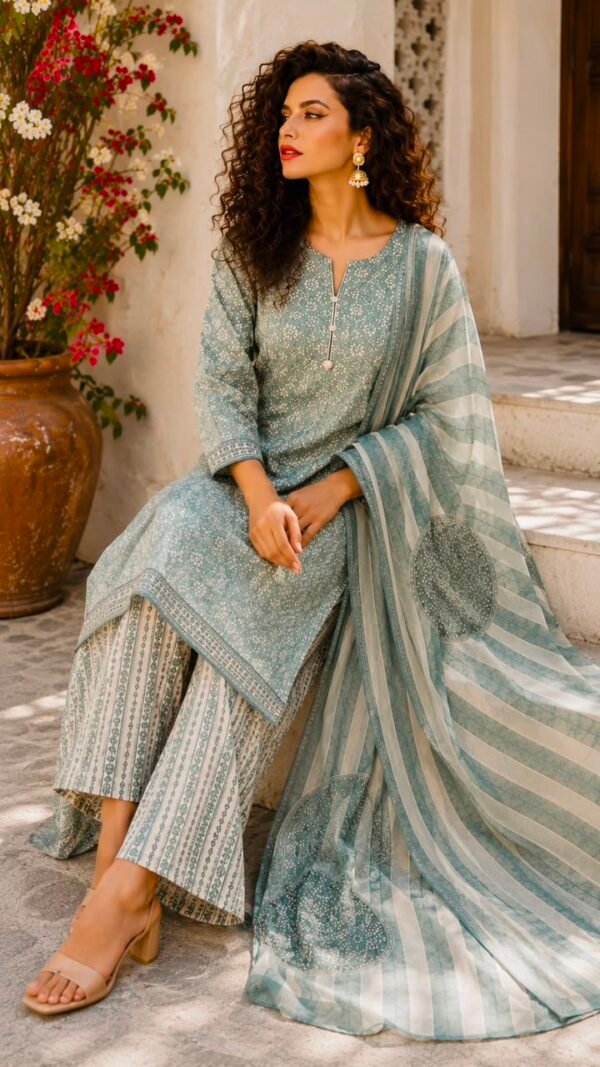
The palazzo fabric is the kurta’s conversation partner. Where the kurta is teal ground with white print, the palazzo is cream ground with teal print: the same colour palette in inverse proportion, the teal now the pattern colour, the cream now the ground. The palazzo print carries the block print border vocabulary — running vertical bands of geometric diamond forms, small dot sequences, and border floral elements across the full palazzo width. The colour inversion between the two pieces is the design’s central decision: wearing the suit, the teal floral sits above the cream geometric, the two halves of the same colour relationship completing each other from shoulder to hem.
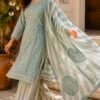
The dupatta is the third vocabulary: a wide alternating stripe of teal and cream-white in a slightly sheer, organza-weight or chiffon-weight fabric, the stripes running the full length of the dupatta. Within the teal stripes, the floral pattern from the kurta appears in a lighter, more diffuse form. Placed at intervals across the dupatta are large circular medallion motifs: the same teal-on-cream floral vocabulary, concentrated into a circle and placed as focal points against the stripe background. The medallion is the dupatta’s most complex element — the teal floral building into a circular composition with a defined border, the same block print language at a different scale.
In the reference images, the setting is a Moroccan-influenced Indian interior with white jasmine flowers, terracotta pots, rattan furniture, and carved stone fretwork screens. The feroza palette — the specific teal that Persian art calls the turquoise — is at complete ease in this setting: it is the colour of the tilework, the colour of the Rajasthani architectural palette, the colour that the Jaipur printers have been using in this block print vocabulary for as long as the tradition has been Jaipur.
Jaipur block printing, centred in the Sanganer and Bagru villages near Jaipur, has produced the specific floral-geometric vocabulary visible in this suit for centuries. The collection’s fourth block-print piece — alongside Rati (Saree 45), Upvan (Saree 49), and Saumya (Suit 02) — Feroza uses the finest end of the Jaipur print register: the small, dense, all-over floral that requires the most precise block and the most consistent block-pressing technique to achieve the even coverage visible on the kurta fabric.
The all-over small floral block requires the printer to maintain the block registration across the full fabric width and length: each adjacent block impression must align precisely with its neighbours so the flower repeat reads as a continuous pattern rather than as visible stamp intervals. At the scale of this floral — each flower at fingernail size, the block carrying approximately twenty to thirty flower forms per impression — a single 2.5-metre kurta length requires hundreds of individual block stamps, each one placed within a few millimetres of the last. The slight variation between adjacent impressions that is visible in the fabric close-up — some flowers fractionally more defined, some slightly lighter — is the record of the printer’s hand moving across the fabric and the ink density varying naturally between stamp and lift.
The three different print patterns across the three suit pieces — all-over floral on the kurta, running geometric border on the palazzo, wide stripe with medallion on the dupatta — are drawn from the same Jaipur block vocabulary but use different block families. A traditional Jaipur block print set like this coordinates across multiple block types within the same colour palette, the design coherence coming from the shared colour rather than from a shared pattern. The colour is the conversation. The prints are the three ways of having it.
• Kurta and palazzo: Hand wash separately in cold water with a mild detergent. The teal print on both pieces is the same colour family but different dye lots. Wash them separately for the first two washes.
• First wash: Wash each piece separately. The teal block print may release slight colour on the first wash. Normal. Keep away from light fabrics.
• Dupatta: If the dupatta is chiffon or organza weight, hand wash very gently in cold water. Do not wring or twist. Press water out carefully. The stripe and medallion print is more delicate on a sheer fabric.
• Do not: Machine wash any of the three pieces. Bleach. Use fabric softener.
• Iron: Kurta and palazzo: medium heat on the reverse side. Dupatta: low heat on the reverse side only if it is a sheer fabric.
• Dry: All three pieces in shade. The feroza teal is UV-sensitive and will shift toward a slightly more grey-green over extended direct sun exposure.
• Store: Each piece folded separately in clean muslin. Do not store the dupatta in direct contact with the printed kurta or palazzo for extended periods.
Related products
-
Gulmohar Chanderi Kurta and Cotton Sharara Suit Set in Crimson with Zari Border
Suits & Kurtas ₹4,200.00 Add to cart
Reviews
There are no reviews yet.