










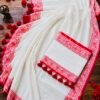

Mangal Bengal Handloom Cotton Saree in White with Red Woven Border
Sarees₹2,800.00
& Free ShippingMangal means auspicious.
It is the quality a moment carries
when the right thing is beginning.In Bengal, white is the colour of the threshold.
Red is the colour of what crosses it.The white body has been woven clean.
The red border has been waiting at the edge
for exactly this.
For the moment the woman steps forward
and the threshold disappears behind her.
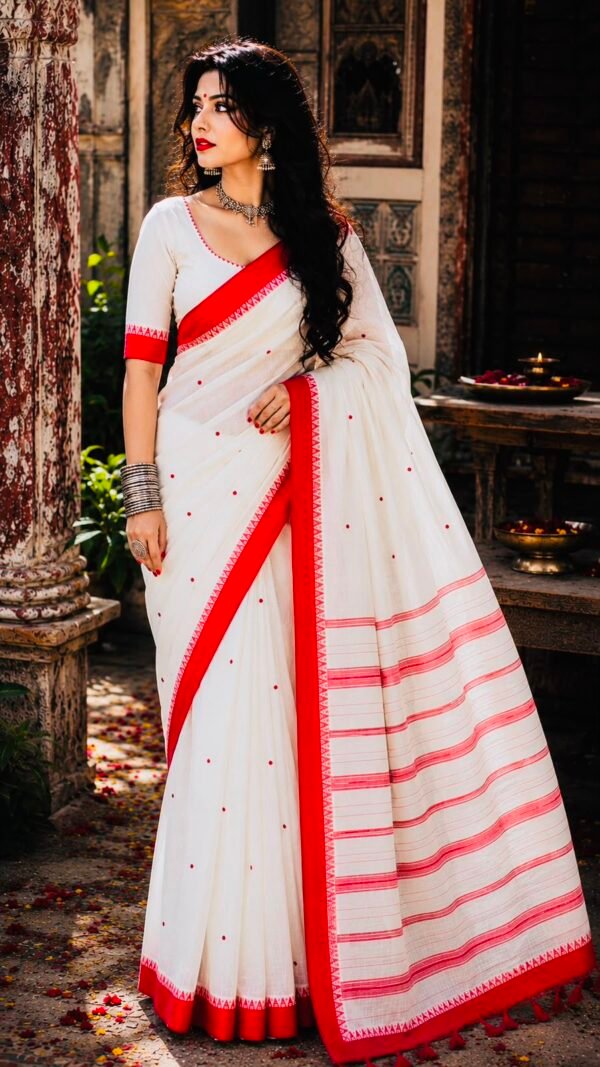
White and red. In Bengal this is not a colour combination. It is a statement. The white saree with the red border is the saree the bride wears to her wedding. The saree the married woman wears to the Durga Puja mandap. The saree that appears in every ceremony the culture marks as a moment of passage. Bengal has been making this saree since before anyone was recording the tradition, and the combination has not changed because the combination is correct. It has always been correct.
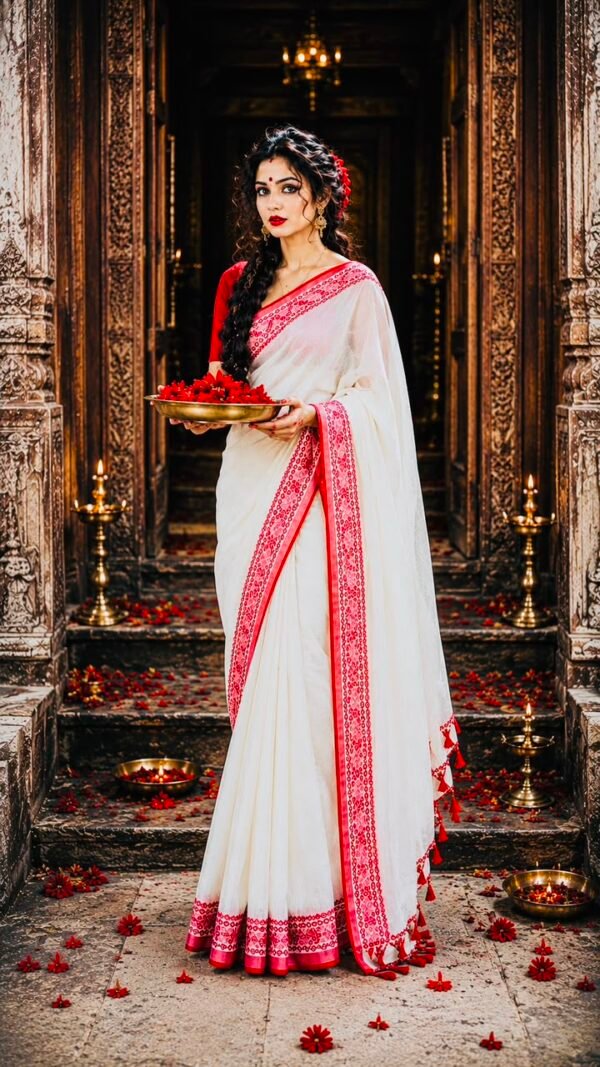
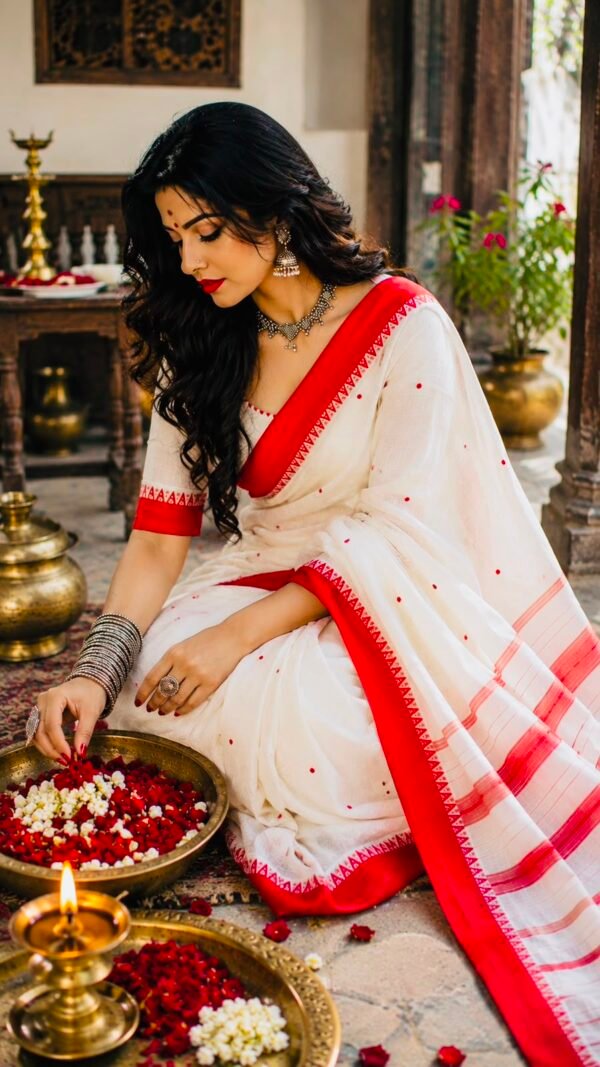
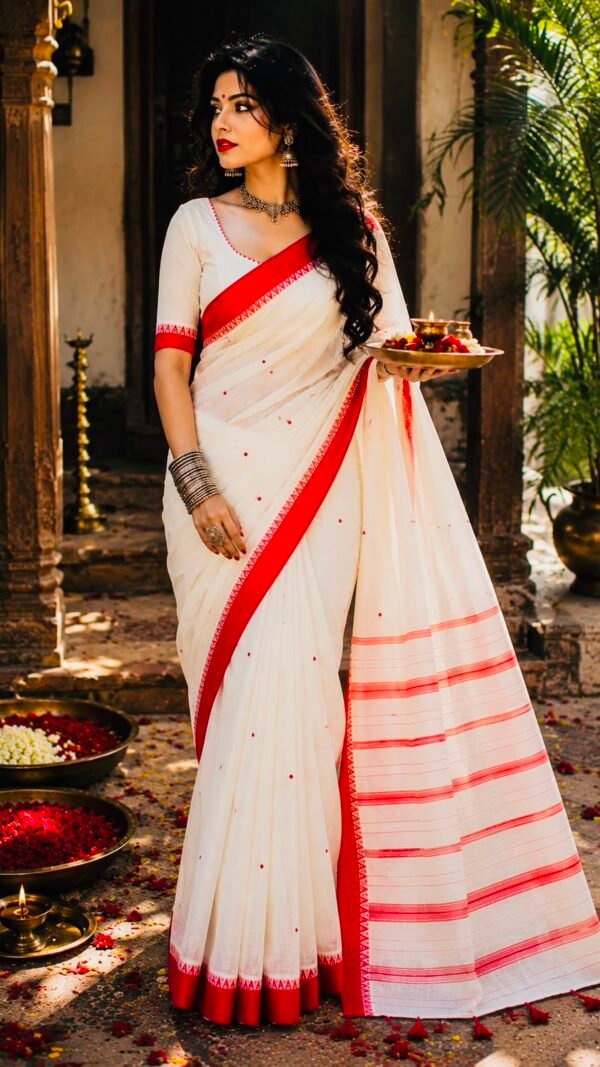
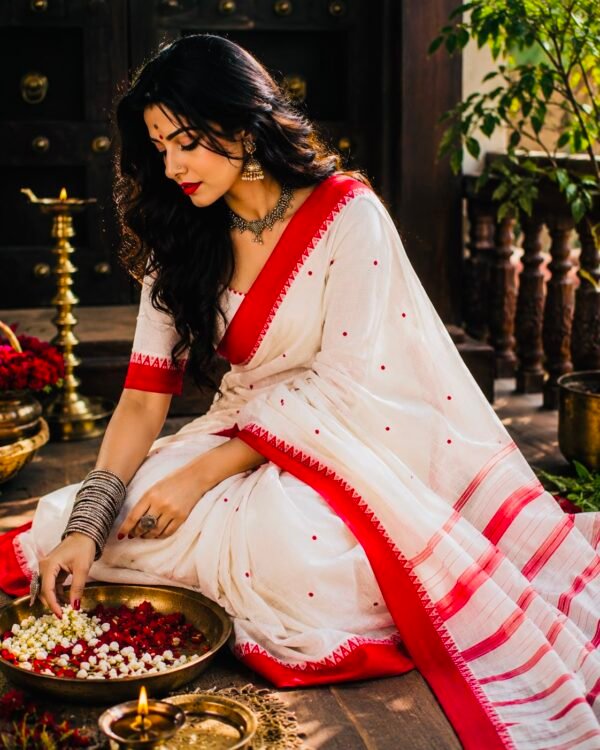
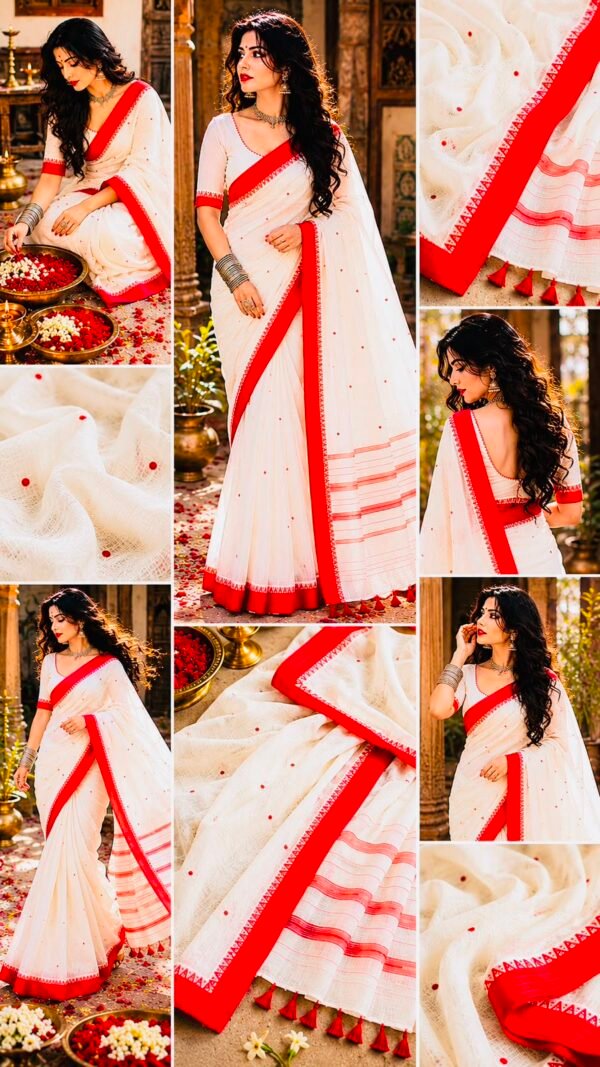
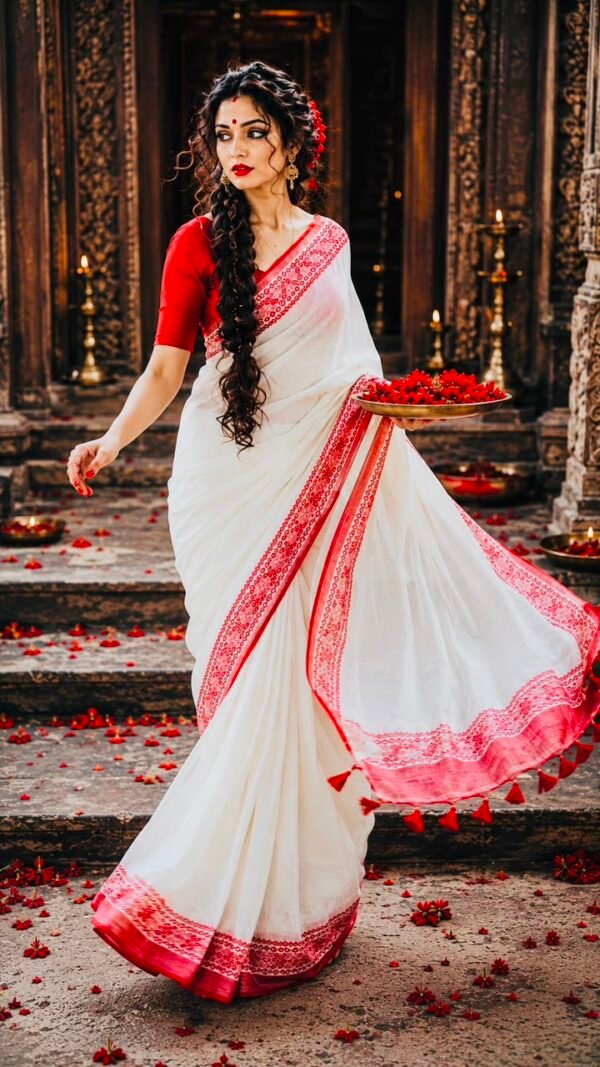
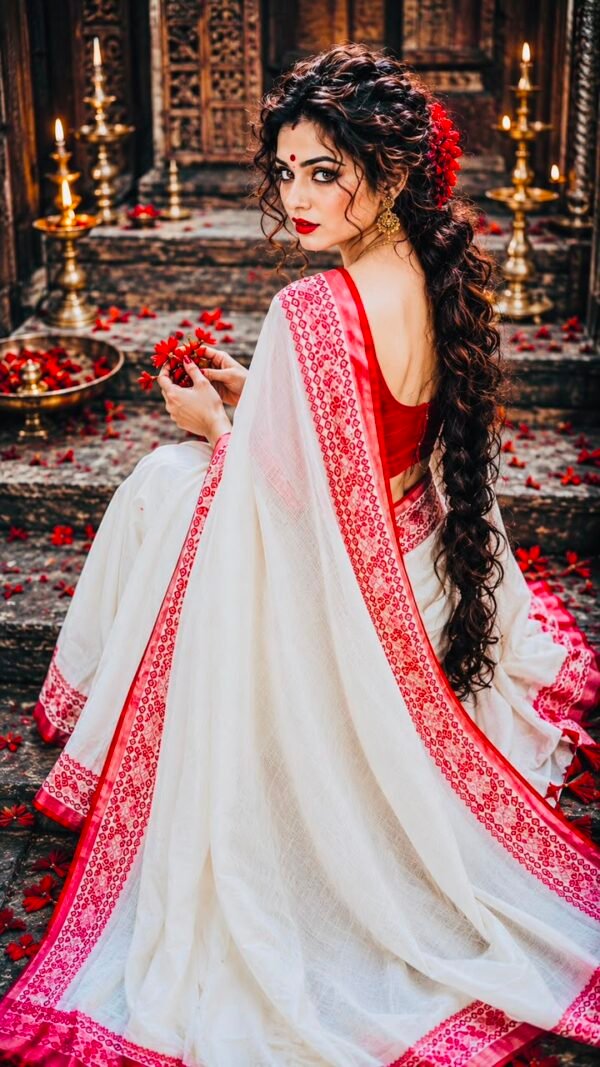
The white body is fine handloom cotton — clean, plain, without embellishment. The plain body is the design. The white carries every colour the occasion brings to it: the gold of the brass diyas, the red of the sindoor, the warm amber of the candles. In the reference images, the woman holds a puja thali with flowers, the temple lamps burning behind her, the white cotton body absorbing the light from a dozen sources and returning something that is never quite the same twice. White cotton in ceremony is a complete colour. It holds everything.
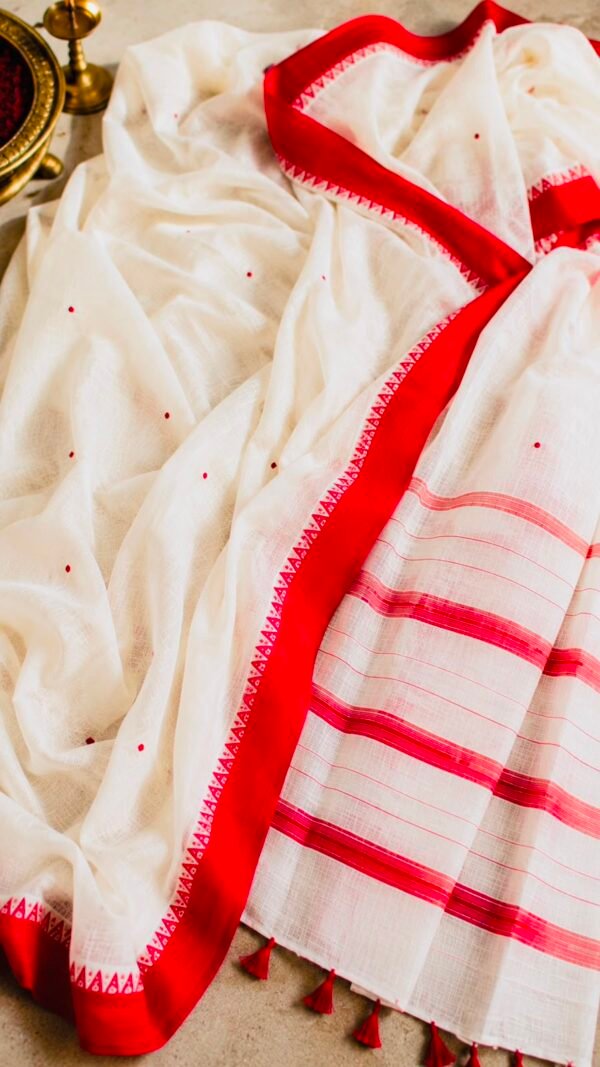
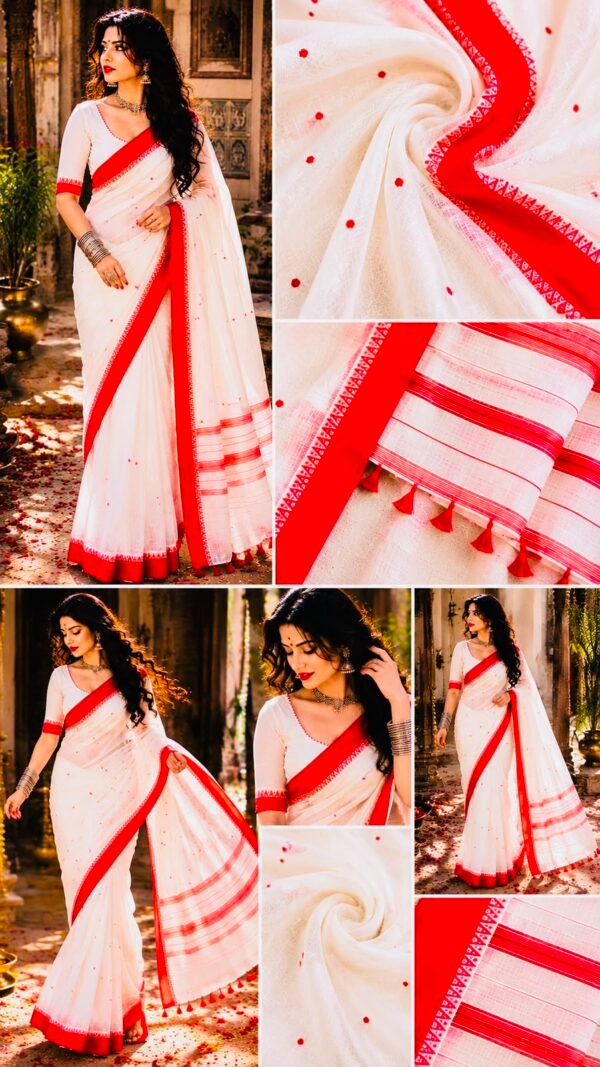
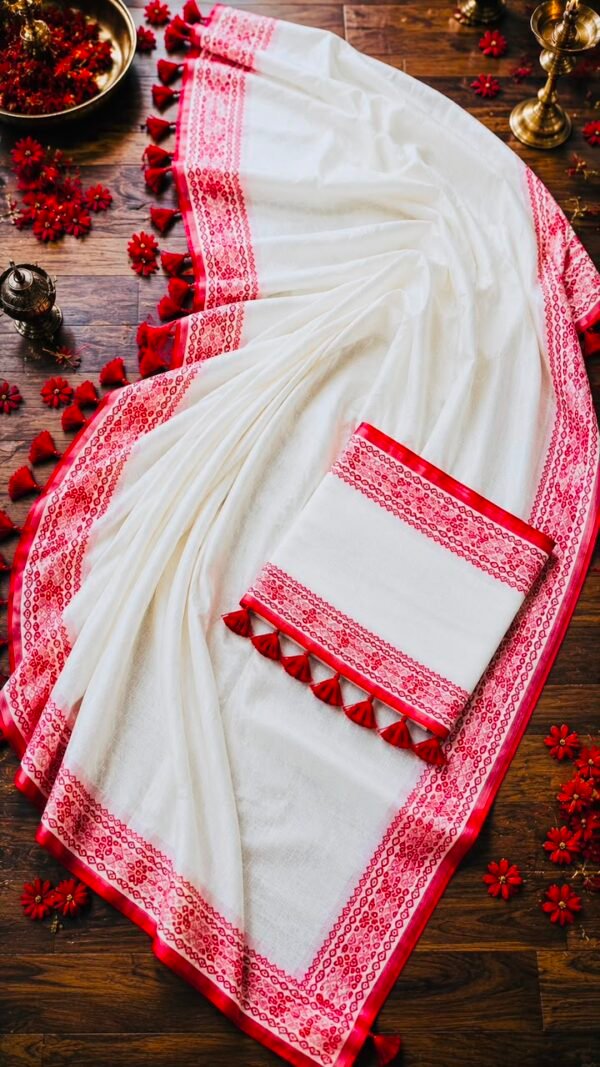
The red border is woven at the loom — not embroidered, not attached after the fact, built into the cotton at the border section with supplementary weft thread in a dense geometric repeat pattern. The pattern is the traditional Bengali border geometry: diamond forms, running chevrons, small floral inserts, the whole sequence repeating along the full length of the running border and filling the pallu border bands. The red in this border is not a warm red. It is the red of the sindoor box, the red of the kumkum pressed to the temple floor, the red that Bengal has been pairing with white since the tradition began.
The red tassels at the pallu hem are dense and evenly spaced, knotted by hand. Against the white, they are the final word the red border says before the pallu ends. The name is Mangal: auspicious, the quality that marks a beginning as the right kind. This saree is for every beginning that has ever mattered.
The white-and-red saree tradition in Bengal predates the recorded history of the craft. The Garad silk version — white silk with a red Benarasi border — is the most famous form, worn by Bengali brides for centuries. The cotton version carries the same visual logic in a more accessible weight: the same white, the same red, the same geometric border vocabulary, woven on handloom rather than power loom, in cotton rather than silk.
The Bengal handloom weaver sets the warp in white cotton and introduces the red supplementary weft thread at the border section of the loom, building the geometric pattern row by row in the same way the zari borders of the festive sarees are built: one weft pass at a time, the colour accumulating into the pattern. The diamond and chevron forms in this border are the traditional Bengal border vocabulary — the same motifs that appear in the Garad, in the Jamdani, in the khaddar borders of rural Bengal. The specific repeat on this saree belongs to the weaver who set the loom. The general vocabulary belongs to the tradition.
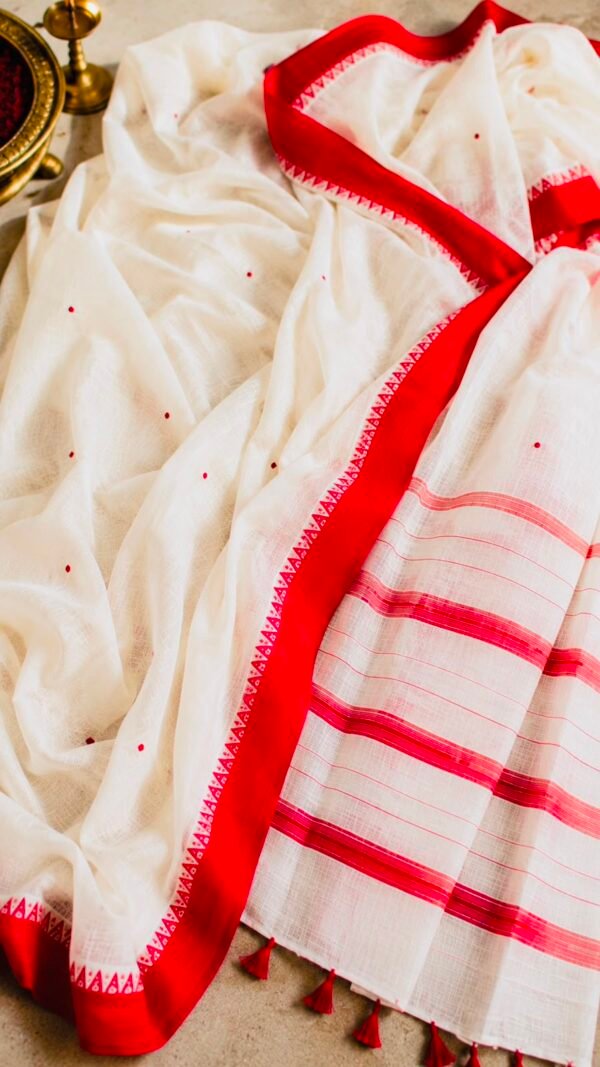
The fine white cotton body has a slight check structure visible in the fabric close-up — a self-stripe or self-check woven into the plain white, giving the body a faint surface texture without departing from its essential whiteness. The red tassels at the pallu hem are attached after the weaving by hand. The tradition of tassels on this saree type is long: the knot at the tassel end carries the same colour as the border it finishes, and the spacing is maintained to match the border’s geometric rhythm.
- Wash: Hand wash in cold water with a mild, pH-neutral detergent. Wash separately from all coloured garments — permanently. White cotton picks up colour in water from other fabrics.
- First wash: Wash separately. The red border may release slight colour on the first wash in cold water. Normal. Will not recur after the first wash.
- White body: Do not use bleach. Bleach yellows cotton permanently. For any staining on the white body, consult a dry cleaner. For regular washing, cold water and mild detergent are sufficient.
- Border: Wash gently through the red border section. The supplementary weft threads are woven into the structure but the red dye can transfer if pressed against other fabrics in hot water.
- Tassels: Handle the red tassels gently. Press gently, reshape, lay flat to dry. Do not pull.
- Do not: Machine wash, bleach, or use fabric softener. All three affect white cotton permanently.
- Iron: Medium heat on the white body. Iron from the front — the warmth brings out the slight check texture of the body. Iron the border from the reverse side on low heat.
- Dry: In shade. Sun-drying white cotton causes it to yellow over time. This white is the entire design of this saree. Protect it.
- Store: Folded in a clean white muslin cloth — never in coloured fabric, which can transfer in humidity. Keep away from direct light. A saree this ceremonial deserves careful storage between occasions.
Reviews
There are no reviews yet.