




Shail Assam Khadi Cotton Saree in Grey with Black Geometric Triangle Border
Sarees₹8,250.00
& Free ShippingShail means mountain.
The Sanskrit word for the thing that holds its position
regardless of what is happening around it.The grey is the ground.
Not the grey of absence or uncertainty.
The grey of slate and stone,
the grey that has been here since before
the question was asked.The triangle is the Assam weaver’s oldest geometric form.
Built by counting threads, one row at a time,
the form growing wider at the base
until the mountain is complete.
The border holds them in sequence.
The pallu holds them at scale.
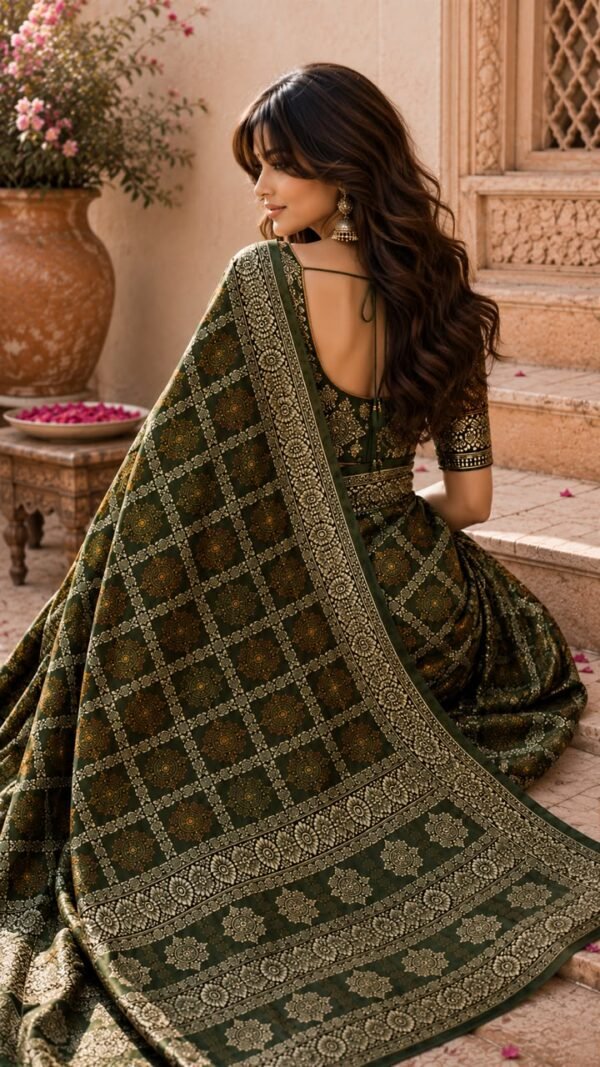
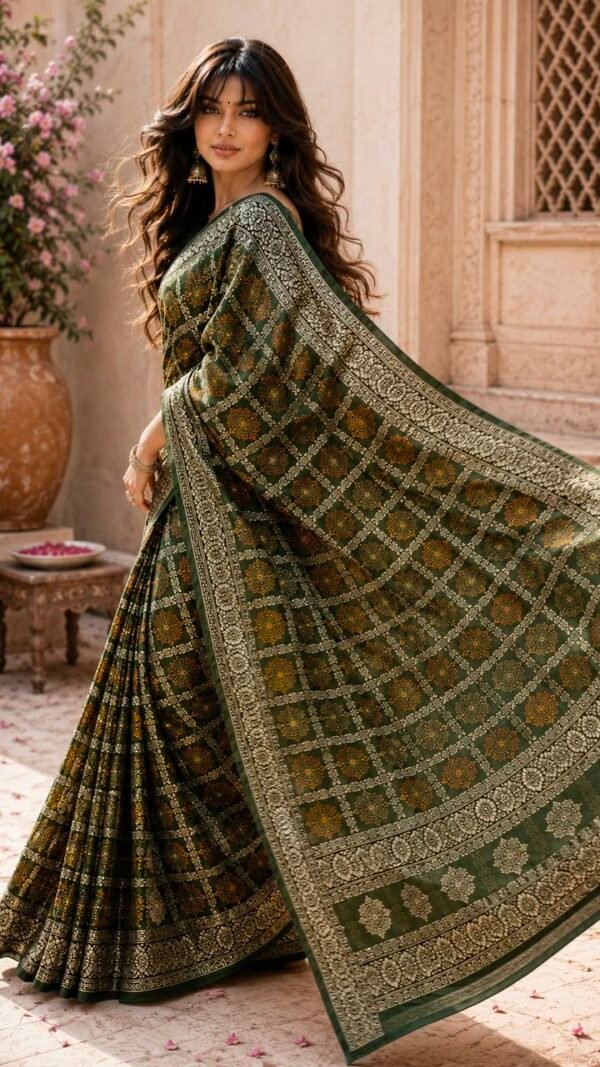
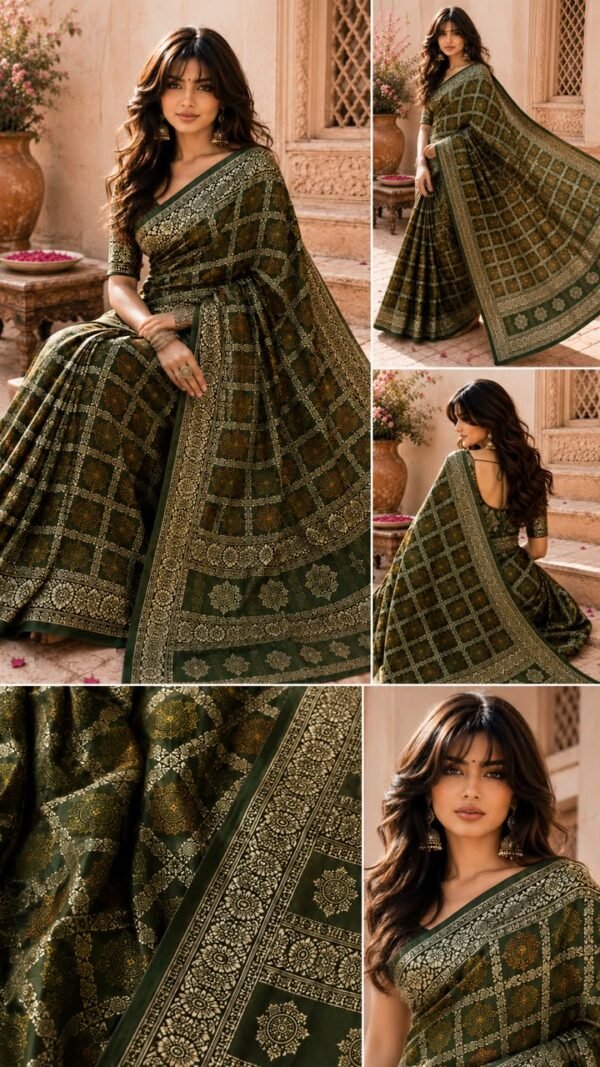
The reference image places this saree in a contemporary corporate office: glass partition walls, pendant industrial lights, leather desk chair, a MacBook on the oak desk. This is the only saree in the collection photographed in a professional workplace setting, and it is the right choice for this specific saree. The grey Assam khadi with the black and white geometric triangle border is the saree the collection has that belongs in a boardroom. The hand-spun thread produces a grey that is not the flat grey of machine-made cloth — it is the slightly varied, slightly textured grey of cotton that was made by a hand, the variation visible as a living surface in the office light. The woman wearing it at her desk is not making a casual choice. She is wearing the mountain.
The grey body is the ground. Scattered across it are small white triangle buti — tiny geometric forms placed at regular intervals across the full 5.5 metres of the khadi body, each one a miniature version of the motif that the border will develop at full scale. At the body-to-border transition, the triangle vocabulary is already established: the buti throughout the body have told the eye what the border will say in full. The black border is solid: a dense, clean band running the full hem and running border in the deepest black the weaving tradition can achieve against the grey. On the black ground, the white triangle motifs are in sharp, graphic contrast — each triangle outlined in white thread, the forms building in a running sequence along the full border band.
The pallu is the saree’s mountain range: the triangle motifs now at a dramatically larger scale, white geometric pyramids built from filled triangular forms and outlined structures rising from the black pallu ground. The composition progresses across the pallu from smaller forms near the body to larger forms at the hem — the triangles building as the eye moves from shoulder to hem, the accumulation of form giving the pallu the specific gravity that the name Shail requires. The white tassels at the pallu hem are individually knotted: fine, clean white against the black pallu, the last graphic note before the saree ends.
The companion saree to this is Shreya (Saree 50): white Assam khadi with a red border, the colour of Assamese ceremony. Shail is the same Assam khadi tradition in the grey-and-black colour register — the colour of the professional day, the colour of the boardroom. Both are Assam. Both are hand-spun. The occasion is different.
Shail is the second Assam saree in the Hastkaar-E-Khaas collection, alongside Shreya (Saree 50). The two sarees share the same Assam khadi hand-spun cotton tradition and the same supplementary weft triangle motif vocabulary. What distinguishes them is colour register and occasion: Shreya is the white-and-red of Assamese ceremony; Shail is the grey-and-black of professional authority.
The Assam geometric triangle motif — used in border constructions across Assamese textiles including the Mekhela Chador and the traditional gamosa — is a counted supplementary weft construction. The triangle is built row by row: the first row establishes the base width, each subsequent row is one thread narrower on each side, and the form closes at the apex with a single thread. The white triangle on the black border is this construction in graphic contrast: the white supplementary thread against the black woven ground, the form precisely geometric because the count was maintained without error. The large-scale triangles in the pallu are the same construction at significantly greater height and base width — the weaver counting a longer sequence, the form taking more rows to build, the finished triangle commanding more of the pallu surface.
The grey khadi body is hand-spun from Assamese cotton, the same spinning tradition described in Shreya. The grey comes from the dye bath applied to the spun yarn before weaving: the grey is structural in the yarn, not a surface coat. On the loom, the grey warp and weft create the body ground, and the black thread is introduced at the border section as the ground colour changes. The white triangle buti scattered across the grey body are small supplementary weft events — each one a brief construction that establishes the triangle vocabulary before the border develops it fully.
• Wash: Hand wash in cold water with a mild pH-neutral detergent. The grey body and the black border are each dye lots that require gentle chemistry. Cold water protects both.
• First wash: Wash separately in cold water. The black border may release slight colour on the first wash and could transfer to the grey body. Wash quickly and rinse thoroughly. Do not leave damp. Will not recur.
• Border-to-body caution: A specific note for grey-and-black: the black border releases colour more readily than the grey body absorbs it, but in extended contact while wet, some colour transfer is possible. Lay flat immediately after washing.
• Khadi note: Hand-spun variation is preserved by gentle washing. Machine agitation breaks down the khadi surface texture over time.
• Do not: Machine wash, bleach, or use fabric softener.
• Iron: Medium heat from the front while slightly damp. Khadi irons best this way. The triangle buti and border benefit from front ironing which sharpens the geometric edges.
• Dry: In shade immediately after washing. Do not leave the grey body in contact with the damp black border. Lay flat and separate.
• Store: Folded in clean muslin. Tissue paper at the border fold to separate black from grey. Keep away from humidity and direct light.
Reviews
There are no reviews yet.