
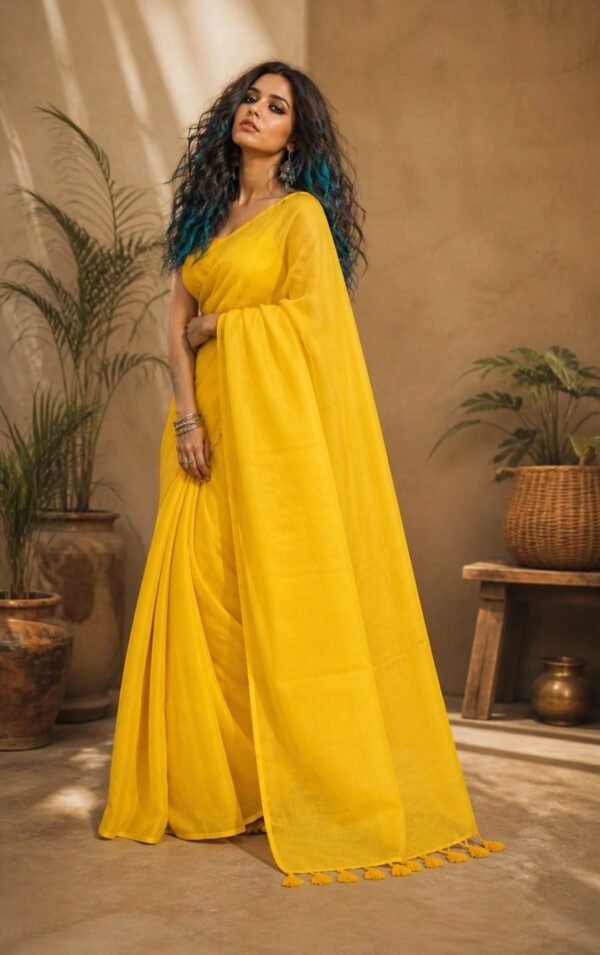
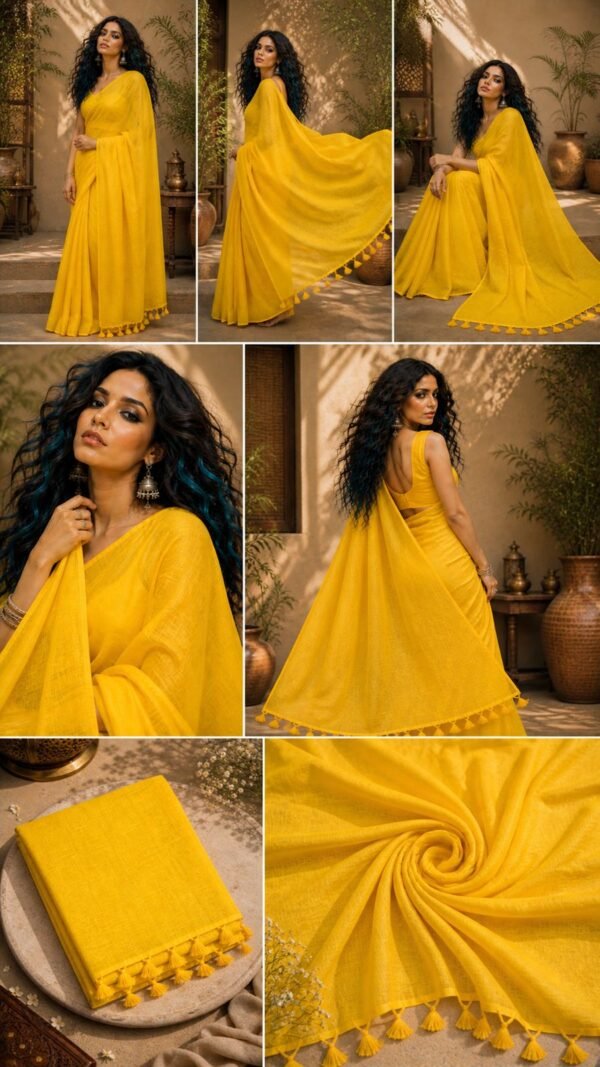







Haldi Mul Cotton Saree in Turmeric Yellow with Pallu Tassels
Sarees₹1,800.00
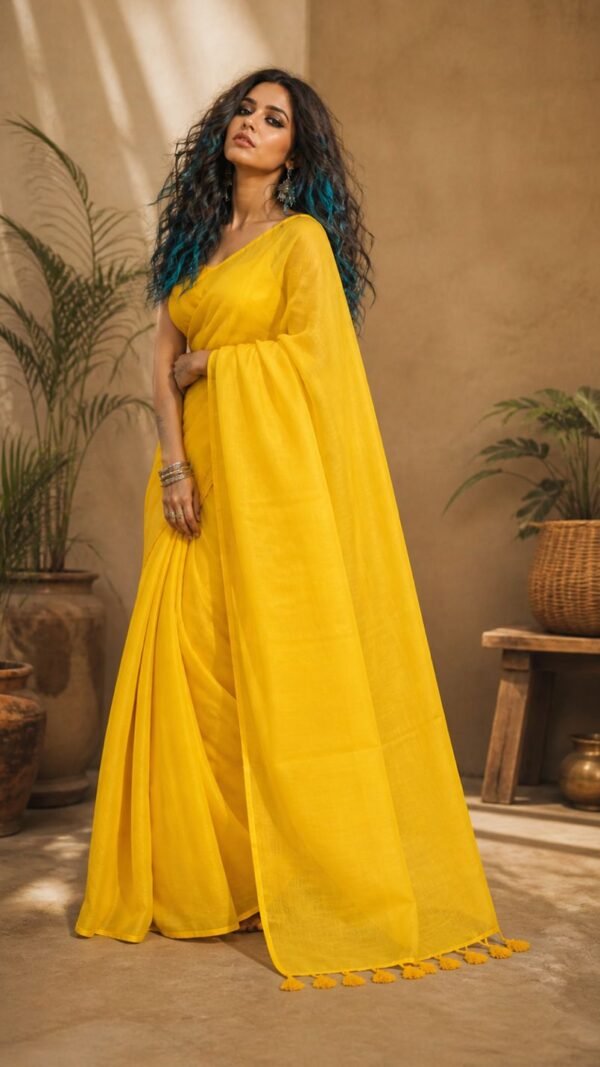
& Free ShippingThe entire design of this saree is the colour.
Turmeric yellow.
The colour of the haldi paste rubbed into the bride’s skin
the morning before the wedding.
The colour of the mustard fields in February.
The colour India reaches for
when something is beginning.
There is no border here. No pattern.
Just the yellow.
Holding everything.
The tassels are the same colour as the saree.
They do not interrupt.
They continue.
- Description
- The Craft Behind This Saree
- Care Instructions
- Description
- Additional information
- Reviews (0)
This is a plain saree. The design is the colour.
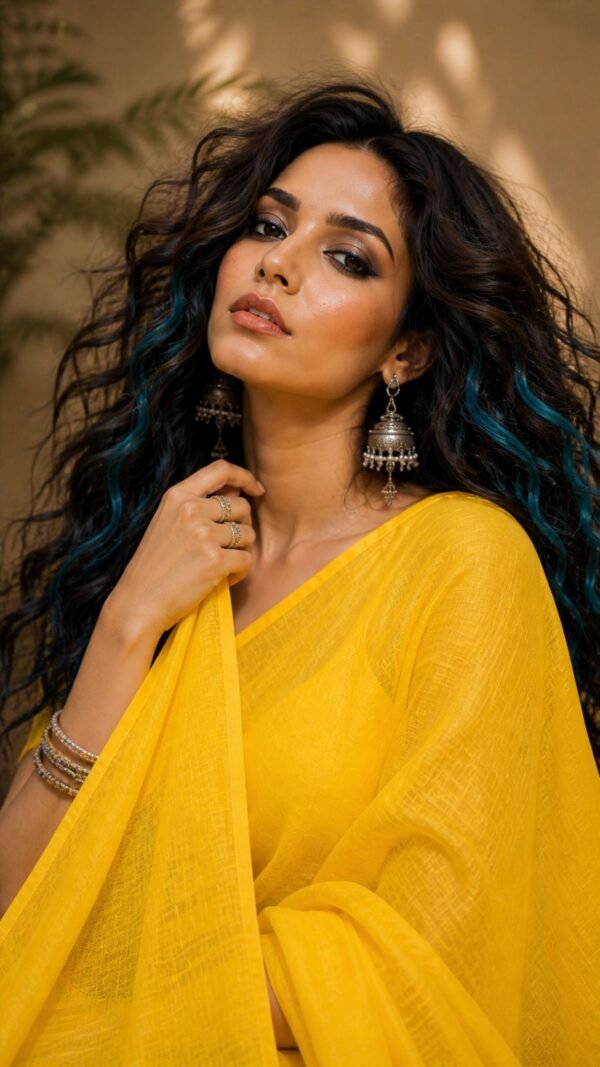
There is no pattern to describe, no border to study, no supplementary weaving to examine. The mul cotton was dyed this yellow — the yellow of fresh turmeric root, of mustard fields in February Punjab, of the marigolds strung at every Indian doorway for every festival — and then woven plain. The result is 5.5 metres of uninterrupted colour.
Mul cotton takes dye the way skin takes haldi — thoroughly and deep into the fibre. The fine-count cotton absorbs colour into its structure rather than holding it at the surface. This is why the yellow in this saree is as vivid in shade as it is in direct light. The colour is not an event on the fabric. It is inside the fabric.
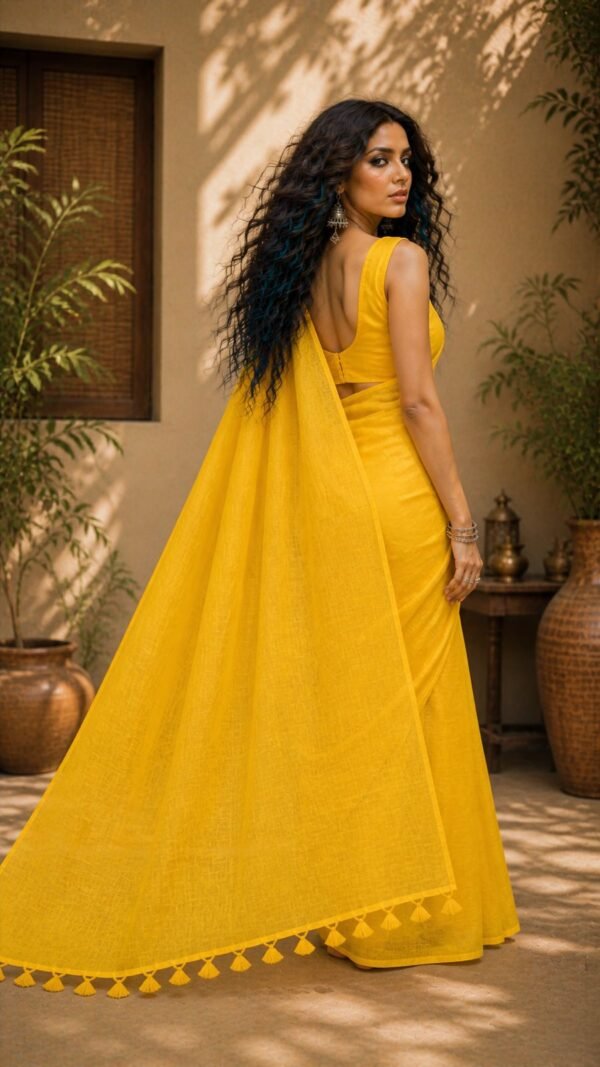
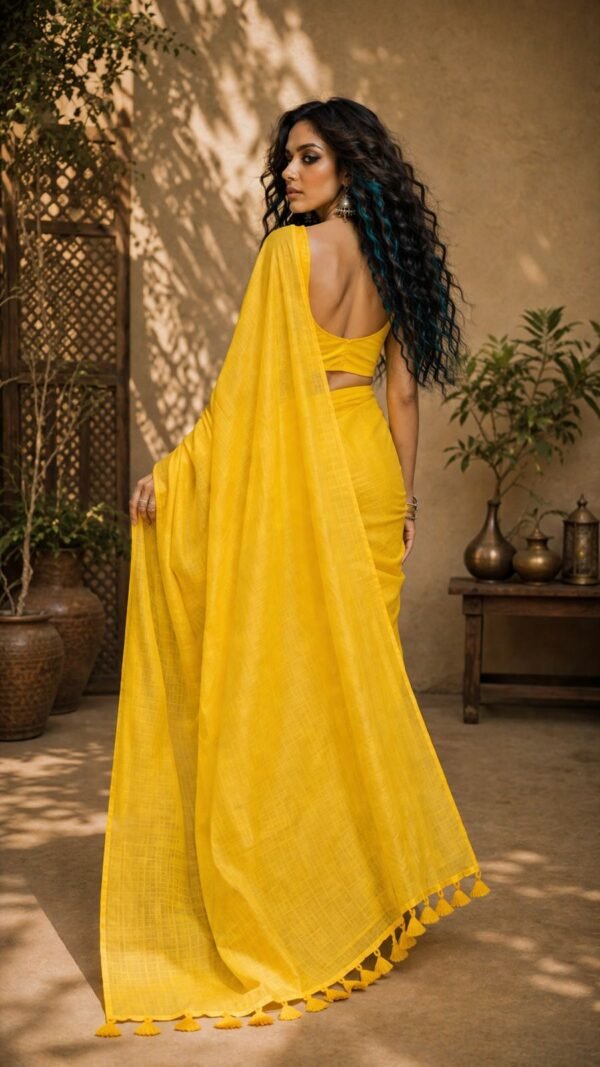
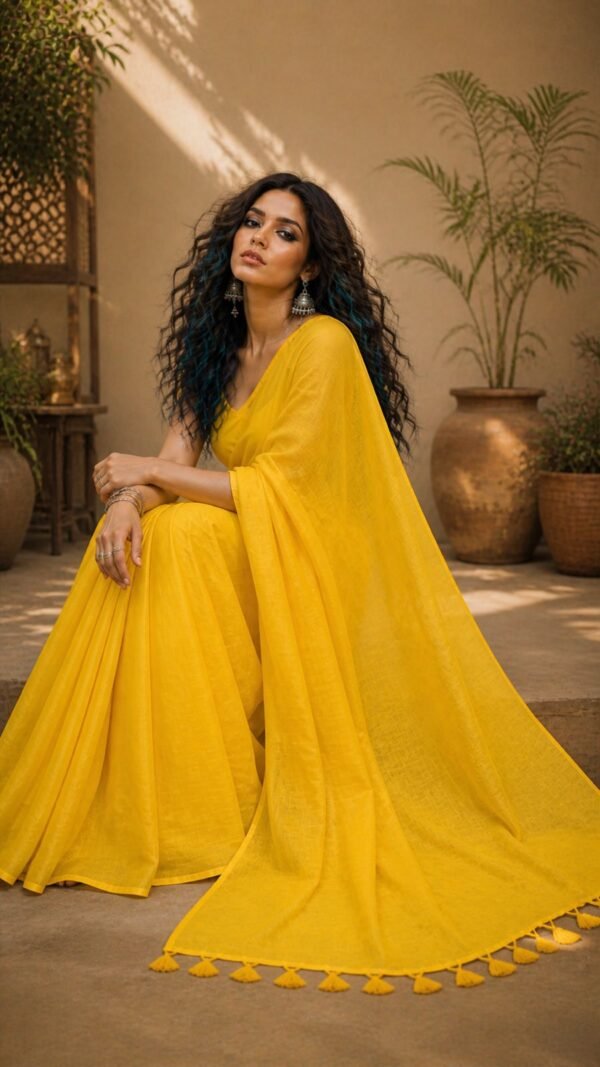
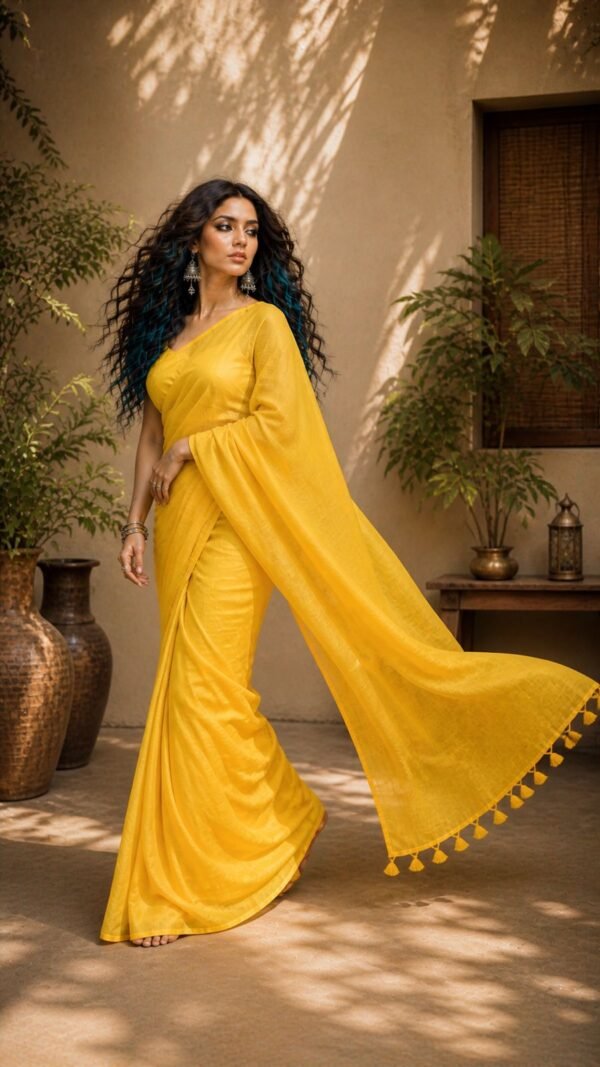
A plain handloom body asks more of the weaver than a patterned one. A motif absorbs inconsistency — the eye follows the design and forgives the rest. A plain body shows everything: thread count, tension, dye evenness, drape. This yellow is even across the full 5.5 metres. The drape in the image is what good mul cotton does when nothing is competing with it.
The pallu tassels are turmeric yellow — the same colour as the saree body, not a contrast, not an accent. They mark the pallu edge through movement and texture rather than colour. When the pallu lifts, they announce it. The name is Haldi. The colour of every Indian beginning.
Solid-colour handloom cotton is the oldest category in Indian textile history. Before pattern weaving, before block printing, before embroidery — there was the dyed thread and the plain loom. The plain weave is the foundation on which every other tradition was built. This saree returns to that foundation.
Haldi is dyed in this yellow using reactive dyes on Bengal handloom mul cotton — a fine-count, loosely woven cotton that takes colour with exceptional depth. The dyeing happens before the weaving: the yarn is dyed in hank form, dried, and then set on the loom. What the weaver weaves is already yellow. The colour is structural from the start.
Plain-weave mul cotton is the most technically exposed fabric a handloom can produce. There is nowhere for imperfection to hide. The thread tension must be even from the first centimetre to the last. The dye must be consistent across the full warp. The result, when it is right — and this one is right — is a fabric that moves as one piece, holds colour as one piece, and drapes as one piece. The tassels at the pallu hem are knotted by hand in matching yellow thread, hung at even intervals, weighted so they fall correctly when the pallu is draped
- Wash: Hand wash in cold water with a mild, colour-safe detergent. Mul cotton is gentle to care for; the colour holds well after the first wash.
- First wash: Wash separately in cold water. The reactive yellow dye may release slight colour on the first wash. This is normal for reactive-dyed fabrics and will not recur.
- Tassels: Wash gently around the tassel knots. Do not wring or pull. Press gently and lay flat to dry and reshape.
- Do not: Machine wash or use bleach. Machine agitation loosens tassel knots and can distort the mul cotton drape over time.
- Iron: Medium heat on the cotton body. Keep the iron away from the tassels — direct heat on hand-knotted thread knots will damage them.
- Dry: Always in shade. Prolonged sun exposure fades reactive yellow dyes. This yellow is the point of the saree. Protect it.
- Store: Folded in clean muslin. Store away from other garments to prevent colour transfer. Keep away from direct light and humidity.
| Dimensions | 5.5 cm |
|---|---|
| Saree Length | 5.5 metres |
| Blouse Piece Length | 0.8 metres |
Reviews
There are no reviews yet.