

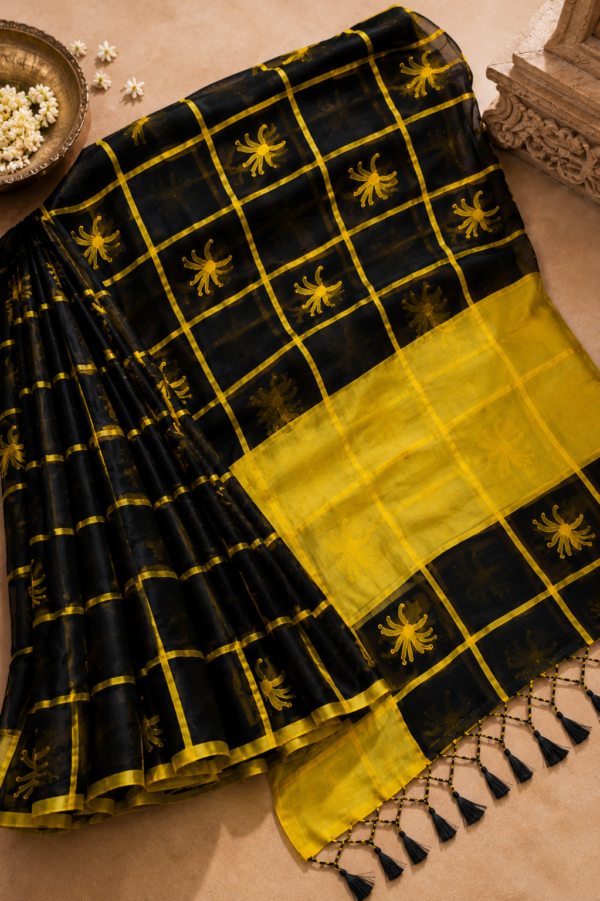








Bijli Bengal Handloom Cotton Saree in Black with Yellow Zari Check and Buta
Sarees₹2,600.00
& Free ShippingBijli means lightning.The yellow zari grid was set at the loom before the first thread of black.
The weaver built the map of the storm first.
Then filled in the sky.Each square holds one buta.
A small burst. A single charge.
The body of the saree is a thousand small charges
held in a black sky,
waiting.
The yellow pallu is where the storm breaks.
The check saree is one of Bengal’s oldest weave traditions. The Bengal weaver sets up the warp with two colours — in this saree, black cotton and yellow zari — in the proportion the design demands. The yellow grid forms first, in the warp. Then the weaving begins, and the black cotton fills each square. The grid is structural. The checks are not printed or painted. They are built into the architecture of the fabric at the loom.
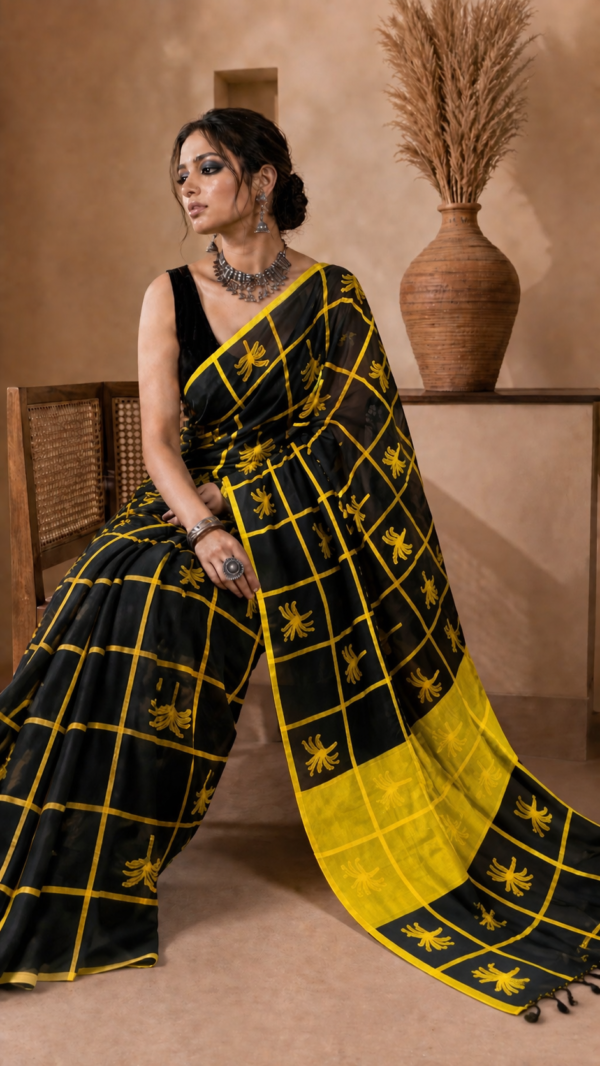
Inside each check, the weaver has placed a buta — a small supplementary weft motif, a stylised burst pattern in yellow thread, one per square, placed at the centre of each black field. This is extra-weft work: the buta thread is introduced across specific weft rows to build the motif, row by row, as the weaving progresses. There are dozens of them across the full saree body, each one placed with the same discipline, the same count, the same yellow charge against the black ground.
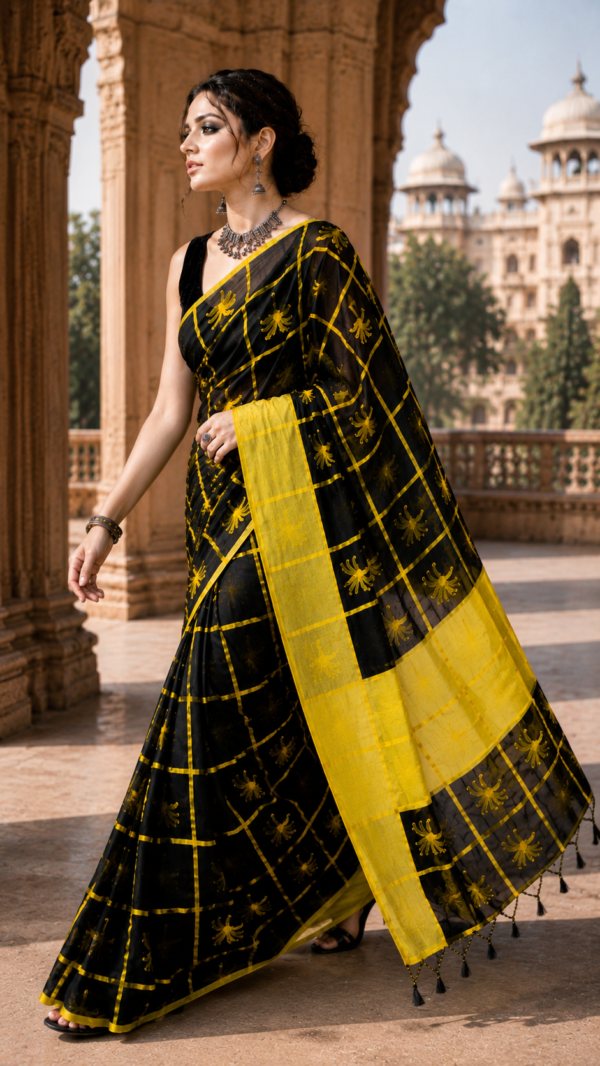
The pallu is solid yellow — the same yellow as the zari grid, but now flooding the full width of the fabric. Where the body holds the yellow in gridlines and small motifs, the pallu releases it entirely. The transition is abrupt and deliberate. Black check body, yellow pallu. Storm sky, then lightning. The black beaded tassels at the pallu hem hang heavy and weighted — ornate, multi-strand, the kind of tassel that announces the pallu before you see it.
The model wears all oxidised silver — a choker necklace, chandelier earrings, stacked bangles, statement rings. Every piece of metal on her is dark. Against the black and yellow, the silver reads as the third colour the saree was waiting for. The name is Bijli. What the sky does the moment it can no longer hold what it has gathered.
The Bengal check tradition — locally called the kora or taant check — is among the oldest weave structures in Indian textile history. The warp is set up with the two colours in the ratio the pattern requires; the weaving then proceeds in the same colour sequence, producing the check automatically as warp and weft intersect. The discipline is in the setup: once the loom is dressed, the pattern is fixed. The weaver cannot change their mind.
The buta — the small supplementary weft motif placed in each check — adds a second layer of complexity. The Bengal tradition has a vocabulary of buta forms: the mango, the floral burst, the paisley, the geometric star. The buta in Bijli is a stylised burst, built from supplementary yellow thread introduced across specific weft rows as the weaving progresses. For each square on the body, the weaver builds one buta — the same motif, the same thread count, the same placement. Across the full saree body, this means dozens of individual buta, each built by hand, none of them printed or stamped.
The yellow pallu is woven as a separate section: the warp proportion changes, yellow floods the full width, and the black recedes to the border lines only. The transition point — where the check body ends and the full yellow pallu begins — is one of the most precise moments in the weaving. The black beaded tassels are attached at the hem after the weaving is complete, by hand, each one a multi-strand drop with a weighted finish
- Wash: Dry clean recommended, particularly for the ornate beaded tassels and the zari grid structure.
- Hand wash: If hand washing: cold water, mild detergent. Wash gently — do not scrub the buta or wring the fabric. The zari threads and supplementary weft motifs are structurally woven in but require gentle handling.
- First wash: Wash separately in cold water. The deep black may release slight colour on the first wash. Normal. Will not recur.
- Tassels: The black beaded tassels are multi-strand and weighted. Handle with particular care — do not pull or wring. Gently press and reshape after washing, lay flat to dry.
- Do not: Machine wash. The bead weight and multi-strand structure of the tassels cannot withstand machine agitation.
- Iron: Medium heat on the black cotton body. Iron from the reverse side to protect the buta motifs. Do not iron the tassels or the yellow pallu zari directly.
- Dry: Always in shade. Both the black ground and the yellow zari fade with prolonged direct sun exposure.
- Store: Folded in clean muslin, away from other garments. Keep the tassels unfolded if possible to prevent the bead strands from tangling.

Reviews
There are no reviews yet.