
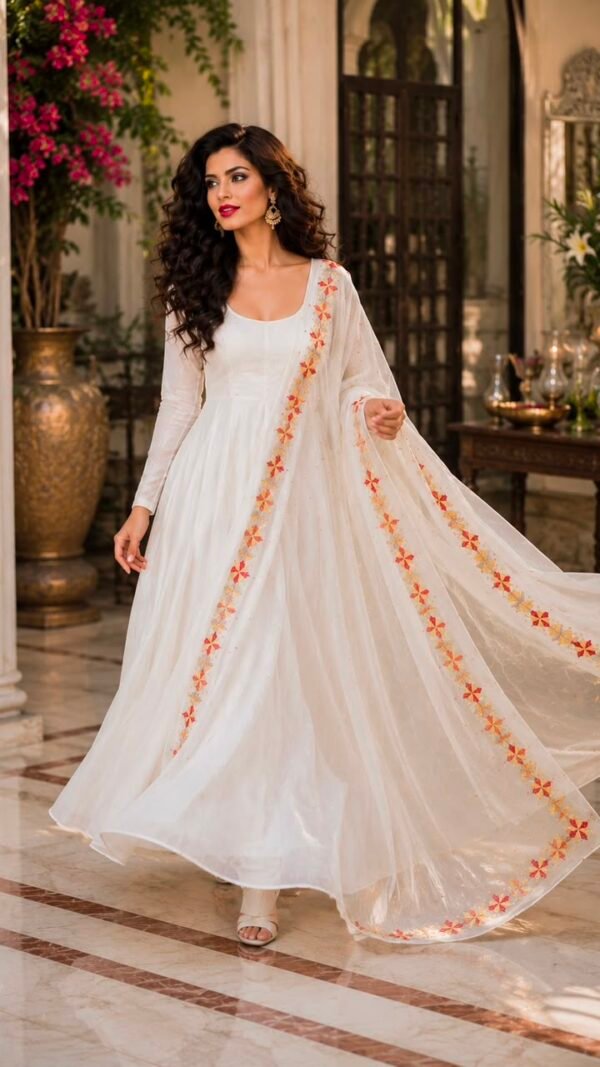
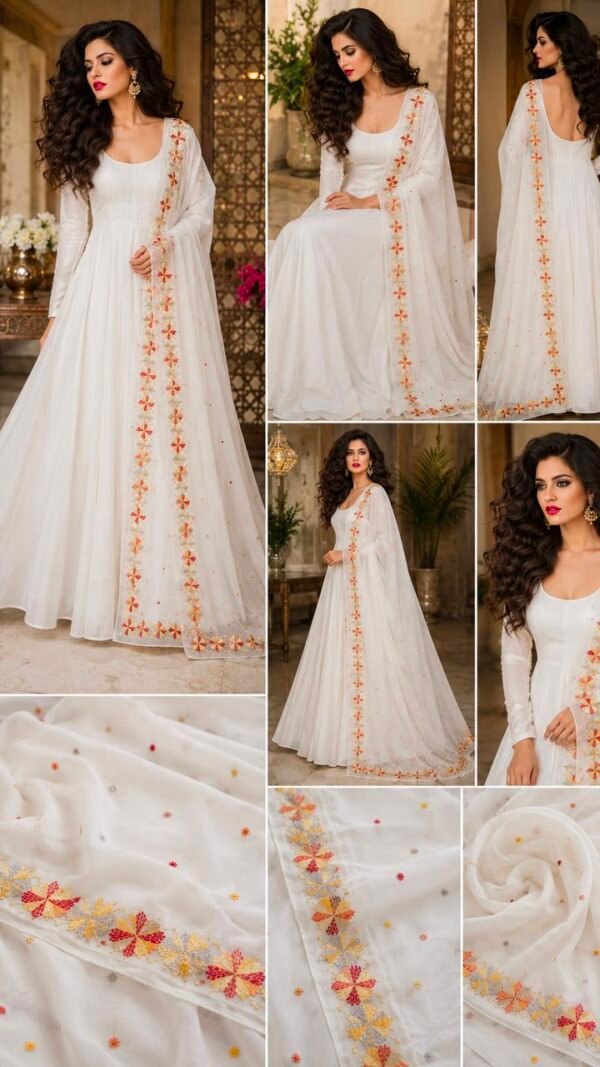
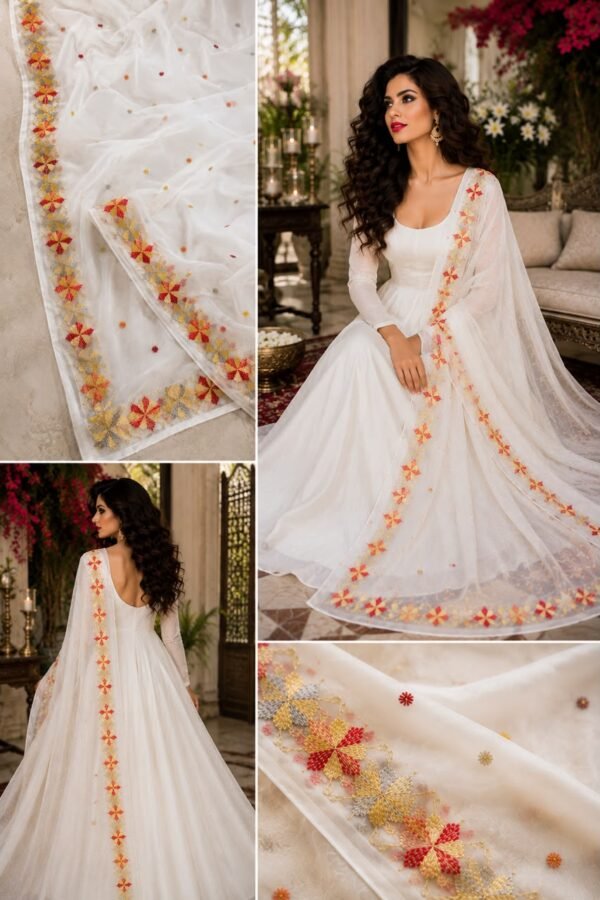
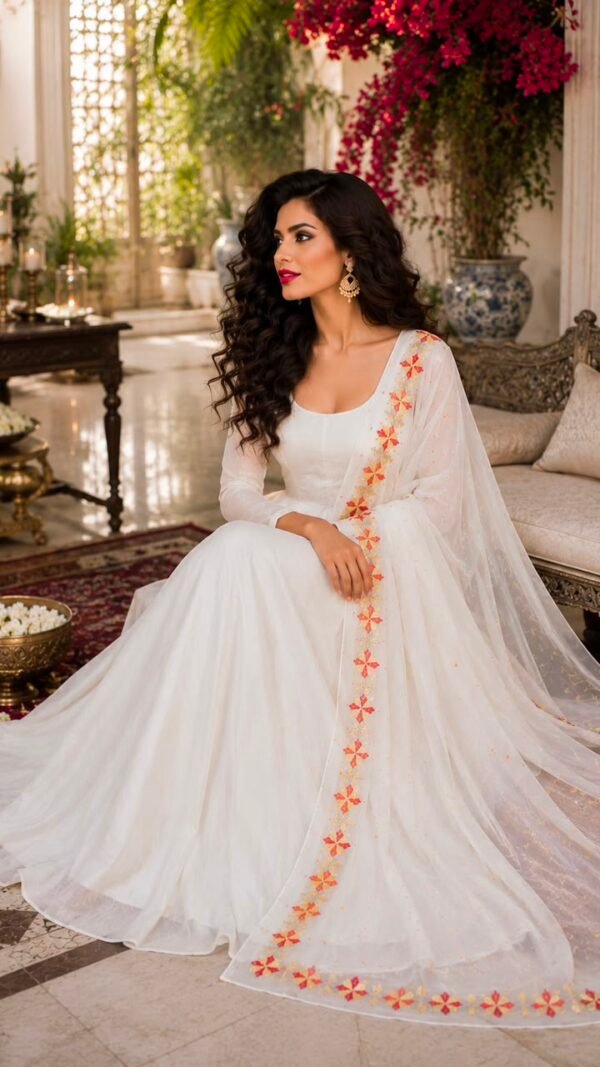
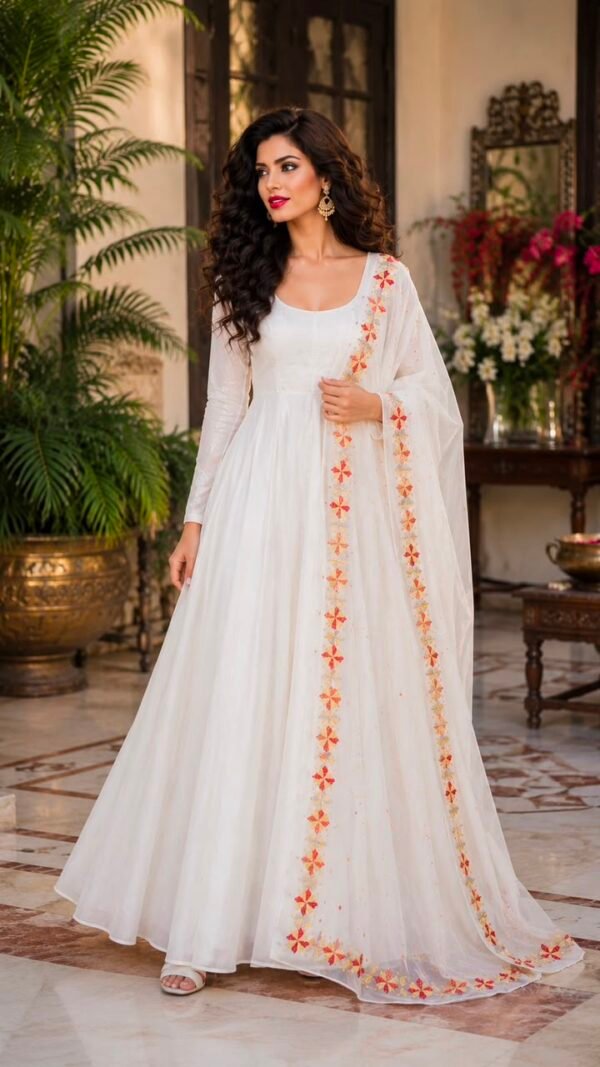
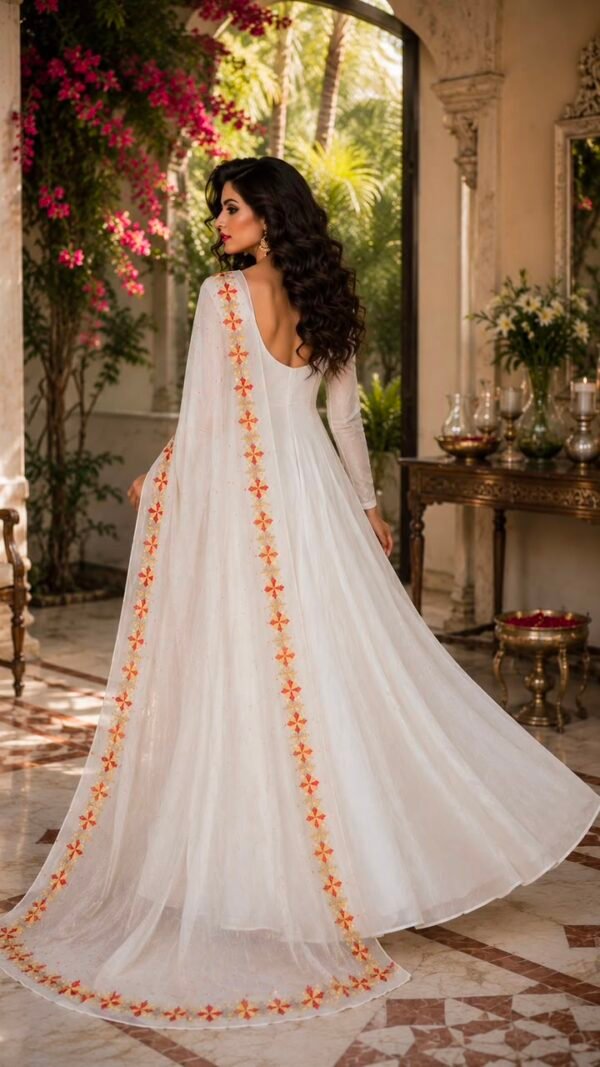






PhulwariChiffon Dupatta in White with Multicolour Phulkari Star Border and Scattered Buti
Dupattas₹8,250.00
& Free ShippingPhulwari means the flower garden.
Phulkari is the flower work.
Phulwari is what it makes.The white chiffon is the clearest possible ground —
the one that holds every colour
at its fullest strength simultaneously.
Red reads as red.
Gold reads as gold.
Silver reads as silver.
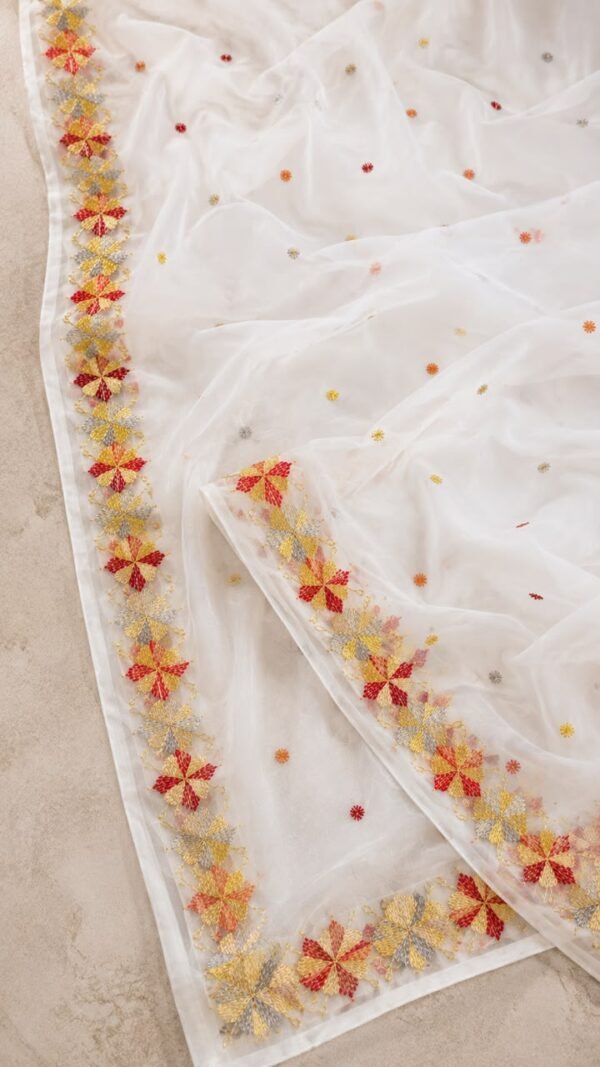
On white, none of them negotiate.The star border along the edge
is the pinwheel form —
the petals alternating red and gold,
the silver connecting them,
the whole border a turning garden.
The scattered buti across the body
are the same garden at a quieter scale.
The white chiffon dupatta collection in this range runs from single-colour restraint to multicolour celebration. Noor carries a single turquoise. Svarna carries a single copper-peach. Phulwari carries three: red, gold, and silver simultaneously. The three colours together are the North Indian festive palette at its most distilled — the red of celebration, the gold of prosperity, the silver of auspiciousness, all three on the purest possible white ground.
The Phulkari pinwheel star motifs along the border are the specific form in the tradition where the petal sections of the star alternate between two colours within the same motif: one petal red, the next gold, the next red again, the motif turning between the two colours the way a pinwheel turns between its colours in wind. The silver-grey thread connects the star forms within the running border, providing the cool neutral that keeps the red and gold from competing. The border motifs are larger than the body buti — the full pinwheel star visible at the border scale, its turning structure apparent.
The scattered buti across the white chiffon body carry the same multicolour thread in miniature: small individual flower motifs in red, gold, orange, and silver, each one a tiny complete embroidered form placed at generous intervals across the full width and length of the dupatta. On the white chiffon — which is the most transparent fabric in the collection — the buti are visible on both sides of the fabric, the thread float on the embroidery surface and its impression through the chiffon both present simultaneously. The white between the buti is the negative space the composition depends on: the garden needs the white ground the same way the sky needs the dark.
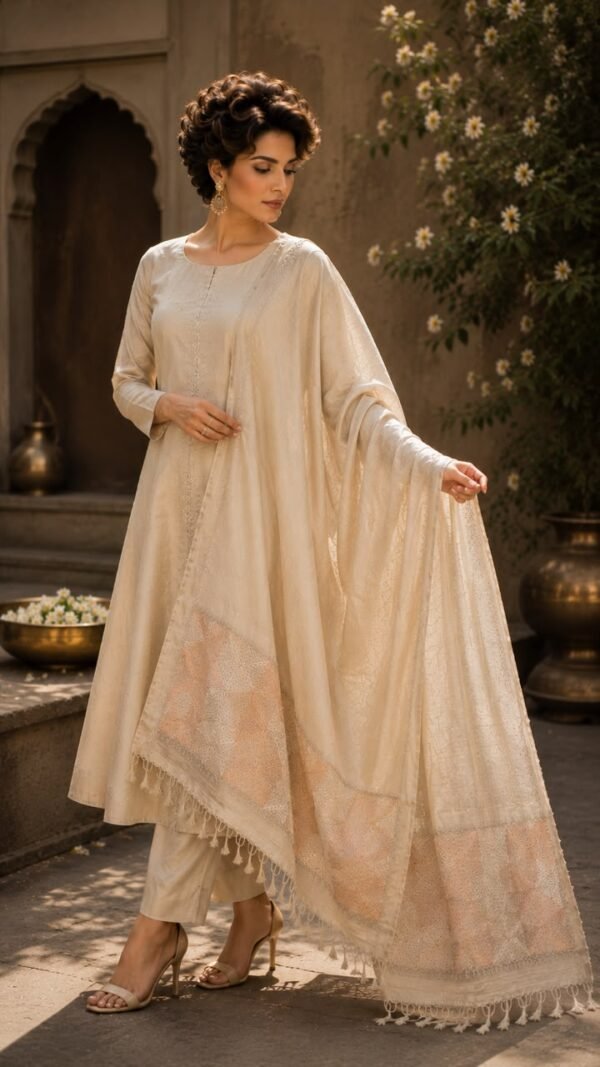
The reference images show the dupatta in a white bridal-adjacent setting: bougainvillea, candelabras, white floral arrangements, the Mughal courtyard in afternoon light. The multicolour Phulkari on white chiffon in this setting carries the specific quality of the North Indian shaadi aesthetic — festive, celebratory, and completely at home in the vocabulary of Indian occasion dressing. The name is Phulwari: the flower garden, the thing the Phulkari tradition has always been building, placed here on the most transparent ground in the collection.
The pinwheel star motif in Phulwari is the Phulkari tradition’s most kinetic form. The running stitch floats that build each petal section are arranged so that adjacent petals are in contrasting colours — red and gold alternating in each star. The eye, moving from petal to petal, creates the impression of rotation: the star appears to turn. This visual effect is the specific contribution of the two-colour pinwheel stitch to the Phulkari vocabulary, and it is what distinguishes Phulwari’s border from the single-colour buti borders of Noor and Svarna.
White chiffon as a Phulkari base requires the highest standard of embroidery execution in the collection. The transparency of the chiffon means the back of the embroidery is partially visible from the front when the dupatta is worn. The neat reverse — the short connecting passes between stitch groups on the back surface — must be as considered as the front. In direct sunlight or candlelight, the Phulwari’s buti appear as luminous multicolour points visible through the white ground: the embroidery lit from behind by the light passing through the chiffon, the colours bright on both sides simultaneously.
• Wash: Dry clean only. Three different thread colours on white chiffon — any colour release from the red, gold, or silver onto the white ground is immediately visible.
• First wash: Dry clean only, no exceptions. The red thread is the highest colour-release risk. Professional first wash essential.
• White chiffon: Keep away from all coloured garments permanently. White chiffon absorbs colour in water, in damp storage, and in sustained contact.
• Pinwheel floats: The alternating-colour petal floats are built from two thread colours in close proximity. Handle through non-embroidered areas. Do not catch or pull.
• Transparency: This is the most transparent dupatta in the collection. Handle with complete care — any mark on either surface shows through from the other side.
• Do not: Machine wash, hand wash, wring, bleach.
• Iron: Low heat, reverse side only, away from embroidery. Never iron on the pinwheel stars from the front.
• Dry: Lay flat in shade immediately. White chiffon will yellow under extended UV exposure.
• Store: Rolled in acid-free tissue, then white muslin. Never fold through the border embroidery. Store in complete darkness.
Reviews
There are no reviews yet.